





 Portuguese
  English
  Spanish
  5 min of reading
  0 comments


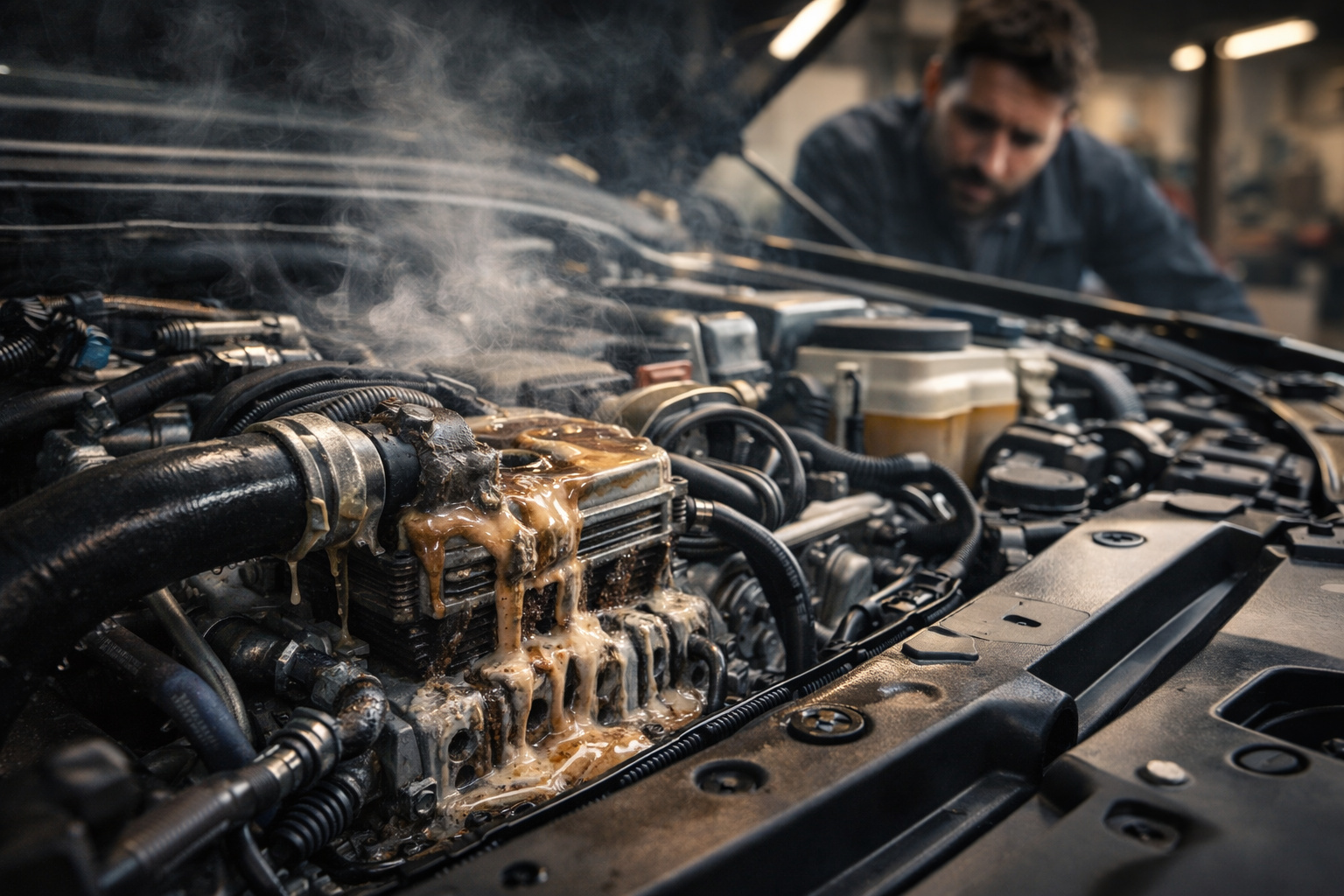
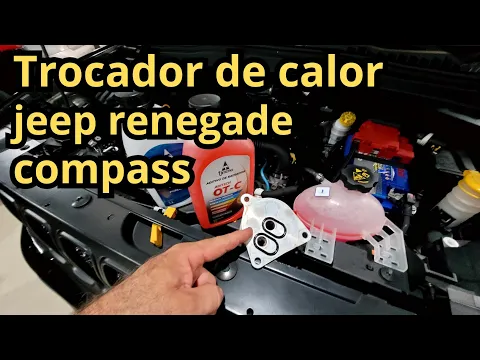
Failure in heat exchanger in Jeep Renegade and Compass can mix oil with water, cause overheating and generate losses above R$ 10 thousand.
In recent years, reports involving failures in the heat exchanger in models from Jeep, especially Jeep Renegade and Jeep Compass, have multiplied in Brazil. The problem, already addressed in technical analyses by Quatro Rodas and Revista O Mecânico, in addition to prompting a statement from Procon-SP, involves an essential component of the cooling system and the automatic transmission.
According to technical content from the automotive sector, the defect can occur when there is an internal failure in the heat exchanger, allowing the coolant to come into contact with the transmission fluid, something that should not happen under normal conditions. In explanations published by Revista O Mecânico and also detailed by Quatro Rodas, this cross-contamination can arise from corrosion or perforation of the component, simultaneously compromising the cooling circuit and the automatic gearbox.
The result can be progressive and highly detrimental, leading to internal damage that, in more severe cases, requires extensive repairs or even complete replacement of expensive transmission components. In reports gathered by workshops and specialized articles, this type of contamination is treated as one of the most costly scenarios for the owner, precisely because it affects one of the most complex and expensive mechanical assemblies of the vehicle.
-
Car starting from R$ 29 thousand with Fiat’s unbreakable engine: 4 used options with up to 167 hp, 23 kgfm, and 0 to 100 km/h in 7.4 s; turbo with overboost and surprising performance.
-
The Royal Enfield Classic 650 arrives in Brazil with a 648cc twin-cylinder engine, a look that seems straight out of the 1950s, Showa suspension, and a price starting at 34 thousand reais that challenges all mid-displacement competitors in the national market.
-
BMW entered 2026 ready to turn the tables with an avalanche of launches that mix new electric vehicles, refreshed SUVs, transitioning sedans, and sports cars, in an offensive that accelerates the Neue Klasse era and could reshape the global premium competition.

-
Honda’s mini car is a hit with a 0.66 turbo engine, selling 198,893 units, leading sales for the 5th consecutive year, featuring Honda SENSING and optional 4×4 traction, with a spacious interior and measuring just 3.39 m in Japan.

How the heat exchanger works and why the failure is critical
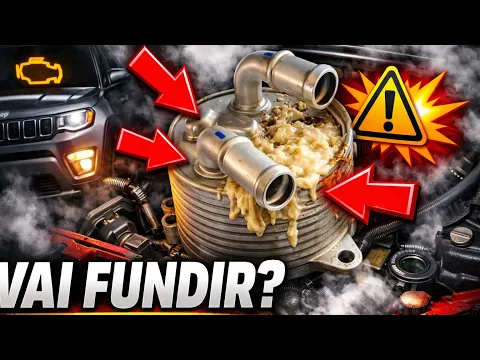

The heat exchanger is responsible for maintaining the ideal temperature of the system, separating two circuits:
- On one side, the automatic transmission oil
- On the other, the engine coolant
These fluids circulate close to each other but should never mix. The problem arises when there is a failure in the internal structure of the part, usually caused by:
- thermal wear
- internal corrosion
- high pressure in the system
When this barrier fails, cross-contamination occurs. This failure has been technically described as a critical point in systems that use the AT6 automatic transmission (Aisin), present in various models from the Jeep and Fiat lines.
Mixing oil and water forms “brown emulsion” inside the system
One of the most characteristic signs reported by owners is the visual alteration of the coolant. Real cases show that the fluid can take on the appearance of:
- thick sludge
- brown coloring
- grease-like texture
A Compass owner reported that the fluid “turned into a kind of brown grease” when checking the reservoir after a temperature alert.

This emulsion completely compromises the efficiency of the system, reducing the heat dissipation capacity and rapidly increasing the risk of overheating.
Real cases show high financial impact and progressive damage
The available records show that the problem is not isolated and can evolve rapidly. In a case involving a Compass, the owner reported that the vehicle showed contamination of the system and received a quote of R$ 47 thousand for complete repair after diagnosis at a dealership.
Another case indicates the need for complete intervention after contamination of multiple systems, with the car remaining weeks out of service for repairs.
Additionally, court decisions in Brazil have already recognized the defect and determined compensations exceeding R$ 15 thousand for affected consumers.
These figures show that the loss can vary significantly, but often exceeds the range of R$ 10 thousand, especially when the problem is not identified early.
The problem can lead to overheating and compromise the automatic transmission
The contamination between fluids directly affects the operation of the transmission. Internal components of the automatic transmission are extremely sensitive to the presence of water.
According to technical analysis, internal materials such as discs and friction elements can be damaged when they come into contact with the coolant.
Moreover, the defect can cause:
- increased temperature
- loss of lubrication efficiency
- accelerated wear of internal components
In more advanced situations, the system may experience total failure, requiring complete replacement of the transmission.
Jeep Compass also frequently appears in defect reports
Although the Renegade is often cited, the Compass also consistently appears in the records. Documents and analyses indicate that the model may present:
- overheating related to the heat exchanger
- transmission failures resulting from contamination
- need for complex repairs
In technical evaluations, the problem in the heat exchanger of the Compass is cited as one of the most recurring defects related to the model’s automatic transmission.
This reinforces that the issue is not limited to a single car but involves a family of vehicles with similar architecture.
Why the problem may go unnoticed at first
One of the factors that aggravate the situation is the progressive nature of the failure. In the initial stage, the vehicle may show discreet signs, such as:
- slight alteration in the reservoir fluid
- small temperature variations
- irregular behavior of the transmission
Since these signs are not always evident, many owners only notice the problem when the system is already compromised.
Failure raises debate about durability and preventive maintenance
The recurrence of similar cases raises questions in the automotive sector about:
- dimensioning of the component
- resistance over time
- quality of the coolant fluid used

Experts point out that the improper use of additives or inadequate maintenance can accelerate wear, although this does not explain all recorded cases.
The increase in reports indicates an isolated problem or a broader failure in the system of these vehicles
With technical records, consumer reports, and even court decisions involving the issue, the failure in the heat exchanger in models like Renegade and Compass has ceased to be an isolated case and has become part of a larger debate about mechanical reliability.
The central question now is not only the existence of the problem but its frequency and impact over time, especially in vehicles that are still in circulation in large numbers in Brazil.
In light of this scenario, the question remains: is it a natural wear of a complex component or a structural vulnerability that may continue to generate significant losses for thousands of drivers in the coming years?









Seja o primeiro a reagir!