





 Portuguese
  English
  Spanish
 5 min of reading
  3 comments


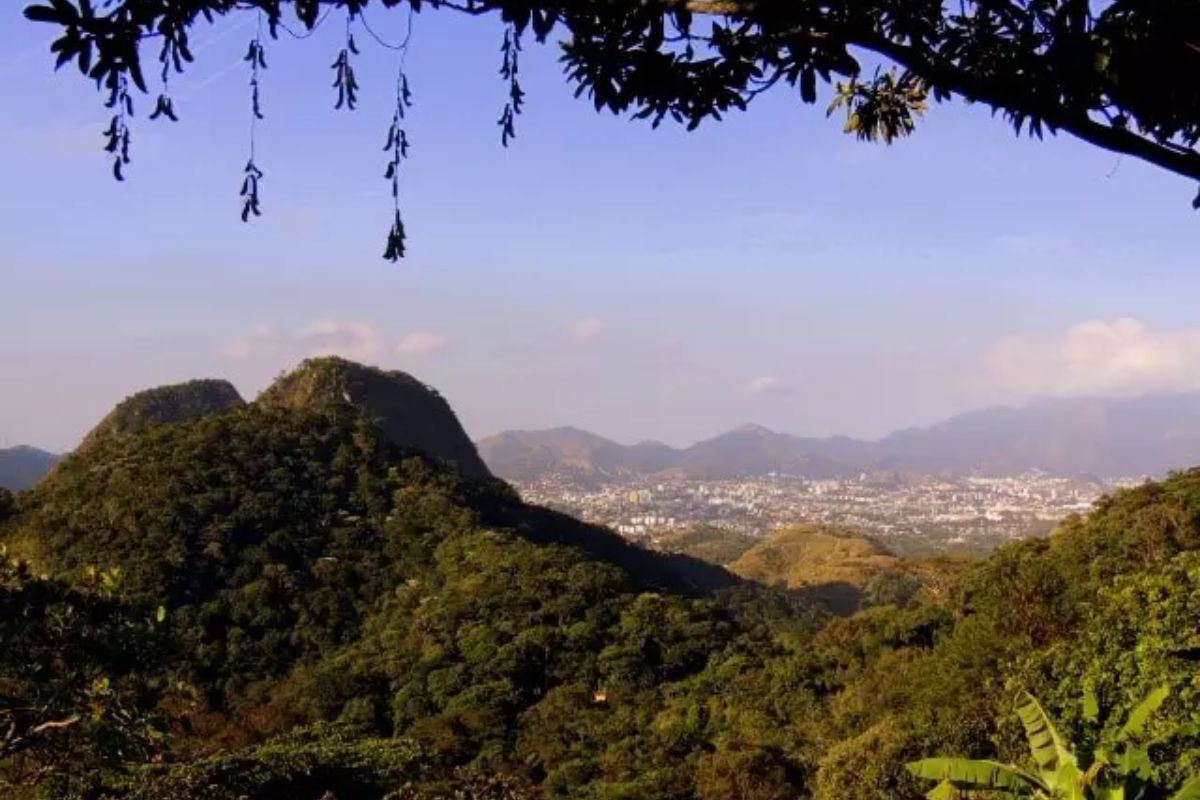


The Largest Urban Forest On The Planet Is Inside The City Of Rio De Janeiro, Occupies 12.5 Thousand Hectares, Houses Jaguarundi And Hundreds Of Species And Helps To Secure The Advance Of Urbanization Over The Atlantic Forest.
The Pedra Branca State Park transforms the West Zone into a huge green corridor amidst densely populated neighborhoods. While concrete advances through Jacarepaguá, Guaratiba, Vargem Grande, Vargem Pequena, Bangu, and Campo Grande, the forest resists as one of the last great natural shields of Rio. While the largest urban forest on the planet regulates the climate, protects water sources, and houses centennial trees, the park suffers from real estate pressure, fires, and illegal occupations.
In The Heart Of The Largest Urban Forest On The Planet
Created as a state conservation unit, Pedra Branca State Park is today the largest continuous urban forest on the planet, with about 12,500 hectares of preserved Atlantic Forest within the urban perimeter.
Surrounded by populous neighborhoods in the West Zone, the park functions as a large green mosaic embedded in the city.
-
With just joint compound, white glue, and pigment, you can make a homemade paint that yields double the conventional amount, saves up to 70%, and leaves the wall with a finish that no one would believe wasn’t store-bought paint.

-
Home environment can influence the brain, mood, and well-being: studies indicate an increase of up to 15% in productivity, a reduction of 12% in stress with plants, and a direct impact of the circadian rhythm on the 24 hours of the day.

-
A Brazilian millionaire couple restores a farm over 150 years old in the interior of São Paulo and transforms the historic property with Portuguese tiles, antique furniture, and new spaces into a refuge that blends tradition, comfort, and sophistication.
-
Submerged city in a lake in Minas reveals intact streets, preserved vehicles, and houses after more than 60 years, impressing divers.

This vegetation belt is crucial for cushioning disorderly urban expansion and maintaining a minimum ecological balance in a metropolis that is still growing horizontally.
Biological Wealth In The Urban Area
Scientific surveys have already cataloged 479 species within Pedra Branca, including 338 bird species, 51 mammals, 27 reptiles, 20 amphibians, and 43 fish species.
In terms of biodiversity, this places the largest urban forest on the planet at a level comparable to distant forest reserves far from major centers.
Among the recorded animals are medium and large species, such as the jaguarundi, as well as agoutis, monkeys, sloths, armadillos, and birds considered rare.
The presence of top predators indicates that the park can still sustain complex food chains, something rare in areas surrounded by intense urbanization.
For the city, this means having, within municipal limits, a true living laboratory of the Atlantic Forest, where researchers, students, and wildlife observers can monitor ecological processes that have already disappeared in much of Brazil.
A 500-Year-Old Jequitibá In The Middle Of The City
In 2025, researchers identified within Pedra Branca a jequitibá-rosa approximately 500 years old and about 40 meters tall.
In the midst of a metropolis that is rapidly verticalizing, finding a tree that had been there centuries before urbanization reinforces the unique character of the largest urban forest on the planet.
Trees of this size are considered true ecological pillars. They store large amounts of carbon, regulate humidity, stabilize soil, and provide shelter for numerous smaller animal and plant species.
Preserving this jequitibá and other giants of the forest means also protecting the ecological memory of Rio and a heritage that cannot be replaced on a human time scale.
Forest That Cools The City And Holds Rainwater

In addition to biodiversity, Pedra Branca State Park provides essential ecosystem services for the daily life of Rio de Janeiro.
The massif functions as a major climate regulator, helping to reduce heat islands caused by asphalt, concrete, and lack of tree cover in several neighborhoods in the West Zone.
The largest urban forest on the planet also acts as a natural sponge. The dense vegetation favors the infiltration of rainwater into the soil, reduces surface runoff, helps to prevent floods, and protects slopes against erosive processes.
The springs that originate in Pedra Branca feed important water sources, such as the reservoirs of Camorim and Pau da Fome, contributing to the supply of quality water to the population.
In a scenario of increasingly common extreme events, having a large area of Atlantic Forest within the city is a kind of environmental insurance against droughts, storms, and heatwaves.
Nature Tourism, Trails, And Environmental Education
Despite being a conservation unit, Pedra Branca is not an isolated territory from society. On the contrary, the park has established itself as a nature tourism hub in the West Zone, with trails, viewpoints, waterfalls, and areas dedicated to educational and recreational activities.
The trails allow for wildlife observation, learning about native trees, getting close to springs, and having panoramic views of different regions of Rio.
This direct connection with the largest urban forest on the planet helps to form a new generation of residents who recognize the value of the Atlantic Forest and understand that preserving it is a matter of urban survival.
Organized visitation also opens space for models of sustainable tourism. Licensed guides, local residents, and small entrepreneurs can generate income with interpretative tours, food, and support services, provided that the ecological limits of the unit are respected and the carrying capacity is not exceeded.
Constant Threats Amid Urban Advancement
Even with all its ecological and social importance, Pedra Branca is not free from risks. The largest urban forest on the planet faces permanent pressures, ranging from illegal occupations and real estate speculation to forest fires and the introduction of exotic species.
Fire, in particular, is a recurring threat. Criminal fires or those caused by carelessness can destroy in a few hours areas that took decades to regenerate, making way for invasive grasses, reducing wildlife, and weakening slopes.
Disorderly occupation pushes boundaries, creates new sources of pollution, and increases the risk of fragmented deforestation.
These problems require constant monitoring, active oversight, and urban planning compatible with the existence of the conservation unit.
Without this, the edge of the forest tends to be gradually eroded until urban pressure compromises the environmental services that today benefit the entire city.
Management, Alliances, And The Future Of Pedra Branca
The management of Pedra Branca State Park depends on a complex articulation between state agencies, the city hall, universities, non-governmental organizations, and surrounding communities.
Without this web of cooperation, it is impossible to maintain the largest urban forest on the planet functioning as a living and resilient system.
Research projects, environmental education actions, volunteer programs, and reforestation initiatives are some of the strategies that can strengthen the protection of the massif.
At the same time, consistent public policies on housing, transport, and land use are essential to reduce pressure on the conservation unit.
Ultimately, the future of Pedra Branca is directly linked to the model of city that Rio de Janeiro chooses to build.
A metropolis that recognizes the value of its Atlantic Forest treats the forest as essential infrastructure, not as an obstacle to growth.
Do you think that Rio de Janeiro values the largest urban forest on the planet enough, or is there still a lack of recognition of Pedra Branca as an absolute priority in decisions about the city?





Tem que priorizar no Plajto municipal, explorando o turismo ecológico e criando estruturas no entorno dela (pequenos hotéis, restaurantes, etc).
A matéria está equivocada,a maior floresta urbana do mundo está na zona norte São Paulo , é a “serra da Cantareira”! Floresta nativa ,nunca foi derrubada! Ao contrário da ” tijuca,por exemplo, que ja foi recuperada do desmatamento”.
A da Cantareira tem 8000 hectares, o da Pedra Branca tem 12,5 mil hectares.
Não confunda com a da Tijuca .