





 Portuguese
  English
  Spanish
  4 min of reading
  0 comments


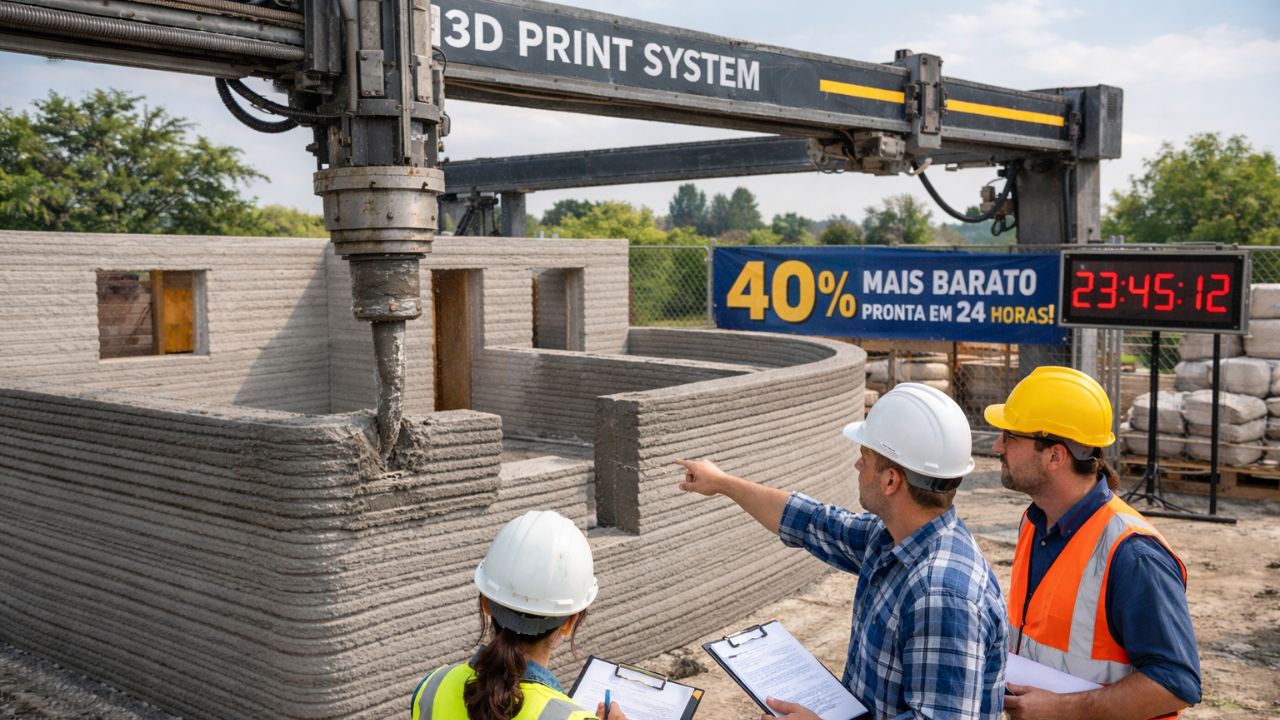
3D Printed Houses Reduce Costs, Accelerate Construction, and Maintain Structural Resilience. See How This Technology Can Transform Housing and Cities.
3D printed houses are already being built by companies and social projects in different countries as a faster, cheaper, and more sustainable alternative to traditional construction.
The technology has been adopted by construction companies, social organizations, and researchers since the last decade, mainly in areas with housing deficits, using giant printers that shape concrete walls from digital designs.
The goal is to reduce costs, accelerate timelines, and tackle historical housing challenges such as material waste, slow construction, and high environmental impact.
-
What if the Sun disappeared suddenly? Simulation shows Earth in darkness within minutes, extreme cold, and rapid collapse of life on the planet.

-
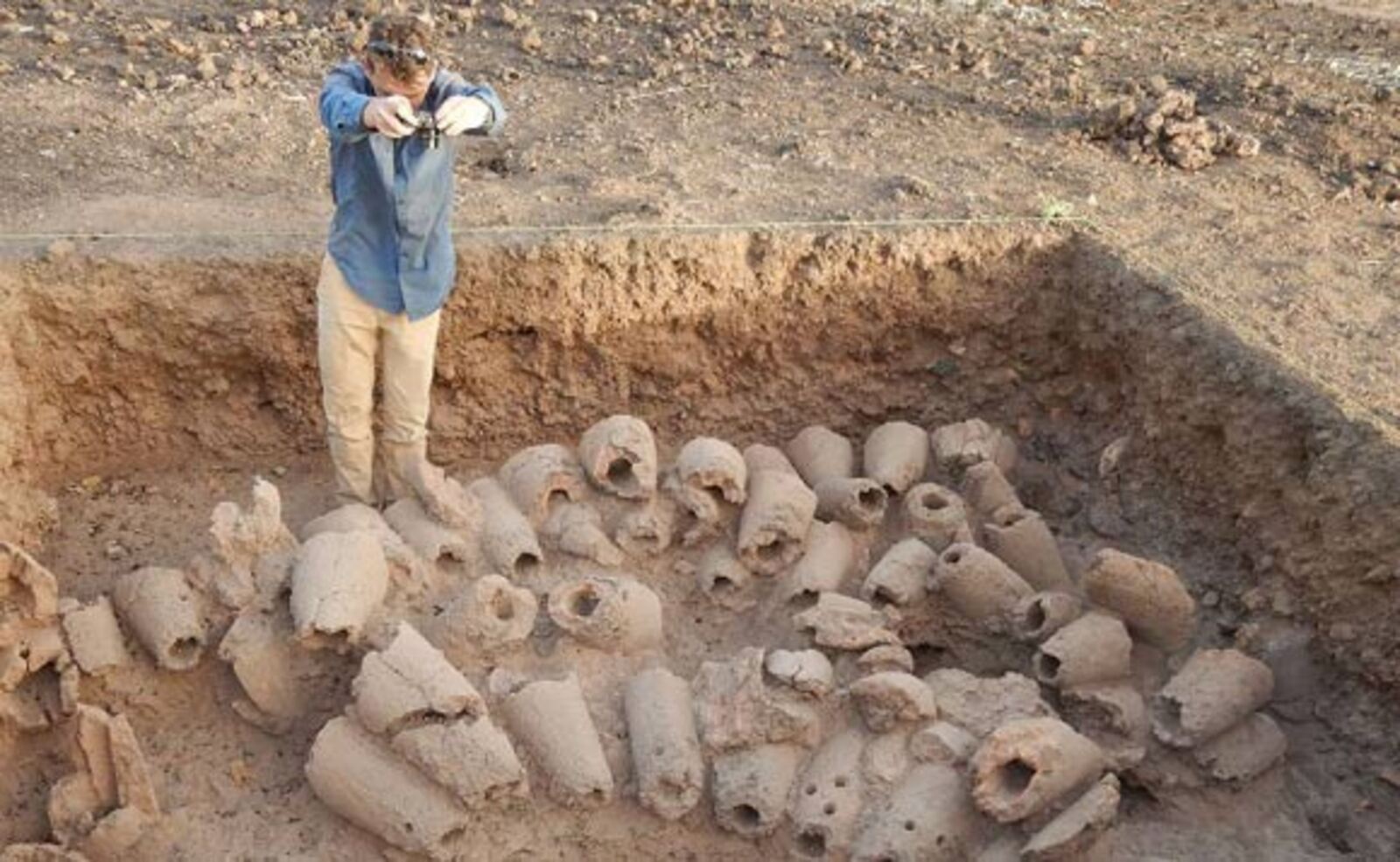
A 2,400-year-old iron foundry has been discovered in Senegal with 100 tons of slag, 35 furnace bases, and signs of nearly eight centuries of continuous metallurgical activity.
-
Four humans are flying towards the Moon inside the Orion capsule launched by the SLS rocket, and on April 6, Artemis II will disappear behind the far side of the Moon without communication with Earth for nearly an hour.

-
Worlds covered by water, atmospheres filled with hydrogen, and the possibility of life beyond Earth: ocean planets are rewriting the map of cosmic search and forcing scientists to rethink where to look.


While conventional methods can take months to complete a house, 3D printed houses can be finished in less than 24 hours.
This advancement occurs because the automated process replaces much of the manual labor, following digital files with high precision.
Thus, each stage is executed continuously, predictably, and with a lower margin of error.
How Does The Technology of 3D Printed Houses Work?
The system of 3D printed houses uses large-scale printers capable of depositing layers of special concrete according to the architectural design programmed in software.
This concrete is formulated to dry quickly and maintain adequate structural resilience.
Moreover, the entire project is created digitally before construction begins. This allows for simulations, adjustments, and prior corrections, avoiding improvisation at the construction site. As a result, construction becomes more organized and efficient from the start.
Another important point is standardization. 3D printed houses follow repeatable models, which facilitates quality control and reduces human errors. Therefore, the process scales without compromising safety.
Proven Cost Reduction and Waste by Studies
Research published in the Journal of Building Engineering, available in the ScienceDirect database, indicates that 3D printed houses can reduce construction costs by 30% to 40%.
This savings mainly comes from lower material usage, reduced labor costs, and shortened construction timelines.
At the same time, studies show that the resilience of structures remains within the standards required by safety regulations. In other words, saving does not mean compromising quality.
Another relevant benefit is environmental. 3D printed houses generate less waste compared to traditional construction. Since the material is applied only where it is needed, waste practically disappears.
Real Projects Demonstrate the Viability of 3D Printed Houses
In practice, 3D printed houses are no longer just a concept. Projects led by the company ICON, in partnership with Habitat for Humanity, have demonstrated that it is possible to build complete homes in less than a day.
These initiatives utilize optimized design for automated printing and concrete specifically developed for this type of application. Technical reports indicate greater uniformity of structures and less rework during execution.
Additionally, the predictability of the process facilitates financial planning and reduces delays, a common problem in traditional construction.
Social Impacts and Quality of Life for Families
The speed of 3D printed houses brings direct impacts on families’ lives. Having a home ready in little time reduces the stress of waiting and increases feelings of safety and emotional stability.
Meanwhile, shorter construction periods reduce noise, dirt, and intense movement in neighborhoods. This contributes to more organized cities and less affected by prolonged construction sites.
In vulnerable communities, the effect is even greater. After natural disasters, for instance, 3D printed houses allow families to be rehoused quickly, reducing the time spent in temporary shelters.
Use in Social Programs and the Future of Housing
3D printed houses have great potential in public housing programs and social projects. The technology allows for large-scale building, keeping costs controlled and timelines short.
In the near future, experts suggest that the model should be combined with traditional techniques, creating hybrid constructions. This way, it will be possible to expand the technology’s reach and adapt it to different urban realities.
Additionally, planned neighborhoods may benefit from the standardization and efficiency of the method, expediting housing delivery.
Why 3D Printed Houses Are Advancing So Quickly
Several characteristics help explain the growth of 3D printed houses worldwide:
- Significantly lower water usage compared to conventional construction
- Digital designs with a high level of precision
- Substantial reduction of material waste
- Construction timelines reduced from months to just a few days
Therefore, by uniting technology, economy, and social impact, 3D printed houses cease to be a futuristic curiosity and establish themselves as a real alternative to transform the construction industry and tackle the global housing deficit.







-

-

-

-

16 pessoas reagiram a isso.