





 Portuguese
  English
  Spanish
  5 min of reading
  1 comment


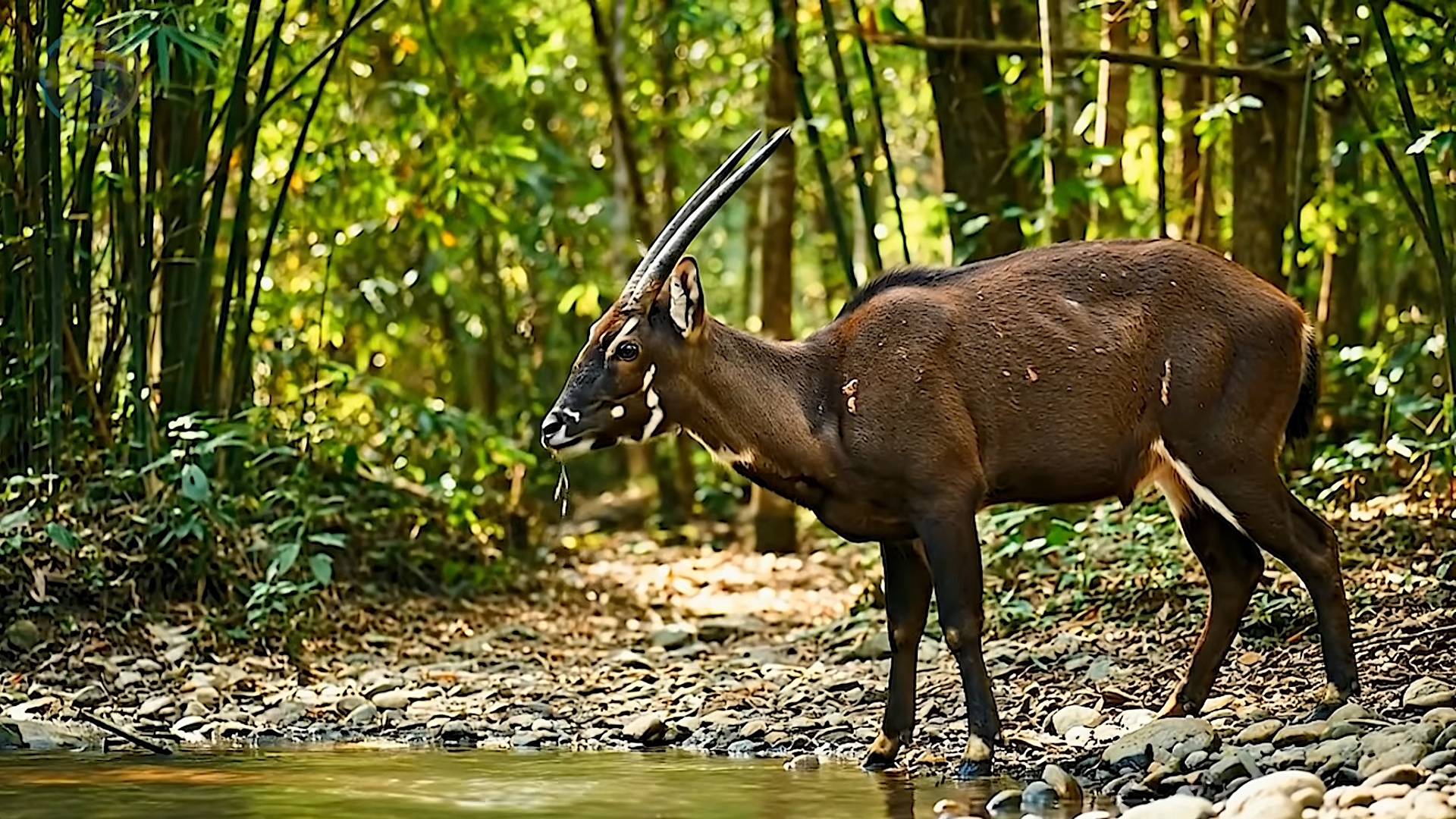


Considered Practically Extinct, the Saola Reappeared in the Forests of Vietnam, Was Recorded Only a Few Times by Camera Traps, and Became One of the Rarest and Most Enigmatic Mammals on the Planet.
For decades, biologists worked under the idea that it might no longer exist. Without direct sightings, without individuals in captivity, without recent remains, and without consistent records, the saola came to be treated as a silent symbol of modern extinction. Still, against all expectations, this extremely rare mammal reappeared in the depths of Southeast Asian forests, reigniting one of the most intriguing stories of contemporary conservation.
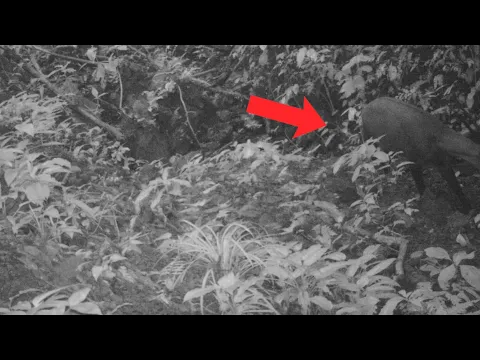
The reappearance of the saola did not occur in front of researchers, drones, or human expeditions. It was captured by automatic camera traps, positioned in hard-to-reach areas of the Annamite mountain range, on the border between Vietnam and Laos. The images, rare and spaced over time, are enough to confirm something extraordinary: the animal still survives, even on the brink of functional extinction.
What Is the Saola and Why Is It Considered One of the Rarest Mammals in the World?
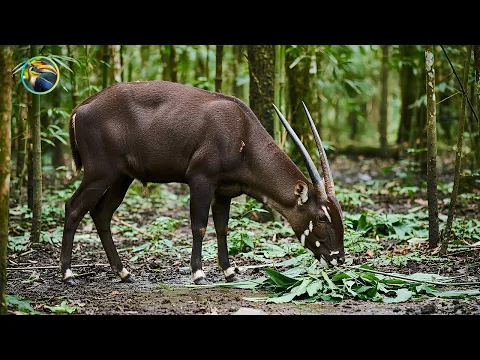
The saola, scientifically known as Pseudoryx nghetinhensis, is a medium-sized herbivorous mammal belonging to the bovidae family. It stands about 85 to 90 centimeters tall at the shoulder, can weigh over 100 kilograms, and has a appearance that blends characteristics of antelope, cattle, and goats. Its most striking feature is the two long, parallel, and almost perfectly straight horns, which can reach about 50 centimeters.
-
Church from 1888 becomes a mansion of over 330 m² in Canada after a renovation of R$ 3.4 million and is eventually sold for nearly R$ 4.3 million.

-
How an innovative city combines high technology, well-being, and sustainability to become the largest reference in clean energy on the planet.

-
Couple buys 1846 church in ruins for R$ 660,000, invests R$ 3.2 million in renovations, transforms it into a millionaire mansion, and even preserved a historic cemetery with over 300 graves.

-
He started running at 66 years old, broke records at 82, and is now a subject of study for having a metabolic age comparable to that of a 20-year-old, in a case that is intriguing scientists and inspiring the world.



The animal was described by science only in 1992, which in itself makes it a biological anomaly. At a time when it was believed that all large mammals had already been cataloged, the saola emerged as a late discovery, reinforcing how little is known about the tropical forests of Asia.
Since then, the problem has not only been studying it but also simply finding it. It is estimated that there are fewer than a few dozen living individuals, although the exact number is unknown. The International Union for Conservation of Nature (IUCN) classifies the saola as “Critically Endangered,” with a very high probability of extinction in the wild.
Why Did the Saola Disappear from Scientific Radar for So Long?
The disappearance of the saola is not linked to a single cause but to a set of ongoing human pressures.
The forests of the Annamite mountain range have suffered intense deforestation over the last few decades, driven by agricultural expansion, logging, and road construction.
Additionally, a particularly devastating factor has been the proliferation of snare traps made from steel cables and spread widely to capture wildlife destined for the illegal meat trade. These traps are not selective and kill indiscriminately. The saola, extremely sensitive to stress and human interference, has become a silent victim of this system.
Another challenge is the species’ own behavior. The saola is solitary, elusive, lives in dense forested and mountainous areas, prefers places near watercourses, and completely avoids open regions. This makes direct observations practically impossible and explains why, even while alive, it remained invisible for so long.
The Reappearance Recorded by Camera Traps in the Forests of Vietnam
The most recent records of the saola did not come from direct encounters, but from camera traps set up by conservation teams. In some cases, years passed between one record and another. Each captured image is treated as a scientifically significant event.
These photographs confirm that small nuclei of the species still persist in extremely isolated areas, far from villages and any constant human presence. The time span between records reinforces the critical risk: this is not a healthy population, but survivors.
The fact that the saola still exists, even in such reduced numbers, challenges pessimistic predictions and reignites the debate about “functional” extinctions, when a species still lives but no longer plays a relevant ecological role due to the scarcity of individuals.
Why Did the Saola Become a Global Conservation Symbol?
The saola has come to represent more than just a threatened species. It has become an icon of invisible biodiversity, the kind that disappears before it is even understood. Unlike widely known animals such as tigers or elephants, the saola never had the time to exist in the popular imagination.
Precisely because of this, its case is often cited as an extreme example of urgency in conservation. If it disappears, there will be no videos, documentaries, or generations that knew it alive. Only blurred photographs and scarce scientific records will remain.
International institutions, the governments of Vietnam and Laos, and environmental organizations have created specific initiatives to protect the last known habitats, reduce illegal traps, and train local communities to identify and preserve critical areas.
Is There a Real Chance to Save the Saola from Extinction?
Despite the critical scenario, the confirmed existence of the saola keeps open a possibility, albeit narrow, for long-term survival. The current strategy does not involve capture or breeding in captivity, as past attempts resulted in the rapid death of animals due to extreme stress.
The focus is on total habitat protection, the systematic removal of traps, and isolating the areas where the species still survives. This is a race against time, in which each lost year could be definitive.
The case of the saola is also influencing broader conservation policies in Southeast Asia, serving as a warning about how many other species may be disappearing without being noticed.
A Living Ghost of Modern Forests
The saola is not just rare. It is almost a biological ghost, an animal existing on the brink between presence and disappearance. Its reappearance does not represent a definitive victory, but a final warning.
As long as camera traps continue to capture its silhouette silently crossing the forest, there is hope. But this hope is fragile, dependent on immediate human decisions and the preservation of one of the planet’s most pressured ecosystems.
The saola remains alive, but its survival is, today, one of the most delicate and uncertain stories in modern biology.







It is very beautiful! I hope it survives!