





 Portuguese
  English
  Spanish
  4 min of reading
  0 comments


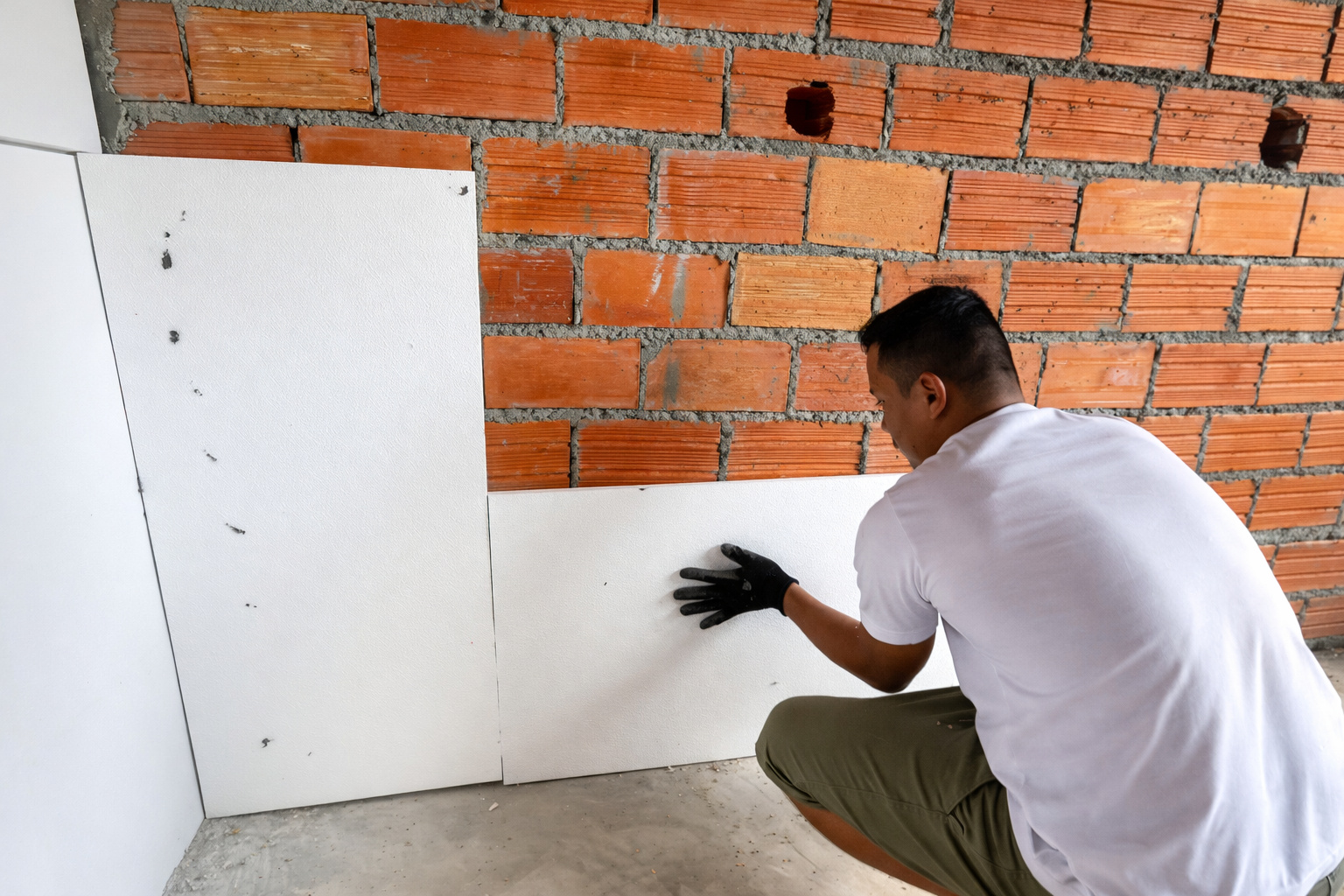
The man used an economical plastering technique with styrofoam panels that reduced costs, improving thermal comfort and facilitating execution in civil construction
The economical plastering with styrofoam panels has been attracting attention in civil construction for combining low cost, ease of application, and thermal efficiency. The man behind the technique is André, who reveals the use of lightweight panels as the base of the coating, creating a practical solution for those seeking savings in construction.
The impact is direct on the wallet and the comfort of the environment. In addition to reducing expenses with traditional materials, the method also improves thermal and acoustic insulation, making spaces more pleasant on a daily basis.
The information was shared by the builder André Oliveira, a civil construction professional who shares practical online content, responsible for demonstrating the complete step-by-step application.
-
Man digs a pool in his backyard, finds bars and coins of gold hidden, and discovers a treasure of nearly R$ 4 million buried for years.
-
Material present in millions of kitchens raises global alarm after causing severe lung disease and leading to multimillion-dollar lawsuits in the United States.
-
A person became a millionaire with just a 10-hour video of a lit fireplace on YouTube.

-
The Finnish armored vehicle Patria AMV 8×8 with eight wheels stands out with mine protection, advanced armor, modular design, and high mobility in military operations that redefine modern combat.


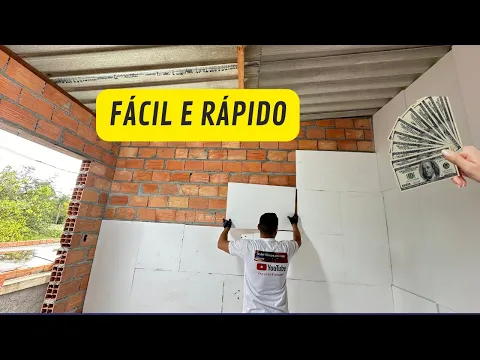

How economical plastering with styrofoam panels works in practice
The process begins with the preparation of the panels, which need to be completely filled with paste before installation. The man uses 20 mm panels that ensure a uniform base for the coating.
The application requires attention to the fitting. The panels should be merely touched and lightly pressed, without forcing them completely. This care prevents unevenness and keeps all at the same height.
After the initial fixing, a ruler is used to level the entire surface. The goal is to ensure that the economical plastering with styrofoam panels is aligned, creating a more professional and uniform finish.
Correct leveling is essential for the final finish
Leveling is one of the most important steps in the process. The ruler should be applied over the already installed panels, pressing until all are at the same height.
This adjustment prevents ripples and visual flaws in the finish. When the surface reaches the ideal standard, no further pressure is needed.
The result is a base ready for the next steps, with uniformity and better adherence of the final texture.

Use of fiberglass mesh reinforces the joints
After the installation of the panels, the fiberglass mesh comes into play, used to reinforce the joints. The material is applied directly over the seams, easily adhering to the surface.
The mesh should be well stretched and overlapped at the ends, ensuring that there are no openings between the panels. This care increases the resistance of the coating.
André Oliveira, a professional in the civil construction who shares practical online content, shows that this step is fundamental to avoid cracks and thus ensure greater durability of the system.
Application of the texture ensures a uniform finish
With the joints reinforced, the next step is the application of the texture. The procedure is simple and done with a roller, spreading the material from top to bottom.
Before that, a light layer of texture may be applied to the joints, helping to uniform the surface. During the application, it is important to remove the excess to avoid accumulation.
The final result depends on this care. A well-done finish guarantees a cleaner and more professional appearance, even with an economical method.
Drying time may vary with the weather
The drying of the coating may take longer in cold or rainy conditions. In some cases, even after two days, the surface may still show damp areas.
This occurs mainly in the regions where the mesh was applied, which may maintain a different tone while drying.
Even so, the economical plastering with styrofoam panels maintains its performance and, after complete drying, presents a more uniform visual finish.

Economy and efficiency make the technique increasingly popular
The use of 18 panels of 20 mm demonstrates that it is possible to execute a complete coating with few materials and low cost. The technique reduces labor costs and speeds up the process.
In addition to the savings, thermal and acoustic insulation significantly improves the comfort of the environment, making this solution even more attractive.
The method stands out as an accessible alternative for renovations and constructions, especially in projects that seek practicality without compromising quality.
The economical plastering with styrofoam panels shows that simple solutions can bring great results in civil construction. With correct application, the final finish meets expectations well.
If you already knew this technique or intend to apply it in your work, leave your comment and share this information with those who also seek to save in construction.







Seja o primeiro a reagir!