





 Portuguese
  English
  Spanish
 5 min of reading
  1 comment





Minas Gerais TRT Ruling Reinforces That Exposure of Dangerous Conduct on Social Media Can Break Trust Between Employee and Employer, Even Without Prior History of Punishments
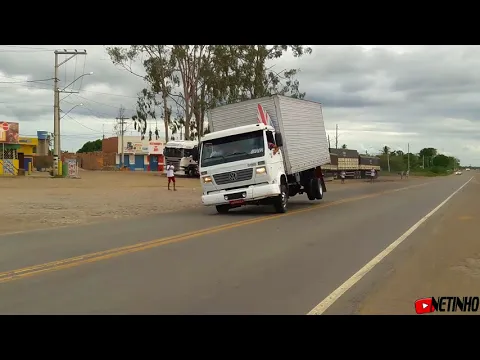
The Labor Court upheld the dismissal for just cause of a professional driver who posted a video on his TikTok profile showing a company truck performing dangerous maneuvers on the highway, including zig-zagging, skidding, and driving with no hands on the wheel, a practice popularly known as “breaking the wing.” The ruling was issued by judges from the Fourth Chamber of the Regional Labor Court of Minas Gerais (TRT-MG) in an ordinary session held on February 26, 2025.
The information was disclosed by the official website of the TRT-MG, based on the judgment of the appeal filed by the worker, who sought the reversal of the dismissal for just cause imposed by the employer, a company in the fuel distribution and cargo transportation sector. However, the judges upheld the decision of the 6th Labor Court of Betim, believing that the conduct was serious enough to justify the maximum penalty provided for in labor legislation.
Since the beginning of the process, the case drew attention for involving the use of social media, public exposure of the company’s image, and driving practices considered extremely dangerous, raising discussions about the limits of employee behavior outside the physical work environment, yet directly related to the function performed.
-
77.2% of Brazilians support lowering the age of criminal responsibility and reinforce pressure for changes in criminal legislation in the country, a national survey indicates.
-
The law that many elderly people are still unaware of protects those aged 60 and over against abusive charges from banks, guarantees debt renegotiation, and prevents loans and credit cards from consuming their entire retirement pension.

-
Portugal approves Nationality Law: Brazilians from CPLP will have to live for 7 years to obtain citizenship (waiting for title does not count), rules tighten for children born in the country, Sephardim are excluded, and it awaits a decision from President António José Seguro.

-
Your neighbor is undergoing construction and debris has fallen on your property? This could lead to compensation and make the owner, responsible party, and construction company pay for the damages.


Driver Claimed He Only Filmed the Video, but Evidence Indicated Direct Participation in the Maneuvers
In the appeal presented to the Court, the plaintiff argued that he was unjustly dismissed, claiming that he was not the driver responsible for the reckless maneuvers recorded in the video. According to him, his involvement was limited to posting the content on social media, without direct involvement in driving the truck during the risky episodes.
However, the defendant companies stated that the driver himself was the one who performed the improper maneuvers on public roads and later posted the material on TikTok. To support this version, audio recordings of conversations between the worker and company representatives were added to the case files, in which, according to the defense, the employee does not deny being responsible for driving the vehicle at the time of the infractions.
According to the case rapporteur, Judge Rosemary de Oliveira Pires Afonso, the elements contained in the labor lawsuit were sufficient to refute the thesis presented by the driver. As the magistrate highlighted, the audio recordings attached to the defense were not challenged by the plaintiff, which reinforced the indications that he was indeed driving the truck at the time of the dangerous maneuvers.
Moreover, in the conversation reviewed by the rapporteur, the worker reportedly acknowledged the questions raised about his conduct behind the wheel, limiting himself to stating that he did not anticipate that the post would gain wide attention and that he intended to delete the video later.
Publication on Social Media Was Considered a Serious Offense for Exposing Risk and Tarnishing the Company’s Image
For the rapporteur judge, the mere dissemination of the video on social media would be sufficient to characterize a serious offense, regardless of who was driving the truck. According to the magistrate, the post exposed irresponsible conduct in traffic, putting at risk not only the driver but also others on the highway.
Furthermore, according to the TRT-MG’s understanding, the content shared directly tarnished the company’s image, which operates in the cargo transport sector and owns the involved vehicle. For the Court, associating the corporate brand with illegal and dangerous practices undermines the credibility of the company among clients, partners, and society.
The rapporteur emphasized that the employee’s conduct fits various hypotheses provided for in article 482 of the Consolidation of Labor Laws (CLT), especially in items “b,” “e,” and “h,” which deal with bad conduct, negligence in job performance, and acts of indiscipline or insubordination.
In this context, the decision emphasized that it was proven that the dismissal for just cause was motivated both by the performance of reckless maneuvers, in total disregard for traffic laws, and by the public dissemination of these infractions, contrary to the principles and purposes of the employing company.
Court Understands That Severity of the Act Dispenses Gradual Punishments
Another central point of the ruling was the discussion on the necessity, or not, of applying gradual penalties prior to dismissal for just cause. For the collegial body of the Fourth Chamber of TRT-MG, there was no obligation for prior warnings or suspensions, given the gravity of the facts.
According to Judge Rosemary de Oliveira Pires Afonso, the act committed was serious enough to immediately break the trust necessary to maintain the employment relationship. The magistrate emphasized that the criterion for the gradation of penalties is neither absolute nor universal in Labor Law.
“It is possible for the occurrence of offenses that, due to their intense and emphatic seriousness, do not allow for any feasibility of gradation in punishment, thus allowing for the immediate application of the maximum penalty,” highlighted the rapporteur, reinforcing that this understanding fully applies to the case at hand.
The ruling also took into account the behavior of the worker at the time he received the news of his dismissal. According to the ruling, there was no expression of indignation, disagreement, or regret on the part of the driver, which refuted the thesis that a milder punishment would have a pedagogical effect.
In light of these grounds, TRT-MG upheld the dismissal of the request to reverse the just cause and rejected, consequently, the accessory claims, including the request for compensation for moral damages. The case was forwarded to the Superior Labor Court (TST) for analysis of the appeal for review.
How Dangerous Maneuvers Known as “Breaking the Wing” Are Made










Vai ficar só nisso? O ministério público tinha que abrir processo penal contra esse ****.