





 Portuguese
  English
  Spanish
  5 min of reading
  0 comments


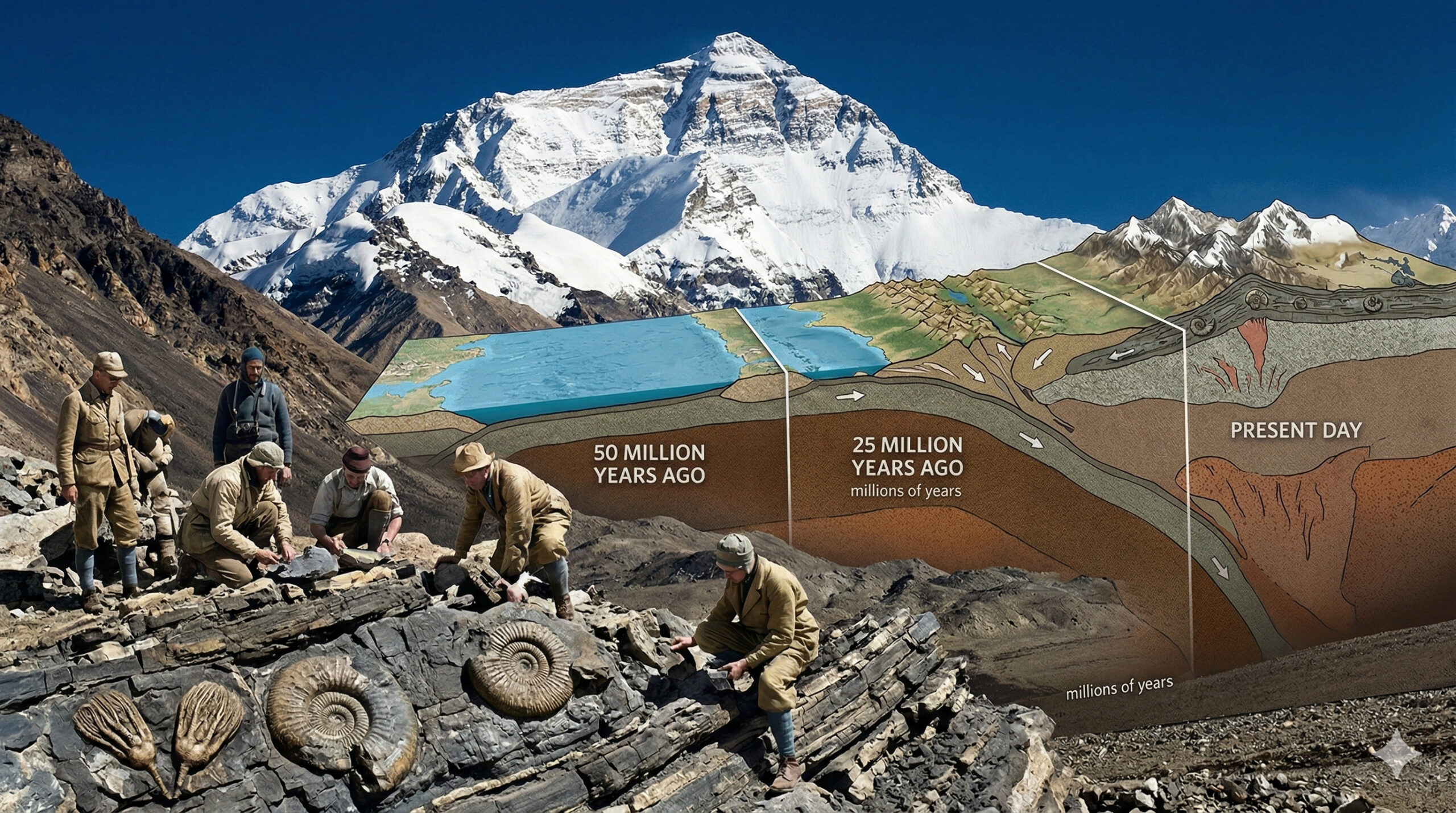
Marine fossils on Everest helped prove plate tectonics and reveal how oceans disappeared and continents moved over millions of years.
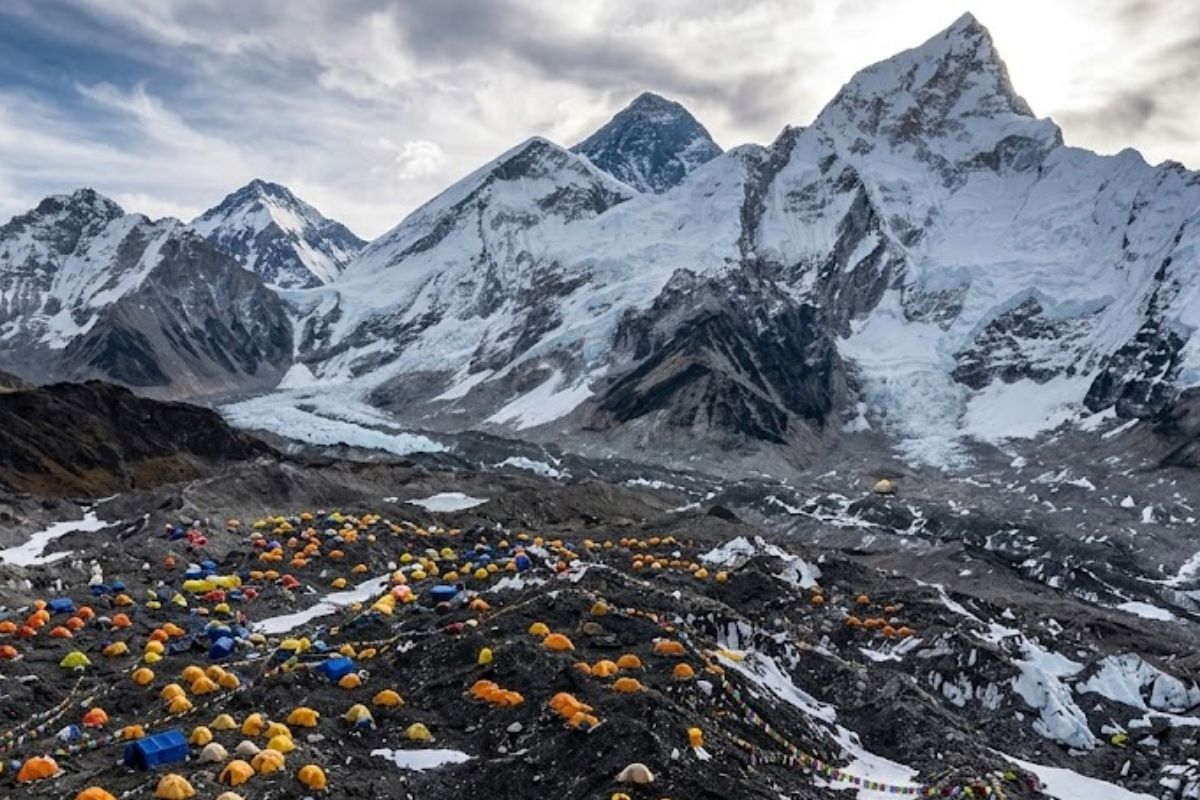
Institutions like NASA revealed one of the most impactful facts of modern geology: the presence of marine fossils on Mount Everest, at about 8,848 meters above sea level. These evidences, composed of sedimentary rocks typical of oceanic environments, demonstrated that the highest point on the planet was once submerged in an ancient ocean known as the Tethys Sea. According to analyses published on the official NASA Earth Observatory portal, the presence of limestone and marine fossils at the top of the mountain is one of the main pieces of evidence that these rocks originally formed at the bottom of an ocean before being uplifted by tectonic processes.
The discovery not only challenged the intuitive perception of mountain formation but also became one of the empirical bases for the consolidation of the theory of plate tectonics. Everest ceased to be just the highest point on Earth to become a direct geological record of the planet’s transformation over hundreds of millions of years.
Limestone rocks and marine fossils on Everest confirm oceanic origin
The rocks found on Everest are predominantly limestone, a type of sedimentary rock formed by the deposition of calcium carbonate in marine environments. This type of formation generally occurs in shallow seas, where organisms like corals, mollusks, and marine microorganisms contribute to the accumulation of sediments over millions of years.
-
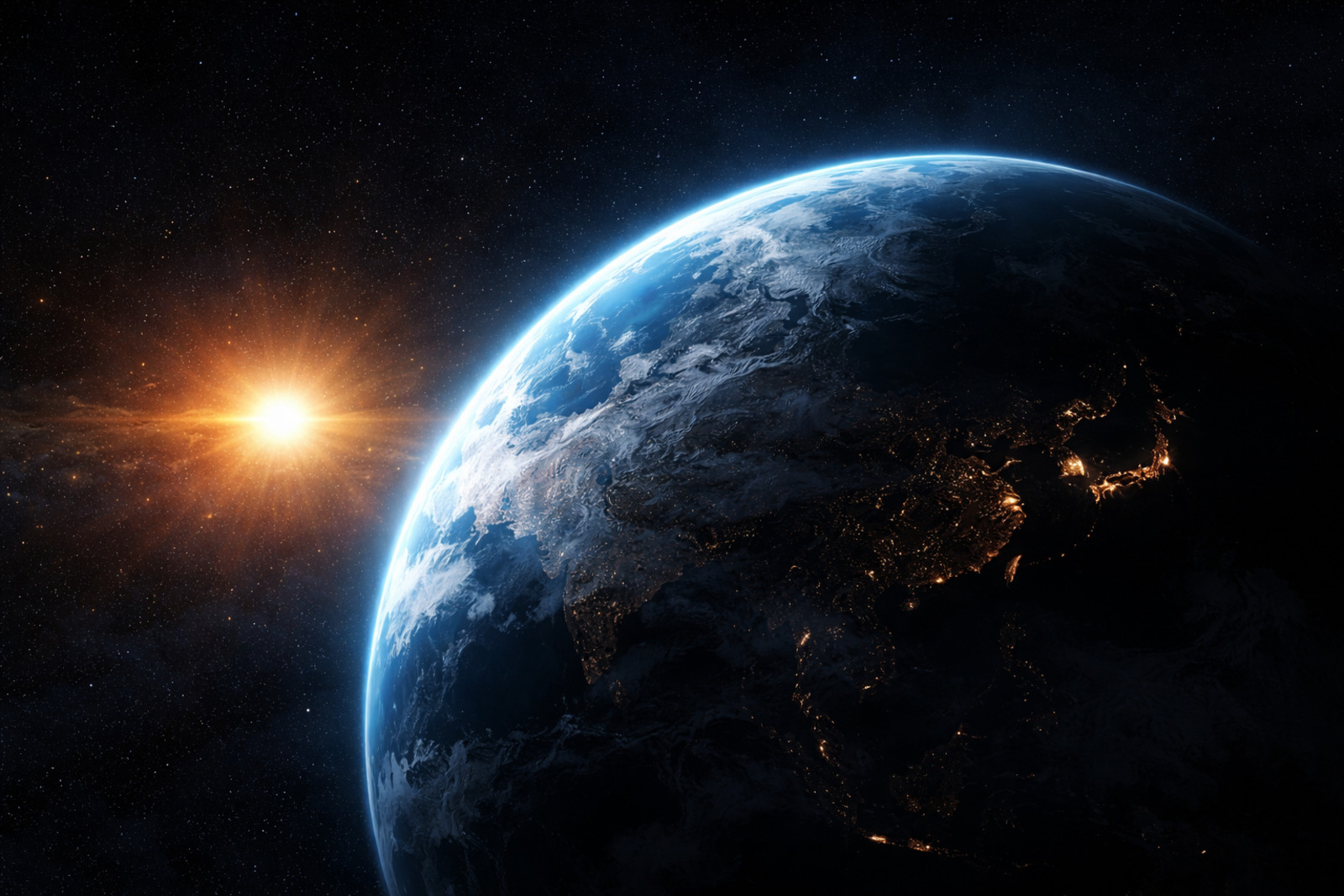
What if the Sun disappeared suddenly? Simulation shows Earth in darkness within minutes, extreme cold, and rapid collapse of life on the planet.
-
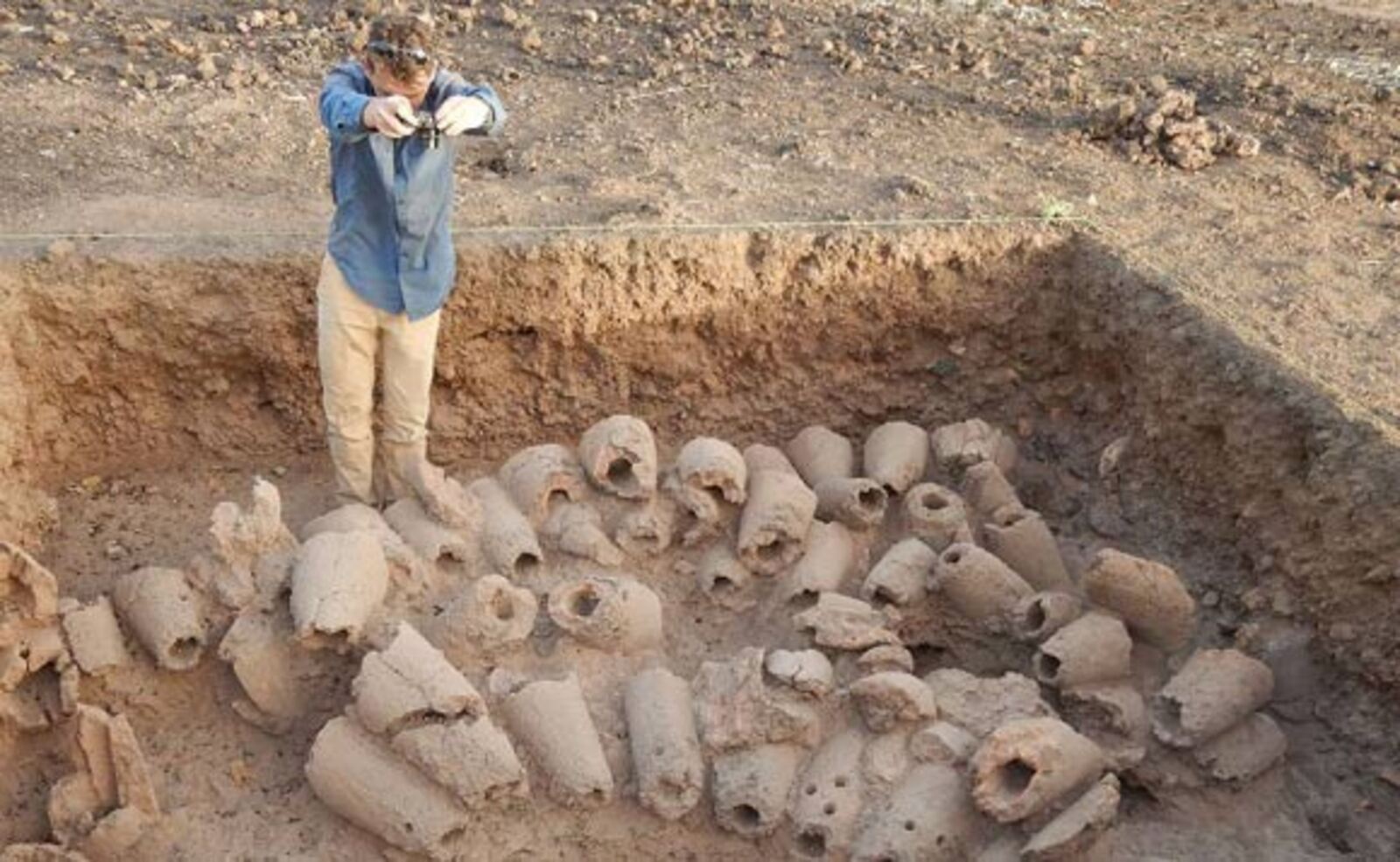
A 2,400-year-old iron foundry has been discovered in Senegal with 100 tons of slag, 35 furnace bases, and signs of nearly eight centuries of continuous metallurgical activity.
-
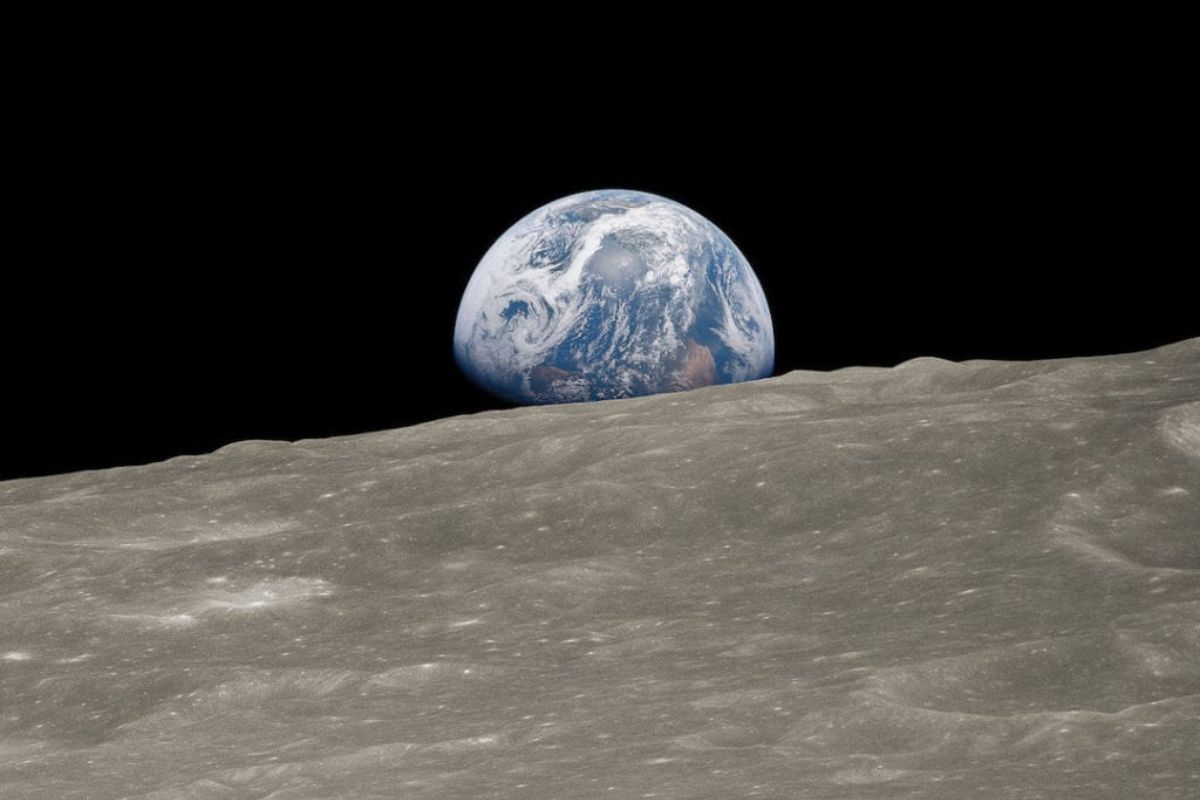
Four humans are flying towards the Moon inside the Orion capsule launched by the SLS rocket, and on April 6, Artemis II will disappear behind the far side of the Moon without communication with Earth for nearly an hour.
-
Worlds covered by water, atmospheres filled with hydrogen, and the possibility of life beyond Earth: ocean planets are rewriting the map of cosmic search and forcing scientists to rethink where to look.

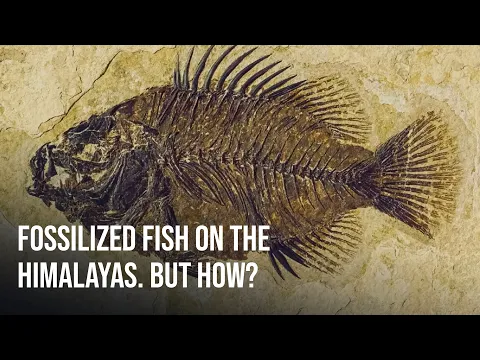

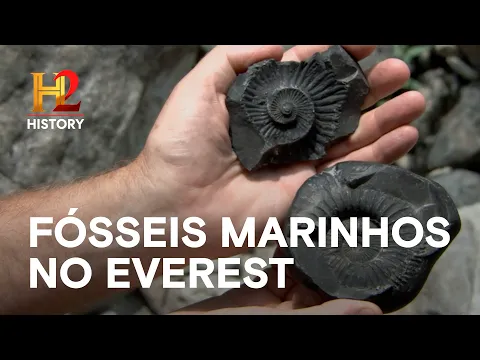
Among the elements identified by geologists are fragments of fossilized marine organisms, deposits of calcium carbonate, and sedimentary structures typical of ocean floors. These materials exhibit chemical and structural characteristics that cannot be reproduced in terrestrial environments.
The presence of these fossils at extreme altitudes eliminates any alternative hypothesis and confirms that these rocks formed in submerged environments, long before the formation of the Himalayas.
Collision between tectonic plates raised the ocean floor to 8,848 meters
The explanation for this phenomenon is directly related to the dynamics of plate tectonics, one of the fundamental processes of terrestrial geology. About 50 million years ago, the Indian tectonic plate began to collide with the Eurasian plate after rapidly moving across the ocean.
This collision was not an instantaneous event but a continuous process that is still occurring today. The impact between the plates caused the compression of the bottom of the ancient Tethys Sea, pushing entire layers of marine sediments upwards.
This movement resulted in the formation of the Himalayan mountain range, including Mount Everest. Rocks that were at the bottom of the ocean were literally raised to nearly 9,000 meters in altitude, one of the most extreme geological processes ever recorded on the planet.
The theory of plate tectonics gained strength with evidence from the Himalayas
Until the mid-20th century, the idea that continents moved still faced strong resistance within the scientific community. The theory of continental drift, proposed by Alfred Wegener, lacked robust evidence to explain the mechanism behind this movement.
The discoveries in the Himalayas played a decisive role in this context. The presence of marine fossils at extreme altitudes provided concrete proof that the Earth’s crust is dynamic and capable of undergoing significant vertical and horizontal displacements.
These evidences helped consolidate the theory of plate tectonics, now considered one of the pillars of modern geology and essential for explaining earthquakes, volcanoes, and mountain formation.
The Tethys Sea disappeared after the collision between continents
Another fundamental aspect revealed by the evidence from Everest is the existence and disappearance of the Tethys Sea, an ancient ocean that separated the continents we now know as Asia and India.
With the advance of the Indian plate northward, this ocean was progressively compressed until it completely disappeared. Its sediments, previously deposited on the seabed, were elevated and incorporated into the mountain ranges.
This process demonstrates that oceans are not permanent structures and can disappear over geological time, being replaced by new continental formations.
Everest still grows a few millimeters per year due to tectonic activity
Despite its formation occurring over millions of years, the geological process responsible for Everest is not yet finished. Studies indicate that the mountain continues to grow a few millimeters per year due to the ongoing pressure between tectonic plates.
This growth occurs because the collision between India and Asia is still ongoing, generating compressive forces that continue to elevate the Earth’s crust in the region.
This means that Everest is not a static structure but a dynamic formation that continues to evolve to this day.
Mountain ranges around the world also reveal oceanic origin
The phenomenon observed in the Himalayas is not an isolated case. Similar evidence has been found in various mountain ranges around the world, including the Alps in Europe, the Andes in South America, and the Rocky Mountains in North America.
In all these cases, marine sedimentary rocks and fossils indicating oceanic origin have been identified. This reinforces the idea that large mountain ranges often form from the uplift of ancient seabeds.
The repetition of this pattern in different regions confirms that tectonic dynamics is a global and continuous process.
Geological discoveries redefined science in the 20th century
Before this evidence, the idea that continents were fixed and immutable prevailed. With the accumulation of geological data, including the fossils found on Everest, this paradigm was abandoned.
Plate tectonics began to offer a unified explanation for various natural phenomena, such as earthquakes, mountain formation, volcanism, and the distribution of continents.
This change marked a scientific revolution that completely transformed the understanding of the planet’s dynamics.
The top of Everest reveals the deep history of the Earth
The presence of marine fossils on Everest represents much more than a geological curiosity. It is direct evidence that the Earth is in constant transformation, with processes operating on timescales far beyond human experience.
What is now nearly 9,000 meters high was once submerged in an ancient ocean, showing that continents move, oceans arise and disappear, and mountains continue to form.
Everest is not only the highest point on the planet but also one of the most impressive records of the Earth’s geological history.





Seja o primeiro a reagir!