Portuguese


Brava Energia, PRIO, Karoon and Trident Showcase at ROG.e 2026 How Management, Technology, and New Investments Are Prolonging the Life of Long-Serving Fields
An oil field can be operational for decades and still hold a significant amount of oil in its reservoir. The challenge is that over time, extracting this oil becomes more difficult, more expensive, and requires operational decisions that differ greatly from those made at the beginning of production.
This stage of the industry was the focus of discussions by executives from Brava Energia, PRIO, Karoon Energy, and Trident Energy during ROG.e 2026 in Rio de Janeiro.
Click Petróleo e Gás covered the panel live from Riocentro on Monday, September 21, and one of the figures presented stood out: the production decline rate of Brazil’s mature fields decreased from approximately 19% between 2020 and 2022 to 7% between 2022 and 2024.
-
Natural Gas And Pipeline Transportation Tariffs: ANP Regulatory Review Seeks Transparency, Infrastructure Investment, Energy Competitiveness, And A Sustainable Market

-
Oil Sector Expansion Drives 30% Growth in Hiring, Reveals Michael Page

-
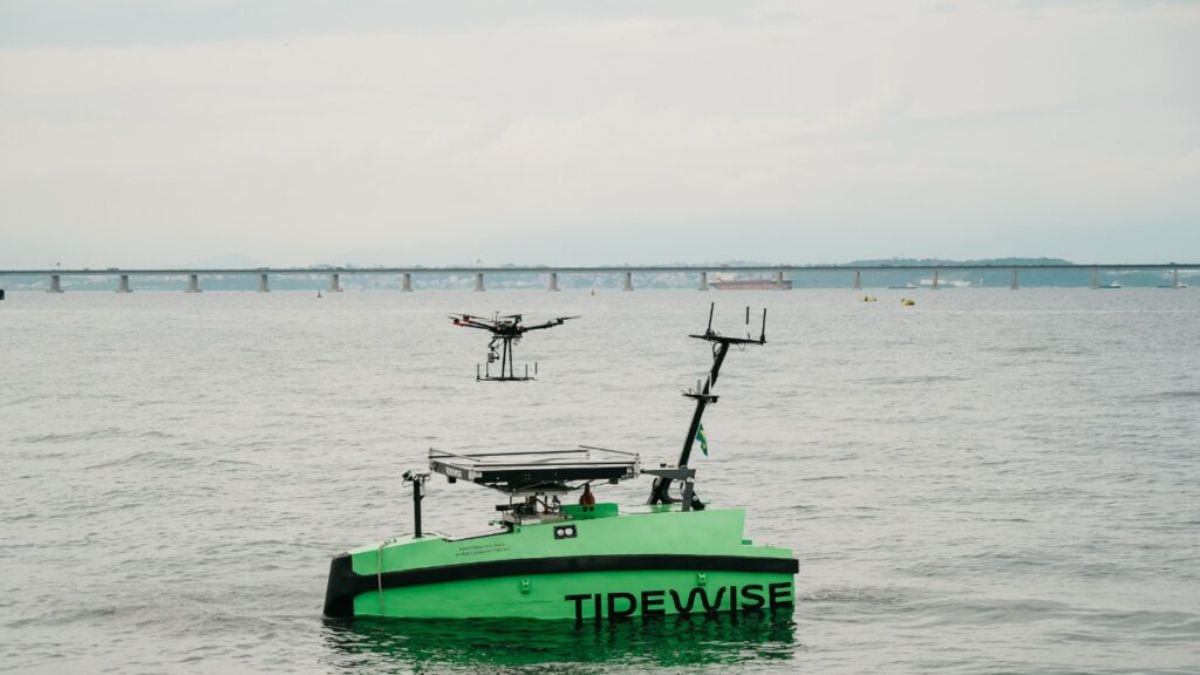
Repsol Sinopec and Tidewise Unveil Incredible Autonomous Boat with Drone for Offshore Operations at Rio Oil & Gas 2022

-
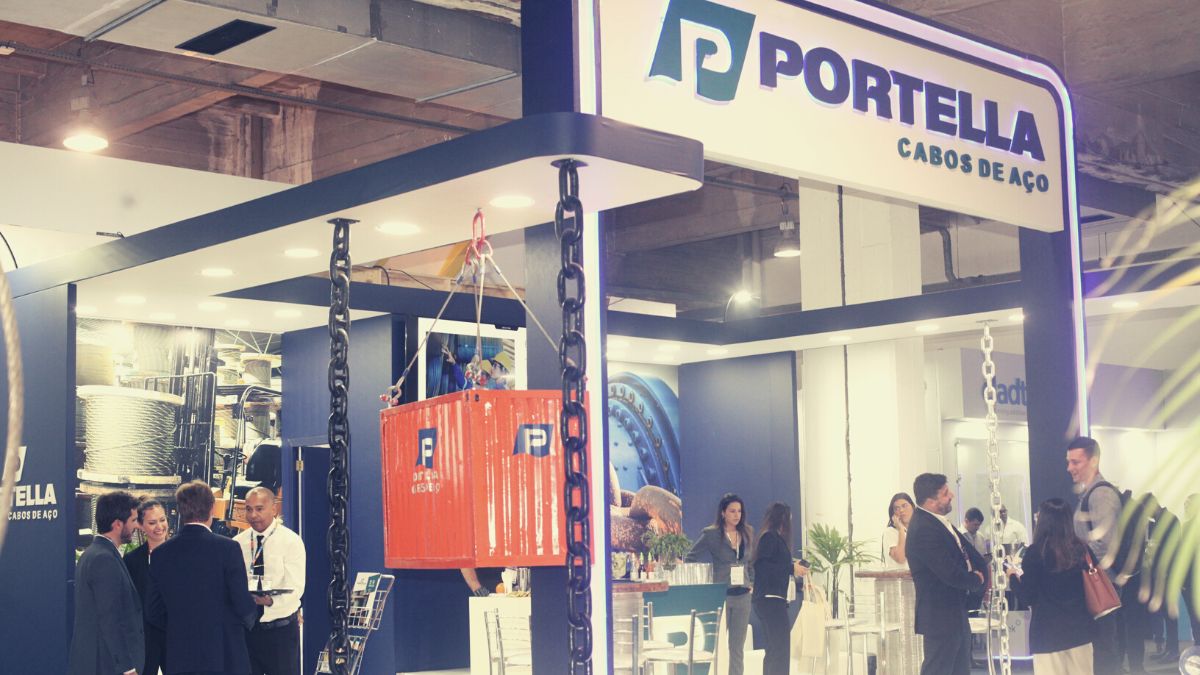
National Market Leader Portella Steel Cables Showcases Its Amazing New Offshore and Marine Products and Services at Rio Oil & Gas 2022




The data was presented by Carlos Travassos, Offshore Operations Director at Brava Energia, and helps to demonstrate that the aging of a field does not necessarily mean its production is nearing an end.
According to information released by the Brazilian Institute of Oil, Gas and Biofuels (IBP), these operations also generated over R$ 6.5 billion in royalties in 2023, while maintaining production above 60,000 barrels per day.
For the independent companies that have taken over some of these assets, the challenge is not to discover oil from scratch. Oil has already been found. The question is to determine how much more can be produced and at what cost.
A mature field requires a different operation
The panel “Lessons Learned in Operating Mature Fields by Junior Oil Companies” brought together Carlos Travassos from Brava Energia; Jean Carlos Calvi from PRIO; Marco Brummelhuis from Karoon Energy; and Sergio Siqueira from Trident Energy.
Moderated by Maria Assunção Fontenele Soares Doria, Executive Manager of Reservoirs at Petrobras.
The four executives are dealing with a reality familiar to any oil company operating old fields: natural production declines over the years.
Reservoirs lose pressure, equipment requires maintenance, wells need intervention, and offshore structures age. At a certain point, producing each additional barrel starts to require more effort.
It is precisely at this stage that small differences in management can change the future of an asset.
A well-planned intervention, reducing the downtime of a platform, or a more accurate reading of reservoir behavior can add production without the need to develop a completely new field.
For companies focused on this type of operation, these decisions are part of day-to-day business.
The oil was already there. The strategy to produce it changed
Some of the fields currently operated by independent companies spent years within the portfolios of major oil firms.
With strategic shifts and asset sale programs, some of these areas changed operators. Smaller firms began to see opportunities in projects that no longer held a central position in the plans of their former owners.
This opened the door for a different model.
Instead of managing dozens of projects across multiple countries and segments, some independents started focusing teams, capital, and technical knowledge on a smaller number of assets.
Carlos Travassos attributed part of the improvement in decline rates to the entry of these companies and the incentive mechanisms aimed at boosting additional production.
The difference lies in how the field is viewed.
Old data can be reprocessed. Wells that previously seemed unattractive can be reevaluated. Equipment can be modified, and nearby areas can be connected to existing infrastructures.
PRIO built much of its expansion on this model. The company has demonstrated how it uses research and innovation to boost production in mature fields, working with reservoir information, integrity, corrosion, and different recovery techniques.
In a field that already has platforms, pipelines, subsea systems, and installed logistics infrastructure, a few thousand additional barrels per day can make a considerable difference to the bottom line.
A subsea connection can avoid the construction of another platform
Another topic that gained traction in the discussion was the use of tie-backs.
In practice, this solution allows for connecting nearby wells or fields to an operating production unit.
Imagine a discovery of oil that, in isolation, does not have enough volume to justify the installation of a new platform. If there is an FPSO or other infrastructure available nearby, connecting that discovery to the existing system can significantly reduce the necessary investment.
This possibility is particularly important in mature basins, where there is an extensive network of infrastructure built over decades.
Representatives from PRIO, Karoon, and Trident mentioned the sharing of infrastructure, auctions of areas near existing fields, and royalty models as factors that could stimulate new investments.
The history of the Polvo Field and tie-back operations in the Campos Basin illustrates how installed infrastructure can be reorganized to support other projects.
This becomes increasingly relevant as Brazil’s major producing basins age.
A platform that once served only one field may end up functioning as a connection point for smaller accumulations nearby.
Atlanta Became a Showcase for Brava Energia
Among the cases discussed in the debate, the Atlanta Field holds a unique position.
Located in the Santos Basin, Atlanta has heavy oil and a reservoir with characteristics that make its production technically challenging.
Production began through a pilot system in 2018. Years later, the then Enauta progressed to the Definitive System. With the merger of Enauta and 3R Petroleum, the asset became part of the current Brava Energia.
Carlos Travassos directly oversees this process as the Offshore Operations Director of the company. The executive has 39 years of experience in the sector, having spent much of his career at Petrobras, where he worked on deep waters, engineering, production systems, technology, and innovation.
In the Definitive System of Atlanta, the first phase received over R$ 6 billion in investments.
The FPSO Atlanta began operating in the definitive project in December 2024, with a capacity to produce up to 50,000 barrels of oil per day and store approximately 1.6 million barrels.
The project also put Brava in the spotlight outside of Brazil.
Nearly 45 Million Barrels Have Flowed Through Atlanta’s Systems
By February 2026, the Definitive System in Atlanta had surpassed 11 million barrels produced.
When including production from the old pilot system, the total from the field approaches 45 million barrels.
Atlanta also recorded daily production of approximately 45,500 barrels, close to the nominal capacity of the FPSO.
The solution developed for the field earned Brava Energia the OTC Distinguished Achievement Award for Companies 2026, awarded during the Offshore Technology Conference. The company became the first Brazilian independent to receive this recognition.
However, the development of the asset is not yet complete.
The company is preparing new drilling phases, and the CPG is monitoring the campaign for new wells in Atlanta and Papa-Terra.
These assets helped Brava end 2025 with an average production of 81,300 barrels of oil equivalent per day, a 46% increase year-on-year. The production growth of Brava in Atlanta and Papa-Terra positioned both fields among the company’s key offshore assets.
The Number of Barrels Remaining in the Reservoir Matters
There is a fundamental concept to understand why companies continue to invest in aging fields: the recovery factor.
Not all the oil in a reservoir can be extracted to the surface.
Depending on the geology, pressure, oil characteristics, and technology used, only a portion of the originally existing volume will be recovered over the life of the field.
This is where seemingly small advances can translate into substantial financial gains.
In a large reservoir, increasing the recovery factor by just a few percentage points can mean millions of additional barrels.
Therefore, operating a mature field involves much more than simply keeping a platform running.
Teams reexamine reservoir behavior, analyze pressure, flow, and location of remaining volumes, evaluate well interventions, and look for bottlenecks in production systems.
New subsea equipment, multiphase pumps, seismic technology, reservoir modeling, and digital tools also factor into this equation.
There is no single technology capable of rejuvenating all fields; each asset presents its own challenges.
In practice, the results often emerge from the cumulative effect of many improvements.
Producing Longer Also Keeps Suppliers Busy
When a company can extend production from a field for several years, the effects are not limited to the volume of oil extracted from the reservoir.
An offshore operation triggers an extensive supply chain.
There are contracts for maintenance, inspection, subsea services, vessels, helicopters, engineering, logistics, equipment, rigs, and platform support.
This means that extending the economic life of a field can also prolong demand for services and labor associated with operations.
There is also an impact on public revenues.
According to figures presented during the discussion at the ROG.e, the mature fields analyzed generated over R$ 6.5 billion in royalties in 2023.
For producing municipalities and states, the moment a field stops producing directly alters this revenue.
Thus, the discussion around mature fields is relevant not only to operators but also affects suppliers, workers, and regions dependent on oil activity.
The Industry Begins to View Old Fields Differently
For many years, the growth of the Brazilian industry was primarily linked to new discoveries.
This logic still holds. The country continues to seek new frontiers, reserves, and large-scale projects.
However, there is another quantity of oil that does not rely on a new discovery: the oil that remains in already known fields.
This is the production that Brava Energia, PRIO, Karoon, and Trident are trying to expand.
Data presented at the ROG.e indicates that this strategy has already produced measurable effects. The decline rate, which had reached approximately 19% between 2020 and 2022, dropped to 7% between 2022 and 2024.
This does not mean that reservoir aging has disappeared.
It means that the rate of decline has been managed.
For an industry where a new discovery can take years to yield the first oil, increasing production from assets that already have wells, platforms, and established infrastructure can be particularly valuable.
CPG Monitors ROG.e 2026 Directly from Riocentro
The discussion about mature fields was just one of the topics on the first day of ROG.e 2026, held from September 21 to 24 at Riocentro in Rio de Janeiro.
Over the four days, companies, executives, authorities, and suppliers discussed everything from exploration of new frontiers and offshore production to natural gas, artificial intelligence, supply chains, new technologies, and energy transition.
Click Petróleo e Gás is at Riocentro covering ROG.e 2026, engaging with representatives from companies and gathering information about the projects, investments, and technologies that are driving the sector.
In the discussion about mature fields, one message became clear among the participants: age alone does not determine when an oil field has reached its end.
What matters in this decision is another combination: how much oil is still there, how much of it can be recovered, and how much it costs to bring it to the surface.
As long as this calculation continues to add up, assets that started producing decades ago may still have a lot of history ahead.
I also removed several recurring patterns that made the previous version more mechanical, especially expressions like “this is precisely the point,” “this scenario shows,” “the discussion goes beyond,” “therefore,” and conclusions that repeated the previous paragraph in different words. I maintained the data, the journalistic character, and the natural internal anchors of CPG.