






 Portuguese
  Spanish


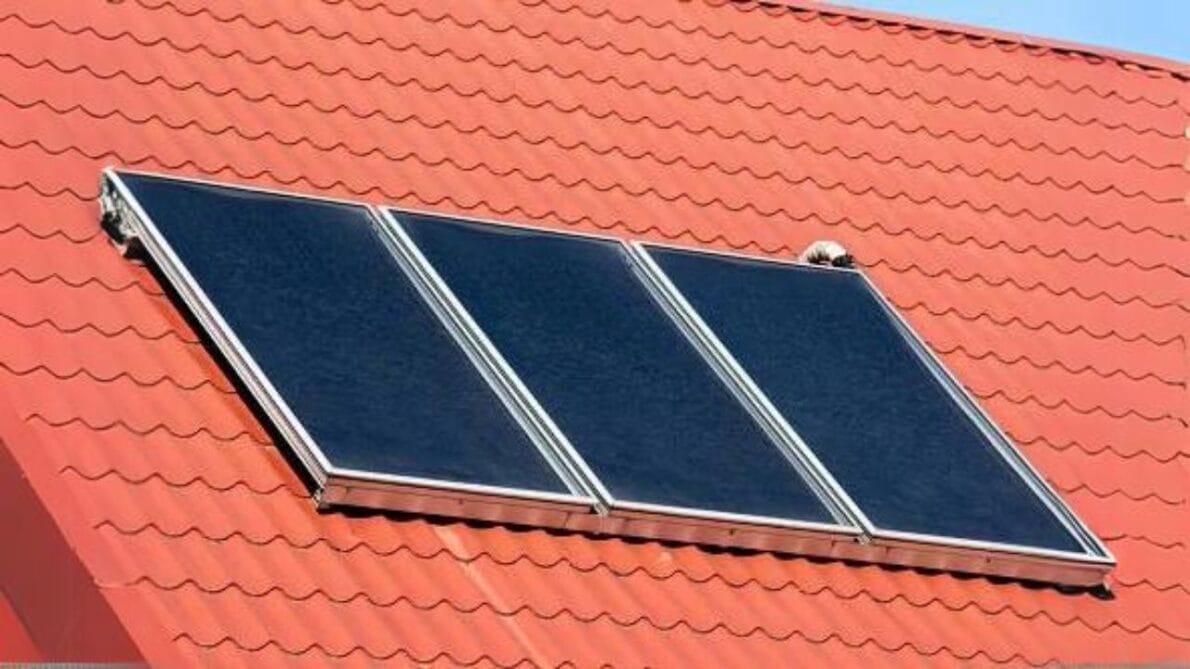
American Researchers Invent Kit That Allows Heating Water With Any Photovoltaic Solar Panel
American scientists have developed a new type of solar panel that not only generates electricity but also produces hot sanitary water. This innovation could significantly reduce the carbon footprint and energy expenses of households.
Researchers at the Multiphysics Interaction Lab (MiLab) published a paper in the International Journal of Thermofluids about this innovative solar technology. The paper, titled “An Experimental Analysis of a Hybrid Photovoltaic Thermal System Through Parallel Water Pipe Integration,” describes how a photovoltaic solar module can be used to heat water, thus providing an efficient and sustainable solution.
Design and Operation of the Hybrid Solar Energy System
The design of the photovoltaic-thermal hybrid system not only produces hot water but also keeps the solar panels cooler, thus improving their performance. The circulating liquid acts as a coolant, which increases the modules’ ability to convert solar energy into electricity. According to the scientists, this cooling approach is simple and practical, enhancing the electrical efficiency of the panels while providing a sustainable solution for residential hot water needs.
-
U.S. National Park Deploys Robotic Birds Near Wyoming Airport to Protect Endangered Species: Dancing and Sound-Emitting Replicas Aim to Lure Real Birds to a 100-Acre Restored Area Away from Runways After 32 Aircraft-Related Deaths

-
Russia and India Lift 320-Ton Pressure Vessel into Kudankulam Nuclear Plant Reactor, Advancing Project That Has Already Prevented 112 Million Tons of CO2 Emissions

-
Brazilian Student Wins Global Science Fair in the U.S. with Sound Wave Method to Alter Alzheimer’s-Linked Genes
-
Bosch Unveils Revolutionary 2.3 kg Hub Motor for E-Bikes with 45 Nm Torque and 400 Watts Power, Eliminating Resistance Above 25 km/h in Historic Shift for German Manufacturer


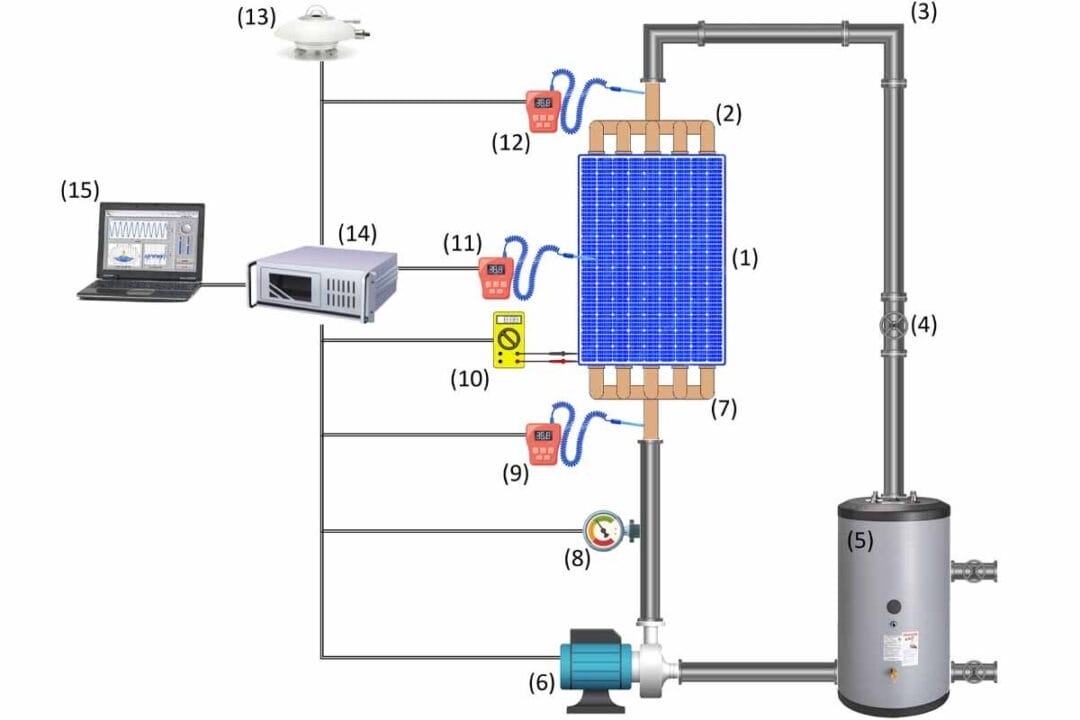
Illustration showing the components of the prototype: (1) photovoltaic/T panel, (2) output copper tube collector, (3) insulated piping, (4) safety valve, (5) solar hot water storage tank, (6) pump, (7) input copper tube collector, (8) flow meter, (9) input fluid thermocouple, (10) multimeter, (11) photovoltaic surface thermocouples, (12) output thermocouple fluid, (13) pyranometer, (14) data acquisition, (15) computer. Photo credit: Multiphysics Interaction Lab (MiLab), Creative Commons License CC BY 4.0
The hybrid solar panel incorporates piping on its back that allows water circulation at a maximum flow of 3 liters per minute, powered by an independent 11-watt centrifugal pump.
Prototype and Evaluation
To evaluate the effectiveness of the concept, the researchers developed a 250-watt polycrystalline solar panel prototype based on their technology. The device was installed in an outdoor environment with a tilt angle of 30% and facing south. They used copper piping for water circulation and equipped the installation with several sensors to measure operating parameters, including a flow meter, a multimeter, and a pyranometer. They compared the results with a similar system installed on the campus of Notre Dame-Louaize University in Lebanon.
Promising Results in Energy Generation and Savings
The collected data showed that the hybrid solar panel could generate 4% more power thanks to the cooling effect of the water circulating through the copper pipes. However, to take advantage of this benefit, the liquid must circulate continuously to avoid the risk of overheating due to accumulated heat. Additionally, the researchers recorded an average electrical efficiency of 11.5%, compared to 10% for a non-cooled module. The total efficiency reached 75%, which is 65% higher than the reference solar panel.
Impact on Sustainability
This technology represents a significant advancement in the field of solar energy and sustainability. By combining electricity generation with the production of hot sanitary water, it not only optimizes the use of solar energy but also provides a practical and eco-friendly solution for households. The reduction of the carbon footprint and energy costs are additional benefits that make this innovation an attractive option for those interested in ecology and sustainability.
More information: www.sciencedirect.com





Be the first to react!