





 Portuguese
  English
  Spanish
  5 min of reading
  5 comments


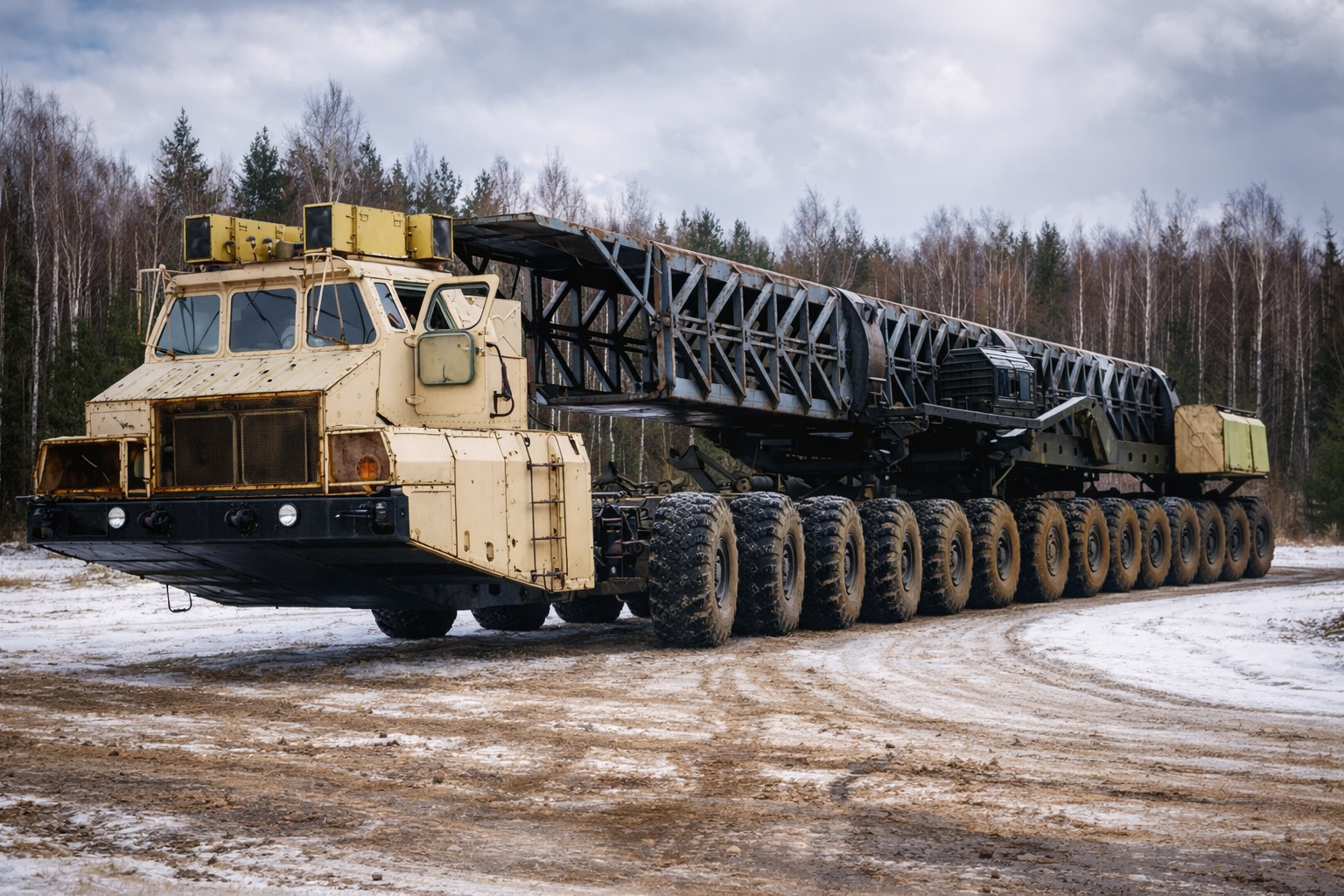


With 24 Wheels, 28 Meters Long, and a 1,250-Horsepower Turbine, the MAZ-7907 Was a Soviet Colossus Designed to Transport Intercontinental Missiles Off-Road.
At the height of the Cold War, when merely locating a nuclear missile became a strategic advantage, the Soviet Union decided to take land mobility to a level never attempted before. The logic was clear: fixed silos became predictable targets, while mobile platforms could disappear into forests, tundras, and regions with no infrastructure. From this reasoning, the MAZ-7907 was born, one of the largest wheeled vehicles ever conceived by human engineering.
With almost 30 meters in length, 24 driven wheels, and a propulsion system directly inspired by war tanks, the MAZ-7907 was not designed for efficiency, comfort, or economy. It existed to fulfill a single mission: to transport massive nuclear payloads off-road, in strategic silence, even if this came at an energy consumption comparable to that of a small power plant.
Why the Soviet Union Needed a Vehicle Like the MAZ-7907
During the 1970s and 1980s, global nuclear balance began to depend less on the quantity of warheads and more on the ability to hide them. The Soviet Union sought ways to move intercontinental ballistic missiles across vast territories without relying on railways or highways, drastically reducing the chance of detection by enemy satellites.
-
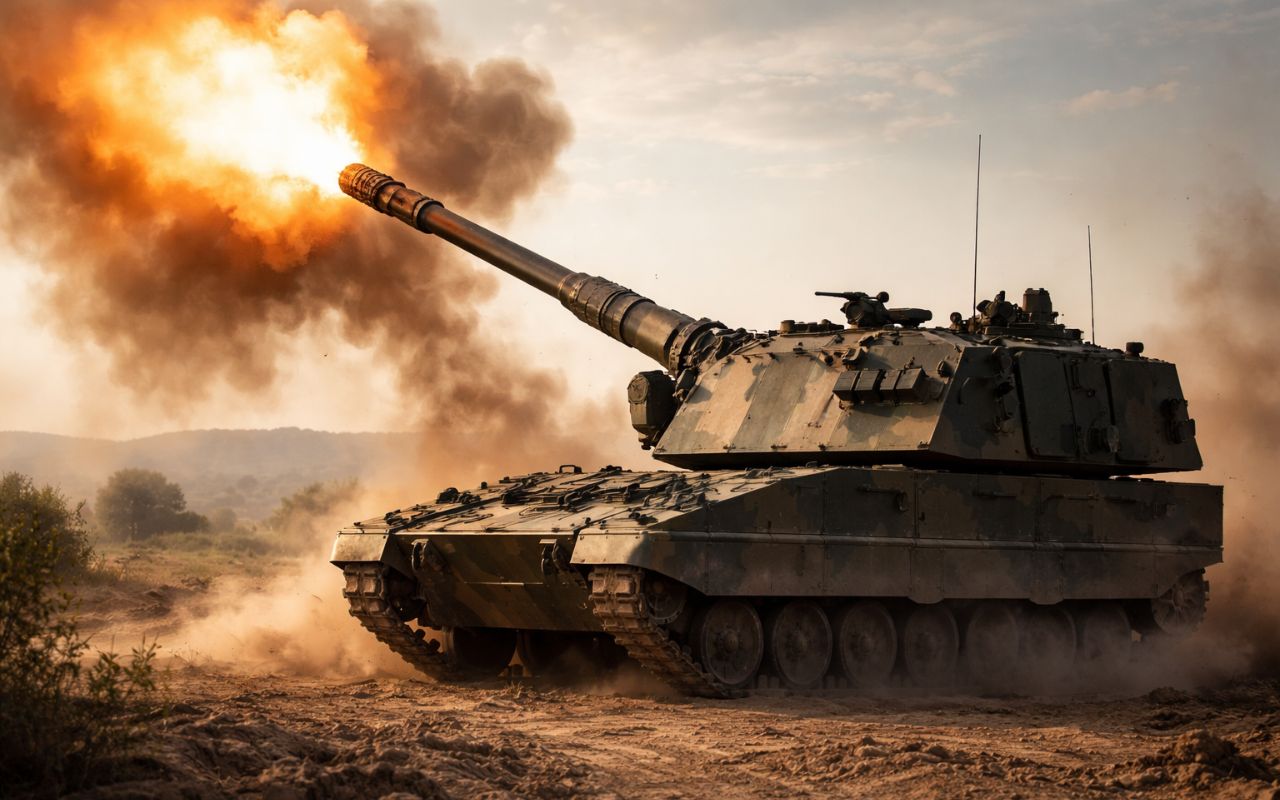
The German “steel monster” weighing 55 tons fires up to 10 projectiles per minute at over 40 km and avoids counterattacks on the battlefield by moving quickly to escape enemy attacks; meet the Panzerhaubitze 2000.
-
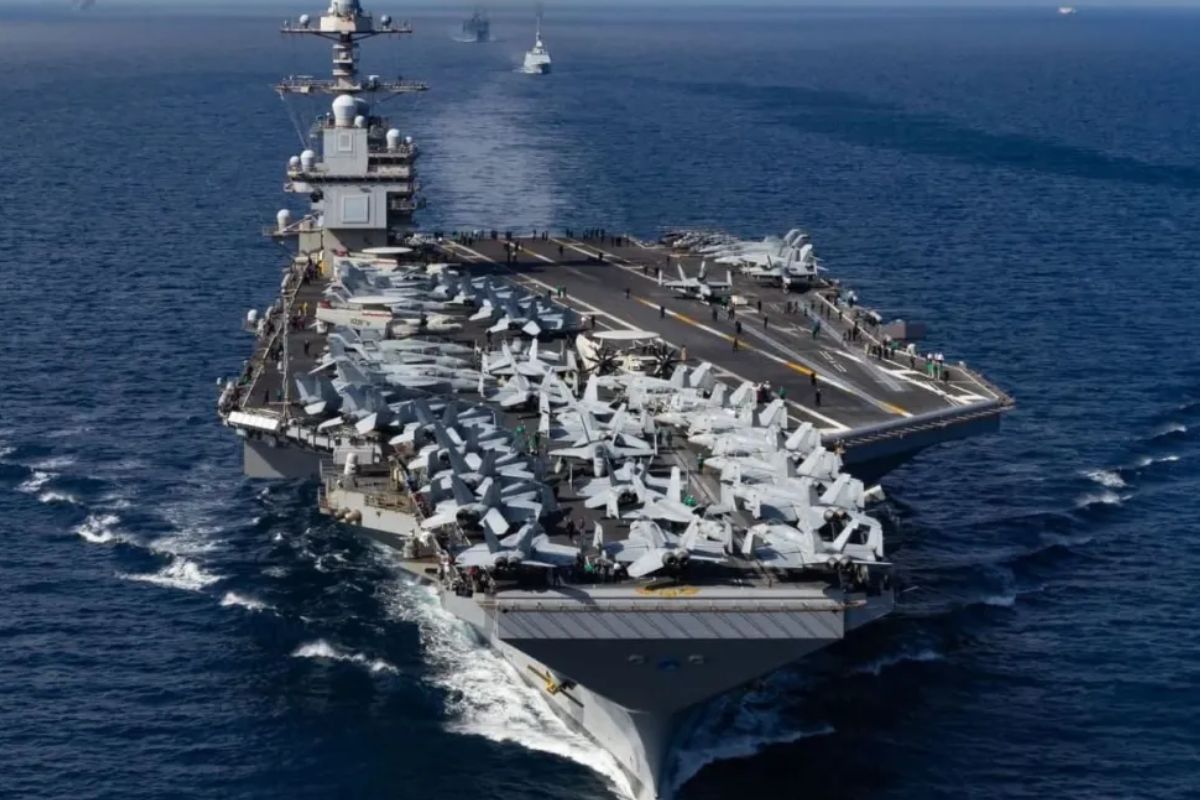
USS Gerald R. Ford, the largest aircraft carrier in the world, returns to sea after a fire in the laundry in the Red Sea; repaired in Crete, it resumes missions of Operation Epic Fury against Iran.
-
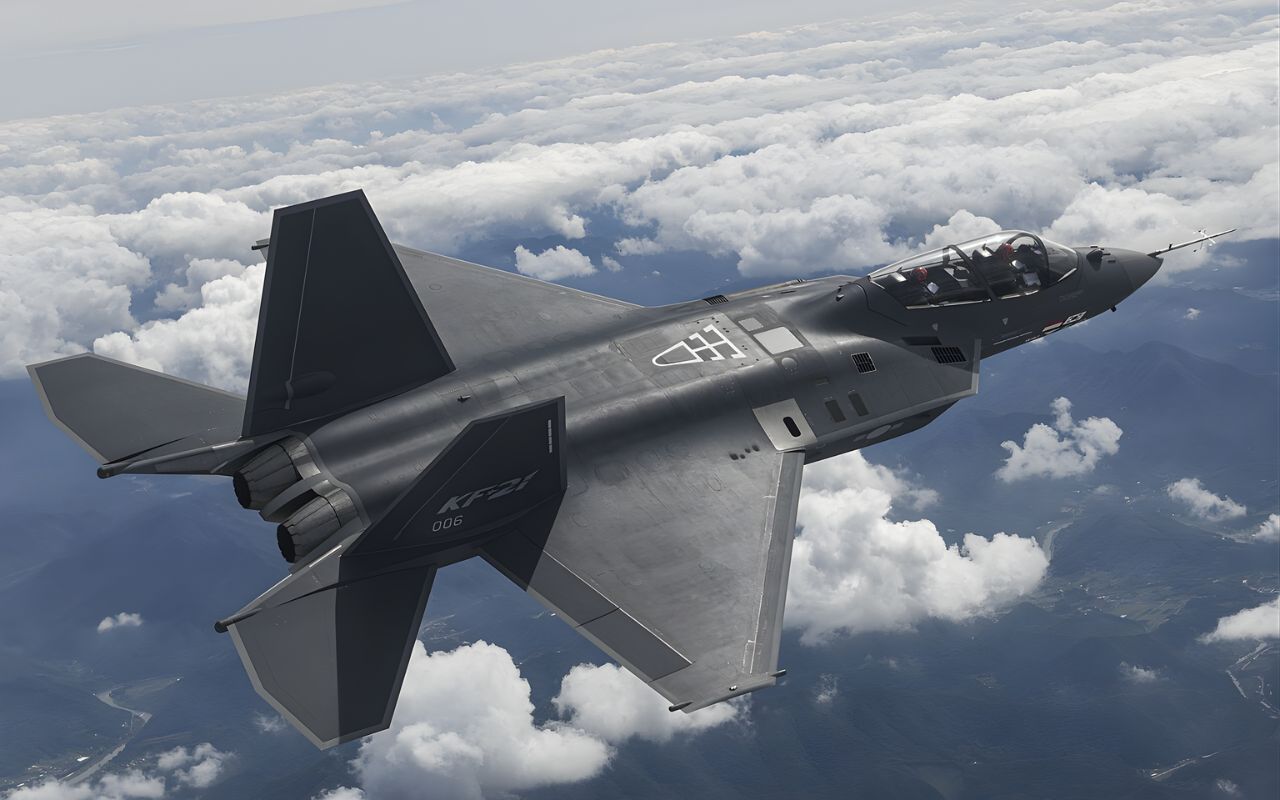
Military power: South Korea’s new KF-21 fighter jet will be a key component in replacing the aging aircraft of the air force, placing the country on the map of air military powers.
-
With 310 meters, 80 thousand tons, and capable of operating for 45 years, the new nuclear aircraft carrier France Libre will be the largest in France and will enter service in 2038.


This requirement eliminated any conventional solution. The vehicle needed to transport loads exceeding 100 tons, maintain extreme stability, navigate mud, deep snow, and uneven soils, and operate far from logistical centers. The MAZ-7907 emerged as a direct response to this challenge, elevating land transport engineering to a level that few countries even attempted to reach.
Dimensions and Structure: When Size Becomes an Engineering Problem
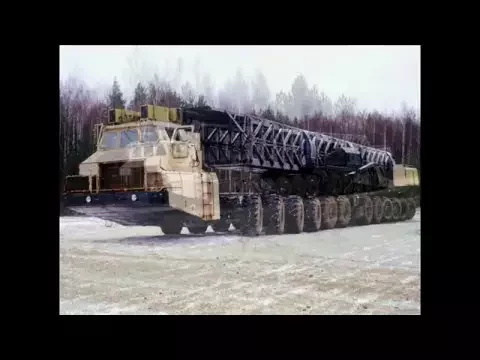
With approximately 28.1 meters in length, more than four meters in width, and a height exceeding 4.4 meters, the MAZ-7907 easily surpassed any heavy truck of its time. Its designed load capacity reached 150 tons, sufficient to transport large intercontinental missiles with relative structural safety.
This size was not only visually impressive. It required unprecedented solutions for suspension, steering, and weight distribution, as concentrating mass of this magnitude on few axles would render the vehicle unviable off paved roads. The answer was to multiply the contact points with the ground, creating a 24×24 configuration where all wheels were driven.
Electric Transmission and 24 Motors: When Gears Were Not Enough
Unlike conventional trucks, the MAZ-7907 did not use a traditional mechanical transmission. Soviet engineering opted for an electric transmission system, where a central power source fed individual electric motors in each wheel.
In practice, this meant that each of the 24 wheels had its own electric motor, receiving torque independently. This solution allowed for better traction on uneven terrain, reduced the risk of catastrophic failure in axles, and offered more precise control of movement on unstable ground.

The price of this sophistication was high. The conversion of mechanical energy to electric and back again generated significant losses, drastically increasing the vehicle’s energy consumption.
The 1,250-Horsepower Gas Turbine: Tank Power, Plant Appetite
At the core of the system was a GTD-1250 gas turbine, derived directly from the engine used in the Soviet T-80 tank. This turbine delivered around 1,250 horsepower and was chosen not for efficiency, but for its ability to provide continuous power in any weather condition.
Unlike conventional diesel engines, gas turbines have high consumption even at idle, reduced efficiency outside of the ideal range, and intense residual heat generation. In the MAZ-7907, this meant that the vehicle consumed large volumes of fuel even when moving slowly or remaining in static operation.
In practice, keeping the colossus running was akin to sustaining a small mobile power plant on wheels.
Energy Consumption and Operational Viability
Although detailed official consumption numbers were never widely disclosed, engineers and historians agree that the MAZ-7907 had an energy expenditure several times higher than that of conventional heavy trucks. Each movement required complex logistical planning, frequent refueling, and highly specialized teams.
This factor weighed decisively against its large-scale adoption. In a real military scenario, the greater the consumption, the greater the operational vulnerability, as the vehicle became dependent on long supply chains to remain active.
Suspension, Steering, and the Challenge of Simply Turning
Moving the MAZ-7907 straight was already an accomplishment. Making turns was a completely different challenge. To overcome this, the vehicle adopted independent hydropneumatic suspension and multiple directional axles, allowing for some degree of maneuverability despite its enormous size.
Even with these solutions, the turning radius remained gigantic, requiring open areas and prior planning for any significant change in direction. The MAZ-7907 was not made for urban environments or quick responses, but for carefully calculated strategic movements.
Why the MAZ-7907 Never Entered Full Production
Despite being technically functional, the MAZ-7907 was ultimately abandoned. The high operating cost, extreme energy consumption, and mechanical complexity made the project unattractive compared to simpler, more efficient alternatives.

Moreover, changes in international nuclear arms control treaties and the development of smaller, more discreet transporters reduced the need for a colossus of this magnitude. Vehicles of the same family, but more compact, proved to be better suited for operational reality.
The Legacy of Technological Excess
Today, the MAZ-7907 is remembered as the ultimate symbol of technological excess during the Cold War. It proved that it was possible to move 150 tons off-road, power 24 motors simultaneously, and operate with power levels worthy of military vehicles.
At the same time, it demonstrated that engineering, when pushed to the limit without restrictions, exacts its price in the form of consumption, complexity, and cost. The MAZ-7907 did not fail because it did not work, but because it worked at too high a cost for a world beginning to seek more efficient and stealthy solutions.
With 24 driven wheels, almost 30 meters long, and a 1,250-horsepower turbine feeding a complex electric system, the MAZ-7907 remains one of the most impressive ground vehicles ever built. It represents an era when engineering was not afraid to exaggerate, even if that meant creating a monster capable of consuming energy like an entire power plant on wheels.
More than a military experiment, the MAZ-7907 is a reminder of how far humanity has gone to transform strategic power into steel, wheels, and fuel.









Amigos, o site é bem legal e as matérias bem informativas, mas está impossível de ler com esse monte de anúncios cobrindo toda a tela. Eu sei que anúncios são importantes mas podia rever essa diagramação aí, tá bem ruim, prejudica demais a leitura.
Mais um l i X o soviético que nunca serviu pra nada. Somente propaganda enganosa.
Ja ouviu falar em “projeção de poder”?
Os líderes mundiais deveriam investir muito mais em acabar a miséria no mundo a criar armas de destruição em massa. É o poder pelo poder. Hoje a situação é ainda pior com dois fanáticos gananciosos querendo mais e mais poder e territórios.
Só dois? Se fossem só dois ia ser tranquilo… São vários grandes, e também tem uns anões tipo Milei, Zelenski, Corina não sei das quantas, doidinhos pra entrar no picadeiro.