





 Portuguese
  English
  Spanish
  7 min of reading
  0 comments


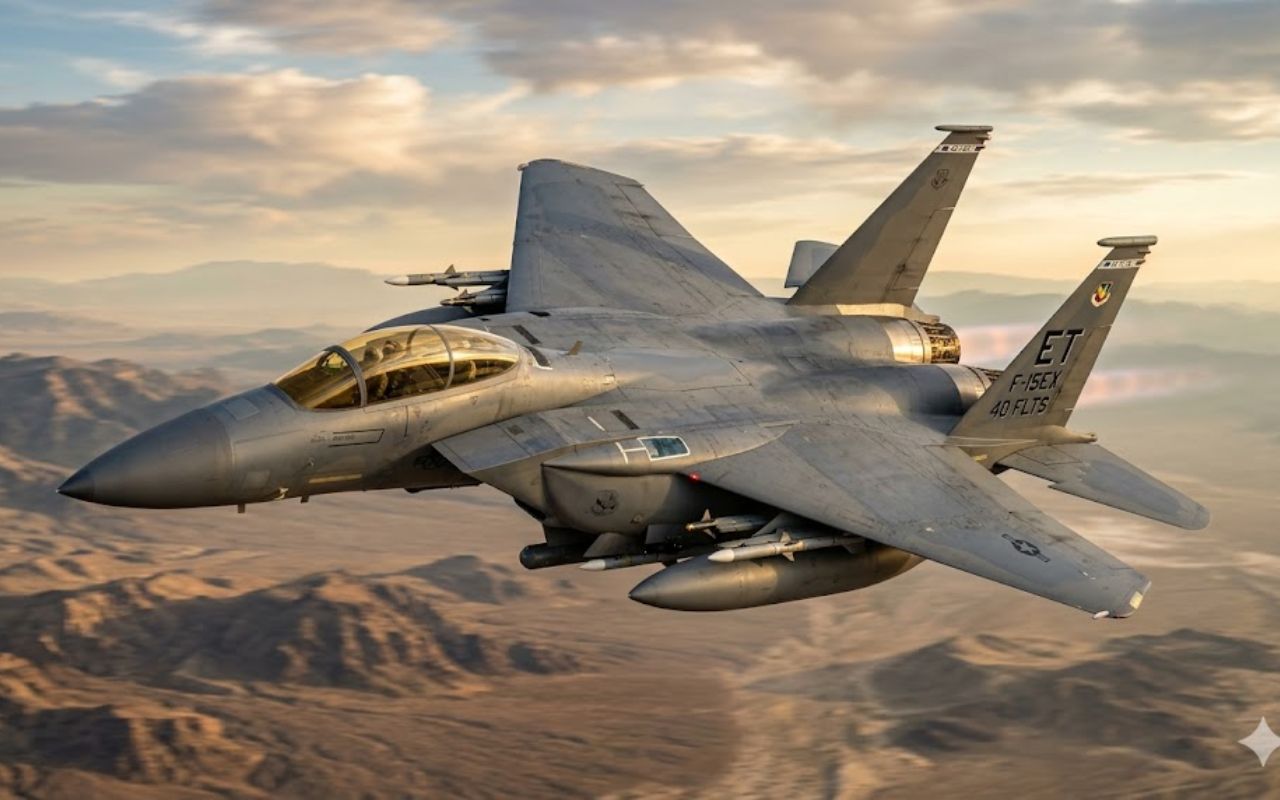
Boeing F-15EX Eagle II gains highlight with capacity for up to 22 missiles, high speed, and strategic role in the US Air Force. Learn more.
The Boeing F-15EX Eagle II, a multifunctional fighter of the United States Air Force (USAF), began to be incorporated into the fleet starting in 2021, with the aim of replacing older aircraft, expanding operational capacity, and ensuring air superiority in strategic scenarios. Developed by Boeing, the model emerges as a direct evolution of the F-15E Strike Eagle, bringing significant improvements in armaments, sensors, and structural durability.
The acquisition decision was made after discussions that began in 2018, when the USAF sought alternatives to maintain the fleet size in light of the aging F-15C/D, the end of F-22 production, and delays in the F-35 program. Thus, the Boeing F-15EX Eagle II began to be seen as a quick and efficient solution.
Additionally, the fighter was designed to operate in various missions, such as air defense, base protection, and enforcement of no-fly zones, especially in scenarios with limited air defenses.
-
Step into Pelé’s incredible mansion in New York: with 3,384 square feet, where celebrities like Madonna and Steven Spielberg have lived, the property was owned by the King for 40 years and was sold for millions more.

-
A little-known yellow fruit in Brazil has up to 4 times more vitamin C than orange, is beneficial for health, contains antioxidants, and also helps to recover degraded areas; meet the Uvaia (Eugenia pyriformis).

-
Sea Giants: The new floating wind turbine technology installed in deep waters that provides renewable energy directly to oil platforms.

-
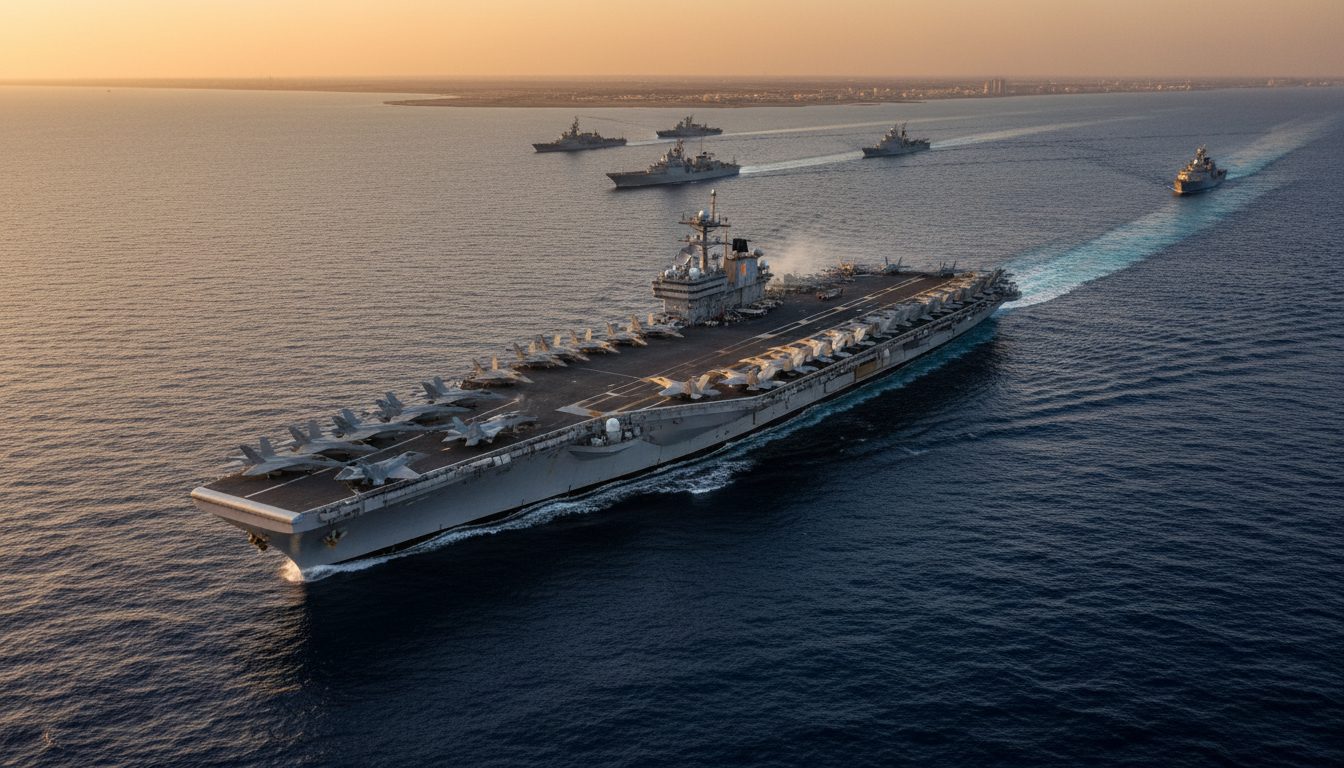
After a devastating fire that left 3 injured and 200 intoxicated by smoke in the Red Sea, the most expensive warship ever built — $13.3 billion — returns to the front in Iran after quick repairs in Croatia.
Learn all about the Boeing F-15EX Eagle II
The choice of the Boeing F-15EX Eagle II involved strategic and industrial factors. One of the main reasons was the continuity of the production line for two-seat versions of the F-15, which facilitated logistical and operational adaptation.
Another relevant point is that the aircraft can be operated by a single pilot or by a crew of two, consisting of a pilot and a weapons systems officer (WSO). This expands the capability to execute complex missions, especially those involving multiple targets or integration with advanced systems.
Furthermore, the platform allows for future control of unmanned aircraft in collaborative combat, representing an important advancement in modern warfare.

Advanced capabilities and impressive firepower
One of the great highlights of the Boeing F-15EX Eagle II is its armament capacity. With the AMBER system, the aircraft can carry up to 22 air-to-air missiles, which is uncommon even among modern fighters.
Among the main armaments are:
- AIM-9 Sidewinder missiles
- AIM-120 AMRAAM missiles
- Future AIM-260 JATM missile
- 20 mm M61 Vulcan cannon
Additionally, the fighter has 23 hardpoints, allowing for a wide variety of combat configurations. This ensures flexibility for both defensive and offensive missions.
The Boeing F-15EX Eagle II also stands out for its advanced electronic systems. The AN/APG-82(V)1 AESA radar offers high precision in detecting and tracking targets, even in complex environments.
Another important feature is the infrared search and track system, which allows for identifying threats without emitting detectable signals. This increases the aircraft’s survivability in combat.
Moreover, the EPAWSS electronic warfare system protects against enemy radars and guided missiles, combining alert, jamming, and countermeasures.
Performance of the Boeing F-15EX Eagle II
The performance of the Boeing F-15EX Eagle II is another point that draws attention. The aircraft is equipped with two GE-F110-129 turbofan engines, capable of generating significant thrust.
Check out the main specifications:
| Characteristic | Specification |
| Maximum speed | Mach 2.5 (about 2,656 km/h) |
| Combat range | 1,272 km |
| Maximum range | up to 4,815 km |
| Service ceiling | 18,000 meters |
| Maximum takeoff weight | 36,741 kg |
Additionally, the fighter has a climb rate of over 50,000 feet per minute, ensuring a rapid response in emergency situations.
Investments and fleet expansion
The Boeing F-15EX Eagle II program has received billion-dollar investments since its inception. In July 2020, the US Department of Defense ordered eight units for $1.2 billion.
Shortly after, new funding was approved, raising the initial total to 20 aircraft. In 2022, the USAF advanced further, planning to acquire up to 144 units, although this number was later revised to around 80.
In the 2024 budget, the purchase of an additional 24 fighters was proposed, which could bring the total fleet to over 100 units.
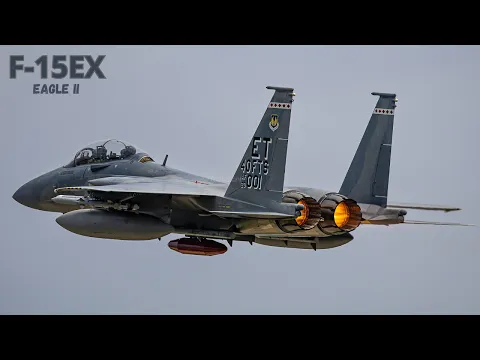

The Boeing F-15EX Eagle II has already begun to replace older aircraft in National Guard units. States such as Florida, Oregon, California, and Louisiana were the first to receive the model.
Initial tests took place at Eglin Air Force Base, where the aircraft underwent operational evaluations. The first flight occurred in February 2021, while the official delivery took place the following month.
Despite its high capabilities, experts point out that the fighter was not designed to face highly advanced air defense systems until the end of the decade. Nevertheless, its role is essential in specific scenarios.
International variants expand global reach
The success of the Boeing F-15EX Eagle II has also opened the door for international versions. One example is the F-15IA, developed for Israel, which includes specific adaptations for the country’s needs.
Another highlight is the F-15ID, a proposed version for Indonesia. In 2022, the United States approved the sale of up to 36 units, in a deal estimated at nearly $14 billion.
These variants demonstrate the global relevance of the platform, which continues to evolve even decades after the first F-15.
One of the differentiators of the Boeing F-15EX Eagle II is its redesigned structure, with an estimated lifespan of up to 20,000 flight hours. This represents a significant gain over previous versions.
Additionally, the aircraft features modern avionics, a digital cockpit, and integrated systems that facilitate operation and reduce the pilot’s workload.
Therefore, even though it is based on a classic design, the model incorporates state-of-the-art technologies, ensuring relevance in the current military landscape.
Strategic role of the Boeing F-15EX Eagle II
The Boeing F-15EX Eagle II was not created to completely replace fifth-generation fighters but rather to complement the fleet. It acts as a robust platform, capable of carrying a large amount of armaments and operating in support missions.
While stealthier fighters focus on penetrating highly defended areas, the F-15EX stands out for its versatility, range, and firepower.
Thus, the aircraft reinforces the USAF’s strategy of maintaining a balanced air force, combining different capabilities to face varied challenges.
| Characteristic | Specification |
| Crew | 2 (pilot + weapons systems officer) |
| Length | 19.44 meters |
| Wingspan | 13.04 meters |
| Height | 5.64 meters |
| Wing area | 56.5 m² |
| Empty weight | 14,379 kg |
| Maximum takeoff weight | 36,741 kg |
| Engines | 2 × GE-F110-129 turbofan with afterburner |
| Thrust (per engine) | 76.3 kN (dry) / 131.2 kN (with afterburner) |
| Structural lifespan | Up to 20,000 flight hours |
| Aerofoil (wing) | NACA 64A006.6 (root) / NACA 64A203 (tip) |
Detailed general characteristics of the Boeing F-15EX Eagle II
The Boeing F-15EX Eagle II has a crew configuration for two military personnel, consisting of one pilot and one weapons systems officer, which enhances its operational capacity in complex missions. In terms of dimensions, the aircraft measures 19.446 meters in length, 13.045 meters in wingspan, and 5.64 meters in height, with a total wing area of 56.5 m².
Additionally, the aerodynamic design utilizes NACA 64A006.6 airfoil at the wing root and NACA 64A203 at the tip, ensuring efficiency at high speeds. The empty weight is approximately 14,379 kg, while the maximum takeoff weight reaches 36,741 kg, demonstrating its structural robustness.
The propulsion system consists of two GE-F110-129 turbofan engines with afterburner. Each engine delivers 76.3 kN of thrust in normal operation and up to 131.2 kN with the afterburner activated, providing excellent combat performance.
Performance and operational capacity
In terms of performance, the Boeing F-15EX Eagle II achieves a maximum speed exceeding Mach 2.5, equivalent to about 2,656 km/h at high altitudes. This factor places it among the fastest fighters currently in operation.
The combat range is approximately 1,272 km, while the maximum range can reach 4,815 km with the use of conformal and external fuel tanks. This allows for long-distance missions without the immediate need for refueling.

The fighter also features a service ceiling of 18,000 meters, structural limits of up to +9G, and a climb rate exceeding 50,000 feet per minute. The thrust-to-weight ratio of 0.93 contributes to its excellent maneuverability and rapid response.
Armament and offensive power
The firepower of the Boeing F-15EX Eagle II is one of its greatest differentiators. The aircraft is equipped with a 20 mm M61 Vulcan Gatling gun, capable of 500 rounds, ideal for close-range combat.
Additionally, it has 23 hardpoints distributed between the wings and fuselage, including pylons and structures on the conformal fuel tanks (CFTs). This configuration allows for carrying up to 13,380 kg of armaments and external fuel.
Among the main compatible air-to-air missiles are the AIM-9 Sidewinder and the AIM-120 AMRAAM, in addition to the future AIM-260 JATM, which will still be integrated into the platform. This combination ensures a high engagement capability in different scenarios.
Avionics and advanced electronic systems
The Boeing F-15EX Eagle II incorporates state-of-the-art avionics systems. The Raytheon AN/APG-82(V)1 AESA radar offers precise detection and simultaneous tracking of multiple targets, increasing combat efficiency.
For attack missions, the aircraft can utilize designation pods such as LANTIRN or Sniper, which assist in identifying and engaging ground targets with high precision.
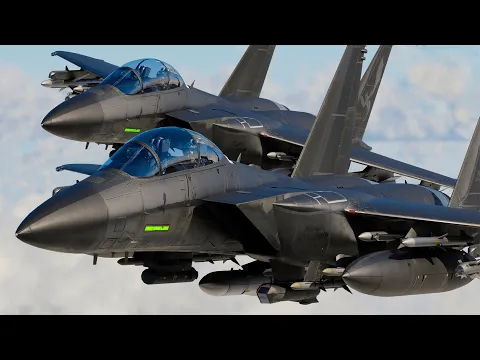
Another important feature is the infrared search and track system, using the Lockheed Martin Legion Pod, which allows for detecting enemy aircraft without emitting radar signals.
Finally, the BAE Systems AN/ALQ-250 EPAWSS electronic countermeasure system provides advanced protection against threats, combining alert, jamming, and neutralization of enemy systems, enhancing the aircraft’s survivability in hostile environments.







Seja o primeiro a reagir!