





 Portuguese
  English
  Spanish
  4 min of reading
  0 comments


Free training bets on digital tools to transform pedagogical practices with autonomy, certification, and direct application in the classroom, integrating interactive resources, audiovisual production, and evaluation strategies aligned with school routine and new educational demands.
The Ministry of Education maintains the course Digital Technologies: tools for creativity and learning on the AVAMEC platform, a free and self-instructional training of 180 hours aimed at incorporating digital resources into the school routine.
The offering allows direct enrollment in the virtual environment, with certification for those who complete the course within the established timeframe and achieve the minimum required performance in the evaluative activities.
The training has been structured to primarily serve basic education teachers, undergraduate students, and other education professionals interested in updating pedagogical practices with the support of digital tools.
-
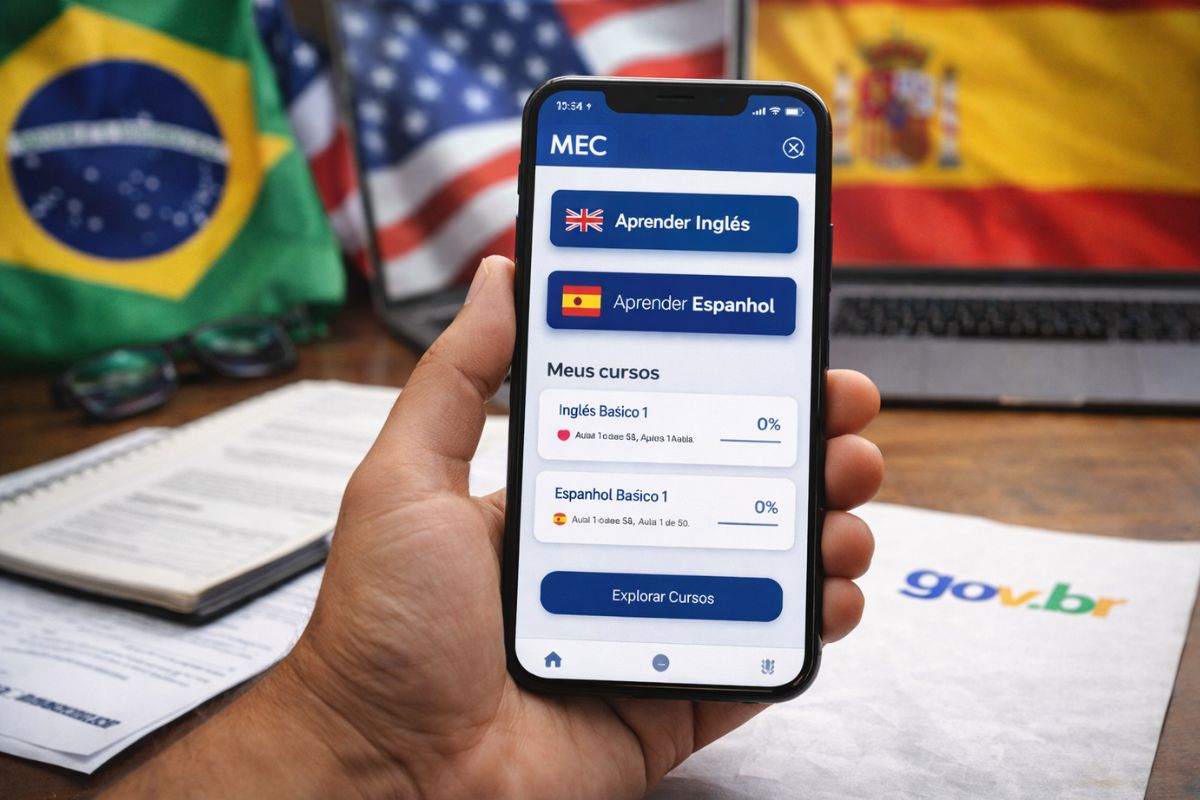
MEC launches free app with 800 English and Spanish lessons for any Brazilian: just have an account on gov.br and start from beginner to advanced.
-
USP opens 10,000 spots in a free online food education course: 110-hour training runs until August, targets public network employees in SP, and accepts registrations only until April 15.

-
Few people know, but SENAC has over 370 open slots for a free online technical course in Logistics, with national certification from SENAC RS and professional training in 13 months.
-
Take a free course in Psychopedagogy: there are 150 open spots in the free EAD specialization from UAB and UNEMAT.
Instead of synchronous classes or continuous tutorial support, the course operates in an autonomous study mode, giving participants the freedom to organize their own learning routine.
Pedagogical use of digital technologies in education
The proposal of the training is to bring the teaching work closer to platforms and languages already present in the repertoire of many students, without shifting the pedagogical focus to the technology itself.
The goal is to support the creation of teaching materials, learning scripts, and evaluation strategies with more interactivity, expanding the possibilities of mediation in the classroom and in remote or hybrid activities.
In this design, the content includes tools used for presentation, curation, audiovisual production, and gamification, in a pathway designed for direct application in school planning.
The logic of the course favors resources that can be adapted for different stages of basic education, which helps explain the recurring interest of education networks and teachers seeking continued training in this area.
Tools covered in the MEC course
Among the resources worked on throughout the training are Genially, aimed at building more interactive teaching materials, and Google Sites, used to organize portfolios, thematic pages, and spaces for presenting school projects.
The pathway also includes tools related to the production of podcasts, short videos, broadcasts, and content curation, with applications aimed at the pedagogical routine.
The structure disclosed in recent pages about the offering also mentions the use of Wordwall and Quizizz for games, quizzes, and evaluation strategies, in addition to resources like YouTube, Wakelet, Flip, and Anchor in the composition of activities.
In practice, this indicates a training centered on digital authorship, content organization, and student engagement, without being limited to a single type of tool.
Deadline for completion and certification criteria
The most recent references found about this offering indicate that the student needs to respect a minimum time of 45 days and a maximum deadline of 200 days to complete the training and issue the certificate.
Additionally, the minimum performance required for approval is 60% in the evaluative activities, a criterion that appears repeatedly in promotional materials and training catalogs of public networks.
However, there are records of previous versions of the course with different parameters, such as a minimum deadline of 30 days and a maximum of 320 days, suggesting updates to the rules over time or coexistence of offerings at different times.
Therefore, the most reliable reference for the current scenario is the combination of recent publications and direct access to AVAMEC at the time of enrollment, especially to confirm the schedule and availability.
Expansion of digital teacher training in Brazil
The encouragement of pedagogical use of technology is part of a broader agenda of the MEC for the training of education professionals, including initiatives associated with AVAMEC and projects in partnership with universities.
In a report released by the ministry, the platform already concentrated hundreds of courses and millions of enrollments, with training related to teaching, curriculum, school management, equity, mental health, and digital technologies.
In this context, the offering of an extensive, free pathway focused on concrete tools meets a demand that remains current in schools: transforming digital resources into teaching strategies with pedagogical intent.
The relevance of the course lies less in the novelty of the mentioned platforms and more in the possibility of organizing their use systematically, with direct application in materials, evaluations, portfolios, and more participatory learning experiences.
How to enroll in the free MEC course
Entry into the course occurs through AVAMEC, with no news of a traditional selection process, which brings the offering closer to the continuous flow model adopted in other trainings on the platform.
In recent reports and promotional pages, enrollment appears to be immediate after registration, conditioned to the availability of spots in the system, which eliminates steps such as tests, curriculum analysis, or classification by titles.
This format responds to an objective demand for continued training: allowing the teacher to find a ready, free pathway with a quick start, without depending on the opening of a class in a closed calendar.
Still, the dynamics may vary according to the internal configuration of the platform, which is why checking the data on the enrollment page remains the decisive step before registration.








Seja o primeiro a reagir!