





 Portuguese
  English
  Spanish
  4 min of reading
  3 comments


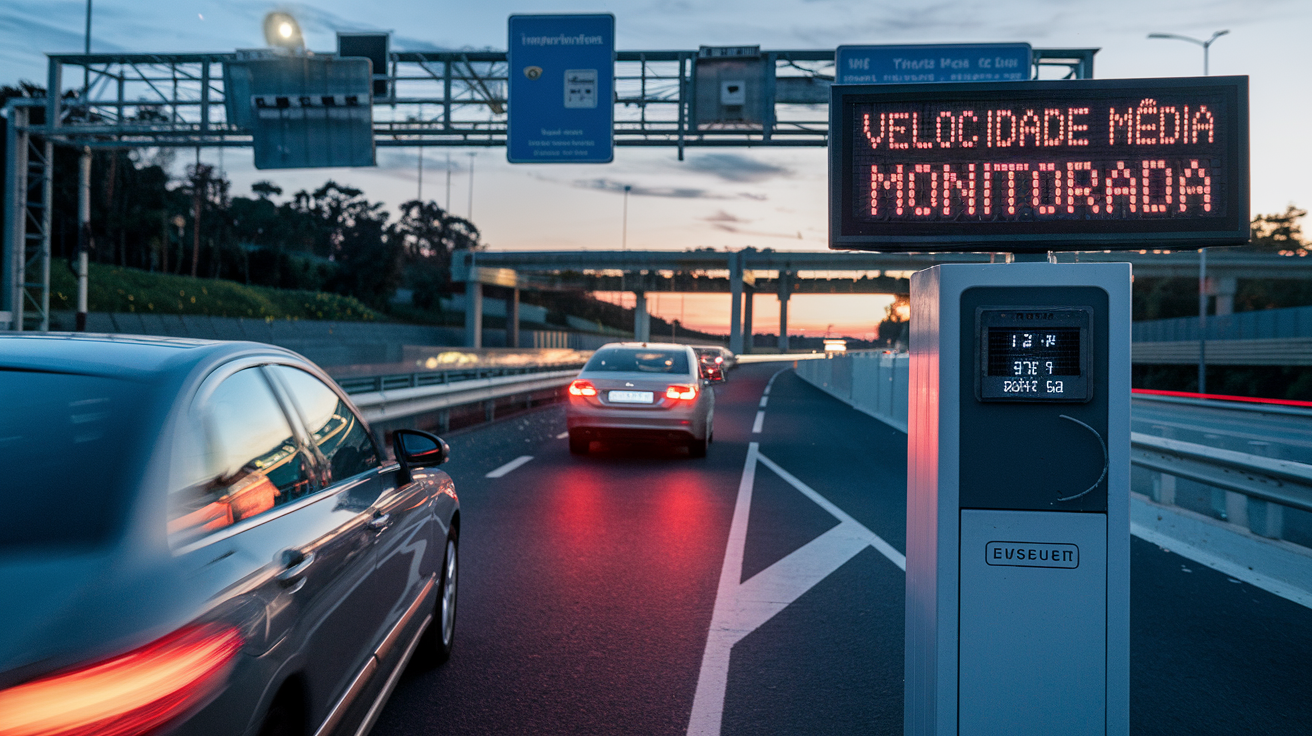


Even Without Fines, Average Speed Cameras Already Reduce Offenses on BR! The Impact on Highways Can Be Gigantic, But the Release Depends on Changes in Legislation. Experts Advocate for Technology as a Solution to Prevent Deaths on the Roads.
The implementation of new average speed cameras on Brazilian highways has attracted attention in recent months.
Although they do not yet issue fines, these devices have already shown a significant impact in reducing speeding offenses.
On BR-050, an 11 km stretch in Uberaba (MG) has become a laboratory to test this new form of enforcement.
-
Luciano Hang, owner of Havan, goes to Juiz de Fora after the tragedy in February, brings R$ 1 million, hands out R$ 2,000 cards, and donates up to R$ 15,000 to victims in the region.

-
The Brazilian passport allows legal residence in dozens of countries without the need for a prior visa, and most Brazilians are unaware that they can apply for residency directly upon arriving in nations in South America, Africa, and even Europe.

-
Hyundai has unveiled the Boulder, a square SUV with a body-on-frame design, 37-inch mud tires, and carriage-style doors that seems to be made to take on the Ford Bronco and the Scout Traveller in the United States.

-
Petrobras sends a message to Brazilian truck drivers after fuel collapse and reveals plan to have 100% domestic diesel.

The numbers are clear: after the installation of the cameras and an educational blitz, the number of drivers caught speeding dropped by 22.5%, according to data from the concessionaire Eco Rodovias.
The information was released by the G1 portal, which highlighted that, despite the effectiveness of the cameras, they still cannot be used to issue fines, as they need to go through regulation by Inmetro and approval in the Brazilian Traffic Code (CTB).
How Do Average Speed Cameras Work?
Unlike conventional cameras, which measure speed at a fixed point, average speed cameras analyze the time it takes for a vehicle to cover a certain distance.
If the driver covers this distance in a period shorter than what complies with the speed limit of the road, they will be exceeding the allowed speed.
Currently, Brazilian legislation still does not foresee this type of enforcement as a basis for issuing fines.
For this to happen, the cameras need to be regulated by the National Institute of Metrology, Quality, and Technology (Inmetro) and included in the Brazilian Traffic Code (CTB).
When Will the Cameras Start Issuing Fines?
The regulation depends on a bill that is currently under consideration in the Chamber of Deputies.
The text, authored by Deputy Jilmar Tatto (PT-SP), proposes the inclusion of average speed as an enforcement criterion in the CTB.
For experts, this change could transform how drivers perceive enforcement on highways.
“Today, what we have is a speed reduction only at points where there are cameras. After the driver passes the device, they speed up again,” explained Ana Carboni, an activist advocating for the approval of the new rule, in an interview with the G1 portal.
Bruno Araújo Silva, operations manager at Eco050 and Ecovias do Cerrado, reinforces this observation.
“The driver reduced speed only at the specific cameras to avoid fines, but speeded up right after. In the case of average speed cameras, this does not happen, as they need to maintain a constant pace within the speed limit of the road,” he emphasized to G1.
Goal Is to Reduce Traffic Deaths by 2030
The initiative aligns with the federal government’s goal to halve the number of traffic deaths by 2030, according to guidelines from the United Nations (UN).
In 2023, traffic accidents caused the death of 35,900 people in Brazil, according to official data. To try to reverse this scenario, the National Traffic Department (Senatran) is betting on awareness campaigns.
Secretary Adrualdo Catão highlighted to the G1 portal that speed is one of the critical factors. “All campaigns will focus on risk factors, and speed is one of the main ones. If we can tackle this problem, we will see a significant reduction in accidents,” he stated.
The national campaign in 2025 will adopt the slogan “Slow Down. Your Greatest Asset Is Life”, reinforcing the need for safer driving.
Urban Measures to Curb Accidents
In addition to electronic enforcement, changes in city infrastructure also help reduce accidents.
The Senatran secretary cited examples such as widening sidewalks, creating pedestrian islands, and raising sections of roads to sidewalk level.
“Road safety is an avoidable epidemic. With simple measures, such as reducing speed, we can save lives,” stressed Ana Carboni in an interview with the G1.
A successful example in Brazil comes from Fortaleza, where readjusting speed limits on urban roads led to a 23% reduction in the number of accidents, according to the city hall.
The Impact on Drivers’ Lives
While the regulation of average speed cameras is still pending, drivers’ behavior is already beginning to change. Many are adopting a more conscious driving style, even without the immediate risk of fines.
“Once we homologate and start issuing fines, behavior will change. And this behavior directly reflects the reduction of accidents,” reinforced Bruno Araújo Silva to the G1 portal.
With the growing adoption of this new technology by traffic authorities and concession companies, the trend is that this enforcement model will become increasingly common on Brazilian highways.






Se temos carros mais seguros, temos sim é que aumentar os limites de velocidade e permitir as pessoas chegarem mais rápido aos seus destinos. Está se chegando ao ****mulo do absurdo a criação desse tipo de regra, transformando os carros de volta ao estágio de carroças, ao impedir que os motoristas dirijam mais rápido.
Total absurdo não deve passar!
Procurem seus deputados e peçam para que se impeça esse absurdo de radar de velocidade média.
Essa coisas que causam acidente,pega esses domingueiro de plantão vê uma **** dessa na pista enfian o pé no freio pensando que uma carreta tem na mesma frenagem de um carro.pronto a mistura ta feita….!
Bora destruir esses radares.
Bando de caça níqueis