





 Portuguese
  English
  Spanish
  6 min of reading
  0 comments


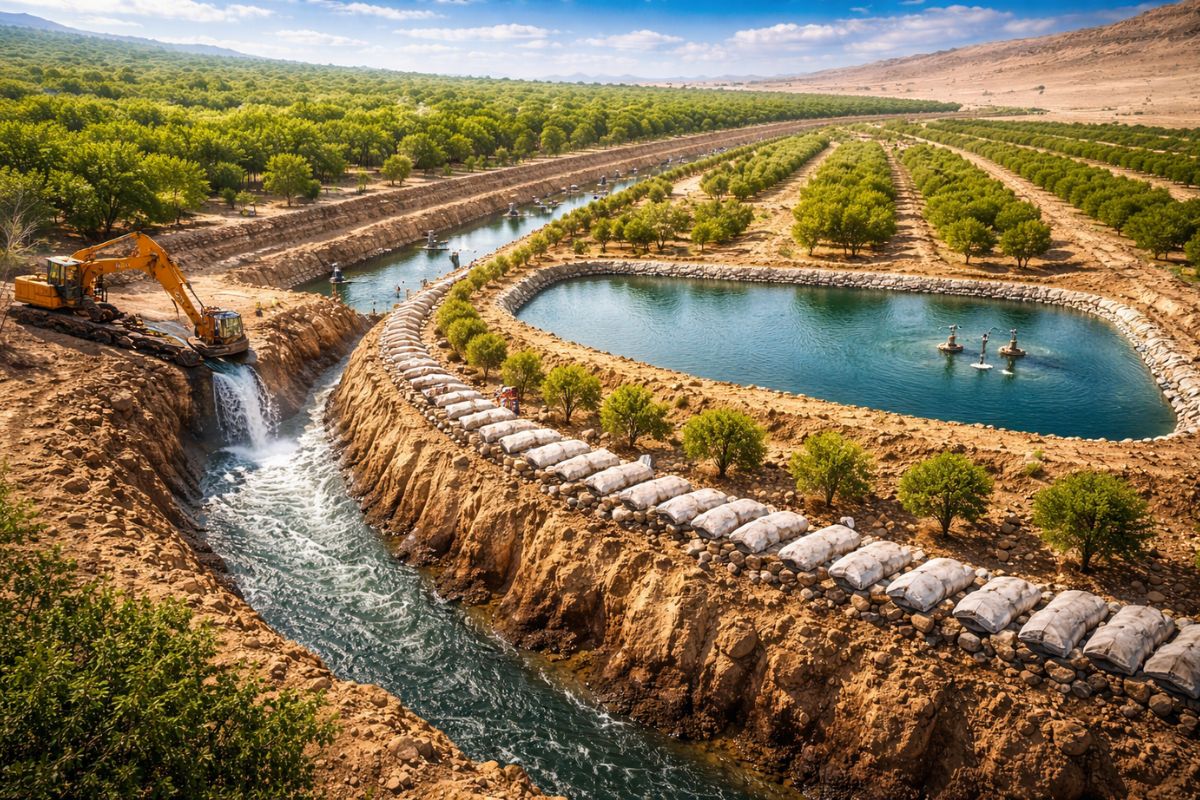
In the Chihuahua desert, a mega project for water capture reorganizes the land with infiltration ditches, expands the drainage area from 5 to 11 acres, and attempts to transform dry soil into a base for a drought-adapted forest.
The desert is often associated with scarcity, dust, and the difficulty of making anything thrive without intense irrigation. But it is precisely in this extreme environment that an unusually large earthworks project is redesigning the landscape to capture rainwater, infiltrate moisture into the soil, and prepare the ground for the cultivation of productive trees.
The proposal does not rely on futuristic technology or concrete works scattered everywhere. It is based on precise readings of the topography, careful planning of water flow, and the construction of ditches wide enough to hold runoff, reduce erosion, and maintain moisture in the subsoil for months. The ambition is enormous: to build a forest in the desert using simple techniques, but executed on an extreme scale.
The project in the desert has already reached 95% of construction
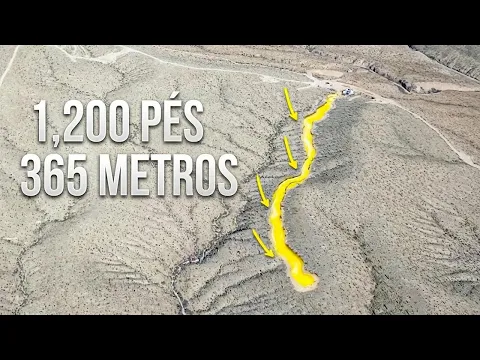
The work, called Mega Swale, was 95% complete at the time presented at the site. It spans 1,200 feet of the Chihuahua desert and is treated as the centerpiece of a larger mission: to form a forest in an area where water normally escapes too quickly and is rarely available long enough to sustain lasting growth.
-
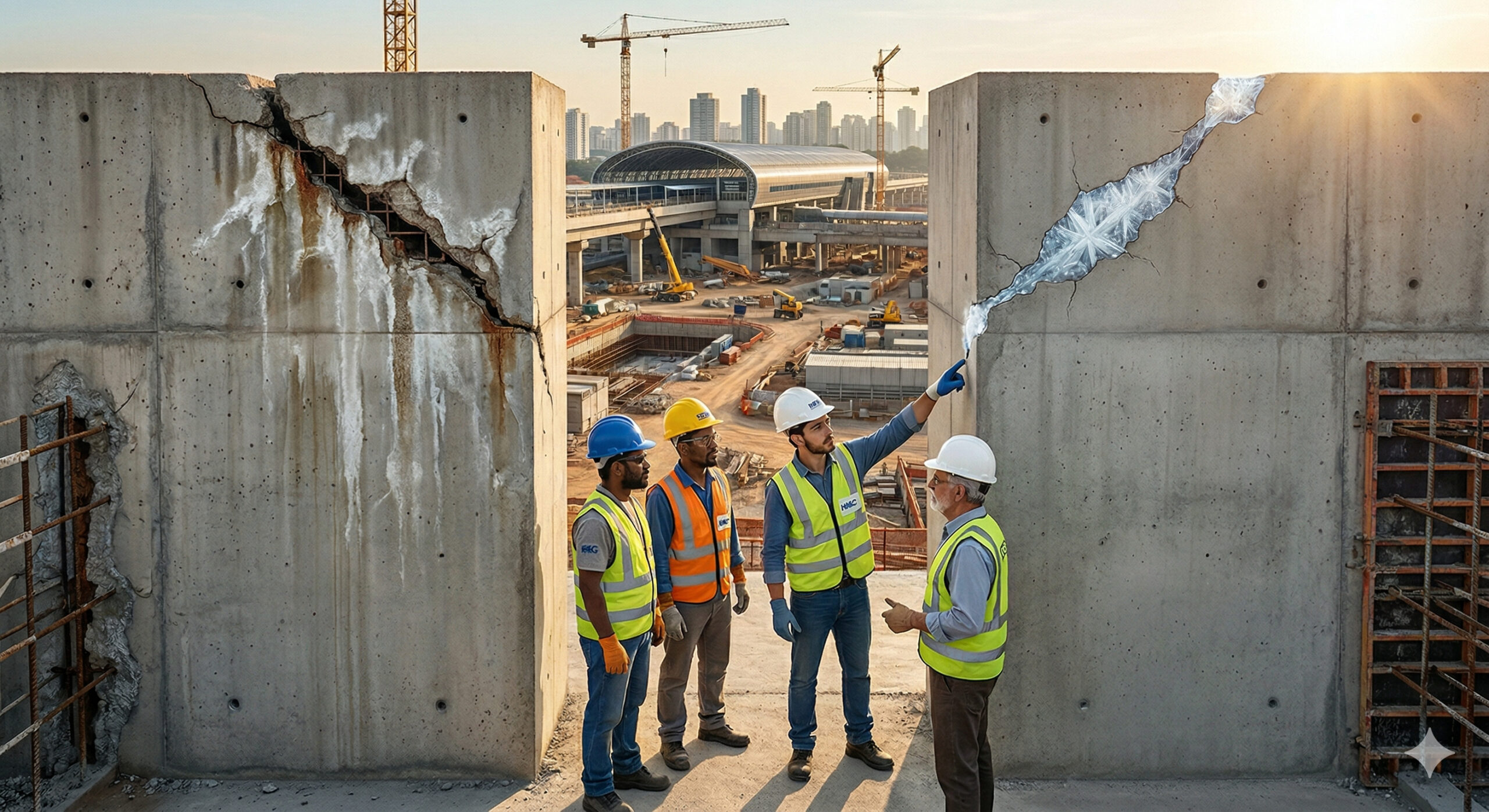
With a lifespan of up to 60 years and a cost up to 30% higher than conventional concrete, self-healing concrete is already being used in Brazil to eliminate leaks, reduce maintenance, and is changing the real cost of construction projects.
-
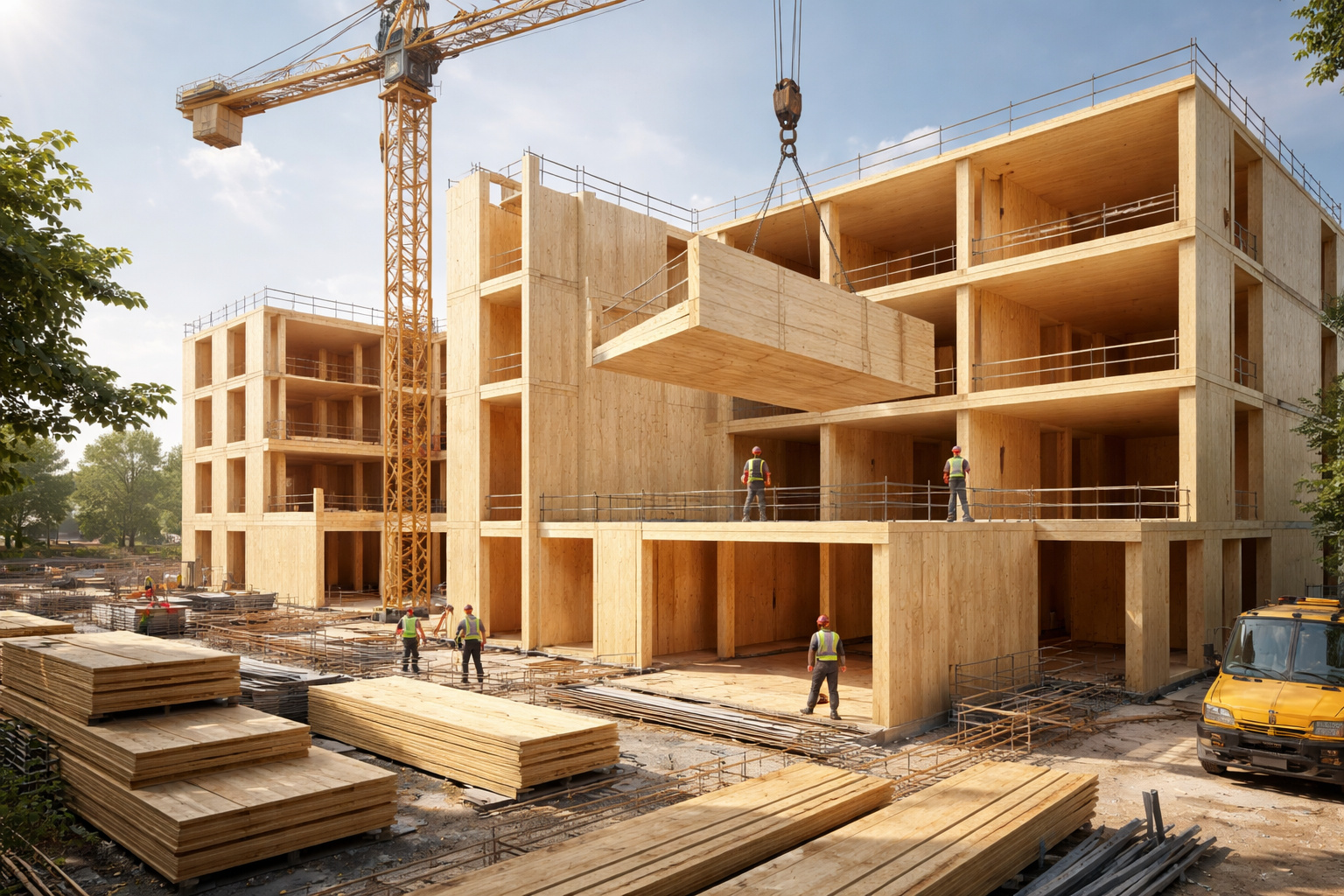
Engineered wood CLT challenges steel and concrete and promises construction that is up to 2x faster with a lower environmental impact in modern civil engineering.
-
Video: Retiree builds 26-meter Roman castle in his backyard with pieces from dozens of countries, ornamental grates from Libya, and a dragon made of recycled metal.

-
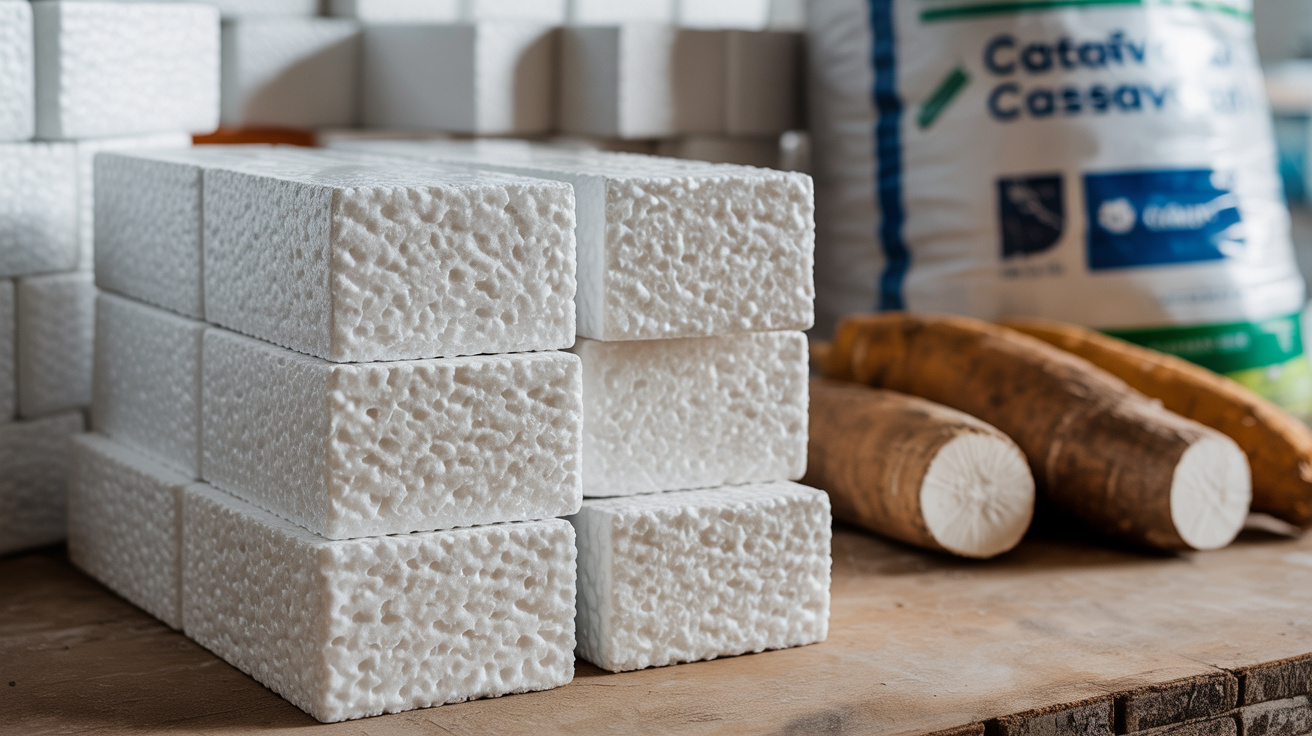
Bricks made with recycled Styrofoam and cassava glue cost R$ 0.40 and insulate walls, reducing internal temperature by 6°C using a technique that produces 50 units with just one 50 kg bag of cement.

The size impresses not only by its length. The system was designed to work with multiple lines of capture and infiltration, taking advantage of the natural slope of the land.
This is not about digging an isolated ditch, but about assembling a hydraulic landscape structure, where each section guides, slows down, and redistributes water from one point to another.
Ditches transform the topography into a capture system
The principle of the project is straightforward: instead of letting rainwater run downhill and leave the property, the land is shaped to intercept this water, spread it out, and force its infiltration. At the end of the process, the goal is to capture water from 11 acres, more than double the initial area of 5 acres.
This expansion occurs through ditches built in a zigzag pattern and strategically connected. Water flows down from the higher areas, enters the channels, and loses speed before reaching the most sensitive points.
The desert stops functioning as a runoff surface and starts acting as a living reservoir, storing moisture underground instead of losing it all in a few hours.
Extreme engineering arises from very real problems

The scale of the work demands more than enthusiasm. In several sections, the base shows that it was necessary to think about overflow, erosion, energy dissipation of water, and reinforcement with large stones to prevent the force of runoff from destroying everything.
In steeper areas, the concern was clear: if the flow was not slowed down, the system itself could be opened or torn apart by the water.
Therefore, the project includes dissipation zones, improvised spillways with stone, and land cuts designed to withstand excess. Nothing there was done to look pretty only from above. Every curve and every width responds to a concrete threat from the terrain.
The desert demands width, slope, and safety margin
In January, very close to the final phase, the goal was to leave certain sections with 7.5 meters wide, preferably reaching 9 meters. This was considered essential to get the slope right and complete the expansion of the catchment basin.
The logic is simple: in the desert, a small level error can turn into water loss or an erosion point. If the channel is too narrow, maintenance becomes complicated.
If the slope is wrong, the water flows too fast. If the edge cannot support overflow, the entire structure becomes a risk. It is a work that seems rustic but depends on precision.
Water is already staying in the soil for much longer
One of the strongest signs that the system works appeared in the soil itself. Even after three months without rain, there was still moist soil in different points of the swale. The base mentions that there has been no significant rain since October 6, and yet, on January 8, moisture was still present in the ground.
This helps explain why the project treats the subsoil as its great reservoir. Instead of storing water only on the surface, it seeks to keep it infiltrated, available for roots and grasses over time.
In the desert, soil that retains moisture for months completely changes what can or cannot be cultivated.
Half a million gallons has already become concrete proof
According to the base, the system stored half a million gallons of water in one year. And the expectation, with the planned expansion, is that the capture will exceed 1 million gallons.
In other words, the work was designed to retain a volume equivalent to millions of liters, something decisive for those who want to create permanent vegetation cover in a dry environment.
This storage does not appear as a large open lake. It emerges as underground moisture, sustaining trees and grasses for much longer than would be possible under the natural regime of that area. This is what allows transforming episodic rain into continuous fertility.
The planned forest in the desert will not be ornamental
The ultimate goal is not to create just a green landscape for visual effect. The plan includes trees such as pistachio and yellow horn, species seen as productive within the logic of the project.
At the same time, species adapted to the environment, such as palo verde and mesquite, as well as grasses like giant sacaton and alkaline sacaton, are included.
The strategy mixes drought resistance, soil cover, biomass production, and the creation of more stable microenvironments.
The trees are placed above the lowest point of the ditch to avoid being waterlogged, while the grasses help protect the ground and maintain organic matter. It is not a forest copied from wet regions. It is a forest designed for the desert.
The desert is being read, not fought

One of the most interesting aspects of the project is that it does not try to deny the landscape. Instead of imposing an external model, the work reacts to the relief, the available clay, the ridge points, and the natural water pathways.
At one point, the base summarizes this logic by saying that the clay was already there and that the work is, above all, a response to the landscape.
This vision changes the meaning of the intervention. The desert is not treated as an empty space to be corrected, but as territory to be understood. The ditches do not arise to erase the dry climate, but to make the most of the little water that already exists.
Machines, maintenance, and logistics also define the project
The construction does not depend solely on technical design. The progress of the work also encounters practical limitations, such as wear on tracks, axle breakage, waiting for parts, and the need to keep the tractor operating in a demanding terrain.
The base makes it clear that part of what seems simple on paper only happens because there is constant adaptation of machines, teams, and schedules.
This matters because it shows the real size of the initiative. Building in the desert is not just about digging ditches. It is sustaining an entire operation in a place where distance, heat, relief, and wear weigh on every step.
When water stops fleeing, the desert changes logic
The heart of the project lies in this shift. For a long time, the water that fell there simply ran off the useful area and followed to another basin.
Now, with new infiltration ditches up to the boundary and a system designed to safely guide this flow, the intention is to double the available water without relying on heavy artificial solutions.
If this continues to work as the base describes, the impact could be profound. The soil begins to retain more moisture, more productive species become viable, and the landscape gains another capacity to respond to drought.
Instead of fighting against the desert with endless irrigation, the project tries to make the desert work in favor of its own regeneration.
In your opinion, can a project like this really transform the desert into a productive forest, or does the challenge still seem too great?






Seja o primeiro a reagir!