





 Portuguese
  English
  Spanish
  4 min of reading
  1 comment


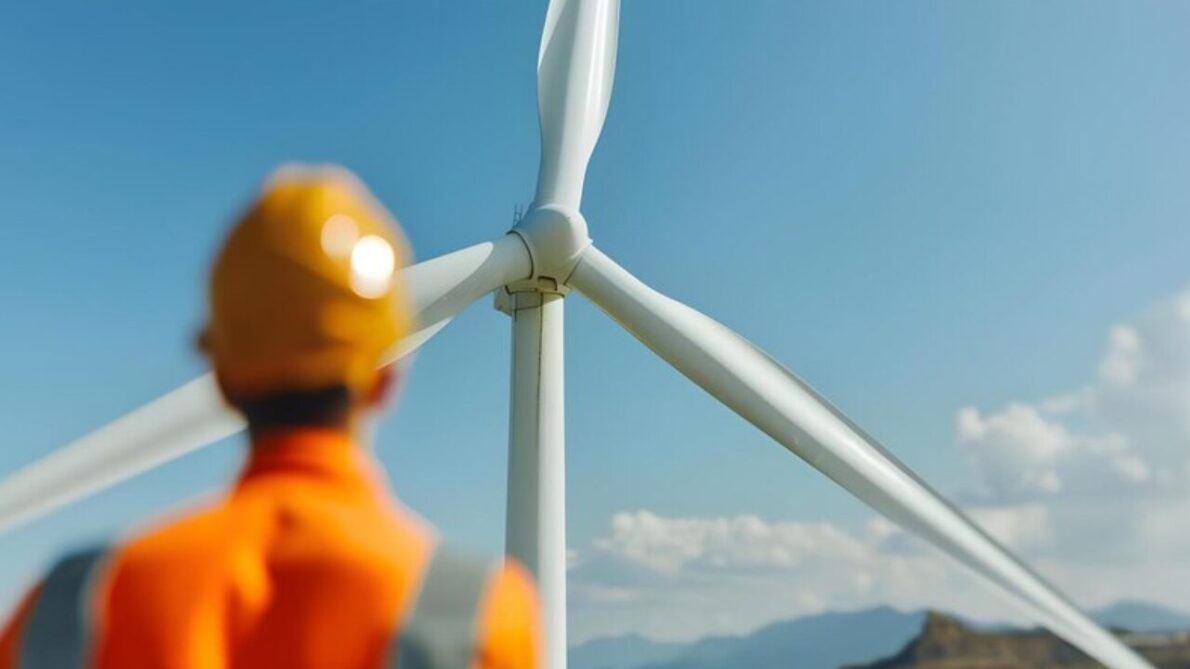

Brazil Can Add Up to 96 GW of Offshore Wind Energy by 2050, Creating More Than 516 Thousand Jobs and Facing Significant Challenges.
A new study conducted by the World Bank in collaboration with the Energy Research Company (EPE) revealed a promising and highly potential scenario for offshore wind energy in Brazil. According to the report, the country has a technical potential of over 1,200 gigawatts (GW), which is four times the current installed capacity of Brazil. By 2050, it is possible to add between 16 GW and 96 GW of offshore wind energy capacity, depending on the scenarios analyzed: basic, intermediate, and ambitious. Furthermore, this expansion could create more than 516 thousand jobs and contribute at least R$ 900 billion to the Brazilian economy.
Challenges to Overcome in the Offshore Wind Energy Sector
Despite the enormous potential, Brazil faces a series of challenges to economically viable offshore wind energy projects.
The report highlights that, due to the long development timeline of this type of energy, Brazil must act quickly to complete the mapping of environmental and social sensitivities and designate the initial zones for the development of offshore wind energy.
-
The Brazilian state accelerates industrial competitiveness with a focus on the extraction of strategic minerals to boost the energy transition in Goiás.
-
A Canadian retiree creates a hydroelectric system on a real river, generating energy continuously throughout the day and demonstrating how the power of water can supply a house with stability even in a simple structure.
-
Giant of the winds in Rio Grande do Norte: Serra do Tigre Wind Complex receives new investments and accelerates the expansion of clean energy generation to supply millions of Brazilian homes.
-
Petrobras reaffirms its commitment to the market and ensures that it will carry out the energy transition safely to maintain national sovereignty.


“Given the long timeline for the development of offshore wind energy, Brazil must act quickly to complete the mapping of environmental and social sensitivities and designate the initial zones for the development of offshore wind energy,” emphasizes the document.
The National Secretary of Energy Transition and Planning of the Ministry of Mines and Energy, Thiago Barral, states that the government is mobilizing a working group with various federal administration entities to reach an agreement or at least come to a consensus on offshore wind energy.
“We are mobilizing a working group with various federal administration entities so that we can reach an agreement or at least come to a consensus regarding wind energy, in such a way that each institution with a role to fulfill can see and understand what needs to be done. This way, we will be able to synchronize everyone’s actions and build a roadmap for the approval of our legal framework,” Barral stated during the presentation of the study.
Financing and Investments
The initial offshore wind energy projects will have a relatively high upfront cost, as the industry will need to create the foundations for the sector and “learn by doing.”
To bridge this cost gap, Brazil will have to explore concessional financing options—both from the public and private sectors.
The report highlights that the development of the onshore wind industry in Brazil was driven by the National Bank for Economic and Social Development (BNDES).
However, the offshore wind industry is more capital-intensive and requires complex financial structures, as well as the involvement of many actors from public and private financial institutions.
Infrastructure and Logistics
The study highlights that Brazil has a robust port infrastructure, with terminals and shipyards along its entire coast.
However, currently, none of these ports can meet the demands of an offshore wind project, primarily from the construction and marshalling perspective.
The country would also need significant investment in the supply chain to deliver larger turbines used for generating offshore wind energy (15 MW+).
To make this process viable, it will be necessary to establish an action plan for the supply chain in Brazil through dialogues with the industry.
It is recommended that initially limited local content requirements be adopted, as this could raise the cost of the first projects.
Attracting Investors for Offshore Wind Energy
The World Bank and EPE emphasize that Brazil will need to act quickly to take advantage of the current interest, especially in light of market conditions that are reducing investors’ appetite for non-essential markets.
“Investors will require clarity on pathways to the market, including a process to gain exclusivity of the seabed and the possibility of participating in initial auctions specific to offshore wind energy,” the report added.
Brazil has enormous potential to become a world leader in offshore wind energy, with the possibility of adding up to 96 GW of installed capacity by 2050.
However, to turn this potential into reality, significant challenges in financing, infrastructure, logistics, and environmental issues need to be overcome.
With coordinated actions among the government, the private sector, and investors, Brazil can not only achieve this ambitious goal but also create thousands of jobs and contribute substantially to the economy and energy sustainability of the country.







Energia renovável é muito essencial para um planeta melhor menos poluição e gastos a Natureza agradece a boa ação de hoje afeta nosso futuro.