





 Portuguese
  English
  Spanish
  5 min of reading
  0 comments


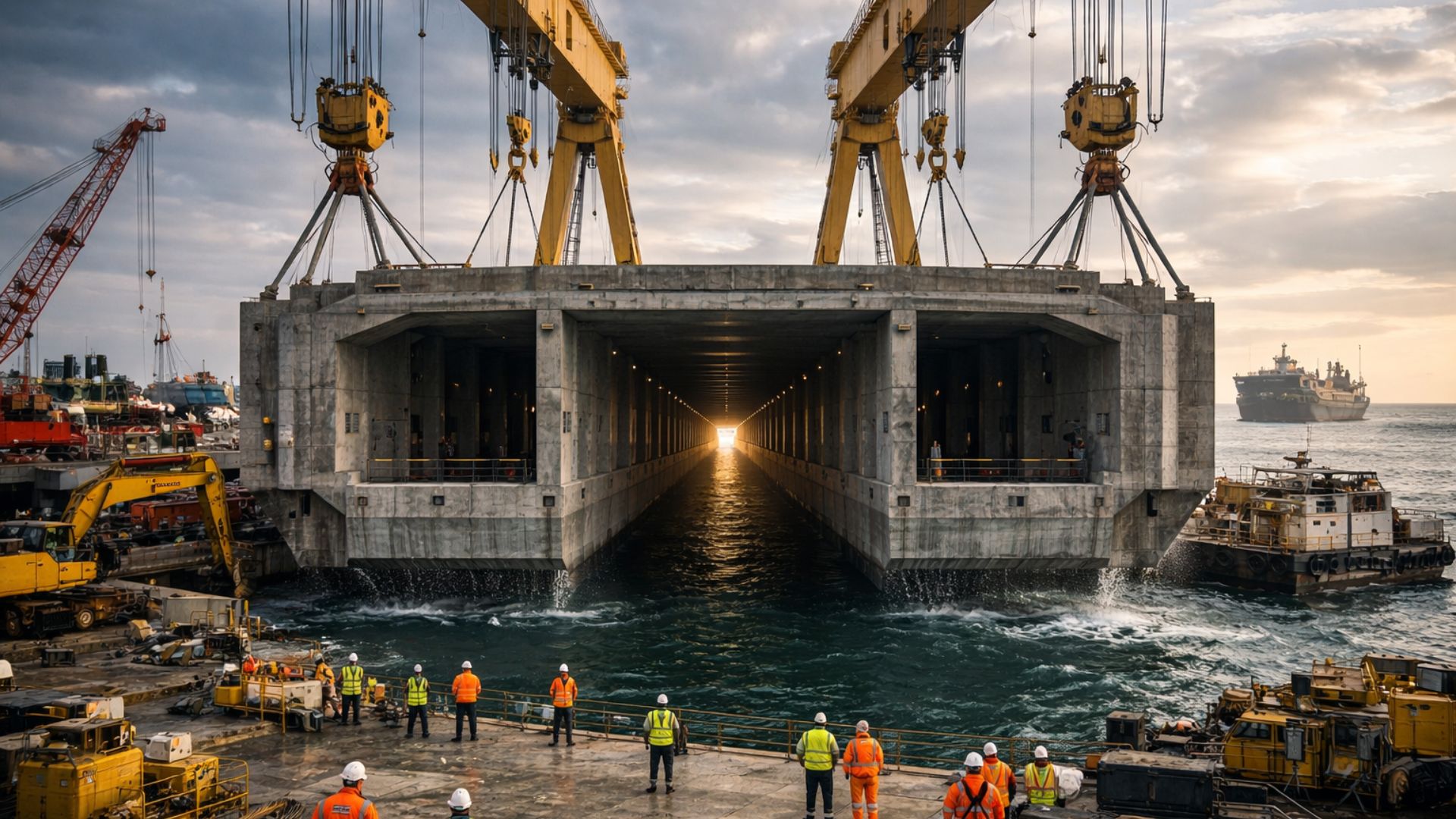
Underwater Mega Project in the Baltic Sea Advances with Unprecedented Engineering in Europe and Promises to Transform Logistical Connections Between Scandinavia and Central Europe, Shortening Trips, Reorganizing Rail and Road Routes, and Creating a Strategic Fixed Link Between Denmark and Germany in One of the Busiest Corridors on the Continent.
The Fehmarnbelt tunnel, under construction under the Baltic Sea between Denmark and Germany, is advancing as one of the major infrastructure projects in Europe and is expected to significantly shorten travel between the two countries.
When it becomes operational, the crossing between Rødbyhavn, on the Danish island of Lolland, and Puttgarden, on the German island of Fehmarn, should take 10 minutes by car and seven minutes by train, replacing the current ferry connection, which takes about 45 minutes.
The fixed link was also designed to strengthen the corridor between Scandinavia and Central Europe, with a direct impact on passenger and freight transport.
-
Scientists transform sawdust into fire-resistant panels, stabilize the compound with an enzyme extracted from watermelon seeds, and turn waste into promising material for construction.

-
Forget concrete: architects are replacing tons of concrete with giant blocks of expanded polystyrene to build the roofs of houses and reduce structural weight by up to 50%, cut costs, improve thermal insulation, and speed up construction.

-
The Brazilian state enters the center of the global race for critical minerals by starting the construction of the largest underground nickel mine in Latin America, a mineral essential for electric car batteries that the entire world is competing for at this moment.
-
New CCR concrete paving technology promises roads up to 3x more durable, less maintenance, and cost reduction in Brazil.

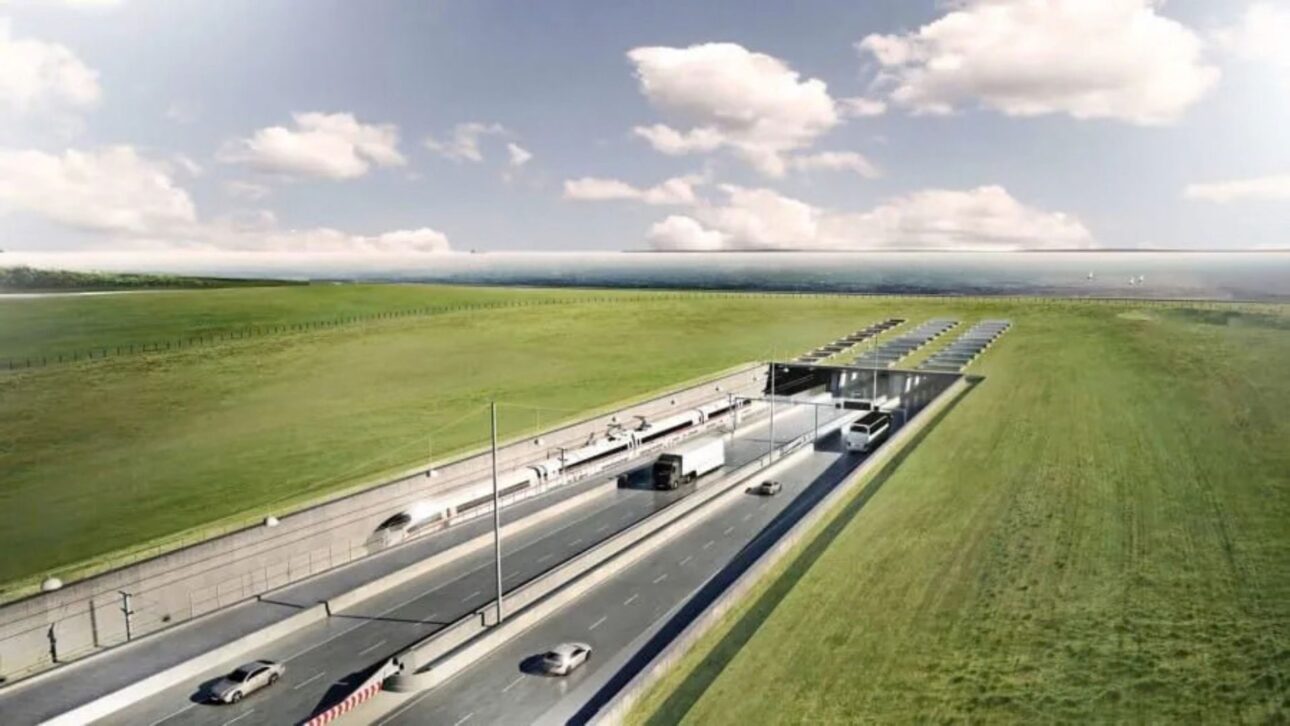
The project combines four-lane highway and double electrified railway within the same structure, a feature that the responsible consortium presents as central to reducing a historic logistical bottleneck in the region.
Although the title mentions 17 kilometers, the officially reported length by Femern A/S and authorities related to the project is 18 kilometers, which should make the work the longest combined immersed tunnel for road and rail traffic in the world.
The crossing will be positioned about 40 meters below the surface of the Baltic, in a strategic stretch for maritime circulation in Northern Europe.
How the Immersed Tunnel Engineering Works in the Baltic Sea
Unlike the Eurotunnel, between the United Kingdom and France, which was excavated at depth with tunnel boring machines, the Fehmarnbelt adopts the immersed tunnel method.
In practice, huge concrete elements are manufactured on land, towed to the construction site, and sunk into a trench previously opened on the seabed.
After the pieces are joined, the structure is covered again.
Each standard element measures 217 meters in length and weighs approximately 73.5 thousand tons, according to an update released by Femern A/S itself.
The scale helps to illustrate the technical challenge: the modules need to be positioned with millimetric precision before the definitive connection on the seabed.
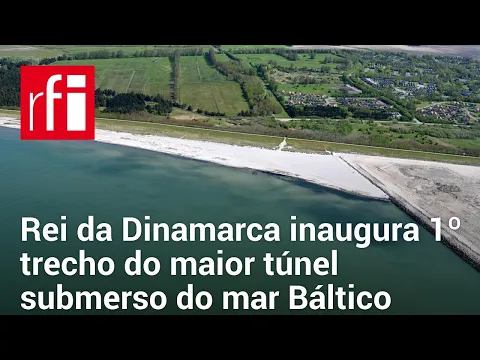
Manufacturing takes place in Rødbyhavn, where the large factory for the project’s elements has been established.
In February 2025, the first two completed modules were moved from the production area to the work port, in a stage seen as preparatory for future immersion.
Since then, the work has focused efforts on the submerged trench, maritime logistics, and tests of special vessels used in this operation.
The operation of lowering each section to the seabed is treated as one of the most sensitive moments of construction.
In the words attributed to Denise Juchem in materials circulated about the project, “there will not be a second chance,” as the whole process depends on exact calculations, integration between teams, and a favorable weather window.
This caution reflects the current stage of the work, marked by technical rehearsals and intensive preparation before the first elements enter the water.

Timeline of the Project and Technical Challenges of the Fehmarnbelt Project
For years, the most repeated expectation for the operation’s entry has been 2029.
This timeline still appears on institutional pages and in official materials from governments and partners of the project.
However, more recent announcements from the project itself indicate that difficulties with the special vessel IVY, essential for sinking the modules, have compromised the original schedule.
In January 2026, Femern A/S reported that it expected the first immersion for the European spring of that year, while the ship underwent final tests.
Shortly before, in September 2025, the company had already acknowledged a significant delay caused precisely by the problems with this vessel.
In February 2026, another development in the schedule emerged with the cancellation of two bids by Sund & Bælt, amid the impact of these postponements.
This means that treating 2030 as a fixed date also requires caution.
Based on the official material available until March 2026, the work continues to be executed, but the inauguration deadline is undergoing a review and does not appear to be definitively consolidated in the project’s most recent updates.
Impacts on Rail Transport, Freight, and Travel Between Countries
The significance of the link goes beyond the short distance between the two ports.
The work integrates the European transport network and was designed to shorten the flow between the Scandinavian peninsula and the center of the continent, especially in freight rail transport.
In promotional materials for the project, the connection is presented as a strategic shortcut for the transportation of goods by electric train, with the potential to relieve pressure on longer routes currently used by land and maritime transport.
In previous versions of the planning, the train journey between Copenhagen and Hamburg was estimated at about two and a half hours after the completion of the tunnel.
The current time is around four and a half hours, a scenario mentioned by technical representatives of the project.
The reduction was also cited as an argument to enhance the competitiveness of rail transport compared to air transport on regional segments.
For road transport, the main gain lies in predictability.
The elimination of waiting for the ferry and the direct dependence on crossing schedules tends to benefit both passenger cars and trucks.
At the same time, the fixed link should reinforce logistical continuity between ports, industrial centers, and rail corridors in Northern Europe.
Tourism and Regional Development Around the Baltic Sea
Tourism emerges as an expected consequence of the new connection, especially in Denmark and the surrounding Baltic area.
In statements reported by the press, Mads Schreiner, from VisitDenmark, classified the Fehmarnbelt as a turning point for the sector by facilitating the movement of visitors between neighboring markets.
The assessment is that the work can increase interest in areas outside of Copenhagen and distribute traveler flow better.
Still, the focus of the work remains on heavy infrastructure.
The project is presented by the European Commission and Danish authorities as a priority piece for continental mobility, with European funding and a clear logistical function within the bloc’s transport network.
This combination of scale, modal integration, and strategic value explains why the tunnel continues to be viewed as a long-range intervention for the regional economy, even under time pressure.







-

-

-

-

7 pessoas reagiram a isso.