





 Portuguese
  English
  Spanish
  2 min of reading
  0 comments



With Annual Production Between 40 Thousand and 50 Thousand Tons, Brazil Stands Out for the Quality and Purity of Exported Honey, With a Strong Presence in the Markets of the United States, Germany and Canada
The production of honey in Brazil is experiencing a moment of expansion and consolidation on the international stage. The country ranks among the ten largest producers in the world, with an annual average between 40 thousand and 50 thousand tons, according to data from Embrapa and IBGE.
The combination of favorable climate, vast plant diversity, and modern management techniques has driven the growth of the sector, which also plays a fundamental role in environmental preservation.
The national highlight is the Northeast, responsible for about 40% of Brazilian production, with states like Ceará, Piauí, and Bahia leading the ranking. The semi-arid climatic conditions and the presence of native honey-producing plants favor the activity.
-
Researchers in the U.S. have created a flying robot that transforms into a land vehicle while still in the air. The technology, based on aerodynamic transition, converts landing into a scene worthy of Transformers and redefines mobility between sky and ground.

-
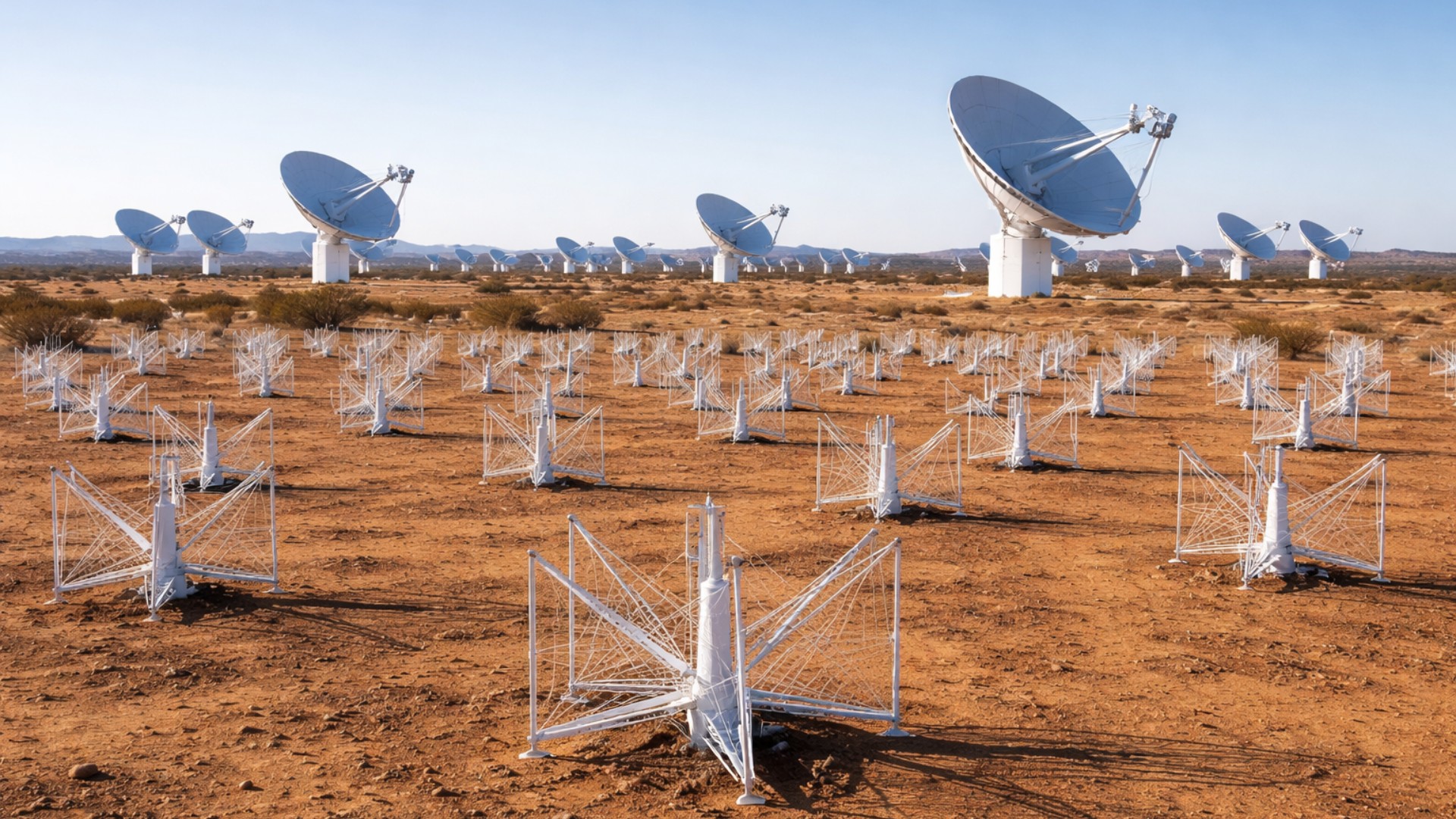
Spread across two continents, with 197 parabolic antennas in South Africa, 131,000 2-meter antennas in Australia, and a range of up to 150 km, the SKA begins to “listen” to the Universe on an unprecedented scale and accelerates the search for black holes, primitive galaxies, and nearly invisible radio signals.
-
Goodbye batteries: a new sensor created by Japanese scientists uses sweat as an energy source and points to a promising path for more sustainable devices, with greater autonomy and less need for frequent recharging.

-
The Brazilian Army inaugurated the assembly line for the Guaicurus armored vehicle with a contract for 420 units by 2033, and the same vehicle has already been tested in combat in Afghanistan and Lebanon by European armies.


In the South, traditional regions like Paraná, Santa Catarina, and Rio Grande do Sul account for approximately 30% of total production, while the Southeast, with Minas Gerais and São Paulo in the lead, is growing in organic and certified production.
More than half of the honey produced in Brazil crosses borders. United States, Germany, and Canada are among the main buyers and recognize the quality and purity of Brazilian products, which are often free of pesticides and cultivated in sustainable systems.
In addition to the economic impact, national beekeeping has decisive environmental importance. Bees are responsible for about 70% of the pollination of cultivated plants, directly contributing to agricultural productivity and the preservation of biodiversity.
Despite the advances, the sector still faces challenges. Climate change affecting flowering, the use of pesticides threatening bee populations, and the need for greater technical support for small producers are obstacles to overcome. Still, Brazilian honey production consolidates itself as an example of sustainable activity with high potential in the global market.









Seja o primeiro a reagir!