





 Portuguese
  English
  Spanish
  5 min of reading
  1 comment


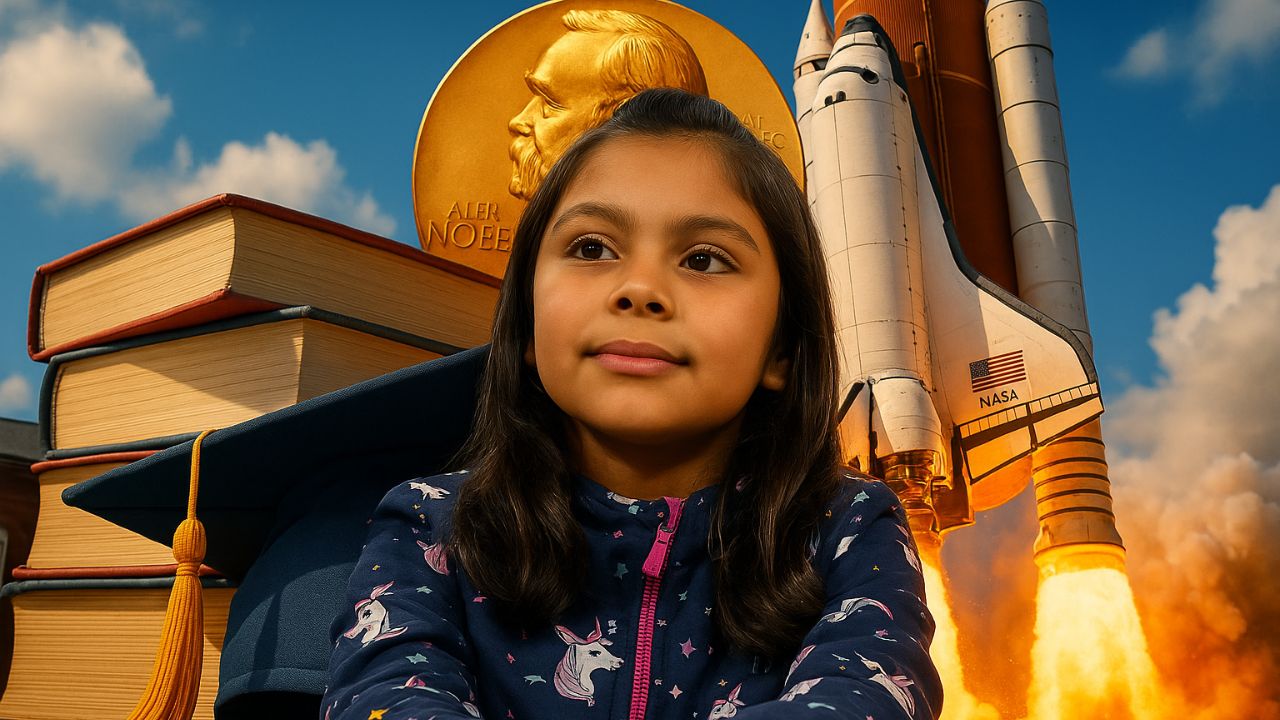


Mexican Prodigy Girl With IQ 162 Overcomes Bullying, Lives With Autism, Enters University at Age 8, and Dreams of Being an Astronaut, Writing Books, and Transforming the Lives of Other Children
The story of prodigy girl Adhara Pérez seems like a movie script, but it is real life. At 8 years old, with a IQ of 162, higher than that of Albert Einstein and Stephen Hawking according to specialists mentioned in the interview, she is already studying industrial engineering in systems and mathematics at a Mexican university while dealing with the autistic spectrum and scars left by bullying. Instead of retreating, she turned her pain into fuel to dream big: travel to Mars, write books, create technologies to help children, and one day win a Nobel Prize.
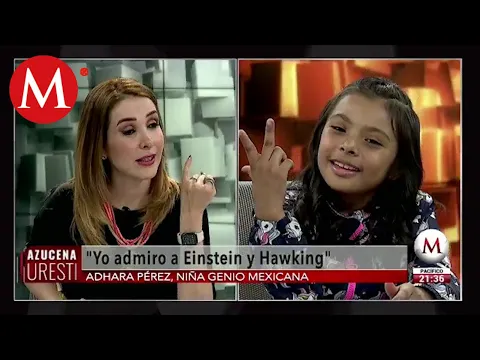
In the interview alongside her mother, Nallely Sánchez, Adhara appears shy yet firm, explaining concepts of black holes, discussing astrophysics naturally, and describing toys and projects as if they were concrete steps toward the future.
Behind the gaze of a girl, there is a scientist in formation, a prodigy girl who already understands that her knowledge can be a tool to change the world and relieve the suffering of others.
-
The village where two rivers run side by side without mixing in Santarém and Alter do Chão reveals some of the most beautiful freshwater beaches on the planet.

-
Brazil’s nuclear submarine with a speed 5 times greater than normal advances after nearly 50 years and R$ 40 billion spent.

-
A Brazilian island charges R$ 0.50 to receive visitors and prohibits any new residents.

-
Why was the Great Wall of China built? The truth that many are unaware of!


Who Is the 8-Year-Old Prodigy Girl Who Is Already in University

Adhara was born in Veracruz, Mexico, and now lives in Mexico City with her mother and younger sister. At first glance, she seems like an ordinary child: she enjoys playing with Barbie, hiding in cardboard boxes, and inventing worlds.
But behind the playtime lies a prodigy girl with an IQ of 162, assessed well above average and even of the most cited geniuses of modern science.
While many 8-year-olds are in elementary school, Adhara is already studying industrial engineering in systems and mathematics at a university, in addition to taking extra courses. She talks about college as if it were a normal topic, like discussing homework.
The astonishment lies with the adults: the presenter has to explain to the audience what this level of IQ means, the range of normal intelligence, and the level at which she is. For Adhara, however, studying seems as natural as playing.
Autism, Difficult Diagnosis, and Bullying: The Hidden Side of Genius
Behind the shine of this prodigy girl lies a painful beginning. The mother says the process was “complicated” from the start.
Adhara was diagnosed with autism spectrum disorder, which required consultations, referrals, evaluations, and a lot of patience until finding a professional who truly understood her case. It was an unusual situation: an autistic child with an extremely advanced IQ.
In the meantime, the school environment was not always welcoming. The mother reports episodes of bullying, adaptation difficulties, and misunderstanding. Above-average intelligence, combined with autism, made Adhara an easy target.
She was not just “different”; she was very different. Over time, with adequate professional support and constant help from her mother, the scenario began to change.
Today, Adhara defines herself as a happy girl, showing that it is possible to be a prodigy girl, autistic, and fulfilled as long as she finds acceptance, respect, and opportunities.
Routine Between Studies, Playtime, and Giant Dreams
Despite her university routine, Adhara continues to be a child. She mentions that in her free time, she enjoys self-studying, playing with her sister, imagining stories with dolls, and transforming simple objects into spaceships.
A large box becomes an interplanetary capsule; drawn windows turn into hatches looking down at Earth.
Her and her sister’s favorite game is “playing astronaut.” She gets into the box with her sister, pretends to be in a spaceship, and together they imagine traveling through space.
This blend of childhood and high intellectual capacity reinforces who she is: a prodigy girl who has not given up her childhood, even while living an unusual academic journey.
Fascination With Space, Black Holes, and the Journey to Mars
When the topic is space, Adhara’s eyes shine. When asked what she wants to be when she grows up, her answer comes without hesitation: she wants to be an astronaut and travel to Mars.
She does not speak of the red planet as a distant dream, but as a project she is already sketching in her head. She wants to investigate, ask questions, and understand what exists beyond what we see.
During the interview, Adhara confidently explains the concept of black holes, mentions Stephen Hawking’s theory, and describes in detail the intense gravity from which even light cannot escape.
She discusses chemical elements, atomic mass, and density as if she were commenting on something she recently reviewed. It is impressive to see an 8-year-old prodigy girl confidently discussing theoretical physics while many adults are still confused with the basics.
Books, Bracelets, and the Desire to Help Other Children

Adhara’s genius is not only in her learning ability but in her desire to use knowledge to help others. She shares that she is writing a book titled “No te rindas,” aimed at children with autism and others who suffer from bullying, to motivate them not to give up.
In the book, she intends to recount part of her own story, show her difficulties, her achievements, and the message that it is possible to move forward even when the world does not understand you.
More than that, Adhara wants to donate the money raised from the book to children with autism who need therapies and cannot afford them.
She also mentions an idea to create a bracelet to help children with autism, coma patients, and people who suffer from seizures, seeking solutions that relieve pain and increase quality of life.
For an 8-year-old prodigy girl, thinking about technology focused on inclusion reveals a rare sense of empathy and purpose.
The Dream of Winning a Nobel Prize and a More Peaceful World
At one point in the conversation, Adhara reveals another bold dream: to win a Nobel Peace Prize. Not just for recognition but for the opportunity to do something that truly improves people’s lives.
She talks about building ships, colonizing planets with water, finding ways to ensure humanity’s survival, but also about something simpler and deeper: for people to be able to live peacefully, free from fear and sadness.
This combination of high intellectual capacity, social sensitivity, and vision for the future makes this prodigy girl a symbol of human potential.
With her mother’s support, who accompanies her, defends, and celebrates each achievement, Adhara has already made important commitments: to finish her studies, study astrophysics, publish the book, develop the bracelet, travel to space, and come back to tell everything.
Whether so many plans will come true, only time will tell, but what is already clear is that the world needs to pay attention to stories like hers.
And you, how do you feel after learning about the journey of this prodigy girl: which part of Adhara’s story touched you the most and why?







Sou Professora e já tive muitos alunos autistas muito inteligentes e que amam ajudar os outros. São os seres humanos mais raros e especiais do mundo todo! Tenho certeza de que esta pequena grande menina fará a diferença na vida de muitas pessoas! Parabéns, Adhara!