





 Portuguese
  English
  Spanish
 3 min of reading
  30 comments


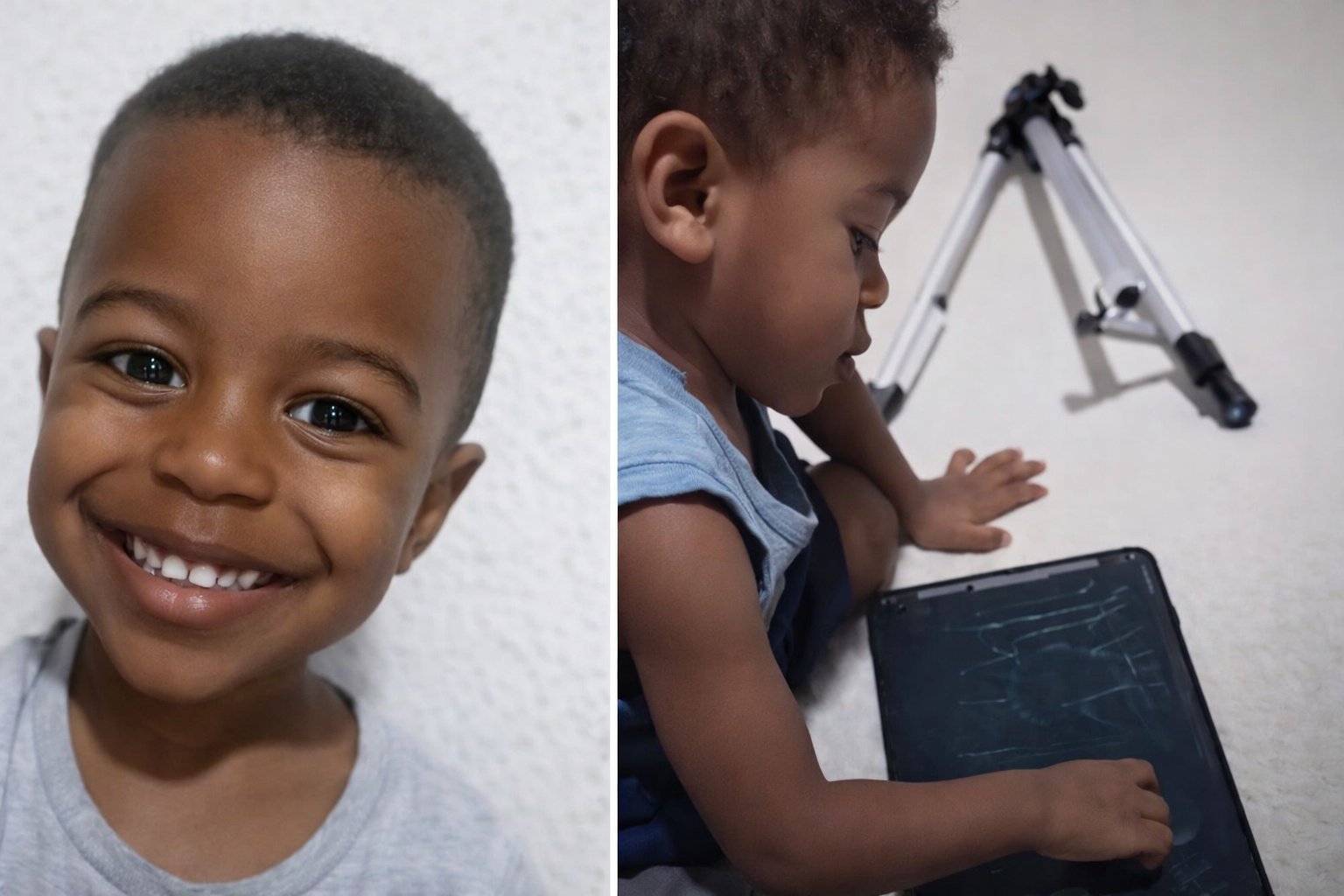


Case of 2-Year-Old Boy From Bahia Who Recognizes Four Languages Featured in National Outlets and Rekindles Debate on Early Learning.
A 2-year-and-10-month-old boy from Feira de Santana (BA) gained national attention after reports published by outlets like Metrópoles and other major publications highlighted his ability to recognize and communicate in four languages: Portuguese, English, Russian, and Korean. The case drew attention not only because of his age but also due to the child’s apparent familiarity with different alphabets even before formal literacy.
According to the reports, the boy started showing interest in letters as early as his first year of life, and by around 1 year and 5 months, he was already asking for materials to write and reproduce symbols. The family claims that frequent exposure to educational content contributed to his early linguistic development.
Early Recognition of Letters and Numbers in Multiple Languages
According to reports released by the media, the child recognizes letters, numbers, and colors in Portuguese, English, Russian (Cyrillic alphabet), and Korean (Hangul). This ability involves identifying symbols and associating them with basic sounds in each language.
-
Church from 1888 becomes a mansion of over 330 m² in Canada after a renovation of R$ 3.4 million and is eventually sold for nearly R$ 4.3 million.

-
How an innovative city combines high technology, well-being, and sustainability to become the largest reference in clean energy on the planet.

-
Couple buys 1846 church in ruins for R$ 660,000, invests R$ 3.2 million in renovations, transforms it into a millionaire mansion, and even preserved a historic cemetery with over 300 graves.

-
He started running at 66 years old, broke records at 82, and is now a subject of study for having a metabolic age comparable to that of a 20-year-old, in a case that is intriguing scientists and inspiring the world.



It is important to differentiate linguistic recognition from full fluency. The highlight of the case lies in the ability to identify and pronounce words and symbols, which is unusual for his age, but does not necessarily imply advanced grammatical mastery.
The fact that it involves different alphabets from Latin makes the episode even rarer, as it requires visual and phonetic recognition of completely distinct writing systems.
How the Infant Brain Learns Languages So Early
Child development experts explain that the first years of life are marked by high brain plasticity. During this period, the brain has a greater capacity to absorb auditory and visual stimuli, favoring language learning when there is consistent exposure.


Neuroscience studies indicate that until around the age of 3, children maintain a strong ability to differentiate phonemes from multiple languages. Early exposure can facilitate familiarization with sounds, symbols, and basic structures.
However, researchers emphasize that the consolidation of learning depends on continuous interaction and appropriate stimuli.
The Role of Family Environment and Technology
According to reports released in the press, the boy was frequently exposed to educational videos and content aimed at literacy in different languages. Digital platforms present alphabets, numbers, and songs in various languages, which can expand the child’s repertoire.
Experts highlight that while technology can contribute as a complementary tool, children’s cognitive development mainly depends on interaction with adults, verbal stimulation, and an enriched environment.
Rare Cases and Possible Signs of Giftedness
Situations like this frequently raise hypotheses about giftedness or talents, although formal diagnosis requires specialized evaluation. Characteristics such as intense curiosity, rapid memorization, and early interest in symbols may indicate cognitive development above average, but only professionals can confirm this classification.
Not every child who learns early exhibits giftedness, and not all giftedness manifests through early language.
Multilingual Learning in Early Childhood
International research shows that children exposed to multiple languages from an early age can develop code-switching skills naturally. In bilingual or multilingual homes, constant exposure to different languages facilitates simultaneous acquisition.
In the reported case, exposure appears to have occurred mainly through educational stimuli and the child’s spontaneous interest.
The case of the boy from Feira de Santana, highlighted by outlets like Metrópoles, illustrates how early linguistic learning can occur when there is appropriate stimulation and natural curiosity. Recognizing four languages at 2 years old is unusual and draws national attention, but it also reinforces the importance of the environment and brain plasticity in the early years of life.
The story reignites the debate on how technology, cultural exposure, and cognitive development can combine to produce skills that surprise even early childhood education experts.










Porque um menino baiano de Feira de Santana? Esse menino tem um nome,uma indentidade
Por que um menino baiano de Feira de Santa,esse menino tem um nome,uma indentidade
Todas essas teorias para não admitir algo tão simples: A Reencarnação é um fato!