





 Portuguese
  English
  Spanish
  5 min of reading
  0 comments


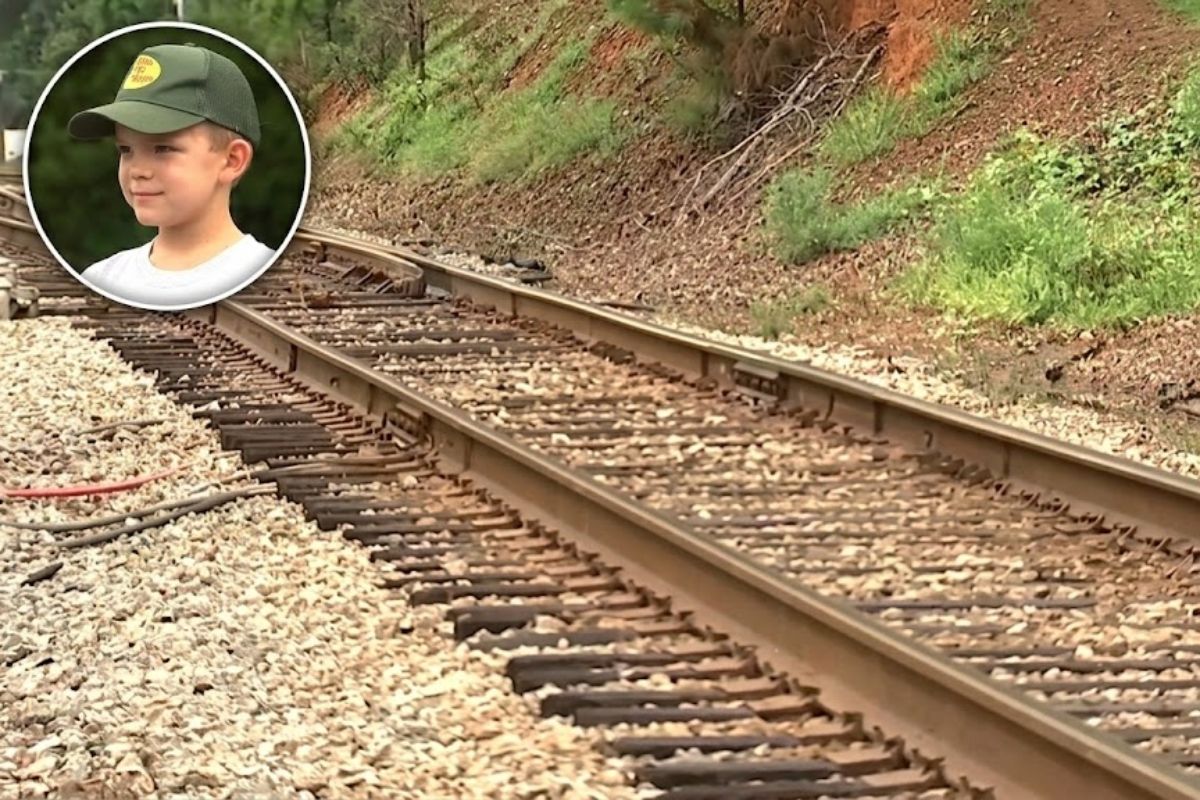
The Train Approaching Downtown Waxhaw Might Have Continued Its Journey Normally, But The Attention Of A Child Accustomed To Following Each Passage Changed Everything When He Noticed A Fallen Tree On The Tracks, Allowing For A Quick Alert And A Decisive Braking Before The Direct Impact.
The train heading towards downtown Waxhaw almost encountered a dangerous obstacle on its way, but the routine of a 6-year-old boy changed the outcome of that morning. Accustomed to observing the railroad crossings almost every day, Graham Huntley noticed something strange on the tracks and reacted without hesitation.
Upon noticing that a tree had fallen on the path, he quickly alerted an adult, which allowed the information to reach the conductor in time. Witnesses reported that the train managed to stop just a few meters from the danger point, avoiding a collision that could have led to a potential derailment in the city center.
How The Routine With The Train Helped Identify The Danger
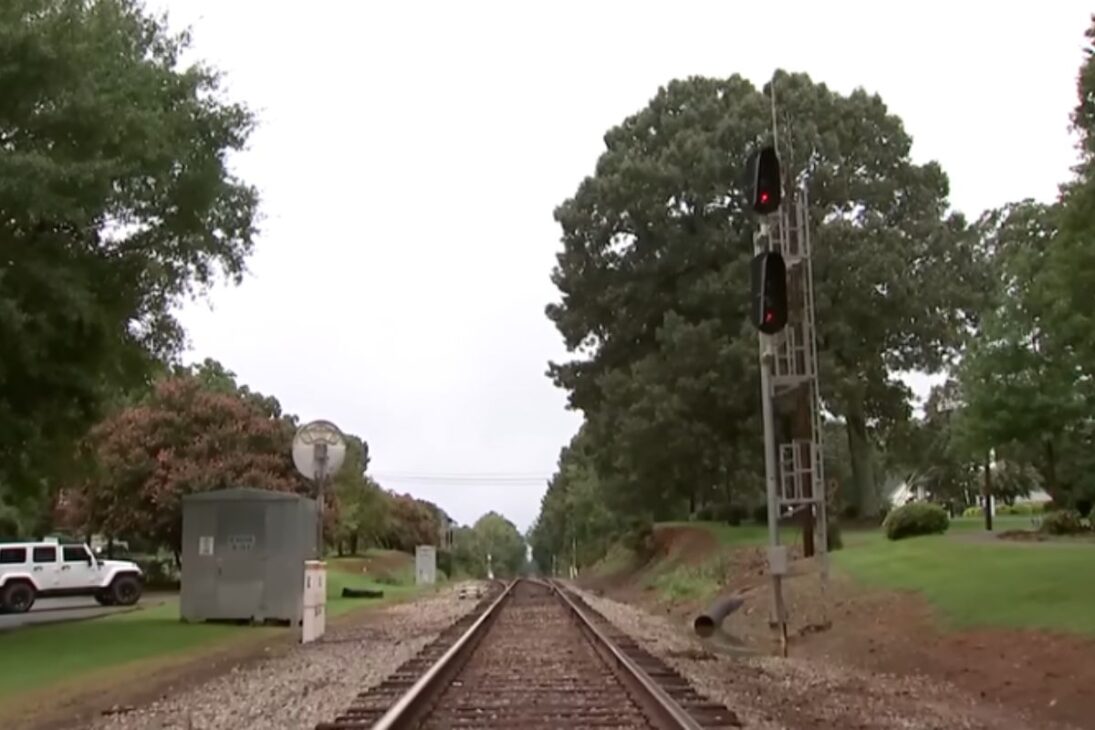
What stands out most in this episode is that the alert did not come from someone who was there by chance. Graham already had a close relationship with the city’s railroad environment.
-
Brazilian fish that lives out of water and hides inside dry logs intrigues scientists and reveals one of the rarest adaptations of mangroves.

-
The Brazilian Navy puts on a show in a complex operation in the Atlantic and rescues an African ship adrift for almost 60 days, with 11 crew members, a rudder failure, no communication, environmental risk, and a mission 1,200 km from the coast.

-
A 68-meter tower, which housed a historic brewery in the heart of Germany’s port, balances on a small base and uses activated core concrete for cooling that reduces the need for air conditioning.

-
For decades, a 50-kilometer ring structure in the middle of the Sahara has puzzled scientists: visible from space, it reveals layers of millions of years and turns the desert in Africa into a geological mystery.


According to the family’s account, he often spends part of his time watching the train in downtown Waxhaw, following the passages and waving to the professionals driving the train. It was a simple habit, but it trained the child’s eye to notice what did not seem normal.
This familiarity with the location helps explain why he noticed the problem so quickly. For many people, a fallen tree might seem just another element of the landscape or something too far away to require immediate reaction.
However, for those who frequently follow the train’s route, any change on the tracks carries a different weight. It was precisely this continuous attention that transformed a childhood habit into a decisive gesture.
The Moment When The Alert Changed Everything
Graham was with his mother, Amber, when he saw the fallen tree blocking the tracks in the central area of Waxhaw.
The most important detail is that a train was coming. At that moment, the scenario ceased to be merely unusual and came to represent a concrete risk. The boy immediately alerted an adult, and this quick communication allowed someone to trigger the alert before the train arrived.
From there, the chain reaction made a difference. The alert reached the conductor, who activated the emergency brakes to try to stop the train before the blockage point.
Witnesses said that the train managed to stop just a few meters from the tree. This short interval between noticing, alerting, and acting was what separated a scare from a potentially much graver situation. In railroad contexts, seconds can completely change the outcome.
Why A Tree On The Tracks Represents A Real Risk
At first glance, some people might think that the train would simply push a fallen tree and continue its journey. In practice, the situation is much more delicate.
Tracks require a clear path and constant alignment for the train to maintain stability and safety. Any more robust obstacle can compromise braking, cause abrupt impact, and increase the risk of operational damage.
Moreover, a train does not stop as easily as a car. The weight of the train and the dynamics of movement require distance and time for braking, especially when the obstacle is perceived only upon approach.
Therefore, the early alert was so important. It was not just about avoiding a visible clash with the tree, but about preventing a critical maneuver that could jeopardize operations, the track, and the people nearby in that urban area.
The Family Reaction And The Dimension Of The Gesture
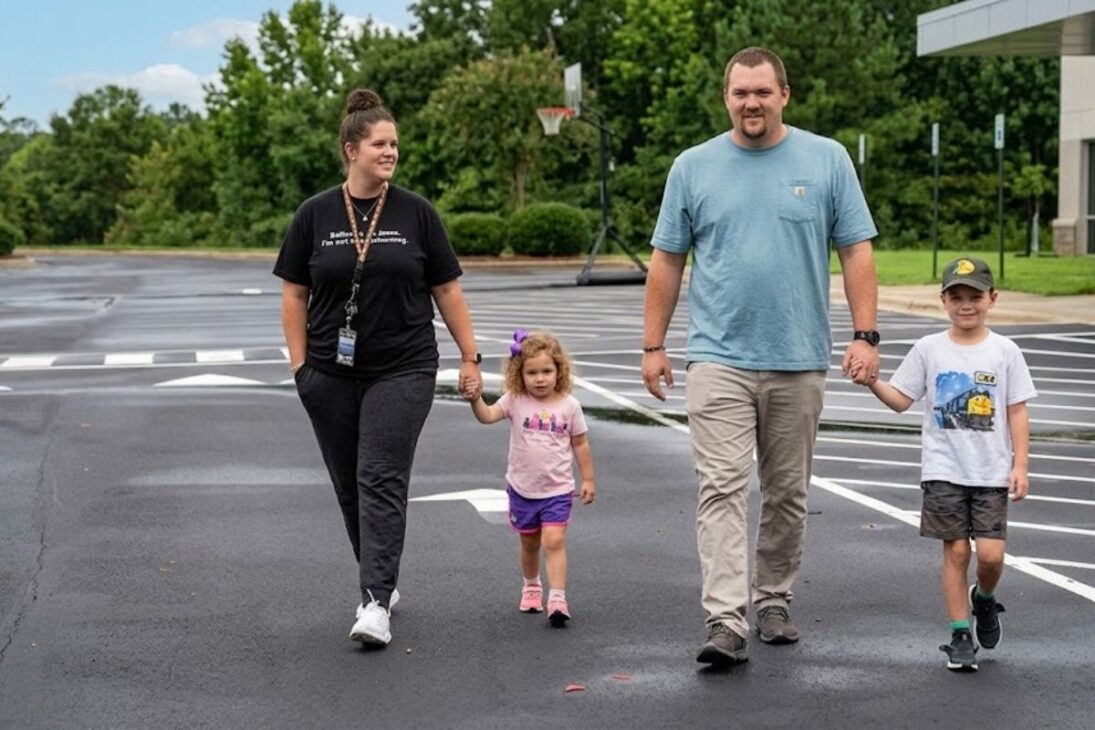
Graham’s family expressed pride in the boy’s attitude, but the episode went beyond affectionate recognition. The boy’s mother highlighted the child’s observant nature and the fact that he learned an essential lesson: when someone sees something wrong, they need to alert.
This stance, repeated many times in safety campaigns, gained in that moment a concrete, spontaneous, and easy-to-understand example.
The account of those present reinforces this value. Graham did not try to turn the situation into a game nor did he ignore what he saw. He identified the problem and communicated it. Seeing something and saying something was the behavior that summed up the entire occurrence.
Instead of an exaggerated or heroic gesture in a cinematic sense, what occurred was attention, speed, and a sense of responsibility, something even more remarkable for coming from such a young child.
What This Case Reveals About Attention And Safety In Everyday Life
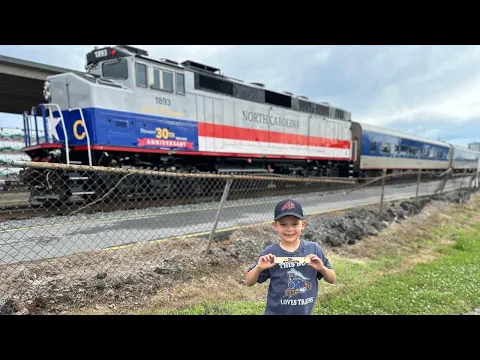

The episode in Waxhaw also demonstrates how critical situations do not always begin with a loud bang. Sometimes, the risk appears quietly, resting on the tracks, waiting just a few minutes to turn into a problem. The first person to notice may not be an official agent, a technician, or an employee, but an ordinary person who knows the area and notices what has deviated from the norm. In this case, that is exactly what happened with Graham.
The contrast between the boy’s age and the practical effect of his attitude is also striking. At 6 years old, he had no way of solving a railway problem by himself, but he had the discernment to do what was within his reach: alert an adult immediately.
This type of simple, objective, and correct reaction prevented the train from approaching the obstacle unprepared. That is why the story resonated so much and came to be seen as an example of presence of mind.
An Ending That Transformed An Ordinary Morning Into A Permanent Memory
What seemed to be just another routine moment of train observation in the city center ended with a lesson hard to forget. Graham was in his favorite spot, watching something he loved to see, when attention to detail made all the difference. The train was alerted in time, the emergency brake was activated, and the train stopped before hitting the fallen tree on the tracks.
In the end, the episode gained significance because it brings together very strong elements: childhood, routine, real risk, and immediate reaction.
It was not just a curious story about a boy who loves trains, but a case in which that interest helped to prevent a potentially serious occurrence. And what do you think, is children’s attention to what happens around them often underestimated?







-

-

-

13 pessoas reagiram a isso.