





 Portuguese
  English
  Spanish
  5 min of reading
  0 comments



At Only 4 Years Old, Little Zorien Royce from the United States Achieved an IQ of 156, Speaks Five Languages, and Was Accepted into Mensa International, Becoming One of the Youngest Members on the Planet.
While many children his age are still learning to read and count, Zorien Royce, at just 4 years old, is already able to converse in five languages, solve complex problems, and interpret texts aimed at teenagers. The extraordinary feat was confirmed in September 2025 when Zorien — a resident of Vernon Hills, Illinois (USA) — scored 156 points on the Wechsler IQ test, a result that placed him among the top 0.1% most intelligent people in the world.
According to a report from Lake and McHenry County Scanner and coverage in People Magazine, the boy was accepted not into one, but two international high IQ societies, including the renowned Mensa International and Intertel, which only include people with results above 98% of the global population.
“We always knew he was curious and very advanced for his age, but we had no idea how much,” said his mother, Tierra Royce, in an interview.
ARTICLE CONTINUES BELOWSee also
Sleeping at different times each day can be a bomb for your heart and even double your risk of having a heart attack.

Without help and without heavy machinery, a woman builds a house from scratch with stone, wood, and cement, erects a chimney, creates a complete leisure area, and transforms an empty lot into her dream home.

Couple transforms abandoned house after years of being closed; residence was overgrown with weeds, had a green pool, and a deteriorated structure in the interior of Rio de Janeiro.

Hidden marks on the walls of the site associated with the Last Supper of Jesus for centuries have been deciphered in Jerusalem, revealing medieval inscriptions left by pilgrims, European nobles, and travelers from the Middle East.
IQ 156: The Same Estimated Level as Einstein
Zorien’s result is comparable to the IQ attributed to geniuses such as Albert Einstein and Stephen Hawking, both estimated to be around 160 points.
According to the clinical psychologist who administered the test, the boy exhibited logical reasoning and visual memory far above the child average, along with an unusual vocabulary mastery for his age.
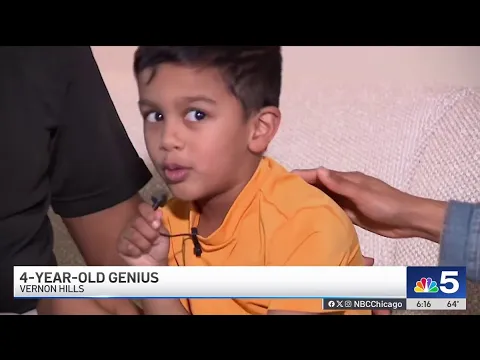

The Wechsler test, one of the most respected in the field of psychometrics, assesses skills in language, reasoning, perception, and memory. In all categories, Zorien stood out with performance of children four to six years older.
Five Languages Before Age 5
At 4 years old, Zorien already speaks English, Spanish, French, Arabic, and Japanese with a surprisingly high level of comprehension. According to his parents, his interest in languages arose naturally from educational videos and cartoons in other languages.
“He doesn’t just repeat words — he understands structures and creates new sentences. Sometimes he mixes languages to explain concepts, something typical of adult polyglots,” his mother reported in an interview with Lake County News.
According to cognitive development specialists, Zorien’s linguistic ability is a rare phenomenon, associated with the so-called early child hyperlanguage, where the brain shows high plasticity to absorb diverse sounds and linguistic patterns.
Acceptance into Mensa International
Mensa is the largest and oldest high IQ society in the world, founded in 1946 in the United Kingdom. To join, one must achieve a score above 98% of the population on standardized intelligence tests.
Zorien’s entry was officially confirmed in August 2025, making him one of the youngest members ever accepted in the organization’s history.
Additionally, the boy was also invited by Intertel, which admits only individuals scoring in the 99.9th percentile — something achieved by less than 0.1% of the global population.
Atypical Child’s Routine
Despite all the media attention, Zorien’s parents are keen to maintain a normal and balanced routine. He attends a regular school, where he receives specialized support to prevent disinterest or boredom in traditional activities.
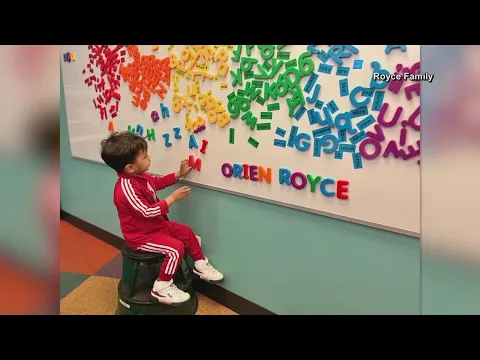
The boy enjoys astronomy, robotics, and reading and, according to his parents, spends hours creating drawings inspired by planets and spaceships. Zorien also shows great interest in programming and mathematics, able to solve simple equations and build complex structures with building blocks.
“He loves numbers and patterns. If he sees something different, he wants to understand why. Learning is like fun for him,” explained his father, Trevon Royce, to the NBC Chicago network.
Child Geniuses: A Growing Phenomenon
Cases like Zorien’s have caught the attention of the scientific community and the international press.
In recent years, advancements in child cognitive testing and greater access to digital education have increased the number of children identified as gifted at a young age.
According to the American Psychological Association (APA), around 2% of children worldwide exhibit some degree of intellectual giftedness, but only a fraction is formally identified. In many cases, recognition comes after signs such as early reading, advanced language, interest in sciences, and complex questions about the world.
In Brazil, specialists estimate that around 400,000 children have similar potential, but only 30,000 are officially registered in gifted programs, according to data from the Ministry of Education.
The Role of Family and Differentiated Education
Psychologists warn that giftedness should not be seen solely as talent, but also as a emotional and educational challenge. Children like Zorien need appropriate stimulation and psychological support to cope with the differences from their peers.
“These children can suffer from loneliness and frustration if the school environment does not keep up with their pace,” explains educational psychologist Dr. Laura Mason, an early education consultant in the USA.
Zorien’s family chose to balance cognitive development with artistic and recreational activities, ensuring a healthy childhood. The boy takes music lessons, participates in science clubs, and maintains a daily routine of screen-free play.
Giftedness and Cultural Diversity
Zorien’s case also stands out for another reason: he is one of the rare African American members to join Mensa International in childhood, which reignites the debate about diversity in access to IQ tests and advanced educational opportunities.
According to a survey by the National Center for Education Statistics (NCES), Black and Latino children are underrepresented in gifted programs in the USA, despite exhibiting comparable cognitive abilities.
Zorien’s story, therefore, breaks stereotypes and serves as inspiration for families from diverse backgrounds seeking to identify and support their children’s potential.
A Promising Future
Zorien’s future is still open, but his parents say they plan to focus on emotional and creative development before any academic acceleration. The boy shows interest in astronomy and technology — and has stated he dreams of “creating robots that help people,” according to a report from NBC News.
Experts assert that, if given the right encouragement, the boy could become a leading researcher in areas such as linguistics, artificial intelligence, or cognitive sciences.
“Zorien is a rare combination of curiosity and empathy. He wants to understand the world but also help people,” his mother summarizes.
The story of little Zorien Royce reinforces a global trend: the emergence of children with extraordinary intelligence levels identified at increasingly younger ages.
At 4 years old, he already speaks five languages, masters complex reasoning, and is part of a select group of geniuses recognized worldwide.
More than just numbers, this case inspires families and educators to value talent and curiosity, demonstrating that genius can bloom where least expected.










-

-

-

-

-

-

401 pessoas reagiram a isso.