





 Portuguese
  English
  Spanish
  5 min of reading
  0 comments


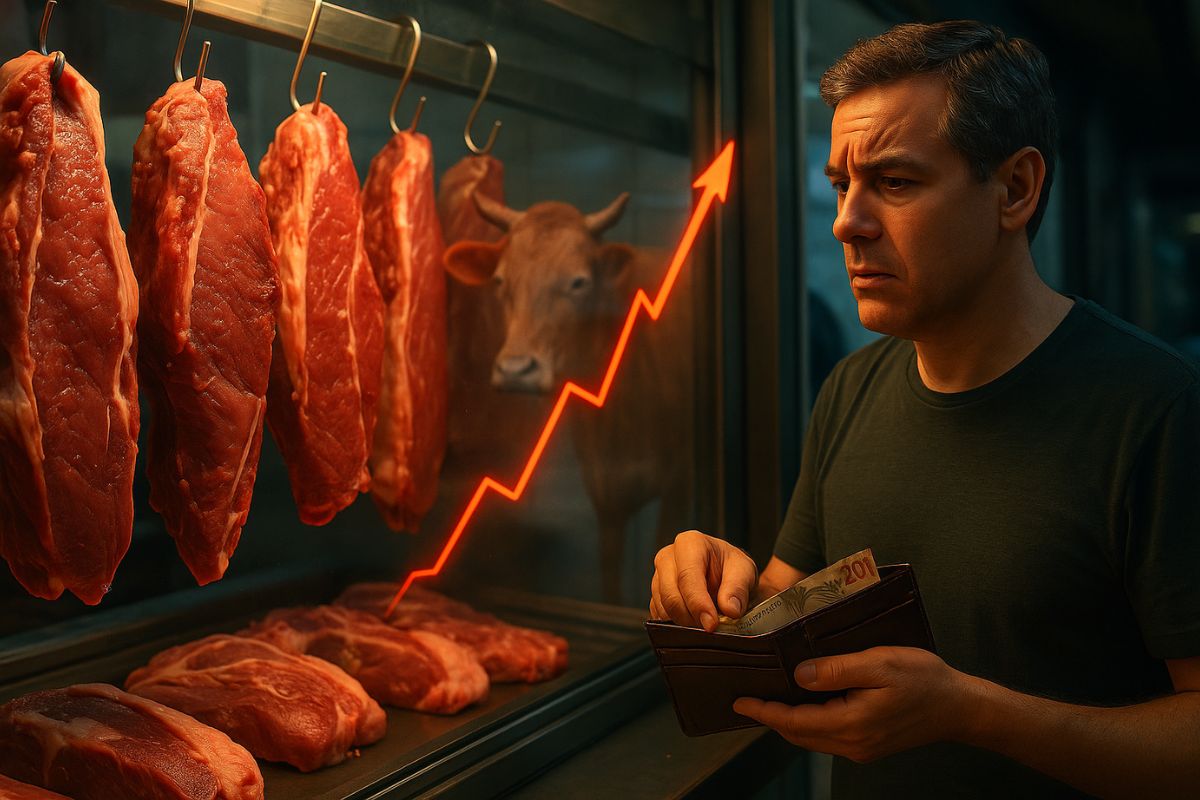
According to IBGE, even with small monthly declines, beef has already increased by more than 22% in 12 months and will remain expensive in the coming years, pressured by record exports and lower availability of cattle for slaughter.
Beef continues to be one of the biggest villains of inflation in Brazil. According to data from the Brazilian Institute of Geography and Statistics (IBGE), in August there was a slight decrease of 0.43% in the average price, but this drop is insufficient given the accumulated inflation of 22.17% in 12 months. The trajectory of prices indicates that, even with occasional reliefs, the trend is for high costs until at least 2027.
The impact is felt in all households, but especially at the tables of lower-income families. Since beef represents one of the main sources of protein in the Brazilian diet, any price variation disproportionately affects household budgets. The general perception of the population is that, even when it drops for a month, the product remains expensive and distant from the reality of most.
Popular Cuts Are the Most Expensive

The chuck increased by 29.1%, the brisket rose by 27.4%, and the muscle became 24.6% more expensive in 12 months.
-
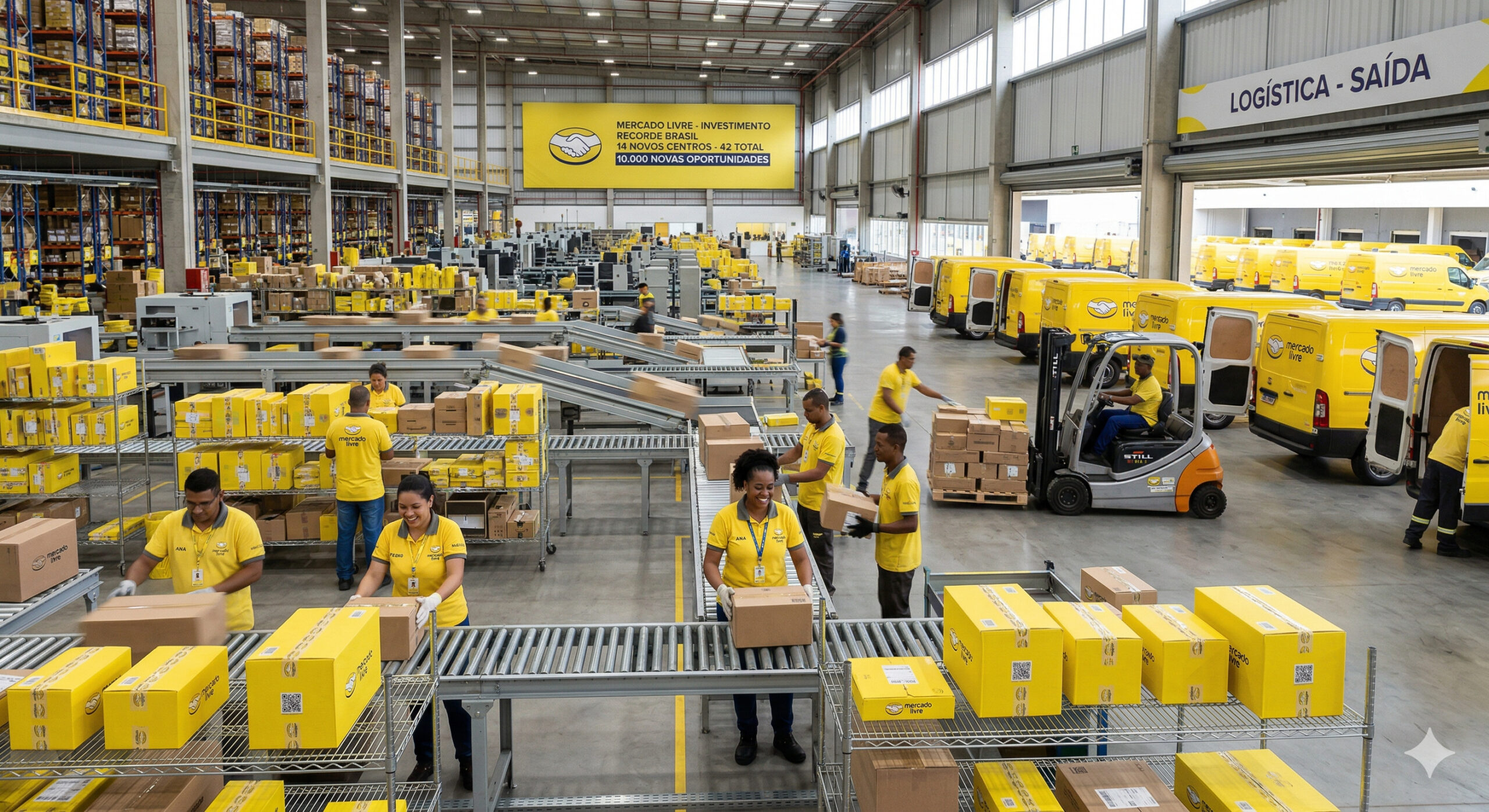
Mercado Livre “opens the vault” and announces a record investment of R$ 57 billion in Brazil in 2026, a value 50% higher than the previous year, with an expansion plan that includes 14 new logistics centers, totaling 42 units in the country and hiring an additional 10,000 employees.
-
How investment in technology can revolutionize the national economy and enhance industrial gains, according to a study that highlights the direct impact on productivity, innovation, and wealth retention within Brazil.

-
The largest food company on the planet, JBS, has just opened a 4,000 square meter laboratory in Florianópolis to develop customized proteins that modulate muscle mass gain, immune response, and metabolic performance.

-
After nearly 30 bids and competition among industry giants, a Spanish company purchases one of the largest airports in Brazil for almost R$ 3 billion and takes over the management of Galeão in a concession that will last until 2039.


Even premium cuts, traditionally accessible only to higher-income consumers, saw significant increases: the tenderloin rose by 19.1% and the picanha increased by 12.1%.
This surge increases access inequality.
For the middle class, maintaining frequent beef consumption has already become a challenge.
For low-income families, substituting with cheaper proteins, such as chicken and pork, has become the only option.
The movement is noticeable in consumption data and also in fairs and supermarkets, where beef cuts occupy less and less space in carts.
Exports at an Accelerated Pace
One of the central factors behind the escalation is the strength of Brazilian exports.
Even after the “tariff hike” imposed by the United States under Donald Trump’s administration, Brazil maintained robust performance in the international market.
The US fell to fifth place among the largest importers, but countries like China, Mexico, Russia, and Chile quickly compensated for the loss.
In the case of Mexico, sales skyrocketed.
Between January and July 2025, shipments tripled compared to the same period in 2024, demonstrating the competitiveness of Brazilian beef.
According to Abiec (Brazilian Association of Exporting Meat Industries), the expectation is that exports will grow 12% in 2025.
This increase, however, reduces availability in the domestic market and directly pressures prices for the Brazilian consumer.
Lower Supply of Cattle Until 2027

Experts project a decline in cattle slaughter starting in 2026, a scenario that is expected to intensify in 2027.
The reduction is related to the livestock cycle, difficulties in replenishing herds, and the cost of production for ranchers.
This movement is not exclusive to Brazil.
In the United States, another major global producer, meat availability is expected to fall 2.3% in 2025 and 4.1% in 2026, reinforcing global pressure on prices.
With lower supply both in Brazil and abroad, the expectation is that beef will remain at high levels for years.
Wages Do Not Keep Up with Beef Prices
Another critical aspect is the relationship between prices and wages.
Economist André Braz, from Fundação Getúlio Vargas (FGV), states that workers’ incomes have not kept up with rising beef prices.
In other words, even when there are occasional drops, consumers continue to feel the pinch.
“Beef has risen much more than the average wages. Even if there is a slight decrease, the perception is that it remains expensive,” explains Braz.
This disparity causes beef consumption to become increasingly restricted.
In many cases, families choose to reduce the frequency of purchases or turn to cheaper alternatives to ensure quality protein.
Beef as a Luxury Product

For him, this is a global phenomenon. “Most will continue to rely on more accessible proteins, such as chicken and pork, which offer good nutritional value at a lower price,” points out Iglesias.
This transformation changes the profile of the consumer market.
In Brazil, beef, which was once a symbol of abundance and a mandatory presence at Sunday lunches, is on its way to becoming a luxury item.
This is expected to impact everything from the industry to small butcher shops and supermarkets, which will need to adjust their sales strategy in light of a product that is becoming less and less accessible.
Outlook for the Coming Years
Experts unanimously agree that there is no prospect for normalization in the short term.
On the contrary: the combination of strong exports, limited cattle supply, and stagnant income creates a scenario of high prices at least until 2027.
In this context, beef is expected to lose ground to other proteins, while the more expensive beef cuts solidify as products aimed at specific consumer niches.
The challenge for Brazil is to balance the economic relevance of exports with the need to ensure the population’s access to quality food.
Beef, which was once a symbol of abundance on the Brazilian table, now weighs on the budget like never before.
Even with occasional drops, the accumulated inflation of over 22% in 12 months shows that the product will remain expensive in the coming years.
And you, have you reduced your beef consumption because of the price? Do you believe it will fit back into the budgets of Brazilian families or will it become a luxury item restricted to a few? Leave your opinion in the comments — we want to hear from those living this reality.








-

-

-

-

7 pessoas reagiram a isso.