





 Portuguese
  English
  Spanish
  3 min of reading
  0 comments


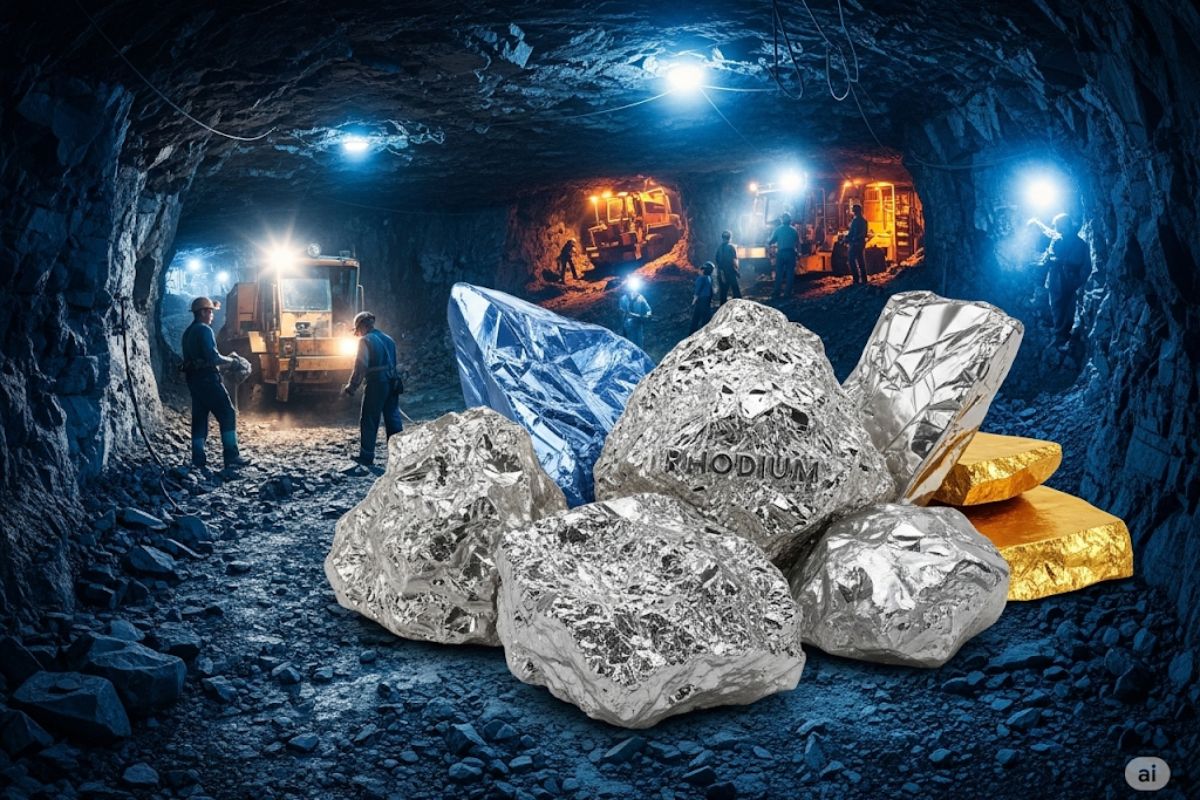
Forget Gold or Platinum. The Title of the Most Expensive Metal in the World Commonly Belongs to Rhodium, a Rare Metal Used in Automotive Catalysts and Known for Its Extreme Price Volatility.
When thinking of the most expensive metal in the world, gold and platinum are the first that come to mind. However, a lesser-known metal to the general public, rhodium, often holds this title, reaching values that far exceed those of its more famous cousins. This prominence is driven by its crucial use in the automotive industry.
The common perception elects gold and platinum as the most valuable metals. However, rhodium often stands out as the most expensive tradable precious metal, a reality that surprises many. Its irreplaceable role in automotive catalysts is the main reason, but its rarity and the complexity of its extraction also contribute to this valuation and to a volatile market.
What Is Rhodium and Why Does Its Price Reach Such High Levels in the International Scenario?
Rhodium is a platinum group metal, characterized by being rare, hard, silvery-white, with a bright luster and exceptional resistance to corrosion and oxidation – it typically does not form oxide. Its high value mainly derives from its critical and, so far, irreplaceable function in three-way automotive catalysts, where it is essential for reducing nitrogen oxides (NOx) emissions in gasoline vehicles.
-
Brazil extracts 26.3 million tons of ore from what was previously treated as waste, transforming residues into wealth, producing over 3 million tons of sand, and demonstrating how national mining is relearning to generate value.

-
A $3.5 billion megaproject in Latin America pumps desalinated seawater at 1,050 liters per second over 194 km to keep a copper supermine in the Andes operational for another 20 years.

-
A hidden mine in the Andes valued at nearly R$ 1 trillion is starting to attract global attention, containing copper, gold, and silver, and raises an intriguing question: why do Argentina and Chile need to act together to exploit this gigantic wealth?
-
A silent discovery in the interior of Bahia could change the future of energy in Brazil: a uranium reserve in Lagoa Real has an estimated capacity to produce 400 tons per year and is already attracting the attention of energy sector specialists.

Although its market is smaller and less liquid than that of gold, rhodium is considered “commercially viable” due to this essential industrial demand, which accounts for 80-85% of its consumption.
Rhodium vs. Gold vs. Platinum: A Comparative Analysis of Current Prices (May 2025) and Historical Quotations

At the end of May 2025, rhodium confirmed its position as the most valuable metal among the three. The price of rhodium ranged from approximately $166.54 to $186.48 per gram, while gold was traded between $102.88 and $107.70 per gram, and platinum between $31.19 and $35.36 per gram.
Historically, rhodium is notorious for its extreme volatility. It reached a dramatic peak of around $29,800 per troy ounce in March 2021, contrasting with values around $600-$800 per ounce between 2016-2017. After 2021, it underwent significant corrections.
Gold, in turn, had a more gradual upward trajectory, and platinum often lagged behind gold in recent years. Between 2019 and 2022, rhodium consistently surpassed $10,000 per ounce, while gold and platinum traded at much lower levels.
Understanding Supply, Demand, and Accentuated Volatility
The unique position of rhodium is shaped by specific factors. Its supply is limited by geological rarity (0.0002 parts per million in the earth’s crust) and it is almost exclusively a byproduct of platinum and nickel mining, with about 80% of global production concentrated in South Africa. This makes the supply inelastic and vulnerable to disruptions.
The demand is overwhelmingly dominated by the automotive sector (80-90%), driven by increasingly stringent global environmental regulations for NOx emissions control. The rhodium market is smaller, less liquid, and has limited investment demand compared to gold, which amplifies price fluctuations. Recycling of automotive catalysts is a growing source of secondary supply.
Other Industrial Applications of Rhodium and Future Prospects for This Valuable and Volatile Precious Metal


Despite automotive dominance, rhodium has other important applications. In the chemical industry, it is used as a catalyst in the production of nitric acid and acetic acid. In electronics, it is used in electrical contacts due to its low resistance and high corrosion resistance, and in thermocouples for measuring high temperatures. In jewelry, it is widely used to plate white gold and silver, providing shine and durability.
The future of rhodium is complex. The transition to battery electric vehicles (BEVs), which do not use catalysts, represents the greatest long-term threat to its demand. Efforts to reduce the amount of rhodium per catalyst (“thrifting”) and develop alternatives may also moderate demand. However, as long as internal combustion vehicles with stringent emission controls continue to be produced, the demand for rhodium should remain robust in the short and medium term.










Seja o primeiro a reagir!