





 Portuguese
  English
  Spanish
  2 min of reading
  2 comments


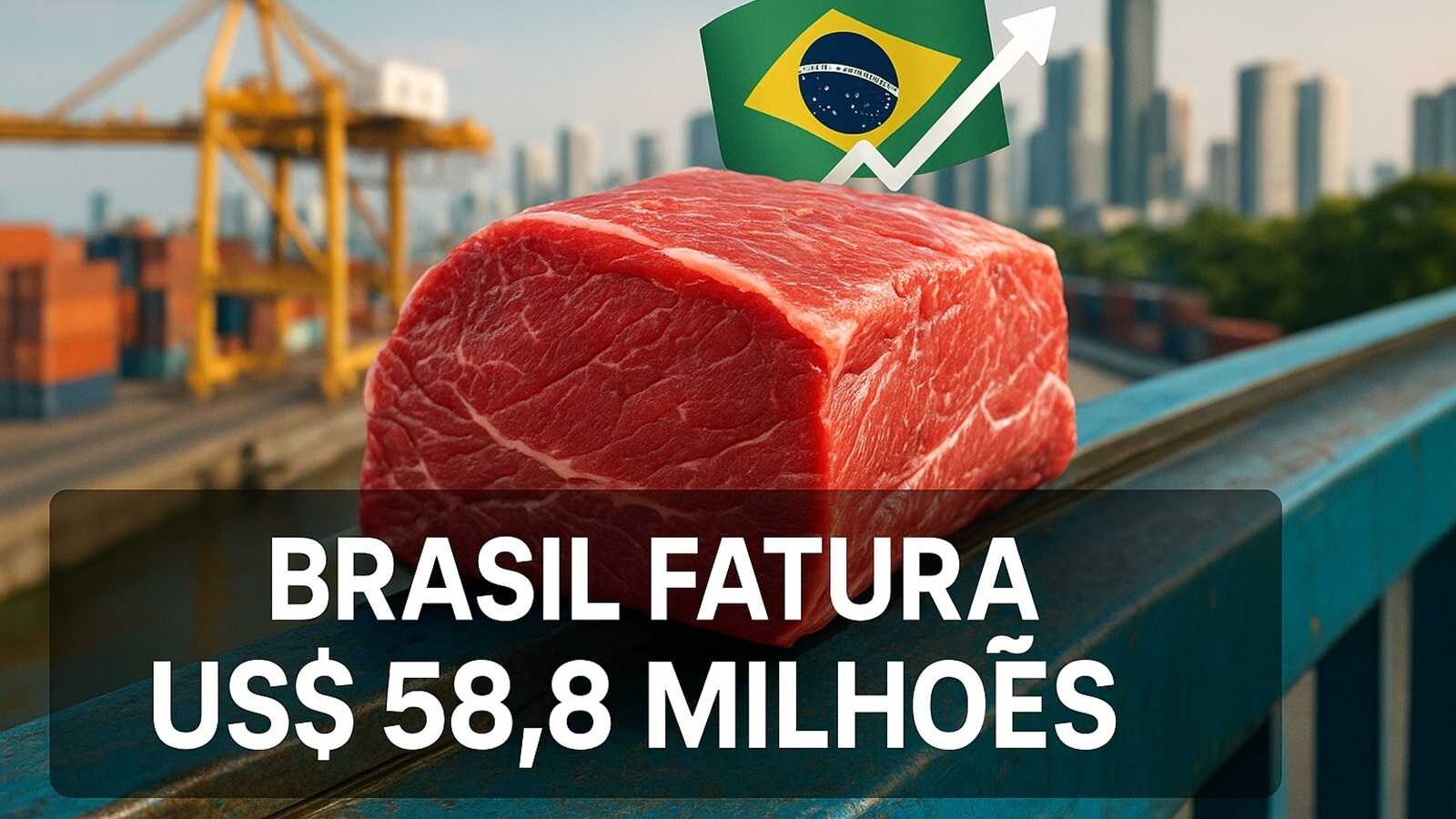


In Less Than A Month, Mexico Establishes Itself As The Main Destination For Brazilian Beef, Surpassing The United States And Moving 10.2 Thousand Tons In The Period.
The international scenario of Brazilian beef took a turn in August. Mexico surpassed the United States and became the second largest destination for Brazilian exports in the sector, second only to China.
This movement occurs at a time when the Donald Trump administration decided to impose additional tariffs on the Brazilian product, altering the flow of trade.
Historic Turnaround In The Ranking
Until July, the United States held the second position among the top buyers of Brazilian beef.
-
Geometric cranberry bogs in Wisconsin flood entire fields and turn red during harvest, creating an agricultural mosaic so intense and out of the ordinary that it transforms wetlands in the United States into one of the most stunning landscapes ever seen from space.

-
At 96 years old, the last survivor of a colony of Japanese immigrants who arrived in the Amazon in 1929 saw his community create an agricultural method that transforms destroyed pastures into forests that produce food year-round and attract researchers from around the world.
-
This rare yellow clay at the top of a plateau in northern Pará is transforming one of the poorest regions of Brazil into a new agricultural frontier, with producers already harvesting three crops a year from the same soil.

-
Brazil has avoided deforestation of 50 million hectares in the last three decades thanks to increased productivity in the field, and now low-carbon agriculture wants to prove that the country is part of the climate solution and not the problem.

With the change in regulations, shipments fell. From August 1 to 25, Americans imported 7.8 thousand tons, totaling US$ 43.6 million.
In the same period, Mexico purchased 10.2 thousand tons, moving US$ 58.8 million. Russia and Chile also surpassed the U.S., each with 7.9 thousand tons.
The drop occurred because, outside of a tariff-free quota, Brazilian beef was already paying a 26.4% fee to enter the U.S. The Trump administration added another 50%, making the product less competitive.
Economic Diplomacy
The Mexican advance is no coincidence. In the same month that the figures were released, Vice President Geraldo Alckmin led a mission to the country to expand partnerships.
The goal is to reduce the effects of the barriers imposed by the United States and open new opportunities for Brazilian meatpackers.
According to information from G1, the Brazilian Association of Exporting Meat Industries (Abiec), efforts are underway to negotiate a free trade agreement with Mexico.
The intention is to provide stability to exports, as, in 2024, Brazil accounted for 23.5% of Mexico’s beef imports.
Accelerated Growth
The numbers confirm the trend. From January to July, Brazil sent 67.6 thousand tons to Mexico, nearly triple the same period the previous year. In value, it was US$ 365 million, consolidating the country as a strategic client.
Abiec emphasizes that, in addition to beef, Mexicans import chicken, pork, soybeans, forest products, and coffee from Brazil.
Only beef accounted for 20% of the total exported by Brazilian agribusiness to Mexico in 2025.
Partner, Not Substitute
Despite Mexico’s rise, the organization avoids talking about substitution. For Abiec’s president, Roberto Perosa, the United States remains a fundamental market.
“We continue to engage with the Brazilian government and American importers to fully restore the commercial relationship,” he stated.
Meanwhile, Mexico strengthens itself as an alternative amid tariff pressure. With an increase in authorized meatpackers and ongoing negotiations, the country takes on a central role in the Brazilian strategy, in a landscape where politics and trade intermingle.









Vamos falar a verdade? Não é que o México passou a comprar mais. Os EUA é que deixou de comprar. Mas até quando o México continuará a comprar?
“Apesar da Ascenção Mexicana a Abiec evita falar em substituição…” pq o governo permanece aberto a negociação na esperança do desgoverno Trump voltar atrás com o tarifaço.