





 Portuguese
  English
  Spanish
  5 min of reading
  0 comments


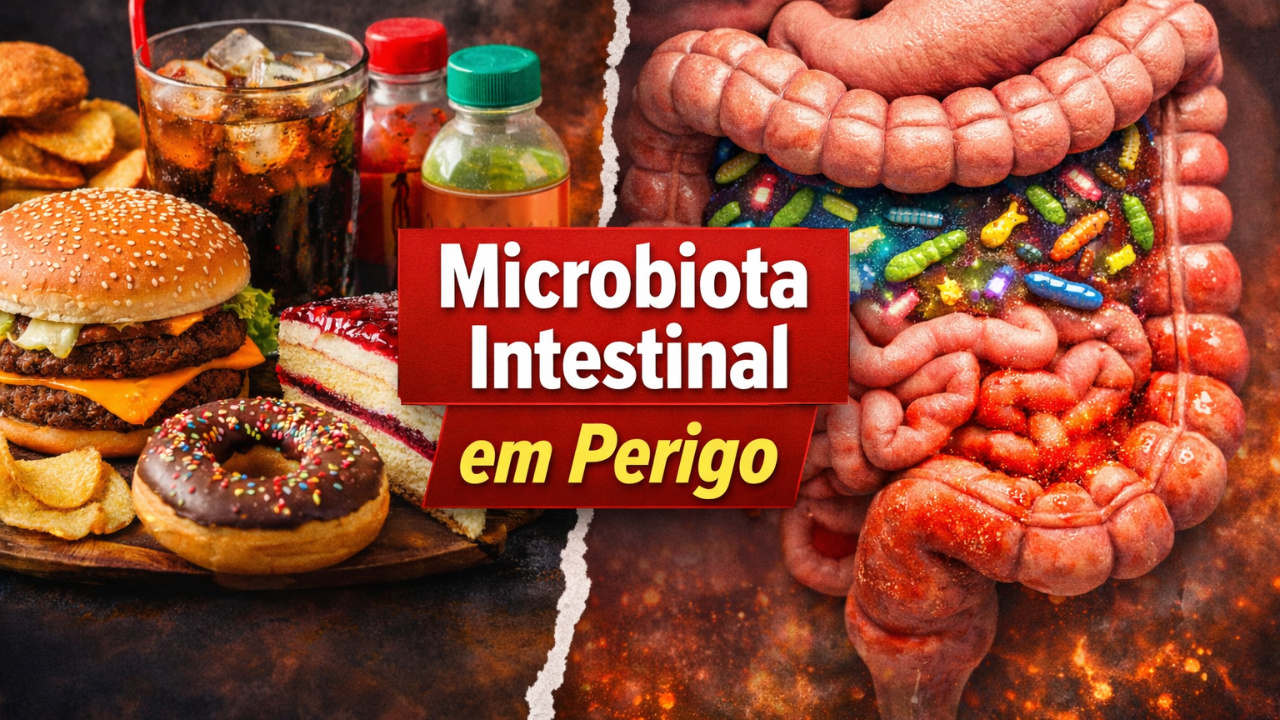
Studies Indicate That Ultra-Processed Foods And Food Additives Can Alter The Gut Microbiota And Impact Health.
Recent scientific research indicates that ultra-processed foods rich in food additives, especially food emulsifiers, can directly affect the gut microbiota, a set of microorganisms that live in the human intestine and play an essential role in gut health.
The topic has gained attention from researchers in Europe, Australia, and the United States, especially after new studies linked these common ingredients in the food industry to inflammation, metabolic changes, and digestive diseases.
These compounds are present in thousands of industrial products consumed daily, such as bread, ice cream, ready-made sauces, and desserts.
-
In Mexico, a 3,000-year-old Maya site with the dimensions of an entire city may have been built as a colossal map of the cosmos, created to represent the order of the universe and reveal how this people organized space, time, and rituals.

-
Japan wants to build a solar ring of 10,900 kilometers on the Moon to continuously send energy to Earth.

-
Weighing almost 1 ton, with temperatures of up to 3,000°C, the ability to launch 10,000 fragments within a radius of 1 km, capable of penetrating concrete and melting steel, Turkey’s terrifying bomb emerges as one of the most destructive non-nuclear weapons ever presented.

-
After a submarine disappeared beneath the “Doomsday Glacier,” scientists announce a new monstrous machine capable of operating at 3,000 meters depth to return to the heart of the ice and investigate a threat that could raise sea levels worldwide.


They are used to improve texture, flavor, and preservation of foods. However, scientific evidence suggests that frequent consumption may interfere with the balance of gut bacteria.
According to experts, understanding how food additives interact with the body has become one of the main frontiers of nutrition science.
What Is The Gut Microbiota And Why Is It So Important
The gut microbiota is composed of trillions of microorganisms that live in the digestive tract.
This microscopic ecosystem participates in essential functions of the organism, including digestion, immunity, and even mood regulation.
Nutritional epidemiologist Melissa Lane from Deakin University in Australia compares this system to a complex natural environment.
“You can compare gut diversity to a forest,” explains nutritional epidemiologist Melissa Lane from Deakin University in Australia.
According to her, the greater the diversity of microorganisms present in the intestine, the greater the organism’s resistance to diseases and inflammation tends to be.
“The more microbes you have in your forest, of more different types, the greater your resilience to potential disturbances.”
Studies indicate that people with lower bacterial diversity have a higher risk of inflammation, digestive problems, and sleep disorders.
More diverse microbiomes have been associated with longevity.
Nutrition professor Sarah Berry from King’s College London summarizes the importance of this system.
“It’s a whole ecosystem,” explains nutrition professor Sarah Berry from King’s College London. “It’s like an additional organ that we have in our body.”
How Ultra-Processed Foods Can Affect The Gut Microbiota
In recent years, scientists have begun to investigate how ultra-processed foods interfere with gut health.
These products typically contain various food additives, such as colorings, artificial sweeteners, and food emulsifiers.
Emulsifiers are substances that allow mixing water and fat, creating smoother textures and increasing the shelf life of foods.
They are responsible, for example, for the creaminess of ice cream or the prolonged softness of industrialized bread and cakes.
An analysis conducted in supermarkets in the United Kingdom identified 6,640 products containing food emulsifiers, representing about half of the items assessed.
Despite their technological usefulness, researchers have begun to investigate the possible impacts of these compounds on the gut microbiota.
Food Emulsifiers May Cause Intestinal Inflammation
One of the most cited studies on the subject was conducted by microbiologist Benoit Chassaing at the Pasteur Institute in France.
In experiments with mice, low doses of two common food emulsifiers caused gut bacteria to move closer to the intestinal wall, triggering inflammation and disease signs.
Normally, a layer of mucus protects the intestine and keeps microorganisms at a safe distance from the intestinal wall.
When this barrier is compromised, bacteria can penetrate the intestinal tissue.
According to Chassaing, this process can trigger chronic inflammatory diseases.
Studies With Humans Indicate Possible Metabolic Risks
In addition to animal research, population studies have also raised alerts about the effects of food additives on gut health and metabolism.
A French study involving over 100,000 adults, conducted in 2024, identified that people with higher consumption of emulsifiers had a greater risk of developing type 2 diabetes.
Another study involving more than 90,000 participants found possible associations between emulsifiers and a higher incidence of breast and prostate cancer.
Although these results indicate correlation — and not direct causation — they reinforce the need for further investigations.
In a small clinical study with human subjects, researchers also observed negative changes in the gut microbiota following the consumption of an emulsifier used as a thickening agent.
Diet Rich In Ultra-Processed Foods Reduces Gut Diversity
Another important experiment was conducted by Melissa Lane’s team.
The researchers compared two groups over three weeks. Both followed diets with similar calories and nutrients.
The difference lay in the level of processing of the foods.
One group mainly consumed shakes, soups, and industrialized bars — typical ultra-processed foods. The other followed a diet based on fresh and minimally processed ingredients.
Although both lost weight, the results on the gut microbiota were quite different.
The group with the less processed diet showed a more diverse microbiome and better gut health.
In contrast, participants who consumed more ultra-processed foods reported higher incidences of constipation, as well as bloating and abdominal discomfort.
According to Lane, the difference may be related to the type of fibers present in the foods.
“The diet with a higher content of ultra-processed foods contained mixtures of additives and much smaller amounts of minimally processed ingredients, while the diet with low levels of ultra-processed foods contained many different types of fibers from whole foods, and far fewer additives,” she explains.
The “Cocktail Effect” Of Food Additives
Another challenge for scientists is to understand the so-called cocktail effect.
This term describes the interaction between different food additives consumed at the same time.
As thousands of combinations are possible in modern diets, it becomes difficult to identify which specific ingredient may cause a certain effect.
Nonetheless, laboratory studies have already indicated that combinations of additives may increase cellular damage.
Moreover, experts highlight that many of these compounds have only been evaluated for direct toxicity.
“They are only tested for their toxicity effect or their ability to induce DNA damage,” explains Chassaing.
“And, in these two aspects, they are perfectly acceptable. But they have never been tested to determine the direct effect on the microbiota.”
How To Protect Gut Health In Practice
Thus, despite the concerns, experts do not recommend completely eliminating all industrialized foods.
For Kevin Whelan, a dietetics professor at King’s College London, the most important thing is to maintain a balanced diet.
“I wouldn’t want to tell the general public ‘never eat anything that has a food additive included’,” he explains. “I certainly don’t do that and I don’t recommend it to people.”
On the other hand, increasing the consumption of fresh foods can directly benefit the gut microbiota.
Fiber-rich diets, fruits, vegetables, and antioxidant compounds — such as polyphenols — help nourish the beneficial gut bacteria.
Sarah Berry emphasizes that cooking more at home can be a simple strategy.
Therefore, preparing meals with natural ingredients reduces the intake of ultra-processed foods and, consequently, food emulsifiers.
Additionally, moderation remains one of the pillars of a healthy diet.
Ultimately, small adjustments in the dietary routine can bring significant benefits to gut health and the balance of the microbiota that lives within us.
Read more at: How Food Preservatives Affect Gut Bacteria – BBC News Brazil










-

-

2 pessoas reagiram a isso.