





 Portuguese
  English
  Spanish
  5 min of reading
  0 comments


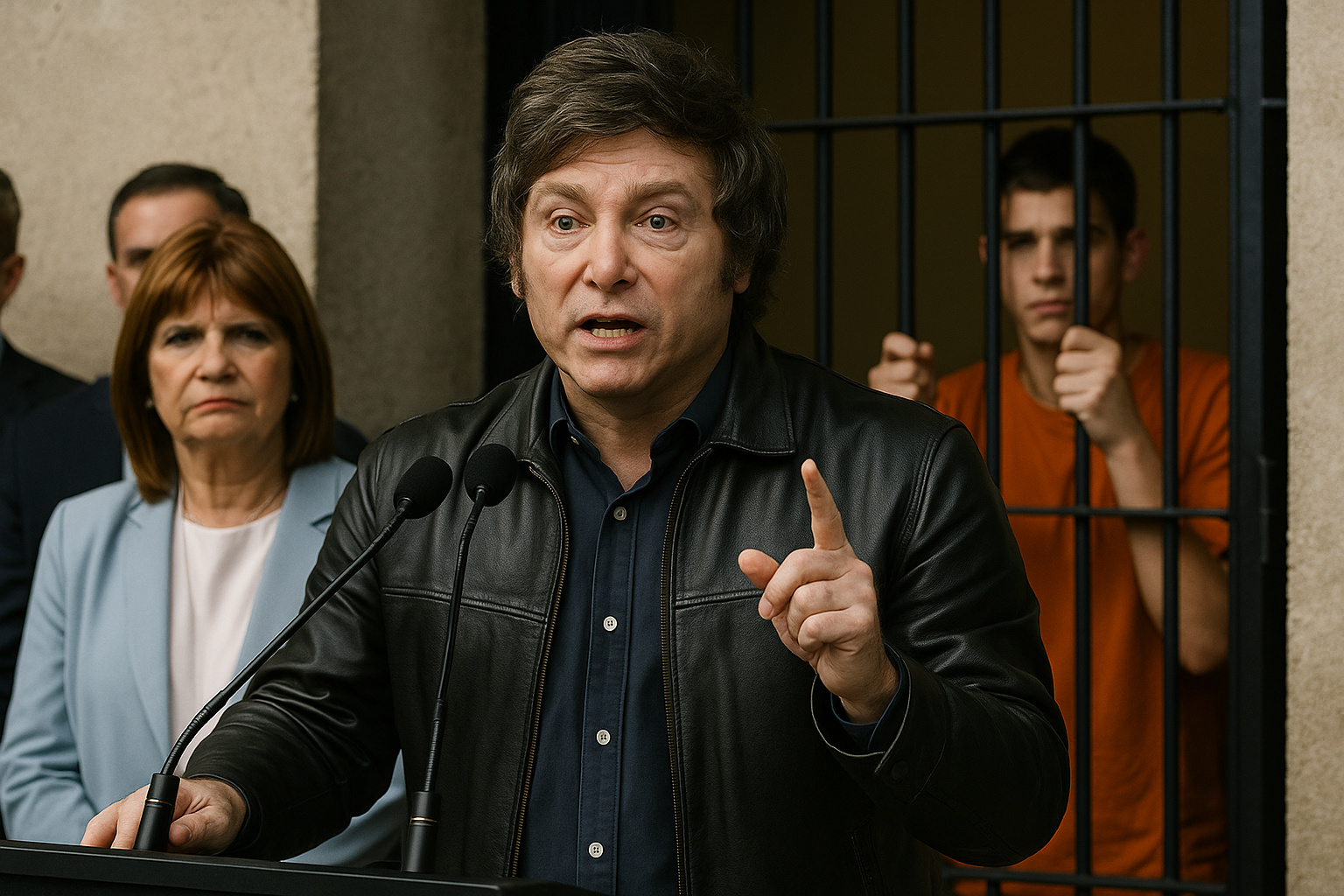
New Proposal Toughens Penalties, Expands Non-Prescriptible Crimes, and Rekindles Debate on Public Safety and Juvenile Responsibility in Argentina
On October 2, 2025, President Javier Milei presented a reform project for the Criminal Code in the city of Ezeiza, in the province of Buenos Aires. The announcement came just weeks before the legislative elections on October 26, intensifying the political climate.
The plan, which Milei defined as “zero tolerance”, provides for harsher penalties, reduction of the criminal age to 13 years, and creation of new non-prescriptible crimes. Additionally, it includes procedural changes to accelerate trials and harden sentences. According to him, “those who commit crimes will truly pay,” which will bring more safety to the population.
According to Reuters, the measure is part of an electoral strategy. Thus, Milei seeks to reinforce the discourse of order and discipline amid rising crime rates in Argentina’s major cities.
-
USA and China compete for Brazil over resources that could be worth trillions — rare earths put the country at the center of a global dispute

-
Global summit with over 40 countries pressures Iran for a blockade in the Strait of Hormuz and warns of direct impact on oil, food, and the global economy.

-
Russia has broken the U.S. maritime blockade to send oil to Cuba and is now loading a second ship while Trump says that “Cuba is next” in a possible military action against the island.

-
Spain challenges the USA and closes its airspace for operations against Iran, raising global tension and provoking the threat of a trade rupture.


Reform Toughens Penalties and Expands Crimes
The presented project proposes an unprecedented toughening of Argentina’s criminal laws. The Minister of Security, Patricia Bullrich, classified the text as a “Zero Tolerance Criminal Code”, as it increases penalties for almost all crimes and creates new criminal classifications.
Among the Main Changes Are:
- Aggravated Homicides: penalty increased from 10 to 30 years.
- Murders at Public or Sporting Events: life imprisonment.
- Illegal Possession of Firearms: crime without bail.
- Increased Penalties for robbery, drug trafficking, human trafficking, kidnapping, fraud, child pornography, and harassment.
- Public Corruption: harsher punishments for presidents, ministers, governors, and judges.
In addition, the text proposes that crimes like terrorism, sexual exploitation, trafficking of minors, and qualified homicides be non-prescriptible, meaning there will be no time limit for punishment. This way, the government aims to prevent impunity.
Reduction of the Criminal Age Divides Opinions
However, one of the most controversial points of the proposal is the reduction of the minimum age for criminal responsibility to 13 years, currently set at 16.
According to Patricia Bullrich, “traffickers use 14 and 15-year-olds as soldiers,” taking advantage of the gaps in the law. For this reason, the government seeks harsher judgments and punishments for adolescents involved in serious crimes.
According to experts from the Buenos Aires Times, this proposal rekindles the debate on juvenile criminalization. Additionally, jurists and psychologists warn that the measure may exacerbate prison overcrowding and increase recidivism among low-income youth.
On the other hand, conservative groups argue that impunity stimulates violence. Thus, they advocate for harsher and more immediate responses given the rise of urban crime.
Government Aims to Accelerate Trials and Ensure Full Enforcement of Sentences
The project also aims to streamline judicial processes and prevent sentence reductions. “Criminals must serve their time in prison, where it is due. Only then can honest Argentines live in freedom,” declared Milei during the event in Ezeiza.
According to the Ministry of Justice, the plan seeks to close legal loopholes, reduce excessive appeals, and prohibit alternative sentencing measures, which are frequently used in the Argentine system. Thus, the government aims to ensure effective punishments and restore confidence in Justice.
Additionally, political analysts point out that the reform reinforces the image of authority of the president. This occurs at a time of high tension with Congress and growing criticisms from the opposition.
Political Impact and Leadership Crisis
The announcement of the reform coincided with the resignation of José Luis Espert, Milei’s main political ally in the 2025 legislative elections. The departure, confirmed by Reuters, was seen as a strategic setback for the government, as Espert was a key player in the coalition.
Furthermore, Congress overturned presidential vetoes on public university funding and child health projects, which represented new political defeats for Milei.
Despite the difficulties, the president promised to continue fighting for the full approval of the reform still in 2025. He emphasized that “freedom only exists when there is law and order,” a phrase that summarizes his political line.
Social Consequences and Human Rights Criticism
While the government insists on its agenda of penal toughening, several human rights organizations have expressed concern.
Amnesty International and the Center for Legal Studies of Buenos Aires stated that the reduction of the criminal age violates international treaties and harms fundamental rights of children and adolescents.
Additionally, they warned of the risk of criminalizing poverty, as most minors in prison come from disadvantaged communities.
The Society of Criminology of Argentina highlighted that simply increasing penalties does not solve structural violence. Therefore, they advocate for investments in education, prevention, and social policies as long-term alternatives.
Argentina Between Penal Populism and Social Pressure
Milei’s proposal reflects a regional trend of penal populism, where governments adopt swift punitive responses to curb the rise of violence.
On the other hand, experts like sociologist Ricardo Di Tella from the University of Buenos Aires warn that “without reforming the police and the prison system, isolated repression is ineffective.”
Even so, the government maintains a firm tone. For Milei, “zero tolerance is the only way to ensure freedom and security,” a phrase he frequently repeats in speeches and interviews.
What Does the Future Hold for Argentina?
With the debate ongoing, the country prepares for a heated legislative battle. If approved, the reform could redefine the Argentine penal system and change the way the state deals with crime.
However, critics argue that the toughening of the law may amplify social inequalities without actually reducing violence.
Thus, Argentina faces a crucial choice: prioritize harsher penalties or invest in social policies to restore security.
And you, what do you believe is more effective in reducing crime: harsher imprisonment for youth or education and social inclusion?









-

-

2 pessoas reagiram a isso.