





 Portuguese
  English
  Spanish
  4 min of reading
  0 comments


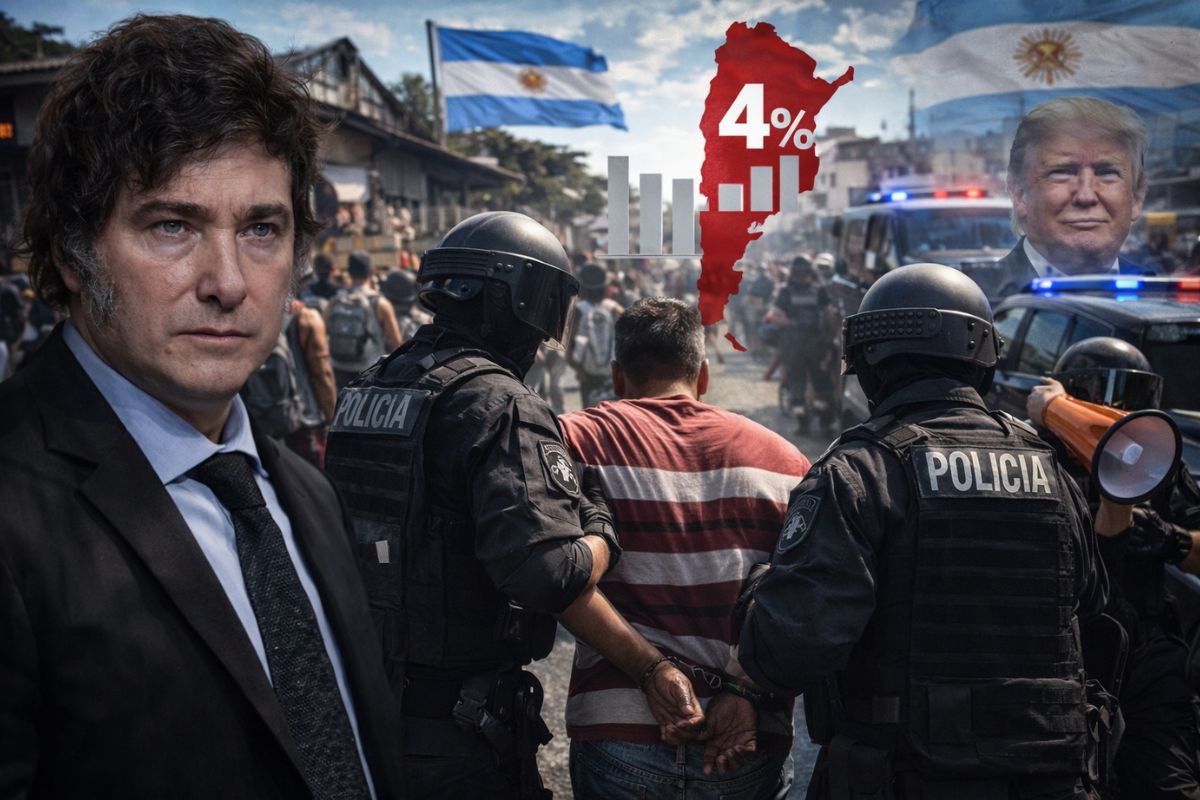
The Milei government began to conduct police raids in neighborhoods of Buenos Aires to check immigrant documentation but in the first operations only 4% were irregular while immigration in Argentina has been falling for years and experts say the policy is a replica of the Trump model without justification in real data
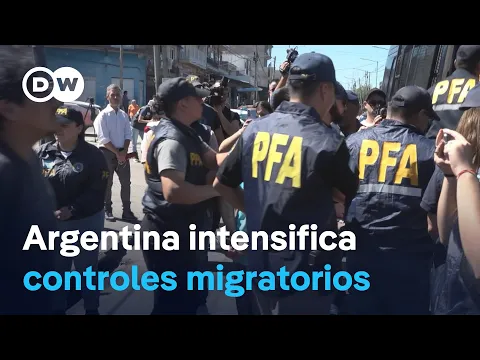
Since January, Milei’s Argentina has placed police on the streets to carry out surprise operations for immigration control, approaching immigrants to check if their documents are in order. According to information from the channel DW Español, those who are irregular receive a notification to regularize their situation, and those who do not comply may be deported. But the results of these operations tell a different story from the narrative that justifies them: in the first raids, only 4% of the immigrants approached were in an irregular situation.
This data is relevant because the rhetoric supporting Milei’s policy relies on claims that official numbers do not confirm. On social media, there is a discourse that 70% of residents in Argentine slums are illegal foreigners but official data shows that only 10% of residents in informal settlements are foreigners, and about 7% of the total immigrants in the country do not have complete documents. The gap between discourse and reality has led immigration experts to classify Milei’s policy as a replica of the Trump model applied to a context where the need does not exist.
What Milei is doing with immigrants on the streets of Buenos Aires
The surprise police operations take place in popular neighborhoods of the metropolitan region of Buenos Aires. The most recent occurred in Ingeniero Budge, a low-income neighborhood where anti-immigration rhetoric finds support among some residents.
-
Indonesia is the largest producer of tropical seaweed in the world, and this market is already worth billions of dollars, but 90% of the production goes directly to China as raw material. Now the country wants to change the game and process everything on its own.

-
This extremely contagious virus has already affected 90% of the population of Brazil and has no cure.

-
The São Paulo city has one doctor for every 100 inhabitants and still holds the title of the third best place to live in Brazil.

-
Brazilian chocolate made with fine cocoa from Bahia, without any preservatives or chemical additives, won second place for the best milk chocolate in the world and is now sold in the country that invented premium chocolate: Switzerland.

Police approach immigrants on the streets, check documentation, and advise those who are irregular to begin the regularization process. There have been no reports of violence during the operations so far.
The Milei government treats the raids as a measure of security and immigration order. In the party’s legislation, the justification is that anyone who wants to live in Argentina, whether for tourism, work, or residence, must comply with all the rules and laws of the country.
But what the data shows is that the vast majority of immigrants approached have their documentation in order, which raises the question: if only 4% are irregular, who are these operations really directed at?
What residents of the neighborhoods where Milei conducts operations think
Opinions in the neighborhoods where the raids occur are divided. Some Argentine residents support Milei’s controls, arguing that other countries also require documentation and that Argentina has historically been too permissive with the entry of foreigners.
“I think this is the only country that allows everyone to enter and that everyone can receive medical care without documentation”, said a resident during the operations.
But among immigrants, the atmosphere is one of fear. Most foreigners did not want to speak with journalists. The few who did expressed contradictory feelings.
Some acknowledge that the control makes sense for those who commit crimes but question why Milei’s police go to neighborhoods where people are working instead of focusing on those who actually represent a risk. “They should be more effective in arresting people who commit crimes than coming to places where people are just working,” said an approached immigrant.
The numbers that contradict Milei’s narrative about immigration
Official data paints a very different picture from what the Milei government’s rhetoric suggests. The foreign population in Argentina was 4.5% in the 2010 census and fell to 4% in 2022, meaning immigration is decreasing, not increasing.
Residency requests halved between 2018 and 2025, a direct result of repeated economic crises that have made Argentina less attractive to immigrants from the region.
Only 0.2% of foreigners in the country are in custody. The main groups of immigrants from Paraguay, Venezuela, Bolivia, and Peru are coming in decreasing numbers.
Immigration experts say that Milei put immigration on the Argentine political agenda when it was already in natural decline, and that the issue serves more as a tool for political mobilization than as a response to a real problem.
Argentina, which was once the main receiving country for migrants in South America, is losing that position for economic reasons, not due to a lack of control.
Why critics say Milei is copying Trump

The comparison with Donald Trump does not come only from external analysts; the American immigration service, ICE, classified Milei’s policy as an imitation of the deportation model of the United States.
Migration experts describe the approach as “a replication in every possible sense of what is happening in the United States,” applied to a completely different context.
In the U.S., the border with Mexico receives millions of crossings per year and irregular immigration is a phenomenon of massive scale. In Argentina, immigration is declining and the numbers of irregulars are minimal.
The central criticism is that Milei imported a solution for a problem that the country does not have on the scale that the discourse suggests, and that the policy has more to do with ideological positioning and a potential re-election campaign in 2027 than with a real need for immigration control.
The police reports highlighting the nationality of the detained feed the narrative, but the absolute numbers do not support the thesis of a migration crisis.
What do you think: is Milei’s policy against immigrants justified or is it an unnecessary copy of the Trump model?







Seja o primeiro a reagir!