





 Portuguese
  English
  Spanish
  5 min of reading
  0 comments


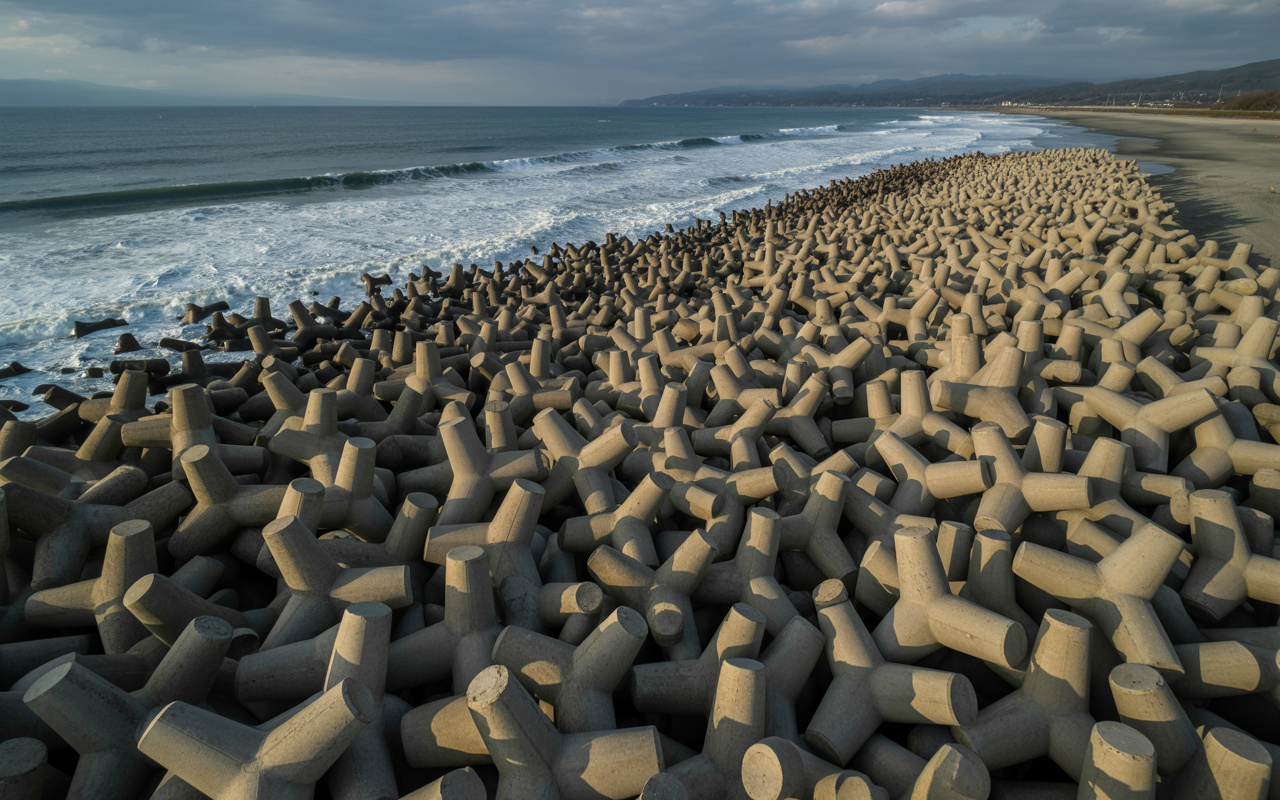
Japan Uses Tetrapod-Shaped Blocks to Dissipate Waves, Retain Sand, and Rebuild Beaches That Disappeared After Decades of Erosion and Storms.
According to records from the Ministry of Land, Infrastructure, Transport and Tourism (MLIT) and the Coastal Development Institute of Technology (CDIT), the systematic use of coastal blocks in Japan began in the 1950s, when the country experienced rapid urban and industrial growth and began to record accelerated coastal erosion along the Pacific, especially in:
- Honshu (Kanto, Tokai, and Kansai)
- Shikoku
- Kyushu
The combination of coastal urbanization, ports, coastal roads, dredging, and storms exacerbated the sediment deficit. In many areas, entire beaches disappeared, and cliffs began to recede several meters a year. Official reports from that time already indicated that coastal cities were suffering from annual damage from typhoons, winter waves, and after the Chilean tsunami (1960), which hit Japan with smaller, but revealing, waves.
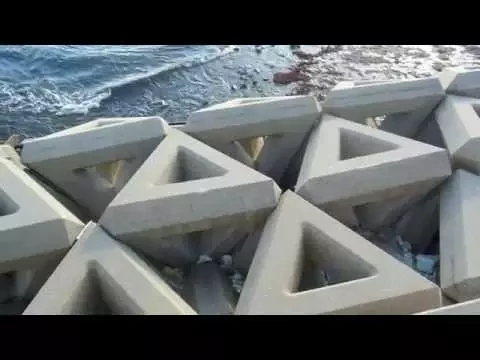

In this scenario, blocks of special geometry began to be used to dissipate energy, protect infrastructure, and retain sediments.
-
Created by George Lucas with over $1 billion, a futuristic museum in the shape of a spaceship with 1,500 curved panels is about to open in Los Angeles and will house one of the largest private collections of narrative art in the world.
-
Couple shows how they built a retaining wall on their property using 400 old tires: sloped land turned into plateaus, tires are aligned, filled, and compacted with layers of soil, with grass helping in support and at almost zero cost.
-
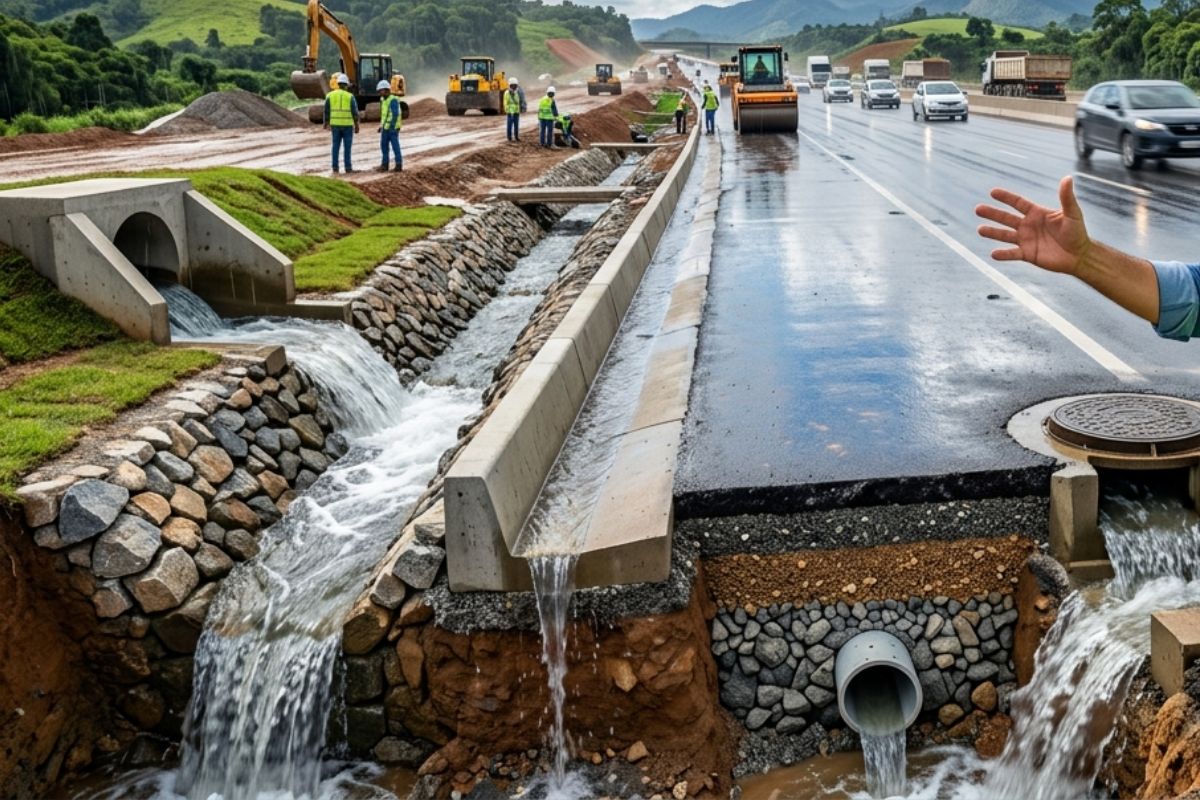
Engineer explains drainage during the rainy season: the difference between surface water and deep water, ditches, gutters, and water outlets on the road, as well as drains and drainage mattresses, to prevent erosion, aquaplaning, and flooding at the construction site today.
-
With 55 floors, 177 meters in height, a 15-meter walkway between the twin towers, ventilated facade, and 6,300 m² of leisure space, Ápice Towers already has one tower completed and another nearly at the top.

What Are Tetrapods and Why Do They Work
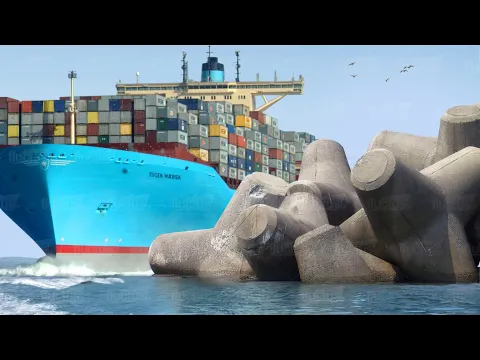
Tetrapods are concrete blocks with four three-dimensional “arms”, originally created in 1950 by the French company Sogreah. Japan was the country that popularized and scaled the technology.
The shape is not aesthetic: it reduces wave impact because:
- Breaks the energy before the main wall
- Allows controlled passage of water, reducing pressure
- Increases friction and turbulence
- Prevents sliding of the blocks, as they interlock
- Creates a permeable armor, which protects rigid structures behind it
While a smooth wall reflects energy, tetrapods absorb and disperse, reducing wave force and rebound erosion.
The concrete also ensures weight and stability, allowing structures to withstand typhoons, storm surges, winter waves, and secondary tsunamis.
Scale of the Work: A Coast Literally Protected by Concrete
Data compiled from academic research by the University of Tokyo, Kyushu University, and inventories from the MLIT indicate that Japan has over 35% of its entire coastline protected by artificial structures, including:
- tetrapods
- cubic blocks
- breakwaters
- sea walls
- rock armor
There are not just thousands, there are millions of units spread across the Japanese islands. Only after the Tohoku tsunami (2011), new barriers were built in:
- Iwate
- Miyagi
- Fukushima
combining tetrapods + walls + levees to reinforce vulnerable sections.
Retaining Sand and Rebuilding Beaches: A Lesser-Known Goal
The public imagines tetrapods only as barriers against waves, but an important part of the Japanese strategy involves recovering beaches that have disappeared, something recorded in coastal reports since the 1980s.
When placed at strategic points, close to the breaking zone, tetrapods reduce wave speed, allowing sediments to:
- stay longer on the coast
- settle in shallow areas
- rebuild submerged bars
- artificially nourish the beach
This process is called “beach nourishment assisted by structures”, and has been applied in sections of:
- Shizugawa Bay
- Kochi
- Shizuoka
- Wakayama
- Fukuoka
where urban beaches have returned after decades.
In some places, tetrapods work alongside artificial sand replenishment, another strategy used by Japan since the 1970s-80s to keep resorts functional.
Impact of Typhoons and Why Japan Has No Choice
The Japanese archipelago is one of the countries most exposed to extreme marine phenomena:
- 20 to 30 typhoons per year in the Northwest Pacific
- Winter swells in the Sea of Japan
- tsunamis at various historical times
- Submarine volcanism altering seabeds
Without protection, coastal roads, railways, ports, and entire neighborhoods would routinely be damaged.
After Typhoon Vera (1959), which killed over a thousand people and destroyed coastal areas in Aichi Prefecture, coastal policy became national and strategic, driving projects such as:
- levees
- breakwaters
- sea walls
- tetrapods
This event is internally remembered as a regulatory landmark.
Economics, Logistics, and Construction of Tetrapods

Tetrapods are manufactured in regional precast plants and vary from half a ton to several tons, depending on the application.
To protect open sea zones, it is common to use blocks with:
- 10–25 tons
- reinforced geometries
- low permeability concrete
- minimum or diffuse rebar
Installation involves:
- cranes
- barges
- crane ships
- amphibious excavators
depending on the depth and access.
Urban sections use artificial bays, fishing ports, and canals as support bases. Additionally, there is a whole national industry dedicated to molds, logistics, and maintenance, which explains why Japan has become a global reference in this technology.
Are Tetrapods Controversial? Yes. And This Makes the Case Even More Interesting
While they work to protect cities and infrastructure, critics argue that:
- they alter the landscape
- they change coastal currents
- they may transfer erosion to neighboring sections
- they reduce biodiversity in intertidal zones
Researchers from Kyoto University and the University of Hokkaido have been studying these effects for years, proposing:
- more porous versions
- blocks with ecological niches
- “bio-friendly” designs
- combinations with artificial reefs
This most recent phase, called Eco-Concrete, seeks to reconcile marine engineering + environmental recovery.
Because the Story Is Not Just Coastal — It’s Political and Territorial
Japan is a country where maritime infrastructure is sovereignty. Ports, railways, fishing terminals, and cities like Tokyo, Osaka, Kobe, and Fukuoka depend directly on the coast.
Without containment structures, typhoons could:
- disrupt transportation
- destroy electrical infrastructure
- affect exports
- flood entire neighborhoods
- block highways
- affect maritime transport
Tetrapods, therefore, are not just concrete — they are civil defense + economy + Pacific geopolitics.
The Japanese case is one of the largest examples of continuous coastal engineering in the world. While many countries are still discussing how to deal with erosion, Japan has been operating for seven decades with:
- applied geomorphology
- precast concrete
- sediment replenishment
- coastal risk management
Tetrapods have become a symbol of a country that coexists daily with the ocean as a constructive and destructive force. They may be critiqued aesthetically, but they serve as a powerful reminder that weight, shape, and geometry can change the fate of an entire coast.









Seja o primeiro a reagir!