





 Portuguese
  English
  Spanish
  6 min of reading
  4 comments


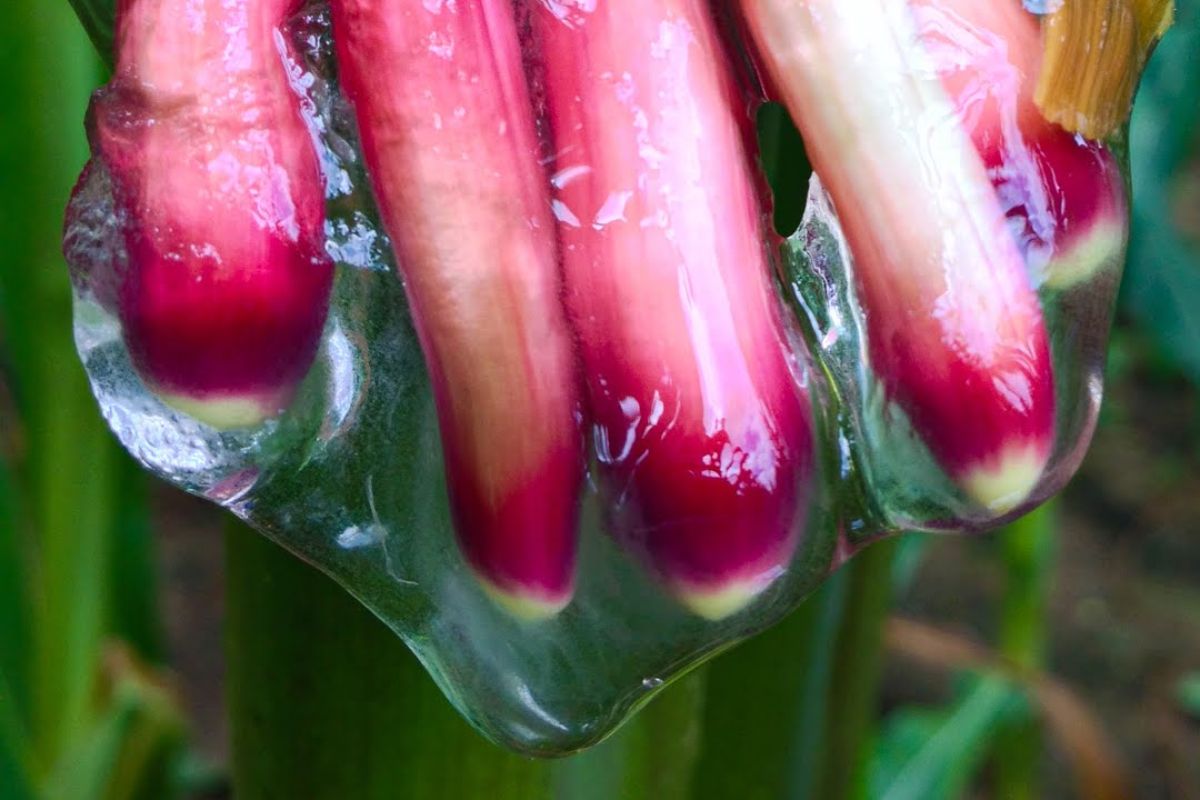


In The Mountains Of Totontepec, In Oaxaca, An Olotón Corn Grows Up To 6 Meters And Releases Slime From Its Aerial Roots. The Mucilage Houses Bacteria That Fix Nitrogen And Allows The Plant To Absorb Up To 80% Of What It Needs From The Air, Reducing Chemical Fertilizers And Costs While Scientists Cross The Variety And Negotiate
In Totontepec, in southern Mexico, a giant corn grown by indigenous farmers for centuries has become a focus of research for an unusual reason: the viscous slime expelled by suspended roots may reduce dependence on chemical fertilizers by helping the plant obtain nitrogen directly from the air.
The plant, known as Olotón, grows up to 6 meters tall and has attracted attention for combining extreme height with a biological mechanism that is rare in cereals. The debate now blends agricultural science, environmental impact, and a dispute over rights, because a confidential agreement foresees royalty sharing with the indigenous community in Oaxaca.
Where Did This Happen And Why Did Totontepec Enter The Map

The phenomenon is linked to the town of Totontepec, in Oaxaca, in southern Mexico, a mountainous region where this corn has been carefully cultivated by indigenous farmers for centuries, possibly millennia. The location is part of the enigma: it is a variety kept alive outside the industrial circuit, preserved by local communities in a rural area shrouded in mist.
-
Expedition 501: Scientists drill into the ocean floor and discover a giant reserve of fresh water hidden beneath the sea, extracting nearly 50,000 liters and revealing an invisible system that could reshape the map of water scarcity.

-
Archaeologists find an intact tomb over 2,500 years old, with more than 100 preserved objects, weapons, jewelry, and human remains never touched.

-
Volcanic lava transforms into threads as fine as human hair that travel over 30 kilometers by wind and fall like cutting rain on roofs and backyards in Hawaii and Iceland.

-
NASA issues a warning for the feared Godzilla El Niño that could change the planet’s climate in 2026 with extreme warming of the Pacific capable of causing devastating droughts in some regions and historic floods in others simultaneously.

The scientific discovery did not begin with immediate foreign laboratories but with curiosity and field observation. One of the names mentioned in this journey is Howard Yana Shapiro, who was already living in Oaxaca in 1980 when he heard about the existence of “giant corn” in that region and decided to check it out.
What Makes Giant Corn So Different From Common Crops

The Olotón corn described in Totontepec does not follow the pattern of widely seen crops in the Americas. While a common plantation may range from 2.4 to 3 meters, plants measuring 16 to 18 feet high have been observed there, equivalent to the height of up to 6 meters highlighted in the account.
The most striking visual difference lies in the roots. There are finger-like structures that hang meters off the ground. These aerial roots expel a thick, viscous mucus, the slime that has become the centerpiece of everything. This is not an aesthetic detail: the slime is the functional mechanism that alters the nitrogen equation.
The Slime, The Mucilage, And The Nitrogen Fixation That Seemed Fiction

The turning point is nitrogen fixation. The air is composed of 78% nitrogen, but almost all plants cannot convert this atmospheric nitrogen into a form they can use, such as ammonia. The classic exception is legumes, which do this in association with microorganisms, while cereals such as wheat, corn, rice, sorghum, millet, and barley, which are the basis of more than 50% of the world’s diet, typically cannot.
In Olotón, the slime in the roots creates a different scenario. The mucilage has been described as being filled with nitrogen-fixing bacteria, microorganisms that normally live in the soil. The slime acts as a kind of shield and helps create an environment with low oxygen levels, a condition that favors the conversion of nitrogen from the air into a usable form by the plant. The observed result is that the plant can absorb up to 80% of the nitrogen it needs directly from the air.
Why This Affects Global Dependence On Chemical Fertilizers

Modern agriculture compensates for cereals’ inability to fix nitrogen by applying large amounts of fertilizers rich in this element. This is crucial for boosting productivity and sustaining the supply for a planet with 8 billion people, but it comes with environmental and financial costs.
There is a structural problem noted: when fertilizer is applied, many plants only absorb about half of it. The rest can pollute groundwater and contribute to eutrophic areas, including dead zones associated with excess nitrogen, such as those mentioned in the Gulf of Mexico. Furthermore, fertilizers aren’t cheap, and in parts of the world, farmers can’t even afford to buy them, which means smaller harvests and less food.
In this scenario, the slime from Olotón corn is seen as a possibility to reduce chemical inputs, ease costs, and mitigate environmental impacts. The promise is to tackle the most expensive and polluting bottleneck in cereal production: nitrogen.
How Research Has Evolved And What Has Been Built In Oaxaca
Even after the initial contact in 1980, there was no quick response. Structured scientific work took time, and it was noted that there was an interval of nearly 30 years until the right team was assembled to study the variety in depth.
When the effort consolidated, the strategy involved the local community. It was mentioned that a laboratory was built there, with community members working alongside Mexican scientists and the town of Totontepec. Research focused on establishing the facts about how the mucilage works, how it helps the plant grow so much, and why the slime is associated with the presence of nitrogen-fixing bacteria.
After a decade of research, evidence of the mechanism was treated as a milestone, pointing to a cereal with the ability to obtain nitrogen from the air at relevant levels for growth.
The Critical Point: Who Has Rights To A Plant Preserved By Indigenous People
Almost immediately after the scientific advancement, questions about rights arose. The issue was framed by some as a potential case of biopiracy, i.e., misappropriation of biodiversity for research or the development of commercial products.
The discussion is sensitive because biodiversity is not separated from the people who preserve it. In the case of Olotón, it was reported that in Mexico, an agreement was negotiated between a company and a local community to ensure informed prior consent for research and establish sharing of potential benefits.
The described arrangement includes an objective rule: for each seed sold, half the value of the royalties would go to the community. At the same time, there are reservations: some people remain cautious, particularly since the agreement remains confidential. The slime that may cut chemicals has also opened a debate about who profits from the innovation.
Why The Agreement Has Yet To Yield Money And What Is Needed To Turn It Into Scale Farming
Despite the promise, the account makes it clear that there has yet to be profit, and this matters for a simple reason: farmers won’t cultivate on a large scale if the plant cannot compete with industrially produced corn.
Therefore, researchers are crossing Olotón with other varieties to transfer unique properties. In this process, it was noted that they have already managed to reduce the growth time by almost half and made progress in nitrogen fixation. The current stage mentioned speaks of about 40% of the nitrogen in the air fixed from local bacteria present in fields in the United States, showing that the goal is to reproduce part of the phenomenon outside the original context.
Still, the road is long. It was indicated that there may be three or four generations needed to reach a stabilized hybrid corn. The original slime from Totontepec is the model, but the industry demands genetic predictability and consistent performance.
The Domino Effect: Corn, Rice, And The Ambition To Extend The Logic To Other Cereals
The project is not limited to corn. The discussed scenario includes nitrogen-fixing corn and nitrogen-fixing rice, with the natural question about the next target: wheat, millet, and barley, all cited as relevant cereals in the global diet.
The logic is straightforward: in an ideal world, all crops would fix their own nitrogen, reducing the need for fertilizer. This affects cost, access in the Global South, productivity, and environmental impacts associated with excess chemicals.
In Totontepec, Oaxaca, in southern Mexico, an Olotón corn of up to 6 meters has placed the viscous slime from its aerial roots at the center of a scientific and political dispute: the mucilage houses nitrogen-fixing bacteria, may allow for the absorption of up to 80% of nitrogen from the air, and reduce fertilizer, but commercialization depends on crossings, generations of stabilization, and a confidential agreement that shares royalties with indigenous people.
Do you think the slime from Olotón corn will become a global solution against chemical fertilizers, or will it remain confined for too long to the mountains of Oaxaca?









Quando eu era menino vagamente lembro de ter visto uns pés de milho com essa característica em alguma residência com esse tipo de raízes no caule. Mas o plantio desse milho em larga escala é ótimo para o meio ambiente e para a economia global. Mas não falaram da produção por ha e quantas espigas da por pé. Caso a produção seja menos que as variedades plantadas atualmente não resolve nada para a segurança alimentar mundial.
Eu conheci um milho com essas características um milho criolo que meu pai plantava so que perdemos as sementes ele tinha somente 8 carreiras de grãos tenho procurado por guardiões de sementes mas até o momento sem susseço
Onde comprar a semente