





 Portuguese
  English
  Spanish
  4 min of reading
  0 comments


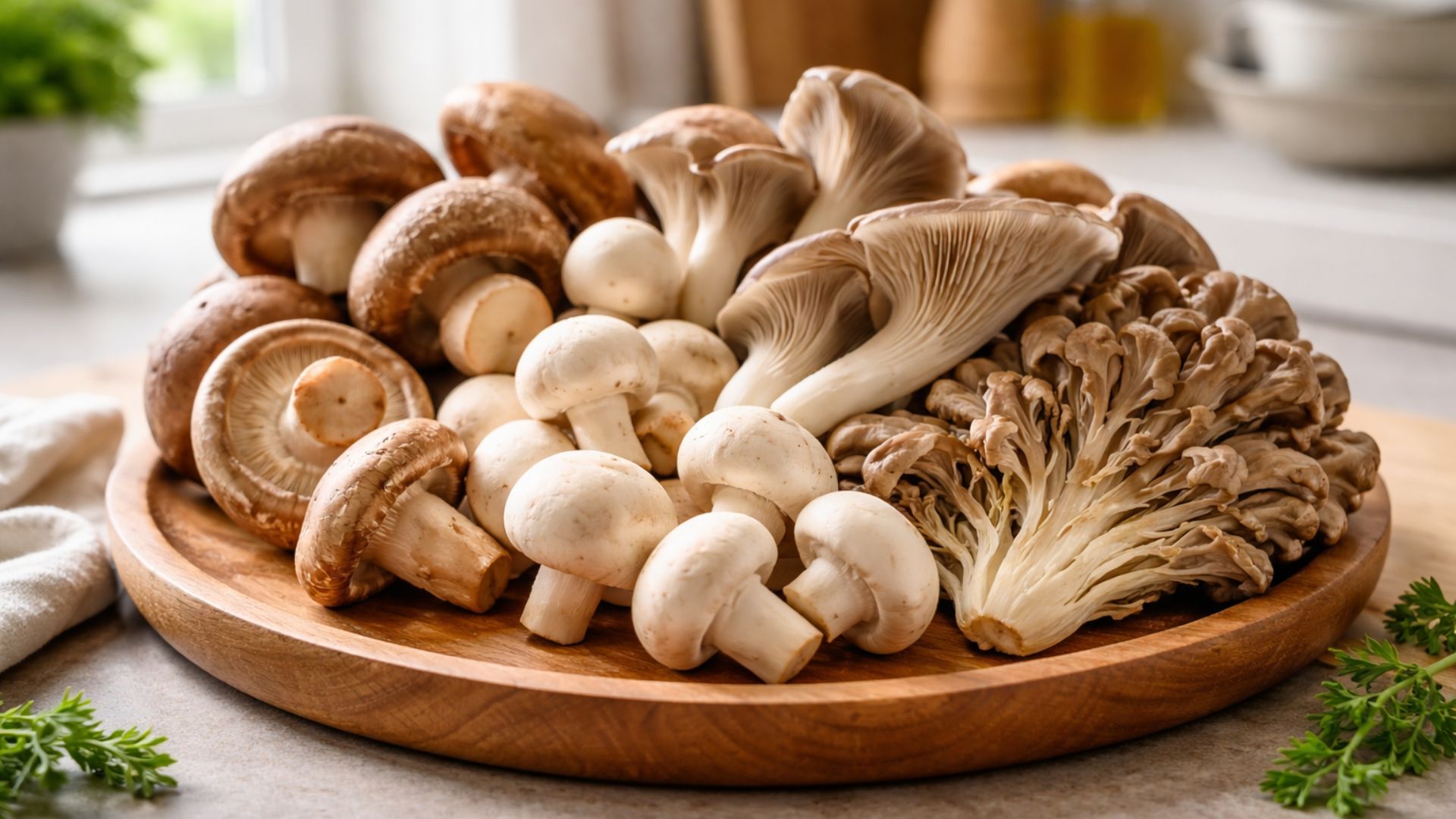
Millennia-old presence in human diet gains new scientific prominence for concentrating ergothioneine, an antioxidant compound investigated in studies on cognition, memory, and healthy aging, with observational results and recent trials that reinforce biological plausibility without indicating definitive causal relationships.
Mushrooms, present in kitchens of different countries and increasingly common in contemporary diets, have returned to the center of nutritional research for concentrating ergothioneine, an antioxidant compound associated, in observational studies and recent trials, with markers of cognition and healthy aging.
The literature does not yet authorize treating the food as prevention or therapy, but it already supports that it brings together unusual characteristics from a biological and nutritional standpoint.
The scientific interest did not arise from an exotic or newly discovered ingredient.
-
Goodbye disposable batteries: an item still consumed in 1.2 billion units per year in Brazil has a rechargeable alternative that can be used up to 1,000 times and reduces household expenses.

-
Sun Tzu wrote 2,500 years ago that the supreme art of war is to defeat the enemy without fighting, and this phrase from a Chinese general born in 544 B.C. has become the most applied advice in the business world, in conflict psychology, and even in neighborly relations in 2026.

-
With 50,000 people crammed into 3 hectares and buildings stacked like a human anthill, this lawless city that lived without police and oversight reached the highest human density ever recorded in any habitable point on Earth before being erased from the map.

-
Constant tingling in the hands that doesn’t go away even when changing position may be the first warning that an essential vitamin for the nerves is lacking in the body, and ignoring this signal for weeks can cause damage that no supplement can reverse later.

On the contrary, it fell upon an ancient food, spread in long-standing culinary habits, which began to be investigated more rigorously as researchers tried to understand why some species concentrate antioxidants at levels higher than those found in most other foods.
It was in this context that ergothioneine gained prominence.
What is ergothioneine and why does it matter
Ergothioneine is described in scientific reviews as a sulfur-containing amino acid with antioxidant action, produced mainly by fungi and bacteria.
In humans, it is not produced by the body and depends on diet to reach tissues, being absorbed by a specific transporter, SLC22A4, also called OCTN1, identified as a central piece in this process.
This particularity helps explain why mushrooms have been observed with such attention.
A study published in Food Chemistry showed that certain species have high concentrations of ergothioneine and glutathione, which positions them as prominent food sources of these antioxidants.
The amount varies according to species, cultivation, and processing, but the group already stands out in the diet when it comes to the natural supply of the compound.
This profile is not limited to ergothioneine.
Nutritional modeling based on dietary patterns in the United States estimated that including a serving of mushrooms would add about 2.2 mg of ergothioneine and 3.5 mg of glutathione to the diet, with minimal impact on sodium and no increase in saturated fat or cholesterol.
In practice, this reinforces the everyday viability of the food, without relying on strategies that are difficult to incorporate into routine.
Mushrooms and memory: what do the studies say
One of the most cited studies came from Singapore.
Researchers analyzed 663 adults aged 60 and older and observed that consuming mushrooms in amounts greater than two servings per week was associated with lower chances of mild cognitive impairment.
In the study, the odds ratio was 0.43 compared to those who ate less than once a week, a result indicating a relevant association, although the cross-sectional design prevents concluding that there was a direct cause-and-effect relationship.
In the United States, the relationship appeared in another population scenario.
An analysis with 2,840 elderly individuals from NHANES found an association between higher mushroom intake and better performance on cognitive tests.
The authors highlighted that the finding remained even after adjustments for sociodemographic factors, lifestyle habits, chronic diseases, and overall diet quality.
Japan also frequently appears in this literature.
In the Ohsaki Cohort 2006 Study, which followed 13,230 people aged 65 and older, consuming mushrooms three or more times per week was associated with a lower risk of incident dementia over 5.7 years of follow-up.
Compared to those who consumed less than once a week, the group with the highest frequency had a hazard ratio of 0.81, already adjusted for potential confounding factors.
A more recent investigation from the CIRCS study expanded the discussion by pointing out an inverse association between mushroom intake and the risk of disabling dementia among women, but not among men.
This finding drew attention precisely because it suggests that the topic may not behave the same way across all population groups, reinforcing the need for larger studies and prolonged follow-up.
Ergothioneine supplementation in clinical trials
The investigation advanced beyond observational studies in September 2025, when a randomized, double-blind, placebo-controlled trial was published involving 147 adults aged 55 to 79 who reported subjective memory complaints.
During 16 weeks, participants received 10 mg, 25 mg daily doses of ergothioneine or placebo.
The study recorded a significant increase in plasma levels of the compound at the tested doses and indicated signs of benefit in subjective prospective memory and sleep onset, especially with 25 mg per day.
At the same time, the study was more restrained than some hasty readings suggest.
The observed improvement in composite memory appeared in the 25 mg group in the fourth week but did not sustain afterward, while other cognitive domains had null or limited effects.
The result, therefore, is relevant as it shows safety and biological plausibility, but still insufficient to transform supplementation into a consolidated recommendation for the general population.
Between food tradition and aging research
This body of evidence helps to understand why mushrooms have come to be seen as more than just a culinary ingredient.
In addition to low energy density, they can contribute vitamins from the B complex, minerals, and bioactive compounds that attract the attention of aging research.
Still, the central point remains the same: association is not synonymous with proven prevention, and benefits observed in a population group do not equate to guaranteed effects in each individual.
What can already be stated with certainty is that science has found in mushrooms a case of convergence between food tradition, biological plausibility, and human results that still require ongoing deepening.






Seja o primeiro a reagir!