






 Portuguese
  Spanish


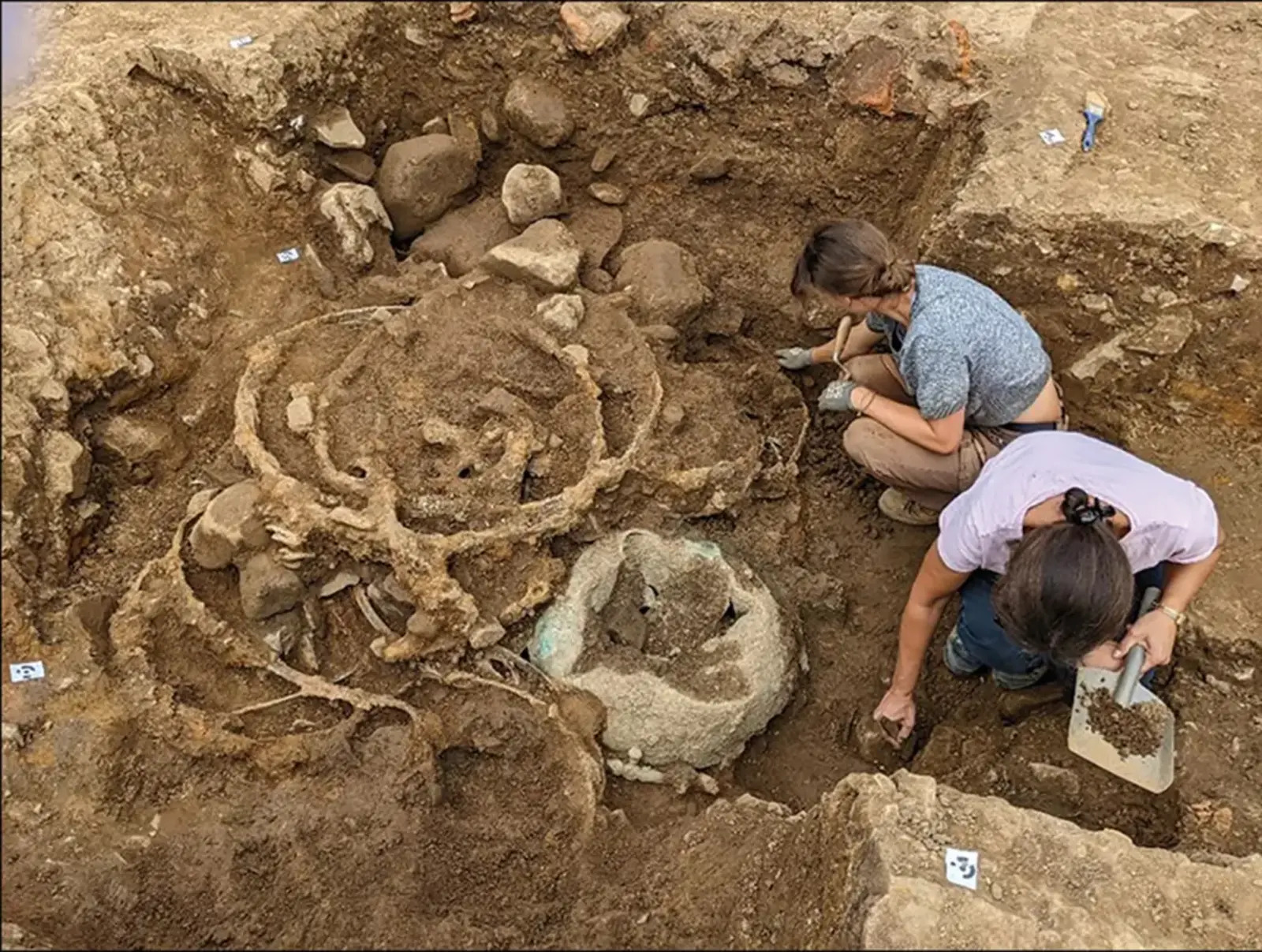


Archaeological find in Melsonby, England, brings together 950 metal objects and may redefine understanding of transport, wealth, and power in the British Iron Age
Archaeologists identified in Melsonby, Yorkshire, England, remains of four-wheeled carts dated from 100 BC to 40 AD, among 950 Iron Age metal objects, in a find that could change the understanding of transport and status during the period.
Discovery in Melsonby
The remains were found at an Iron Age archaeological site near the village of Melsonby, about 56 kilometers south of Durham, Yorkshire, England.
The cache was located during an excavation conducted in 2022, following a survey with metal detectors carried out in the area in 2021.
-
China Develops Custom 140-Ton Electric Mining Truck with 770 kWh Swappable Battery, Deploys 290 Units in Xinjiang’s Largest Zinc Mine

-
Meta to Launch Arena, a New Prediction App Targeting 3.56 Billion Users, Competing with Polymarket and Kalshi

-
Scientist Challenges Famous Human Evolution Theory, Argues Homo Sapiens Evolved Gradually Over Thousands of Years
-
15-Year-Old American Builds Ocean Generator with PVC Pipe and 3D-Printed Propeller for $12, Wins National Prize, Presents at White House, and Makes Forbes 30 Under 30 List




Although the materials were found during the excavation, the announcement was made with the publication of the study in the journal Antiquity on March 17.
What was found
Among the 950 metal objects unearthed were vehicle parts, horse harnesses, ceremonial vessels, weapons, and king pins, used to steer the vehicles.
The collection also included cylindrical iron bands and U-shaped supports that, when analyzed together, appear to form wheel rings for four-wheeled carts.
The researchers stated in the article that the artifacts represent one of the largest deposits of Iron Age metallurgy found in Britain.
Why the find matters
The study pointed out that the treasure represents the first potential tangible evidence of four-wheeled carts in Britain.
The researchers highlighted that items such as the U-shaped iron supports with central curvature do not appear in known two-wheeled carts in Britain.
For archaeologists, the presence of these vehicles in Melsonby could transform the understanding of wheeled transport and the role of these carts in the British Iron Age.
Relationship with Stanwick
The objects were found less than a mile and a half from Stanwick, widely considered an important Iron Age fortress in northern England.
Stanwick is associated with the Brigantes, a Celtic confederation with a complex relationship with Rome, which adds historical weight to the find.
Next analyses
The researchers assessed that the conservation and analysis of the pieces are still in early stages, and that future work should significantly enhance the understanding of this material.
The treasure is part of a growing number of Iron Age discoveries in Britain, as finds from this period continue to emerge in different regions, as recently occurred in Scotland, with remains of circular houses found during a sewage construction.
With information from New York Post.





