





 Portuguese
  English
  Spanish
 3 min of reading
  0 comments


Prosecutor Calls for Immediate Suspension of Activities and Alerts to Social and Environmental Risks
A major dispute has arisen in the Jequitinhonha Valley, in Minas Gerais, involving the extraction of lithium, a strategic mineral for the global energy transition.
In September 2025, the Federal Public Ministry (MPF) recommended that the National Mining Agency (ANM) temporarily suspend research and mining authorizations in Araçuaí, Itinga, and other municipalities.
Consequently, the measure signed by prosecutor Helder Magno da Silva demands respect for the rights of indigenous, quilombola, and traditional communities.
-
After China, it’s now the turn of the USA to ‘secure’ a share of Brazil’s natural resources: the country buys critical rare earths for R$ 3 billion and enters the center of the global technology dispute.
-
Rare earths are in everything, from cell phones to bullet trains, and what almost no one realizes is why they have become the target of such a delicate global war.
-
Brazil extracts 26.3 million tons of ore from what was previously treated as waste, transforming residues into wealth, producing over 3 million tons of sand, and demonstrating how national mining is relearning to generate value.
-
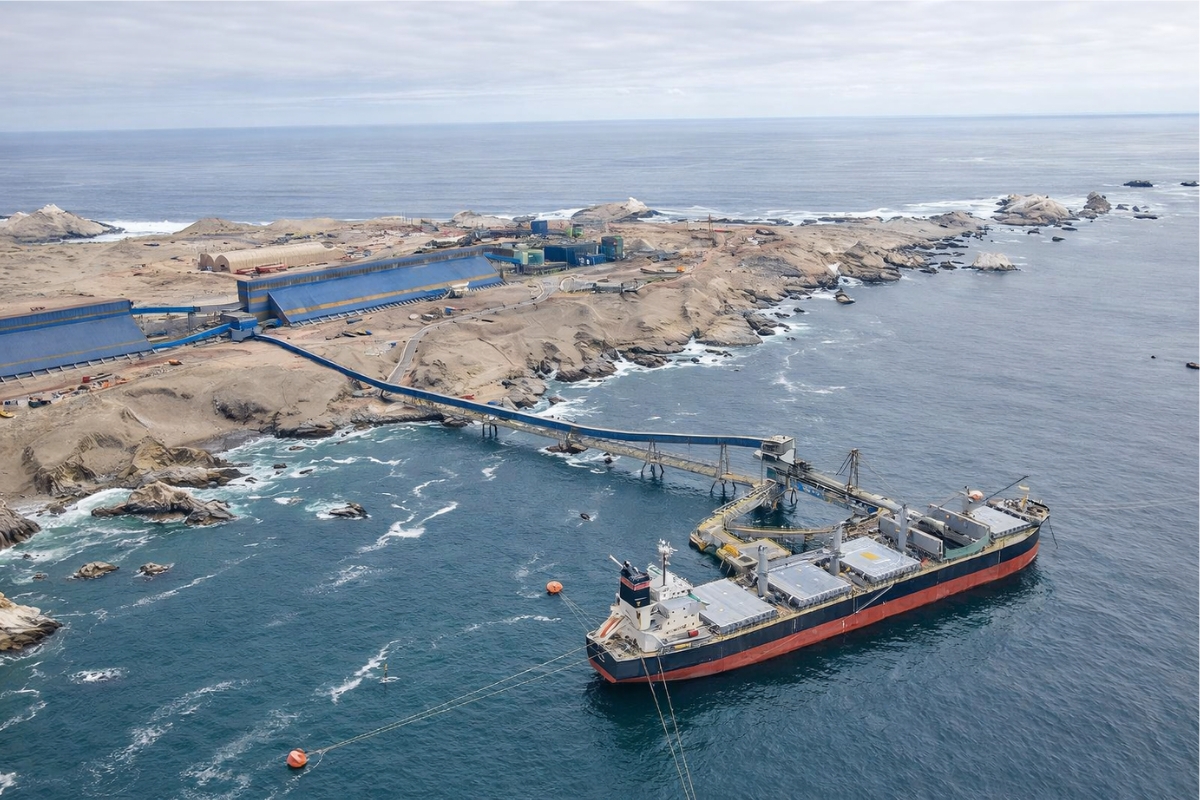
A $3.5 billion megaproject in Latin America pumps desalinated seawater at 1,050 liters per second over 194 km to keep a copper supermine in the Andes operational for another 20 years.

The decision is based on ILO Convention 169, which requires prior, free, and informed consultation before any mining advances.
However, authorizations granted without dialogue with residents are viewed by the MPF as “a cycle of colonial and predatory exploitation”.
Expert Assessments Reveal Critical Environmental Impacts
Assessments conducted by the MPF indicate water scarcity and difficulties accessing water in Calhauzinho and Passagem da Goiaba.
The technical report highlighted flaws in the Environmental Impact Study of Sigma Mineração, linked to the Grota do Cirilo project. The document pointed out a risk of lowering the water level of the Ribeirão Piauí, which supplies Araçuaí and Itinga.
Similarly, there was a record of overlap of mining areas with territories of traditional communities. The MPF identified 248 communities in 19 municipalities already affected by direct or indirect effects from mining enterprises and titles.
Billion-Dollar Investments Intensify the Dispute
The Jequitinhonha Valley contains the largest lithium reserve in Brazil, a scenario that attracts massive investments. For example, Sigma Lithium announced R$ 2.5 billion for Grota do Cirilo and, in 2024, secured R$ 486.7 million from BNDES.
Thus, the company plans to increase annual production from 250,000 to 520,000 tons.
Consequently, lithium remains essential for electric vehicle batteries, energy storage, and electronics.
Nonetheless, experts warn of environmental and social risks that demand control and transparency.
Banner Project Under Review
The Banner Project, by MGLit (Lithium Ionic), is also under scrutiny. As recorded, in March 2025, during the 122nd CMI meeting, Copam removed the licensing vote from the agenda following a recommendation from the MPF. The process was returned for adjustments and clarifications, with a risk of suspension or filing if flaws persist.
According to the report, Feam placed the project within an 8 km restriction zone for mining in quilombola territories. However, the exemption from consultation with the Quilombo do Baú was contested by the MPF.
The agency highlighted changes in air quality, noise, vibrations from explosives, vegetation suppression, and threats to biodiversity. The effects were classified as “negative, direct, immediate, permanent, irreversible, and of great magnitude”.
Growing Pressure on the Jequitinhonha Valley
The territory has become a focal point for multiple mining enterprises. According to the MPF, two other civil inquiries are investigating possible irregularities in the region.
The global demand for lithium intensifies territorial pressures and socio-environmental conflicts. Local communities claim that the exploration advances without guarantees of sustainability and without full respect for fundamental rights.
In light of the scenario, do you believe that Brazil should prioritize economic expansion via lithium or adopt cautious exploration, ensuring environmental preservation and community rights?









Seja o primeiro a reagir!