





 Portuguese
  English
  Spanish
  6 min of reading
  0 comments


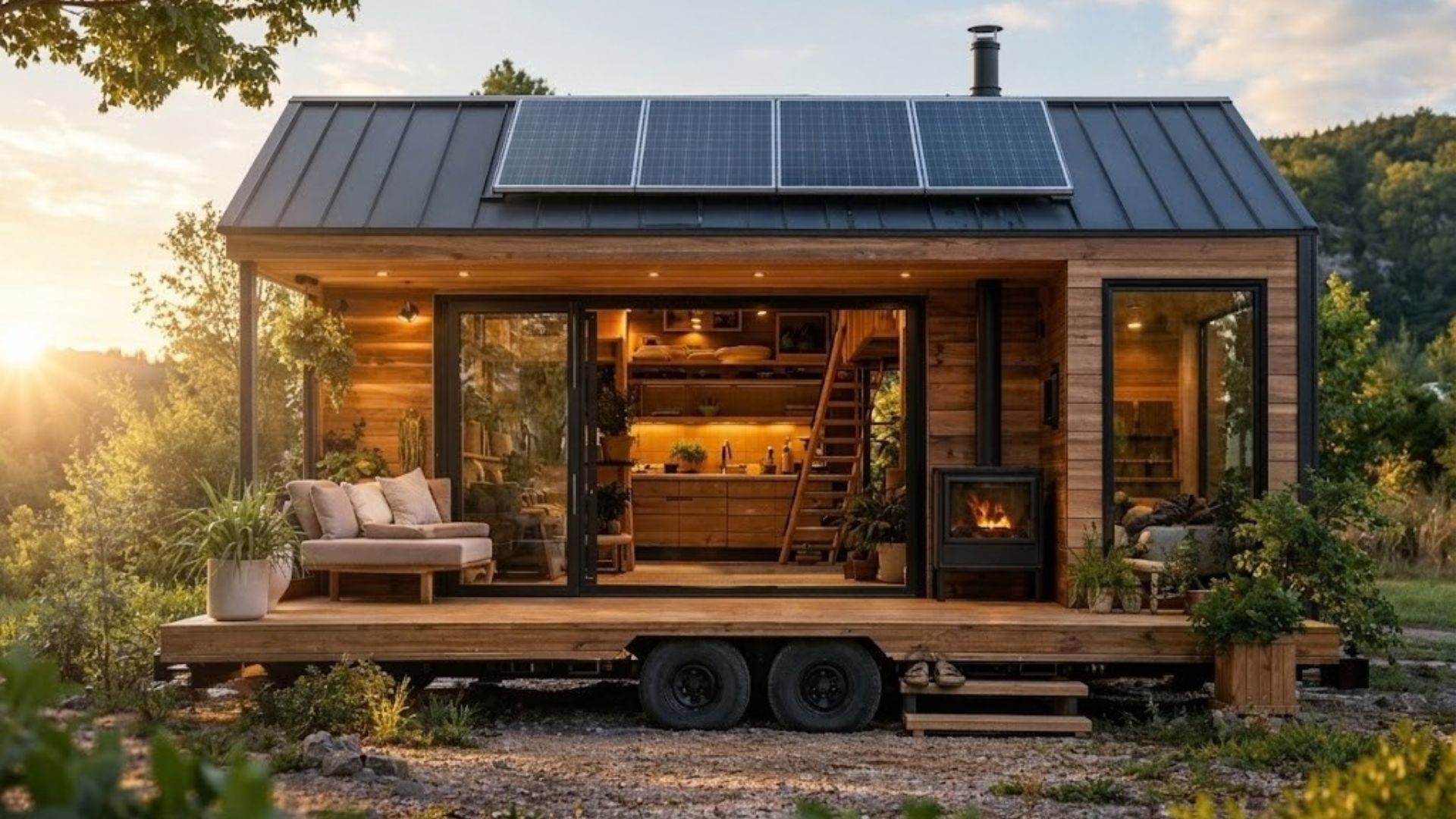
Compact Design, Handmade Woodwork, and Off-Grid Autonomy Transform This French Tiny House Into an Example of How a Few Square Meters Can Concentrate Comfort, Functionality, and Technical Solutions Designed for Everyday Use, Without Sacrificing Circulation, Storage, and Space for Up to Two People.
With 6.6 meters long, the Chillhouse combines custom woodworking solutions, well-distributed storage, and energy and water autonomy systems in a structure designed for everyday use.
Produced by the French workshop Atelier Bois d’ici, the tiny house was conceived to offer comfort on a reduced scale, with an interior capable of accommodating one resident and, in a later stage, also a second person, without compromising circulation, lighting, and gathering areas.
The project stands out for combining compact dimensions with a complete domestic program.
-
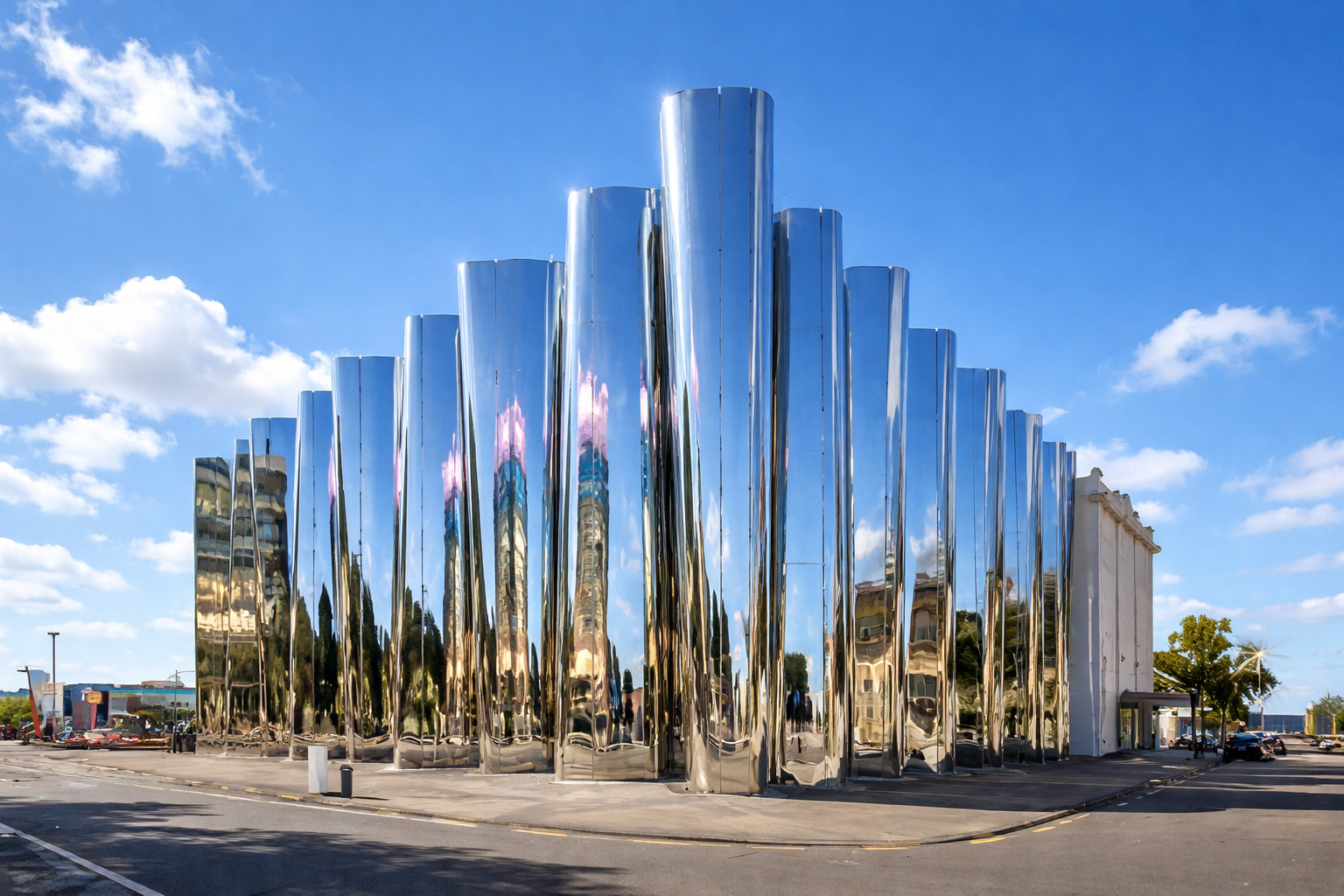
New Zealand builds a shimmering building that vibrates, featuring a 62-seat cinema, moving sculptures, and an environment where sound, light, and energy are felt in the body.
-
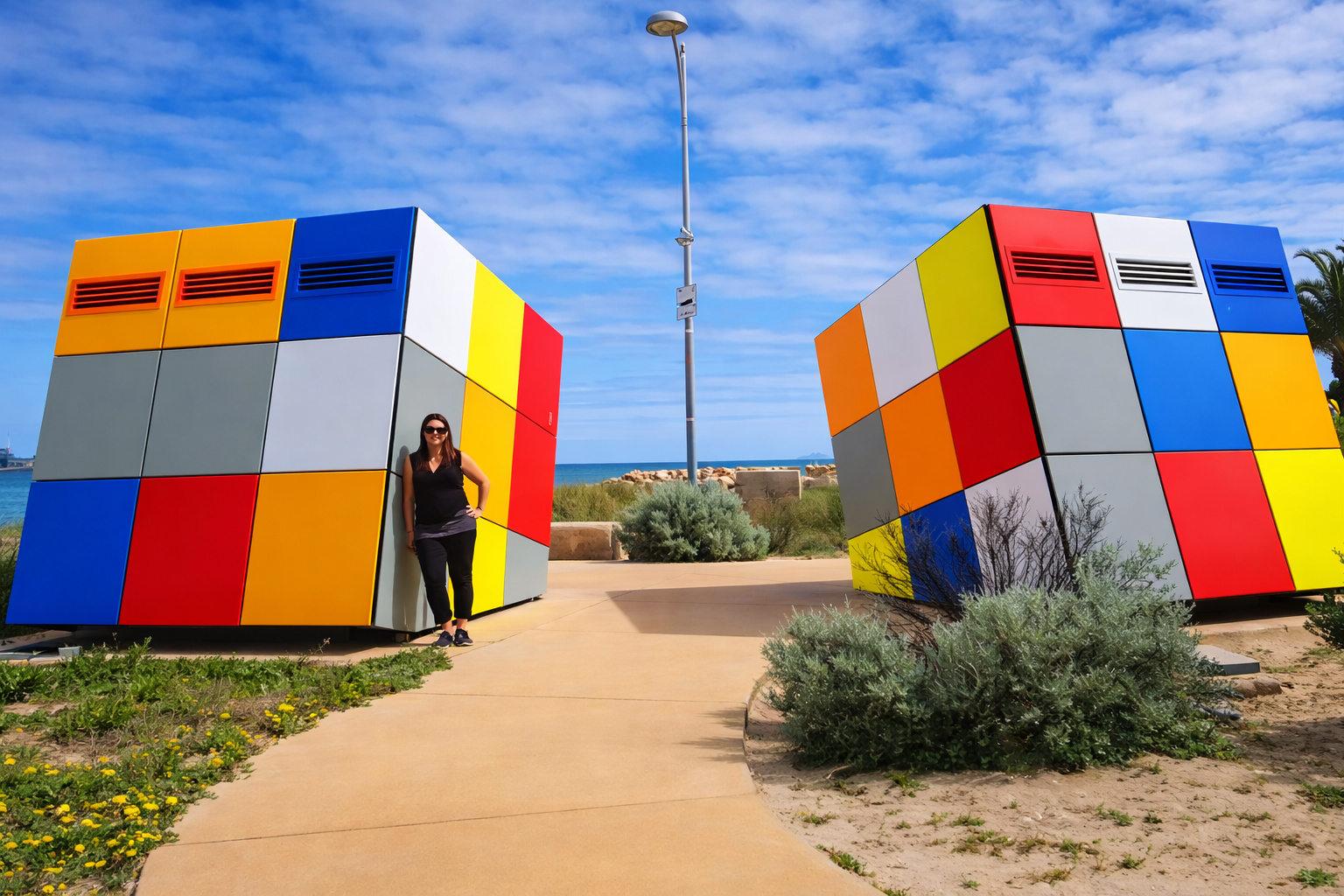
Two colored cubes of 2.5 m transform a public bathroom into a selfie spot in Western Australia, costing up to 75% less than traditional construction and helping to reduce vandalism in public spaces.
-
Santa Catarina produces up to 7 times more than it consumes in some sectors, and its century-old industries founded by grandparents and great-grandparents now compete on equal footing with Germany and the United States in the international market.

-
U.S. war giant weighing 9,600 tons and equipped with long-range missiles is sent to the Atlantic to protect global internet and hunt submarines.


The base is a mobile chassis of 6.60 meters, a recurring measurement in European tiny houses due to its ease of transport and deployment.
Even so, the Chillhouse includes a living room, kitchen, bathroom, loft bedroom, support areas, and a covered terrace, an element that expands the use of the house and helps dilute the sense of physical limitation inside.
Instead of treating the limited space as an absolute restriction, the workshop views the house as a handcrafted piece, designed around the habits of its future occupant.
In its project presentation, the company claims that the resident actively participated in the design of the house, defining usage, decor, and storage solutions.
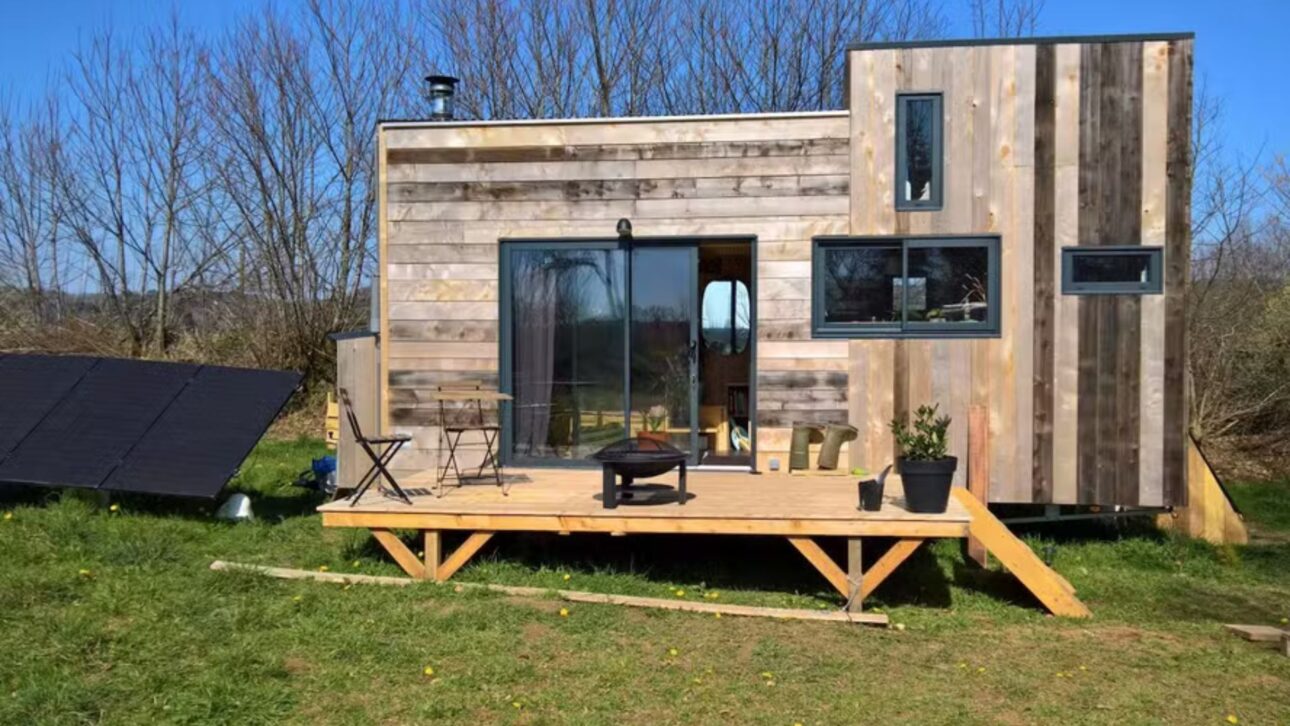
The result is a tiny house that prioritizes immediate functionality but also considers a future shared routine.
How the Layout Makes Use of Every Inch
This logic is evident in how the Chillhouse distributes its spaces.
The social area has been organized to accommodate friends, whether on cold days, aided by a corner wood stove, or in milder periods, when the external extension takes center stage.
At the same time, the internal circulation avoids the impression of isolated compartments, an important choice in such compact projects, where any excess of divisions can compromise the sense of spaciousness.
Local Wood and Handmade Production in France
Another central point is the origin of the materials and the production method of Atelier Bois d’ici.
The studio, based in Brittany, operates with local wood and informs that it maintains a sawmill and storage area on the same land where the houses are built.
In practice, this reduces steps between raw material and final assembly, as well as reinforcing a more artisanal process, distant from the standardized model of mass-produced tiny houses.
The company also claims that its houses are developed in a short circuit, with local suppliers and a focus on solid wood.
This positioning helps explain why the materiality of the Chillhouse does not appear merely as aesthetic finishing.
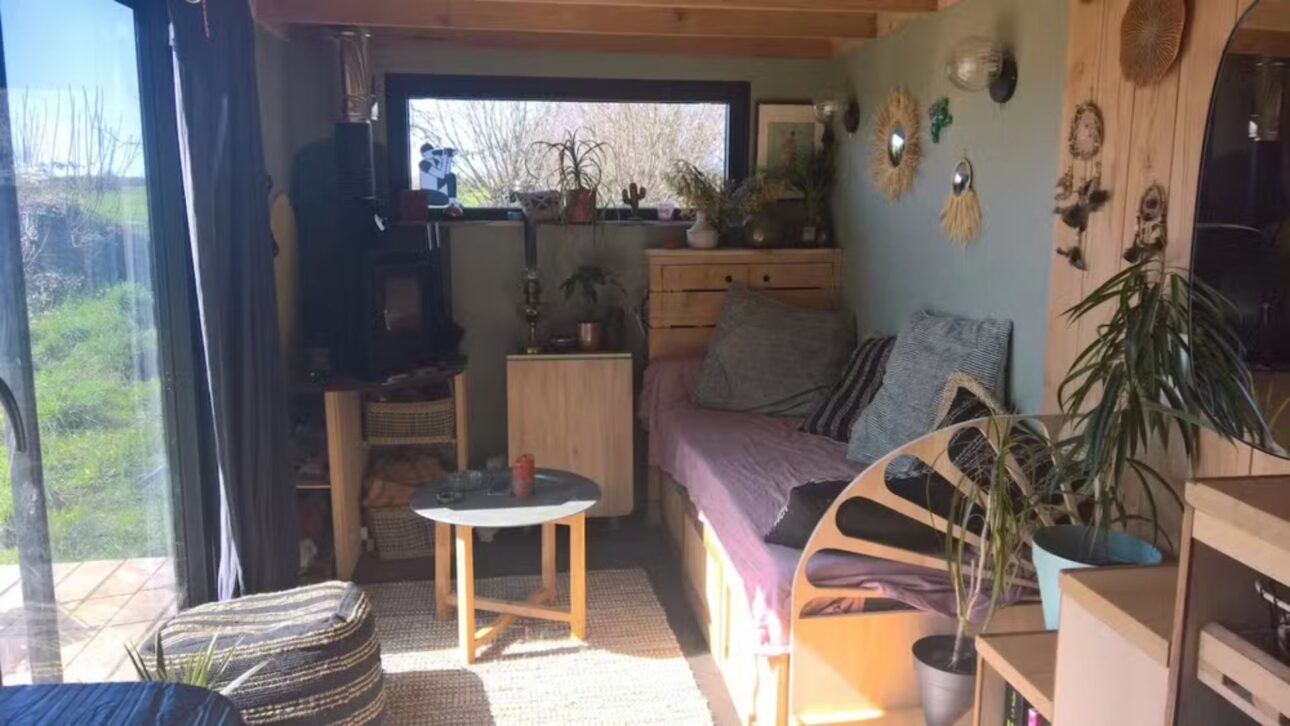
Wood is part of the constructive identity of the project, both in the structure and in the internal atmosphere, which seeks a balance between robustness, comfort, and ease of maintenance.
Self-Sufficient Energy and Water System
In terms of autonomy, the Chillhouse is equipped with its own electric generation set consisting of four solar panels, a battery, and an inverter, according to the specifications released by the workshop.
In a broader reading, this configuration follows the company’s proposal to deliver small housing units capable of functioning without conventional grid connections, or at least with a significant reduction in external dependence, especially on alternative land or in more flexible residency contexts.
Independence is not limited to electricity.
The project also includes a water autonomy system, with a 390-liter reservoir and a flexible cistern of 3,000 liters beneath the tiny house, according to the official description.
This is an important detail because it shows that the proposal for self-sufficiency was envisioned in an integrated manner, involving collection, storage, and support for daily routines, and not just the use of solar energy as an isolated resource.
This technical set accompanies other essential equipment for continuous residency.
The Chillhouse received simple flow mechanical ventilation, an exhaust fan, and an instantaneous gas water heater.
The interior heating is taken care of by a 4.5 kW Arada wood stove, a component that addresses both thermal needs and the design of a more welcoming social area, a common feature in compact dwellings where each element must serve multiple functions.
Custom Interior for Comfortable Living
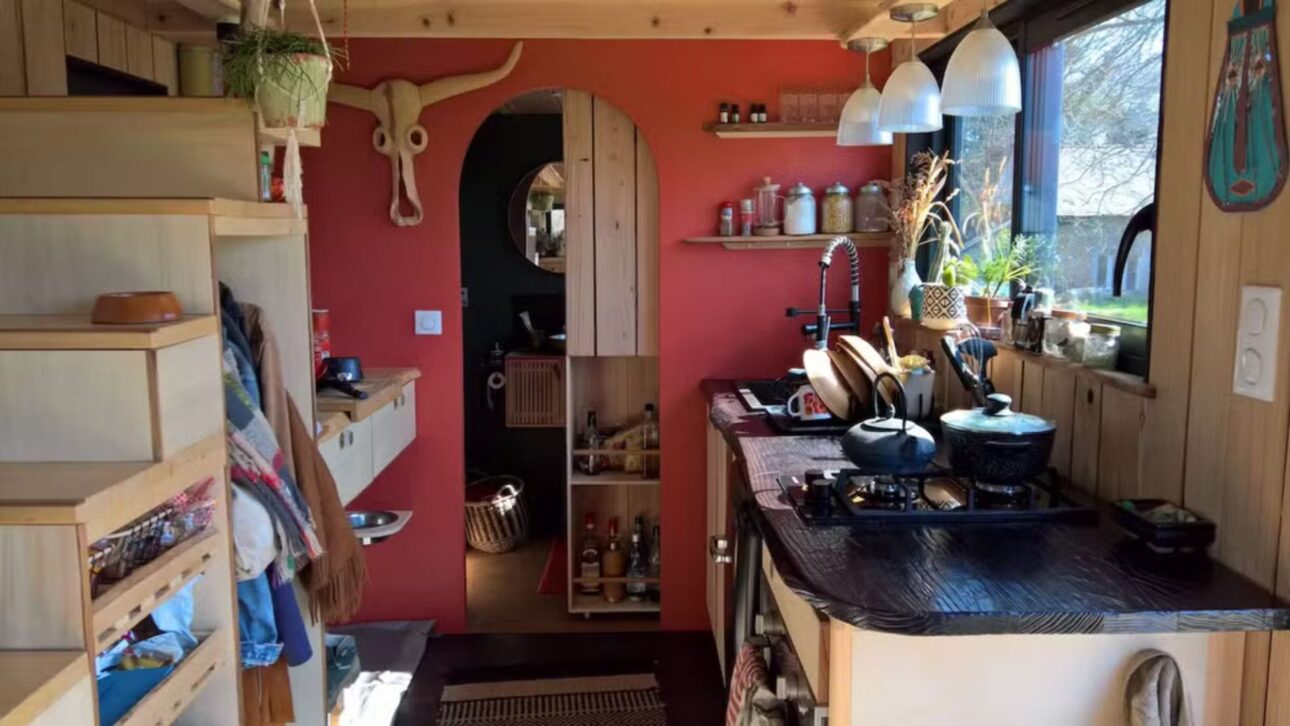
Inside, the organization prioritizes built-in solutions and vertical utilization.
The workshop’s description and the material published about the house indicate a layout with a loft bedroom, distributed storage, and gathering areas designed for relaxation and prolonged use.
In houses of this size, efficiency depends less on gross square footage and more on the ability to avoid dead spaces, anticipate real routines, and integrate furniture into architecture.
The Chillhouse fits precisely into this logic.
Although the tiny house market tends to associate small homes with minimal and provisional solutions, the proposal from Atelier Bois d’ici points in a different direction.
On the institutional website, the company mentions having produced nearly 100 tiny houses, with about three-quarters of them being autonomous.
This experience helps to contextualize the Chillhouse not as an isolated experiment but as part of a trajectory aimed at compact housing with independence from networks and a focus on architectural simplicity.
Tiny House Reflects Change in Living Habits
There is also an important cultural component in this type of project.
In France, as in other parts of Europe, tiny houses frequently emerge as a response to changing lifestyles, implementation costs, and the search for mobility.
In the specific case of the Chillhouse, the workshop’s discourse associates the house with a more direct relationship with nature, less material excess, and greater emphasis on conscious use of space.
The message approaches an idea of essential living, without this meaning giving up basic comfort.
The choice of a covered outdoor area reinforces this understanding.
In compact projects, expanding outside the main structure can be decisive for daily life, especially when the house is used as a permanent residence.
The porch functions as an extension of the living area, creates a transition between interior and exterior, and better distributes activities that, in such a small volume, would tend to overlap.
Thus, the small square footage ceases to be viewed merely as a physical limitation and becomes more dependent on the quality of the design.
It is also noteworthy that the Chillhouse was designed based on a specific demand, rather than from a generic catalog.
The workshop describes the house as the result of a long-standing desire of the owner, developed with attention to comfort, rest, storage, and the presence of pets in daily life.
This detail helps explain why the house combines technical autonomy solutions with a more personal, colorful, and less standardized ambiance than is typically found in industrial models.
In the current landscape of compact housing, the Chillhouse summarizes a trend gaining momentum in various countries: small houses, but resolved with precision, durable materials, and sufficient infrastructure to support real use.
Instead of betting solely on the visual appeal of the miniature, the French project attempts to show that the gain lies in the everyday engineering of the space, where every inch must respond to a concrete function and keep the house livable over time.






Seja o primeiro a reagir!