





 Portuguese
  English
  Spanish
  5 min of reading
  0 comments


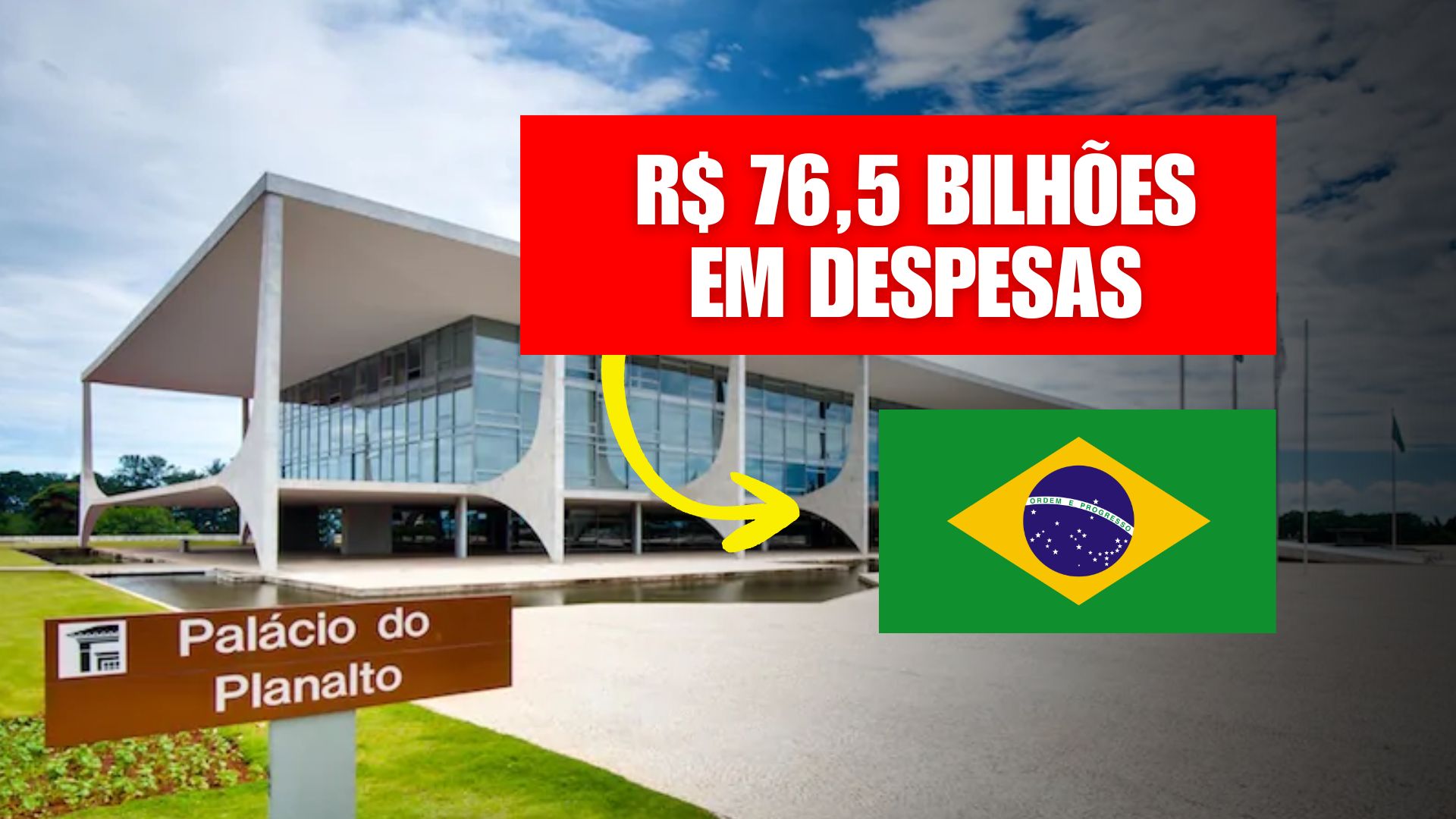
The Ministry of Finance Points Out That Changes in Social and Educational Programs Approved During Bolsonaro’s Government Should Generate A Strong Impact on Public Accounts by 2026, With A Deficit Projection Even Amid Measures to Strengthen Revenue.
The Ministry of Finance attributes R$ 76.5 billion of projected expenses for 2026 to legal changes approved during the government of former president Jair Bolsonaro (PL).
The calculation, produced by the Economic Policy Secretariat (SPE), is used by Minister Fernando Haddad to respond to criticisms regarding the conduct of fiscal policy in President Luiz Inácio Lula da Silva’s (PT) third term.
According to a report published by Folha de S. Paulo, this amount arises mainly from the advancement of the BPC (Continuous Cash Benefit) and the increase in the Union’s contribution to the Fundeb.
-
“No one will make us change the Pix,” says Lula after the US report.

-
Lula responds directly to Trump and says that Pix is from Brazil and will not change under pressure from anyone, after a report from the United States pointed out the Brazilian payment system as an American trade barrier.

-
Amazon has just announced a new fee on all deliveries, and your online purchases will become more expensive starting April 17, including for those buying from the United States here in Brazil.

-
He sold his share for R$ 4 thousand, saw the company become a giant worth R$ 19 trillion, and missed the opportunity of a lifetime.



Fiscal Impact Between 2023 and 2026
Between 2023 and 2026, the changes in these two policies should sum an additional expenditure of R$ 227.7 billion, in nominal values.
The estimate compares the current trajectory with the trend that would have been observed had the previous rules been maintained.
According to an investigation by the newspaper Folha de S. Paulo, the economic team decided to publicize these numbers precisely to reinforce that part of the current imbalance originates from previous measures.
BPC Growth After Legal Changes
The expenditure on the BPC grew after Congress approved, in 2021, a change in the Loas (Organic Law of Social Assistance) that authorized the deduction from declared family income of expenses with doctors, diapers, special foods, and medications.
In practice, people with income above the formal limit of ¼ of the minimum wage could join the program, provided they proved expenses in these categories.
Still in October 2021, the Executive issued a decree establishing standard deductions by type of expense, which simplified the analysis of requests.
Starting from July 2022, just before the elections, the granting of benefits accelerated.
Only in 2025 did the queue begin to experience some slowdown, with containment measures and administrative review.
Even with the recent slowdown, the projection from the PLOA 2026 indicates an expenditure of R$ 131.1 billion with BPC.
The amount exceeds the total projected for public investments and is approaching the amount reserved for Bolsa Família, estimated at R$ 158.6 billion, although the income transfer program serves a number of families nearly three times greater.
If the BPC had followed the trend prior to the changes in 2021, the expenditure for 2026 would be R$ 93.3 billion — a difference of R$ 37.8 billion.
The government’s accounts also consider the effect of the policy to raise the minimum wage resumed in the current administration.
Without the real increase in the minimum wage, the projected expenditure with BPC in 2026 would be lower, around R$ 84 billion.
Expanded Fundeb Pressures Public Accounts
In the case of Fundeb, Congress approved in 2020 a PEC that gradually raised the Union’s contribution from 10% to 23% of the fund’s revenues, transitioning over six years and concluding in 2026.
The measure, advocated by education specialists for strengthening basic education financing, increased the weight of this expense in the federal budget.
With the new level, the Union’s contribution to Fundeb is expected to reach R$ 68.4 billion in 2026.
Under the old rules, the obligation would have been R$ 29.7 billion — a difference of R$ 38.7 billion in comparison.
The newspaper Folha de S. Paulo also pointed out that, although meritorious from an educational standpoint, the expansion pressures public accounts in the short term.
Projection of Expenditures Relating to GDP
The official projection indicates that the total expenditure of the federal government will reach 18.8% of GDP in 2026.
Without the additional effect of BPC and Fundeb, this ratio would fall to 18.3% of GDP, a level close to that observed in recent years.
The economic team states that this exercise seeks to dimension the regulatory “legacy” and separate what is structural trend from what derives from recent rule changes.
Adjustment Attempts and Political Resistance
Faced with demands from economists for a firmer adjustment in mandatory spending, the Ministry of Finance has begun to clarify the weight of these measures approved in previous administrations.
At the end of 2024, the economic team sent to Congress a bill to tighten the criteria for granting BPC.
Only part of the text was approved after resistance from legislators.
There was no proposal to change Fundeb, although government members warned about its fiscal impact and advocated specific revisions.
Revenue Measures Under Discussion
While working on the expenditure side, the Executive is also betting on revenue recomposition.
Several initiatives have been forwarded to Congress to strengthen the treasury and meet fiscal targets.
Affected sectors criticize some measures, but the Ministry of Finance argues that they are necessary to rebuild the federal revenue base.
At the end of the term, the Bolsonaro administration sent the 2023 budget proposal with a net revenue of 17% of GDP, well below the result of 18.4% of GDP recorded in 2022.
In the last days of government, tax benefits were granted, which the current administration later reversed.
Furthermore, the STF decision that excluded ICMS from the calculation base of PIS/Cofins — known as the “century’s thesis” — has been reducing federal revenue by over R$ 100 billion per year since 2020.
In an interview with the newspaper Folha de S. Paulo, members of the economic team emphasized that, even with all the measures in progress, the net revenue is expected to close 2026 at 18.6% of GDP, a level similar to that of 2022.
Estimated Fiscal Deficit for 2026
With this combination of expenditures and revenues, the government estimates a deficit of 0.2% of GDP in 2026.
Although the official target points to a surplus, the legislation allows for deductions from the calculation of part of the expenses with judicial sentences, which keeps the balance negative.
The Ministry of Finance states that the focus remains on executing the measures already approved and monitoring mandatory expenditures, especially those linked to social benefits and basic education.
In light of this scenario, what should be the priority to reduce pressure on public debt starting in 2026: reviewing rules for mandatory benefits or permanently expanding the revenue base?







-

4 pessoas reagiram a isso.