





 Portuguese
  English
  Spanish
  3 min of reading
  0 comments



The Development of the Sentinel Intercontinental Ballistic Missile Reinforces the Modernization of the U.S. Nuclear Arsenal, Increasing Its Global Military Response Capability
The United States Air Force and Northrop Grumman Corporation have reached an important milestone in the development of the Sentinel intercontinental ballistic missile (ICBM).
On March 6, 2023, a successful static fire test of the missile’s first stage solid rocket motor was conducted. The event took place at Northrop Grumman facilities in Promontory, Utah.
This test is crucial for validating the motor design. Its success brings the program closer to the production and deployment phase. The new ICBM system is being developed to replace the Minuteman III, which has been in service since the 1970s.
-
The German “steel monster” weighing 55 tons fires up to 10 projectiles per minute at over 40 km and avoids counterattacks on the battlefield by moving quickly to escape enemy attacks; meet the Panzerhaubitze 2000.

-
USS Gerald R. Ford, the largest aircraft carrier in the world, returns to sea after a fire in the laundry in the Red Sea; repaired in Crete, it resumes missions of Operation Epic Fury against Iran.

-
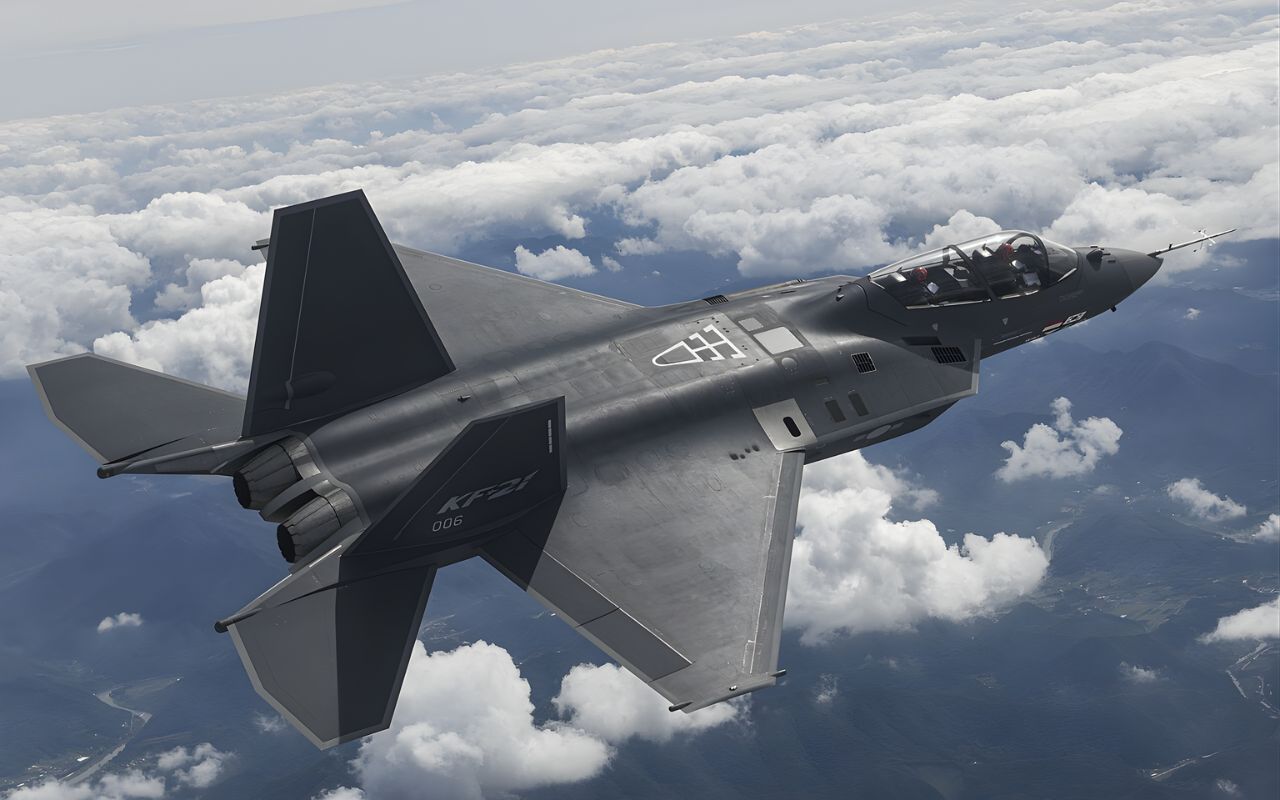
Military power: South Korea’s new KF-21 fighter jet will be a key component in replacing the aging aircraft of the air force, placing the country on the map of air military powers.
-
With 310 meters, 80 thousand tons, and capable of operating for 45 years, the new nuclear aircraft carrier France Libre will be the largest in France and will enter service in 2038.


Importance of the Missile for U.S. Nuclear Defense
Brigadier General William Rogers, Air Force program executive for ICBMs, emphasized the test’s impact on modernizing U.S. nuclear deterrence. “As we modernize our nuclear triad, the ICBM Systems Directorate is committed to safely delivering the United States’ ICBM capabilities,” he stated.
The new Sentinel system strengthens the ground part of the nuclear triad, which also includes submarines and strategic bombers. The new missile aims to ensure a reliable deterrent mechanism, maintaining a rapid response capability to threats.
Colonel Amanda Okeson, program manager for the Sentinel system, highlighted the commitment of the team involved. “The entire Sentinel team is extremely focused on ensuring that the program fulfills its promise of providing unmatched strategic deterrence,” she said.
Advances in the Program
The static fire of the first stage adds to previous successful tests conducted on the missile’s second and third stages. Experts from the Air Force Nuclear Weapons Center and Northrop Grumman are analyzing the results to confirm their effectiveness and accuracy.
The Sentinel nuclear missile, officially designated LGM-35A, will have a range exceeding 5,500 kilometers (3,400 miles). Its introduction will replace about 400 currently operational Minuteman III ICBMs. Despite some upgrades, much of the Minuteman III’s structure has remained the same since its original deployment.
Infrastructure and Future
Training and maintenance activities for the new system will be conducted at various facilities, including Hill Air Force Base in Utah, and missile alert sites in several states. Part of the Minuteman III infrastructure will be adapted for the new system, while other structures will be replaced.
With the transition to the Sentinel, the decommissioning of the old Minuteman III will occur through a process of demilitarization and proper disposal. This procedure will be carried out with attention to safety and compliance with current regulations.
Despite modernization, the number of U.S. land-based ICBMs will remain unchanged. The Air Force’s commitment is to maintain a reliable nuclear deterrent, ensuring national security through technological and strategic advancements.
With information from Interesting Engineering.








Seja o primeiro a reagir!