





 Portuguese
  English
  Spanish
  5 min of reading
  0 comments



The Identification of a Companion Star Orbiting Only 0.3 Astronomical Units Within a Region of Dust Heated Above 1,000 Degrees Fahrenheit Provides a Novel Explanation for a Phenomenon Considered Unviable by Observational Astronomy for Decades
About 70 light-years away, astronomers led by the Steward Observatory identified a companion star of Kappa Tucanae A crossing a dust region at over 530 °C, a discovery published in the Astronomical Journal that helps explain a mystery observed for decades and impacts searches for exoplanets.
Hot Dust That Challenges Observational Physics
The so-called hot exozodiacal dust remains extremely close to certain stars, at temperatures exceeding 530 °C.
Under these conditions, the material should rapidly vaporize or be expelled by stellar radiation pressure, which makes its prolonged presence a persistent observational paradox.
-
A robot with a silicone face and 26 facial motors learns to move its lips accurately by observing its own reflection like a child, then analyzes hours of videos on YouTube to reproduce how humans speak and sing, now articulating words in several languages, has already recorded a music album generated by AI, and is beginning to cross the uncanny valley that causes people to reject almost human robots.

-
Iron foundry in Senegal reveals a pile of 100 tons of slag, 35 furnace bases, and a rare technique that has remained stable for centuries.

-
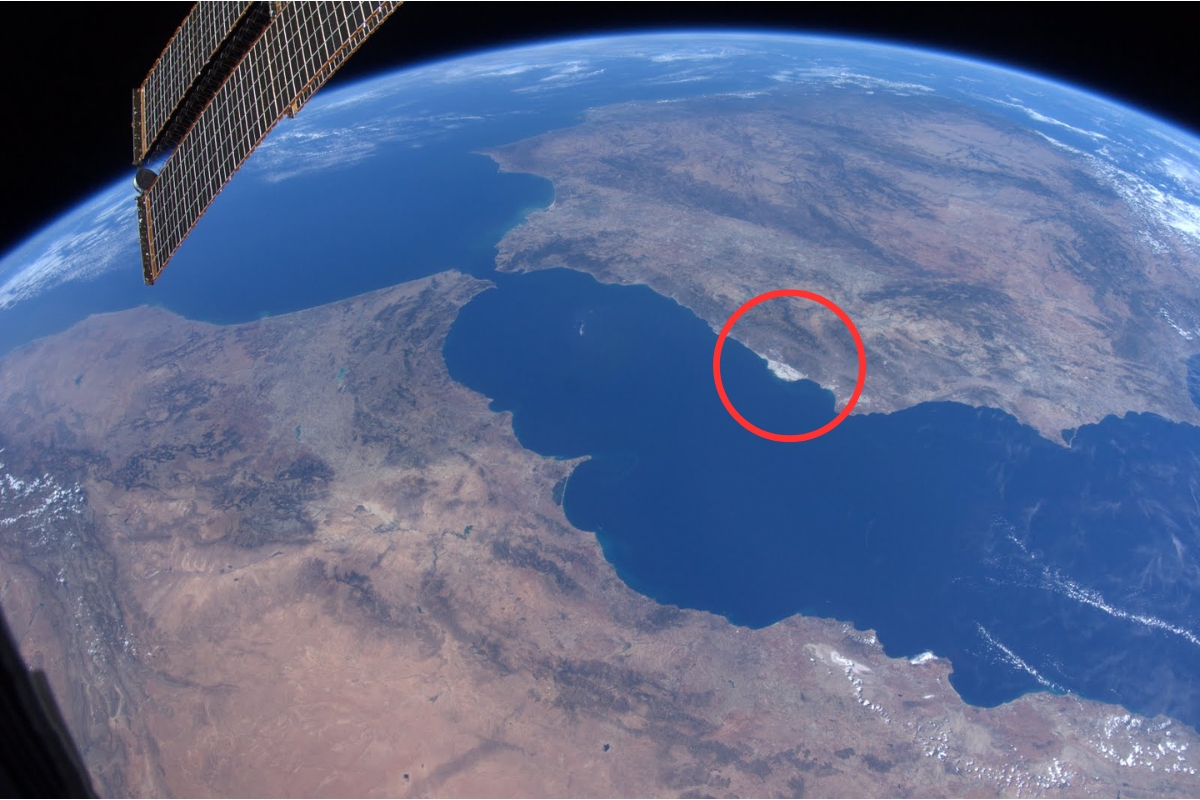
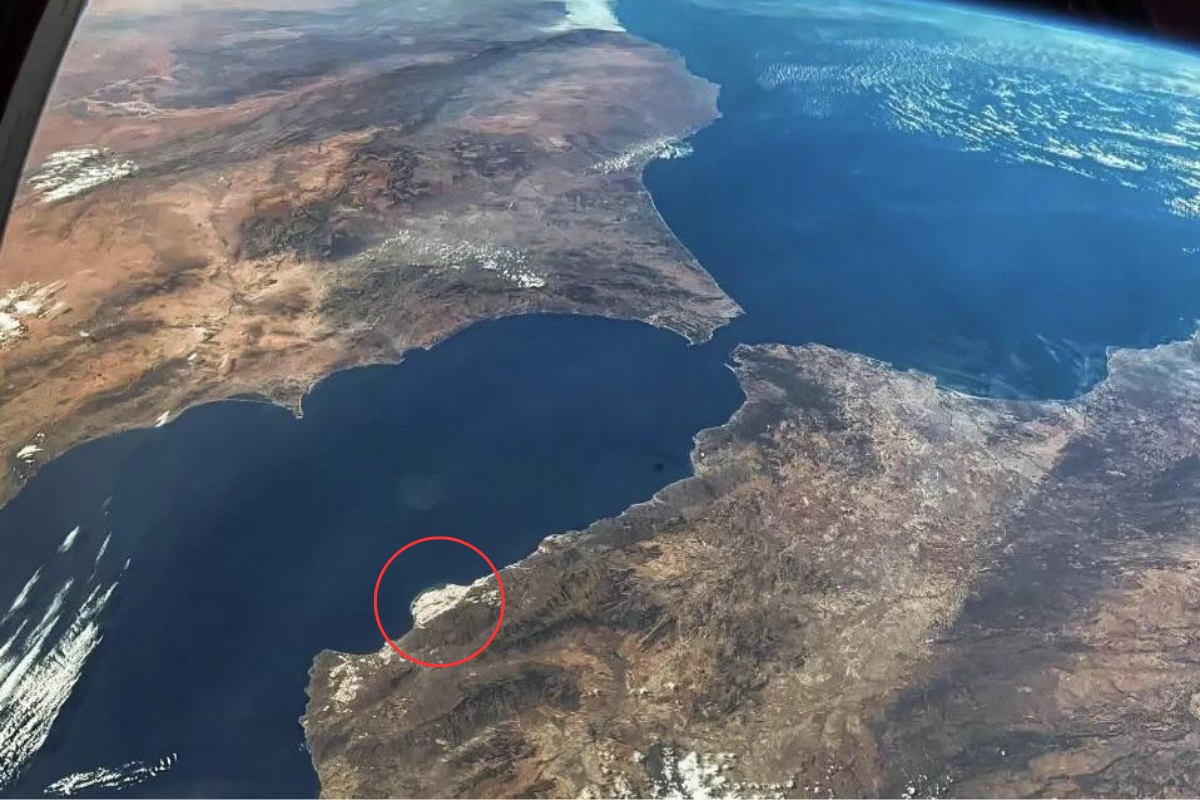
The only man-made structure in the world that can be clearly seen from space is not the pyramids of Egypt nor the Great Wall of China.
-
An analysis by NASA highlighted that the Great Wall of China and the Pyramids of Egypt are not visible to the naked eye from the International Space Station, and only one man-made structure is visible in this way.

In the case of Kappa Tucanae A, the dust is observed in significant amounts, which implies constant replenishment or the existence of a mechanism capable of extending its lifespan.
This incongruity has motivated continuous observation campaigns over the years.
According to Thomas Stuber, a postdoctoral researcher at the Steward Observatory, if the dust is seen in large volumes, it needs to be rapidly renewed or sustained by some process not yet understood by current models of planetary system evolution.
Interferometric Observations Reveal Hidden Star
Using interferometry, a technique that combines the light from multiple telescopes to achieve resolution equivalent to a much larger single instrument, the team conducted repeated observations between 2022 and 2024 with the VLTI in Chile.
The study used the MATISSE instrument from the European Southern Observatory, achieving the highest contrast detection ever obtained for a companion star with this equipment, a technical milestone highlighted by the article’s authors.
During the temporal analysis of the dust, researchers identified a previously unknown companion star orbiting in the same region where the hot dust persists, a result deemed completely unexpected by the team.
The star follows a highly eccentric orbit, coming as close as 0.3 astronomical units from the primary star, a distance smaller than any planet in the Solar System reaches from the Sun, according to the presented data.
A Natural Laboratory for Exozodiacal Dust
The presence of the companion star turns Kappa Tucanae A into a dynamic stellar laboratory. Its extremely elliptical orbit causes the object to traverse large distances and repeatedly cross the dust-rich inner region.
For Steve Ertel, an associate astronomer at the Steward Observatory and co-author of the study, it is practically impossible for the companion not to be connected to the production or maintenance of the observed dust.
According to him, the dynamic interaction between the star and the particulate material should play a central role in the dust’s behavior, providing a natural setting to investigate mechanisms previously only hypothesized.
This system offers a unique observational environment to examine how hot exozodiacal dust forms, persists, and interacts with stellar bodies under extreme conditions, enhancing the understanding of planetary system architecture.
Direct Impact on the Search for Habitable Worlds
Hot exozodiacal dust is particularly relevant because it appears around stars considered priority targets in the search for Earth-like planets. This material can directly interfere with exoplanet observation techniques.
The upcoming NASA Habitable Worlds Observatory, set for launch in the 2040s, will use coronagraphs to block starlight and reveal faint exoplanets. Hot dust, however, can scatter light and cause what’s known as coronagraphic leakage.
This effect can obscure weak planetary signals, making it harder to directly detect potentially habitable worlds. Understanding how the dust remains and distributes itself becomes essential for guiding future observational strategies.
The discovery provides fundamental data for calibrating instruments and interpreting optical signals in environments where dust plays a significant role, reducing uncertainties in planned missions.
Technological Leadership in Interferometry
The advancement achieved relies on decades of technological leadership at the Steward Observatory in interferometry. The Large Binocular Telescope Interferometer, funded by NASA and built on Mount Graham, was crucial in revolutionizing the search for hot exozodiacal dust.
With unprecedented stability and sensitivity, the LBTI established the observatory as an international benchmark on the topic, attracting funding from NASA, NSF, and philanthropic entities, as well as training specialists who now lead global projects.
This technical tradition allowed the team to quickly recognize the anomaly in the data and conduct detailed orbital modeling, even in a system already observed numerous times in the past.
The result reinforces the importance of long time series and high-precision instrumentation to uncover hidden components in complex stellar systems, something rarely achieved in snapshot observations.
International Network and Next Generation of Instruments
The accumulated expertise is now being applied to the development of a new European nulling interferometer, which will be 50 times more sensitive than previous observations, drastically expanding the capacity to detect dust and stellar companions.
Denis Defrère, responsible for the instrument’s development in Europe, was trained at the Steward Observatory as a postdoctoral researcher, where he helped build the LBTI, exemplifying the institutional continuity of research.
Ertel received a NASA grant to study exozodiacal dust with this new equipment, reinforcing the observatory’s role in scientific preparation for direct imaging missions of terrestrial exoplanets.
This global network of experts allows for comparing systems, revisiting old targets, and applying more sensitive methodologies, paving the way for new detections in environments previously considered inexplicable.
Scientific Perspectives Opened by the Discovery
With Kappa Tucanae A, astronomers hope to investigate the origin, composition, grain size, and spatial distribution of the hot dust more comprehensively. The system allows testing multiple physical scenarios in a single observable environment.
Among the explored hypotheses are the trapping of charged particles by magnetic fields, continuous replenishment by cometary material, and the possibility of different physics governing these extreme environments, as described by the study’s co-authors.
The discovery also suggests that other hot dust systems may host similar companion stars that have gone unnoticed in previous observations due to instrumental or contrast limitations.
The researchers plan to revisit already studied stars, applying new techniques to identify hidden companions, which may redefine previous interpretations of dust persistence.
A System Reassessed After Decades of Observation
Although Kappa Tucanae A has been observed many times over the years, the companion star had not been previously detected, a fact highlighted by Stuber as particularly significant.
According to him, the surprise reinforces the value of revisiting known systems with new tools and approaches, as even exhaustively studied targets may conceal crucial components for their understanding.
As the Habitable Worlds Observatory approaches reality, discoveries like this provide the fundamental knowledge needed to handle the complexity of future exoplanetary research, avoiding misinterpretations of observed signals.
The system now transitions from an isolated enigma to an observational reference, opening new pathways to explore hot exozodiacal dust and its effects on the detection of Earth-like worlds, even with challenges still open and ongoing analyses.




-

-

8 pessoas reagiram a isso.