





 Portuguese
  English
  Spanish
  3 min of reading
  1 comment


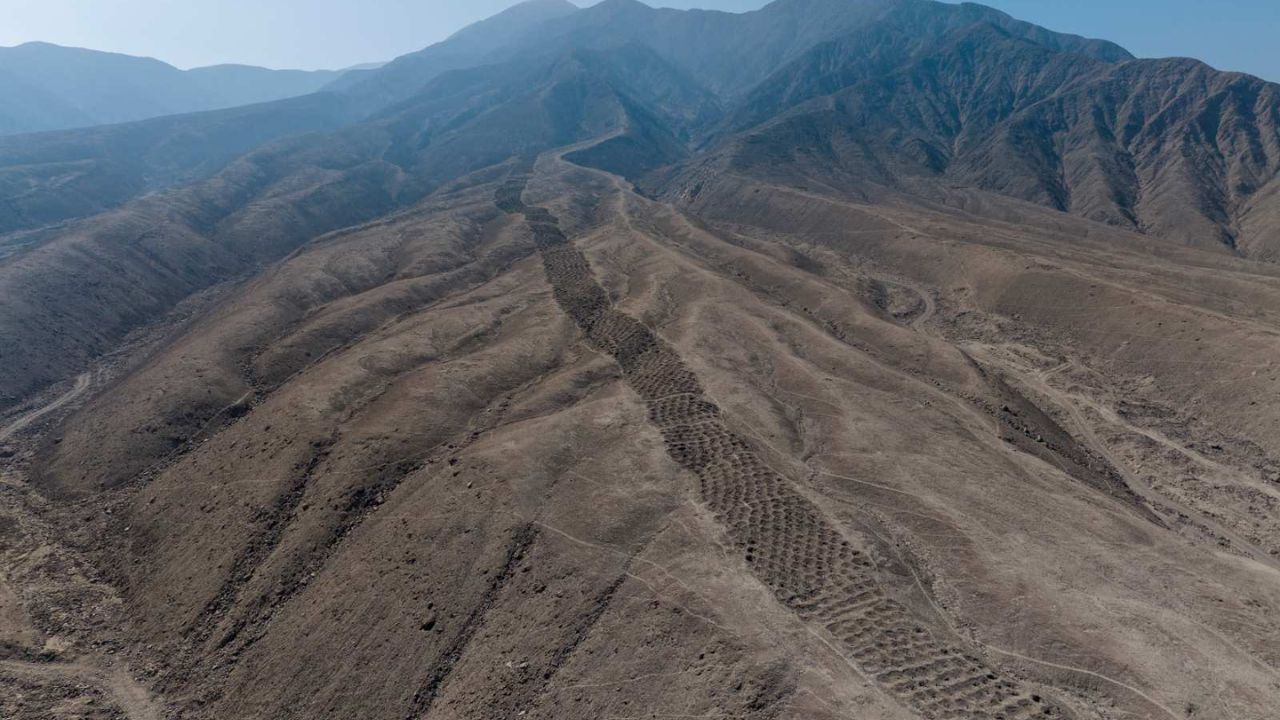


New Archaeological Study Reveals The True Purpose Of The Over 5,000 Aligned Holes In The Andes Mountain Range, Solving An Ancient Pre-Inca Mystery.
Researchers from universities in Peru, Australia, and the United States announced this week an unprecedented explanation for what has been one of the most persistent Andean enigmas for decades: the over 5,000 aligned holes on Monte Sierpe, south of Peru.
The study, published in the journal Antiquity, transforms an ancient archaeological mystery into a new key piece for understanding pre-Inca societies.
The discovery—made with drones and sediment analysis—indicates that the structures were used as part of a commercial and administrative organization system, long before Inca domination.
-
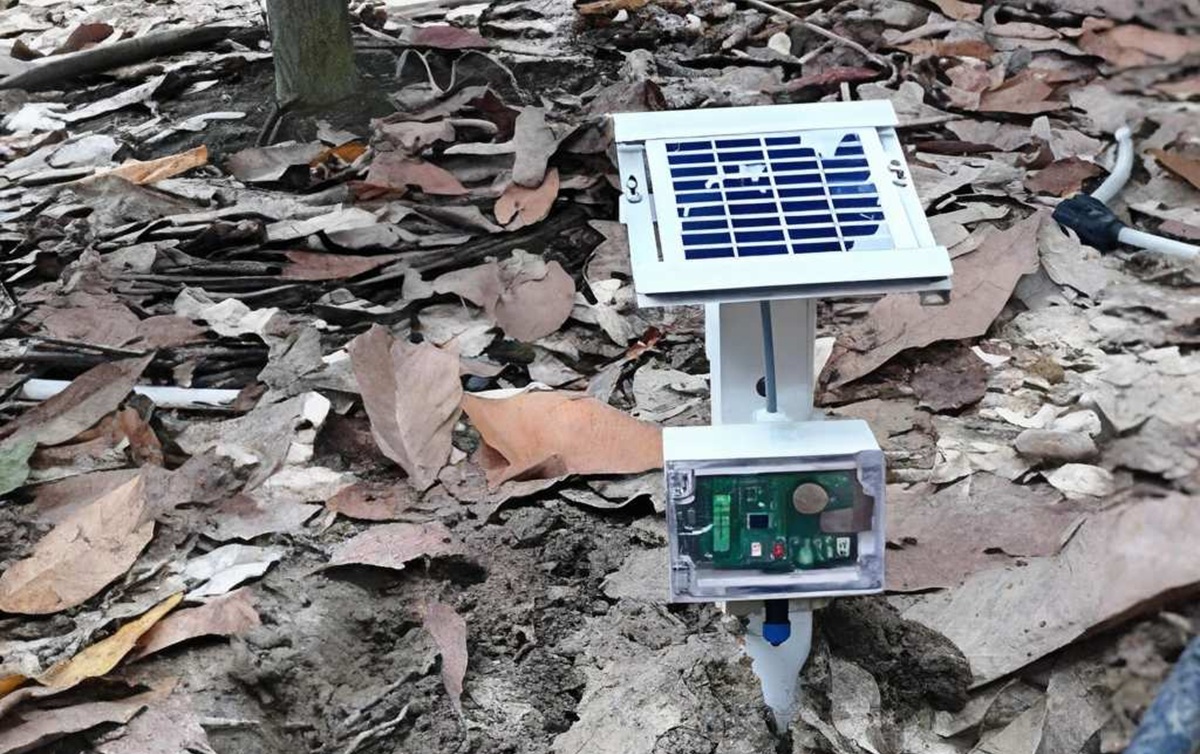
Researchers in Malaysia buried sensors at 15 and 30 cm and can now predict soil moisture with 95.49% accuracy, helping the field to irrigate only at the right time and reduce water waste.
-
Technology developed to protect military communications in the 1940s scrambled voices and today gives rise to the robotic sound that dominates current music.

-
If you look at the sky this Wednesday, you will see the Pink Moon shining at its peak at 10:11 PM, but before you get disappointed, know that the name has nothing to do with the color and instead refers to flowers that bloom at this time in the United States.

-
Discovery at USP reveals how Brazilian arnica can revolutionize the production of silver nanoparticles with less environmental impact.


Mysteries In The Andes Mountain Range: Monumental Structure That Intrigued Generations
Located in the Pisco Valley, the holes extend over more than 1.5 km and are similar in size: between 1 and 2 meters wide and up to 1 meter deep.
For years, experts proposed various explanations—from agricultural rituals to irrigation systems. However, no theory could justify the mathematical precision in the arrangement of the cavities.
The symmetry of the lines reinforced the presence of an intentional purpose, but the lack of concrete evidence kept the mystery alive.
Technology Revealing The Past: Drones And Microscopic Analyses
To understand the function of the structures, the scientific team used drones capable of capturing high-resolution aerial images.
Thus, they observed that the holes followed a stable numerical pattern, something that would be unlikely in structures intended only for rituals or agriculture.
Subsequently, microscopic analyses of samples taken from the holes revealed traces of corn pollen and fragments of bulrush—plants used by pre-Inca peoples to produce baskets.
This combination of elements led researchers to a conclusion: the site was used to account for, temporarily store, or organize goods in circulation.
Connection With Ancient Counting Systems
One of the most interesting points of the discovery is the similarity of the set with the quipu, a system of strings and knots used by the Incas to record information such as taxes, inventories, and censuses.
Although the quipu is more recent, the structure of the holes suggests a similar principle of organization: each line and group could represent some category of items or people, forming a large “physical record” prior to traditional writing.
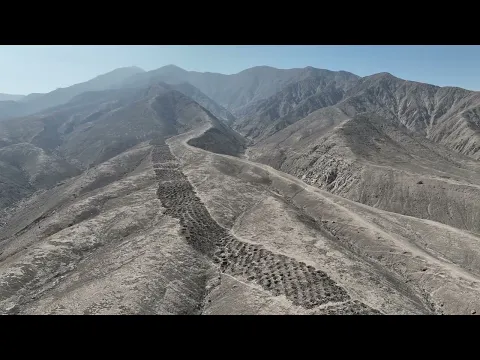

Thus, the mystery gains an explanation that connects technique, commerce, and administration.
Monte Sierpe is close to ancient Inca administrative centers and historical routes for the circulation of products.
Therefore, the site had ideal conditions to serve as an area for counting, trading, or sorting goods.
The new hypothesis reinforces that pre-Inca societies were economically more organized than previously thought, maintaining internal distribution networks even before the emergence of the great empire.
How Does This Discovery Change Andean History?
The research reveals that civilizations before the Incas already displayed complex forms of resource management. This alters the timeline of cultural development in the region.
Furthermore, the methodology used—a combination of aerial technology and microfossil study—opens doors to solve other enigmas still hidden in the Andean landscape.
New excavations may show that administrative practices were more common and varied than current records indicate.
Source: Xakata







Boa descoberta. Espero que essa teoria espelhe a realidade dos fatos!!! Muito bonito mesmo.