





 Portuguese
  English
  Spanish
  4 min of reading
  0 comments


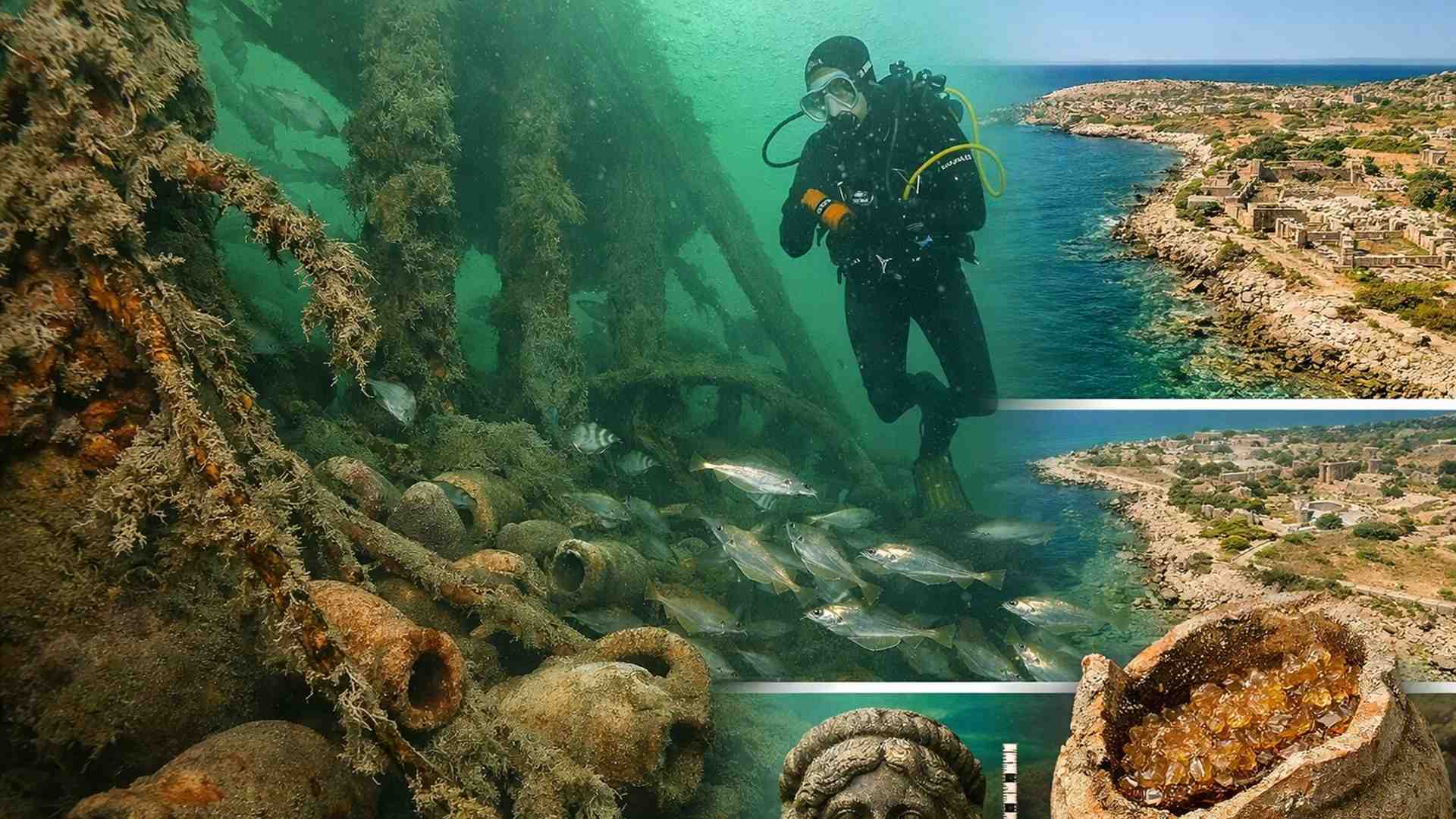
Archaeological Expedition Resumed in 2023 After 12 Years of Interruption Identified Several Shipwrecks About 100 Meters Deep Near the Ancient Greek City of Ptolemaida in Libya. The Set of Wrecks, Located Four Kilometers from the Coast, Suggests Successive Failed Attempts by Ships Trying to Reach a Port That Eventually Became Submerged Due to Environmental Changes and Seismic Activity
Researchers identified several shipwrecks about 100 meters deep on the seabed near the ancient Greek city of Ptolemaida in northeastern Libya. The discovery occurred during archaeological excavations resumed in 2023 after a 12-year hiatus.
The investigation was conducted by archaeologists from the University of Warsaw, who returned to the region after the interruption caused by the civil war.
The work involved land and underwater research and revealed a significant set of archaeological remains linked to the ancient city.
-
100 kW megalasers are already pointing to a new industrial phase, with enough power to cut thick steel, drill through rocks, accelerate mining, and increase productivity in operations previously considered too difficult.
-
Thousands of people in poor countries are paid cents to film household tasks, label images, and operate systems remotely all day long, and this invisible work fuels a $17 billion market that trains the artificial intelligences of Google, Tesla, and Meta.

-
Technology created in the United States uses deep drilling to store high-level nuclear waste.
-
Dozens of Chinese research ships are discreetly mapping the ocean floor in three oceans – and naval analysts see a military pattern.


The shipwrecks were found approximately four kilometers from the coast. The first signs appeared from a dispersion of amphorae in shallow waters, which served as a trail for researchers to follow to fragments of cargo, boat fittings, and finally, the wrecks.
Group of Shipwrecks Indicates Repeated Accidents Over the Centuries
According to the archaeologists, the area features not just an isolated shipwreck but a group of vessels that sank over time.
The concentration of these shipwrecks suggests that many ships faced similar difficulties when trying to reach the port of the ancient city.
According to chief archaeologist Dr. Piotr Jaworski, the shipwrecks likely occurred in different historical periods.
He points out that several vessels may have been unable to cross the strait leading to the port due to the same hazardous navigation conditions.
This scenario indicates a sequence of frustrated attempts to reach the coast. Over the centuries, ships seeking to access the port of Ptolemaida would have faced similar obstacles and ended up at the bottom of the sea.
Recovered Objects Help Understand Maritime Activity
During the excavations, researchers found various objects associated with the shipwrecks and maritime activity in the region.
Among them is a bronze weight, a fragment of a Roman balance filled with lead and molded in the shape of a female head.
Several amphorae were also recovered, used in the transportation of goods in antiquity. One of them contained crystallized wine, which is currently being analyzed by researchers to better understand the content and historical context of the material.
These artifacts help reconstruct aspects of maritime trade and the economic activities linked to the ancient port. The presence of the amphorae indicates that the vessels were carrying commercial loads when the shipwrecks occurred.
Submerged Structures Confirm Existence of Ancient Port Complex
Between 2024 and 2025, underwater archaeologists identified extensions of the ancient port, including columns, roads, anchors, and instruments used to measure the depth of the sea. These structures reinforce the interpretation that the site functioned as an important port center.
According to researchers, the port complex eventually became submerged due to environmental changes over time. Among the factors noted are the rising sea level and seismic activity in the region.
The discovery of these structures complements the scenario revealed by the shipwrecks and indicates that the area had significant maritime infrastructure during the period when Ptolemaida was in operation.
Land Excavations Reveal New Remains of the Ancient City
While Jaworski coordinated the underwater excavations, archaeologist Szymon Lenarczyk led the land research. During the investigation, the team identified a road meant for wheeled vehicles leading to the city located at the top of a hill.
Upon passing through the gates of Ptolemaida, archaeologists also found a Greek inscription dated to the 3rd century A.D. Additionally, remains of an ancient residential neighborhood were discovered, including the entrance area of a house belonging to a high-ranking state official.
Among the objects found outside the house were a mask representing a human face and various stone containers. The presence of these items drew the researchers’ attention, as they are still trying to understand why they were placed outside the residence.
Currently, conservators are working on restoring wall mosaics, paintings, and a rare double-disk sundial that had previously been discovered by the team in 2010.
With the resumption of excavations, the archaeologists are entering a new phase of research in a historical center that is still little explored.






Seja o primeiro a reagir!