





 Portuguese
  English
  Spanish
  5 min of reading
  0 comments


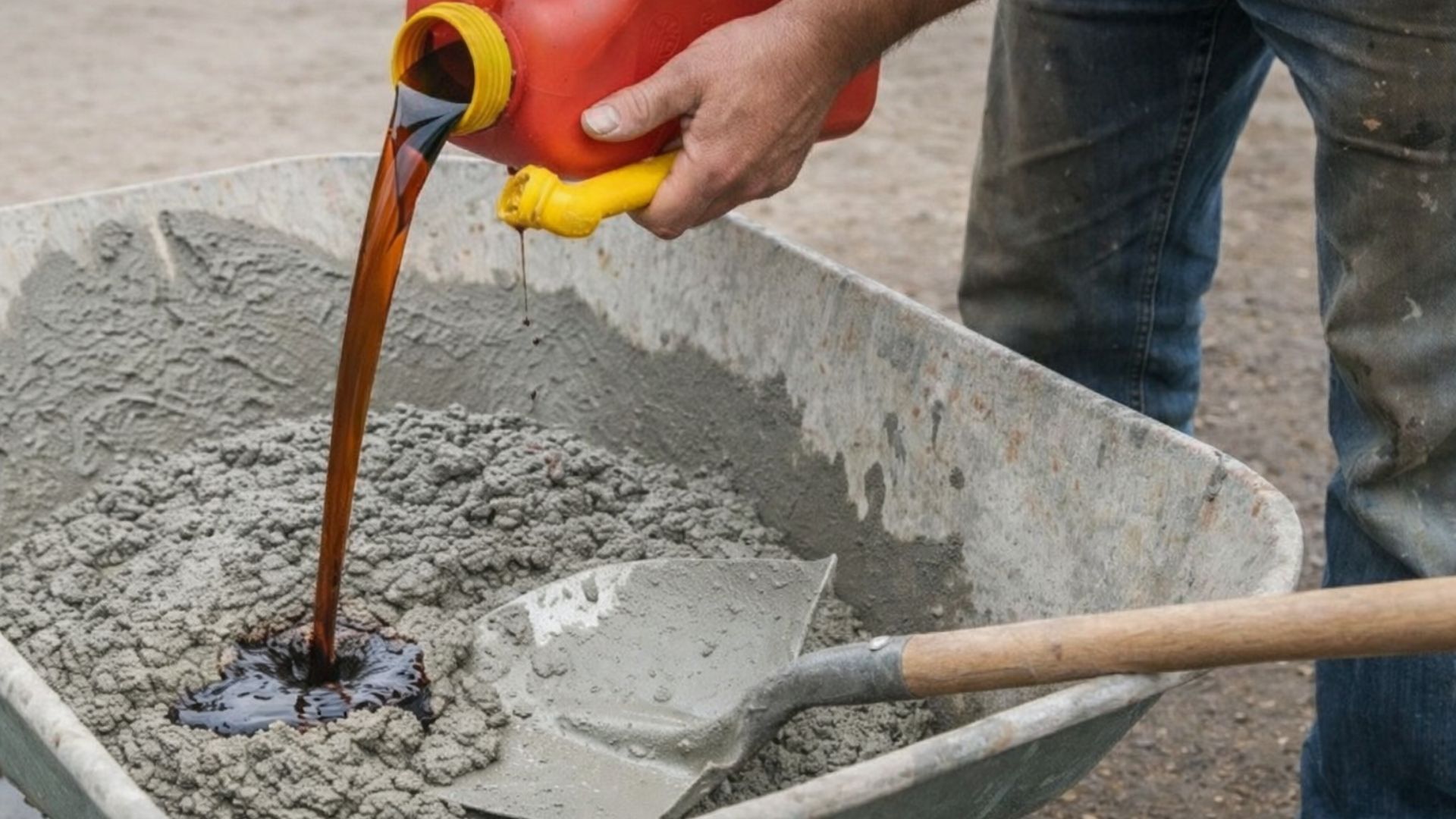
Homemade Mixes of Cement, Oil, and Resin Have Gained Popularity in Home Repairs for Promising Quick Sealing and Low Cost, but Experts Warn of Environmental Risks and Lack of Technical Validation. Proper Disposal of Used Oil and Professional Waterproofing Methods Are at the Center of the Debate.
Homemade recipes that promise to seal cracks in slabs and walls with cement, used oil, and even acrylic resin have circulated strongly among residents and small service providers.
The practice draws attention for its low cost and the appeal of reuse, but it stumbles on one central point: there is no reliable technical validation, in the consulted sources, to recommend the use of used lubricating oil in waterproofing surfaces.
On the contrary, Brazilian environmental legislation determines that this waste has specific collection and disposal requirements, with forwarding to re-refining, and classifies the material as potentially harmful to the environment and public health.
-
The Brazilian city has 319 crooked buildings built on sandy soil without proper deep foundations, houses the largest beach garden in the world, with over 5 km, and is still considered the birthplace of surfing — meet Santos, in São Paulo.

-
New Zealand builds a shimmering building that vibrates, featuring a 62-seat cinema, moving sculptures, and an environment where sound, light, and energy are felt in the body.

-
Two colored cubes of 2.5 m transform a public bathroom into a selfie spot in Western Australia, costing up to 75% less than traditional construction and helping to reduce vandalism in public spaces.

-
Santa Catarina produces up to 7 times more than it consumes in some sectors, and its century-old industries founded by grandparents and great-grandparents now compete on equal footing with Germany and the United States in the international market.


Cement, Oil, and Resin Mixture: How the Viral Recipe Spread
The combination is usually presented as a thick paste, applied directly onto cracks and small voids to block the entry of water.
In similar versions, the recipe includes water-based acrylic resin to provide more adhesion and form a protective film.
The logic behind these solutions is simple: use cement as a rigid base and a polymeric or oily component to try to reduce the passage of moisture.
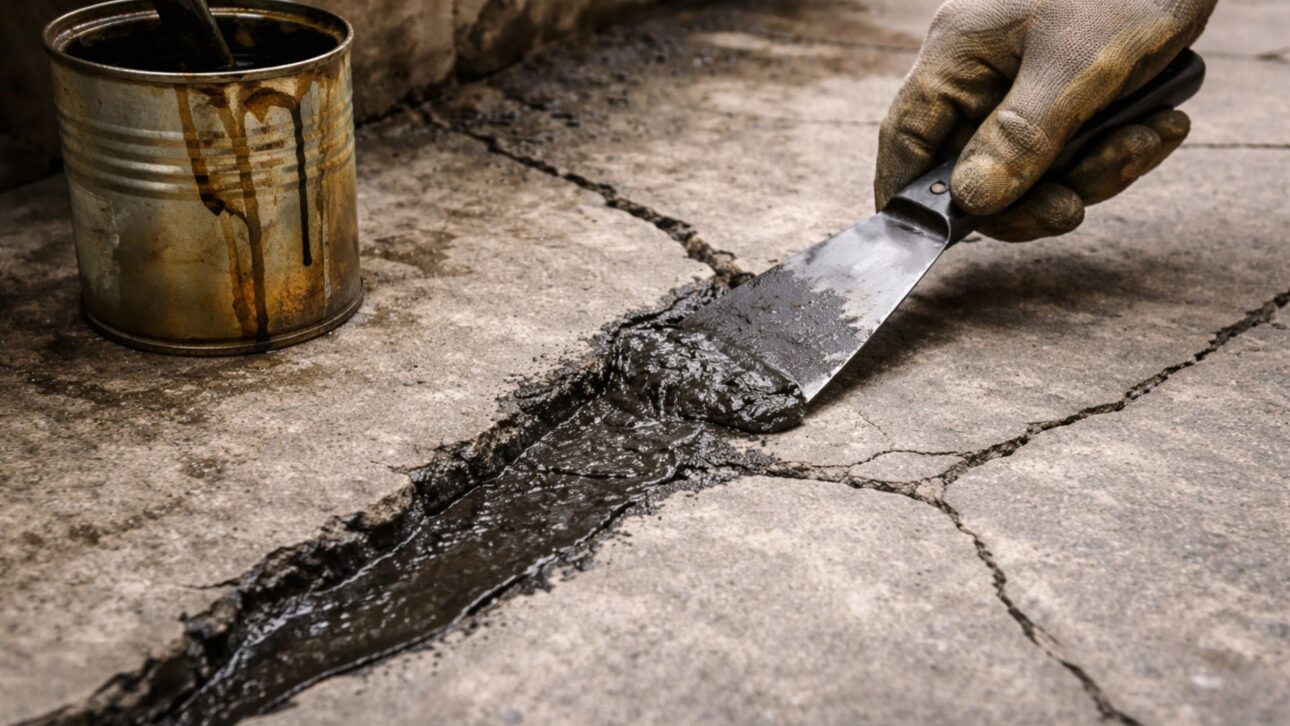
The problem is that, without technical testing, mix control, and assessment of the crack’s origin, the outcome may vary greatly and mask an infiltration that requires adequate repair.
Cement with Acrylic Resin Already Exists in Professional Systems
Among the systems recognized by the construction industry, there are cementitious products with acrylic resin specifically developed for waterproofing concrete, mortar, and masonry.
Technical data sheets from manufacturers in the sector show that this type of composition is used for moisture protection, with performance linked to the correct preparation of the base, application in layers, and curing according to the manufacturer’s guidance.
In other words, the idea of combining cement and acrylic polymer is not strange to engineering.
What changes everything is the controlled formulation, with additives, defined proportions, and performance testing.
This point helps explain why the so-called “cement paint” with resin generates interest in small repairs and finishes.
On the market, there are acrylic waterproofers and polymeric mortars with drying between layers of just a few hours and final curing that can take up to 24 or 48 hours, depending on the product and application conditions.
Therefore, the reference to drying in about 24 hours only makes sense when associated with specific formulations, and not as an automatic guarantee for any mixture prepared artisanally on site or at home.
Cracks and Infiltrations Require Diagnosis Before Repair
When an infiltration appears, the first impulse is usually to close the visible crack.
However, crack, fissure, and rupture are not the same thing, nor do they have the same origin.
In slabs and facades, the entry of water may be linked to thermal movement, failure of the waterproofing layer, inadequate sealing, wear of the coating, or construction defects.
Companies in the waterproofing sector advise that the treatment of the crack should precede the final protection and be done with products designed for this purpose.
Covering only the symptom tends to reduce the durability of the repair.
Furthermore, surfaces exposed to sun and rain require materials with some flexibility.

Pure cement hardens, but does not adapt well to base movements.
That’s why professional solutions for slabs and outdoor areas usually combine cement with polymers, fibers, or membranes.
This type of system creates layers with better adhesion and elasticity.
This performance cannot be assumed in mixtures made with used oil, especially when there is no reliable public data on resistance, adhesion, or behavior under weather conditions.
Used Oil Is Waste With Mandatory Environmental Disposal
In the case of used lubricating oil, the obstacle is even more serious.
Standards and public bodies inform that the material must be collected and disposed of in an environmentally appropriate manner, with re-refining as the correct destination.
Used or contaminated lubricating oil is treated as waste that cannot be improperly discarded, precisely because of its potential for contamination and the presence of toxic substances.
This weakens the idea of transforming the product into a domestic input for wall, fence, and slab repairs.
The promise of “reusing” oil, in this scenario, does not equate to an environmentally correct solution.
Safe reuse is not the same as improvisation. When legislation mandates forwarding the material to a controlled recycling chain, it rules out informal alternatives that could spread contaminants.
This is a point that often gets overlooked in short videos and viral recipes.
Professional Alternatives to Seal Cracks and Infiltrations
For localized repairs, the market offers acrylic sealants for cracks and fissures, liquid membranes based on acrylics, and polymeric cementitious coatings recommended for internal and external areas.
The advantage of these materials is that they come with usage recommendations, interval between layers, curing time, and application limits.
These guidelines reduce the margin for improvisation in home projects.
In persistent infiltrations, especially in slabs, facades, and areas subject to movement, technical assessment remains the decisive step to prevent the problem from recurring.
This does not mean that every mixture with cement and resin is inadequate.
It means that the component needs to be appropriate for civil construction and have a defined purpose.
In the case of reused cooking oil or waste motor oil, no safe recommendations were found to support the use of these wastes as reliable sealants for slabs and walls.
Without this basis, promoting the practice as an effective and economical solution requires heightened caution.
In small projects, the rush to resolve leaks and infiltrations often opens space for shortcuts.
The difference between a durable repair and a temporary fix is almost always in diagnosing the cause and choosing the correct system.
When it involves hazardous waste such as used lubricating oil, improvisation is no longer just a performance gamble but also an environmental and sanitary risk that Brazilian regulations seek to avoid.







-

-

-

-

-

-

36 pessoas reagiram a isso.