





 Portuguese
  English
  Spanish
  4 min of reading
  0 comments


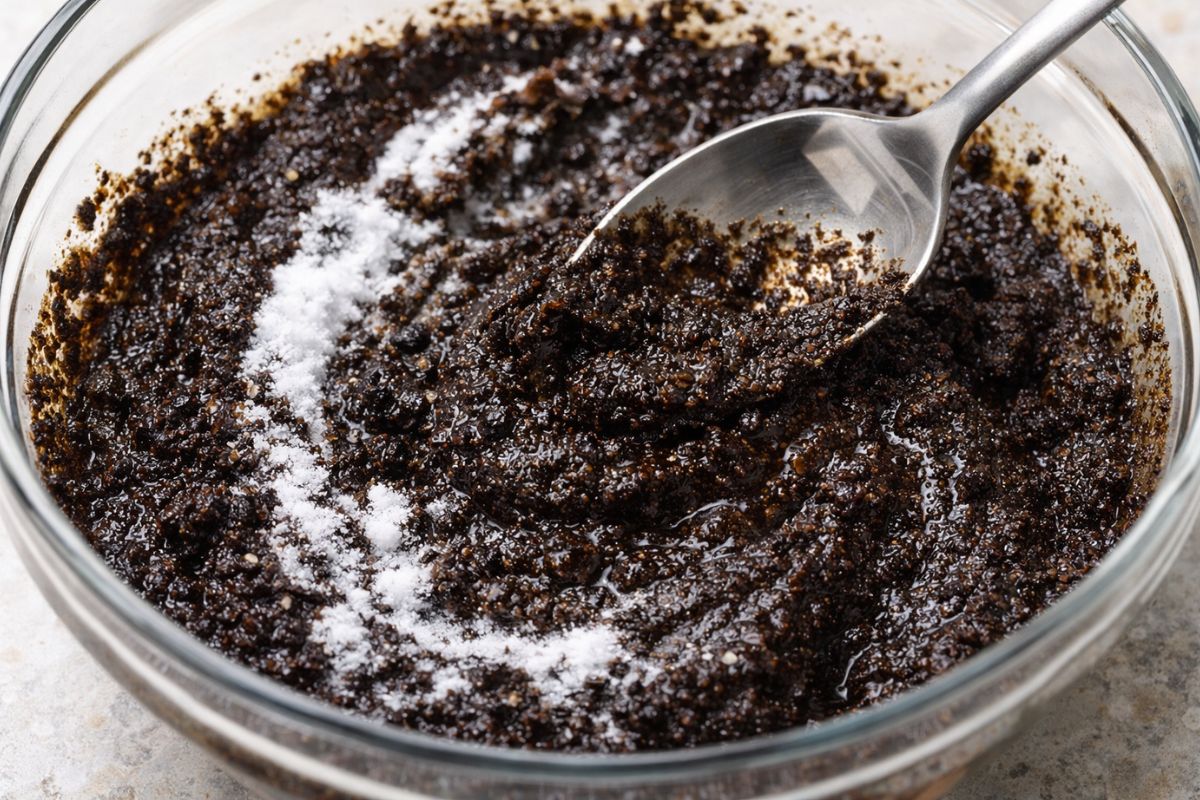
The coffee grounds left after straining the coffee preserve a granular texture and the ability to absorb odors, and when combined with baking soda, which neutralizes acids and works as a light abrasive, it becomes a multipurpose product that replaces degreasers, deodorants, and industrial exfoliants for a fraction of the cost
The average Brazilian consumes 6 kilograms of coffee per year. Almost all of this coffee ground goes straight to the trash. At the same time, baking soda costs less than R$ 5 at the pharmacy and is already present in most kitchens. The combination of the two creates a homemade product that solves at least four different household problems.
The logic is simple. Coffee grounds have a granular texture that works as a natural abrasive and a proven ability to absorb odors. Baking soda is a base that neutralizes acids, eliminates odors, and cleans surfaces without scratching. Together, they do what neither can do alone.
How to prepare the coffee grounds and baking soda mixture?
The preparation takes less than two minutes. Let the coffee grounds dry naturally after straining. It can be outdoors or in a baking tray in a low oven for 15 minutes. The grounds need to be dry to avoid mold.
-
Differences between automotive technologies show advantages in energy efficiency, lower operating costs, and reduced environmental impact in real-world scenarios.

-
The artificial intelligence race is creating energy monsters that consume more electricity than entire cities, and now American states like Maine want to prohibit new data centers so that the population does not foot the bill for this revolution.

-
A SR-71 Blackbird lost both engines at 25,000 meters altitude over the Soviet Union in 1984 while spying on Russian nuclear submarines, and the crew had to choose between ejecting in enemy territory or trying to restart the engines while in free fall towards the Barents Sea.

-
A Syrian immigrant arrived in São Paulo with nothing, sold fabric door to door until he saved enough money to open a store on the corner of 25 de Março in 1905, which still operates at the same address today, 120 years later, in the same yellow mansion, with 60,000 items on the shelves and the fourth generation of the Abdalla family in charge of Doural.

Then, mix two tablespoons of dry grounds with one tablespoon of baking soda. The ratio is always 2:1. For cleaning, use the dry mixture or add a little water to form a paste. For exfoliation, add a few drops of olive oil or coconut oil.
Before applying to any surface, test in a small and inconspicuous area. Coffee grounds can stain light and porous materials like white marble or fabrics.
What is it good for inside the house?
Refrigerator and trash can: place the dry mixture in an open container inside the refrigerator or near the trash can. The grounds absorb odors and the baking soda neutralizes the acids that cause bad smells. Change every two weeks.
Pans with grease: apply the paste directly onto the greasy surface, scrub with a sponge, and rinse. The granular texture of the grounds loosens the adhered grease without scratching the bottom of the pan, while the baking soda dissolves the grease layer. It works especially well on stainless steel and cast iron.
Drains and sinks: the same paste can be used to clean drains with accumulated organic residue. The combination helps to loosen dirt and reduce the odor that rises through the pipe.
Shoes: place the dry mixture inside a used coffee filter or an old sock, tie it up, and leave it inside the shoe overnight. The smell disappears by morning.
Does it work for the skin?
Coffee grounds have been used as a natural exfoliant for decades. The granular texture removes dead skin cells without the need for plastic microbeads, which are banned in several countries for polluting oceans. Baking soda, in small amounts, helps balance the skin’s pH and unclog pores.
The exfoliation mixture is different from the cleaning one. Use a 2:1 ratio (grounds to baking soda) and add a teaspoon of coconut oil or olive oil to hydrate while exfoliating. Apply to the face or body with gentle circular motions and rinse with warm water.
Do not use on skin with open wounds, sunburns, or irritations. And do not apply more than twice a week to avoid damaging the skin’s natural barrier.
Does it really repel insects?
Coffee grounds are already known to repel ants and mosquitoes when spread dry around pots and flower beds. The addition of baking soda enhances the effect because it alters the pH of the soil superficially, creating a less attractive environment for larvae and crawling insects.
Spread the dry mixture around the plants, at the entrance of the house, or in corners where ants usually appear. The effect is not permanent and needs to be renewed after each rain or watering, but it works as a temporary barrier without using insecticide.
Two ingredients that cost cents, that almost everyone has at home and that would normally go to waste. Together, they replace degreaser, deodorizer, exfoliant, and repellent. Sometimes the smartest solution is not on the supermarket shelf, it’s in the kitchen sink.
With information from El Tiempo and El Cronista.








Seja o primeiro a reagir!