





 Portuguese
  English
  Spanish
  3 min of reading
  0 comments


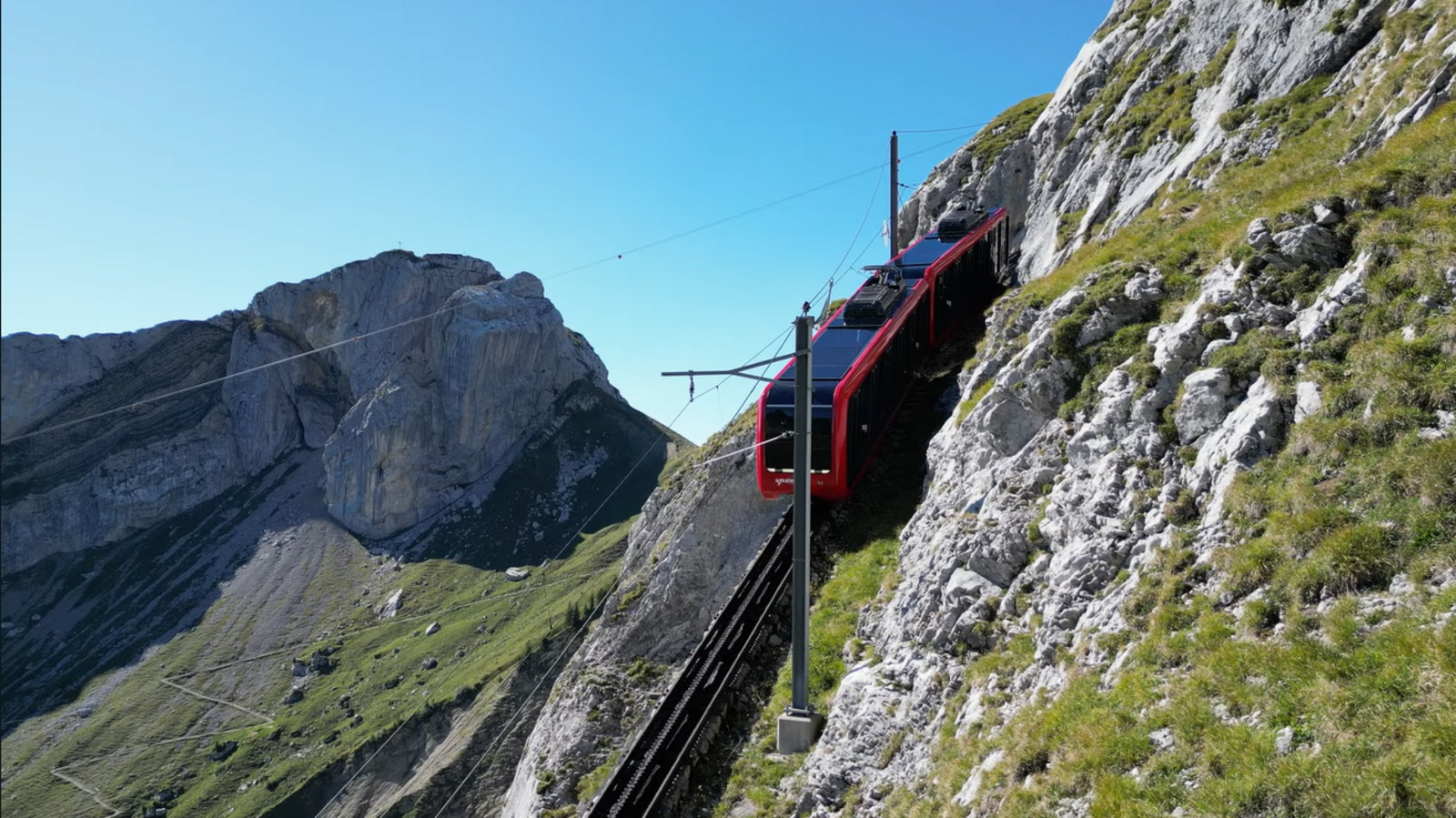
The Pilatus Mountain, Near Lucerne, Houses the Steepest Railway on the Planet and Offers a Rare Combination of Engineering, Alpine Landscapes, and Traditions That Continue to Captivate Travelers from Diverse Regions
Located below the Alps, Switzerland combines mild summers and harsh winters because it is surrounded by imposing mountains. This scenery blends modern cities and preserved nature, creating one of the most admired environments in Europe. The country brings together tradition, innovation, and iconic works. Among them is the steepest railway on the planet, installed on Mount Pilatus. It has been operating for over a century and receives visitors from various regions.
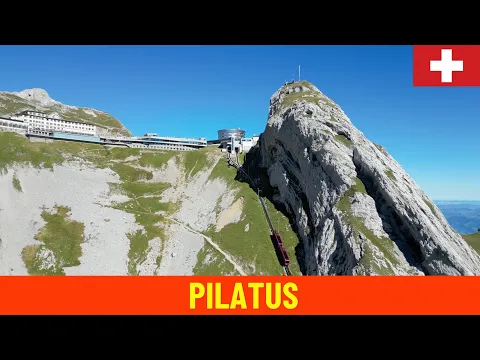

The Imposing Mount Pilatus
Pilatus is one of the most sought-after mountains in Central Switzerland. It is close to Lucerne and reaches 2,132 meters at its highest point.
The massif has several peaks. Among them are Tomlinson, at 2,128 meters, and Weidenfeld, at 2,076 meters. These structures form an impressive set that attracts travelers year-round.
-
Argentina enters the phase of the receiver network in Patagonia and Antarctica to monitor the far south, while Brazil keeps an eye on the South Atlantic and spreads sensors over 5.7 million km² of the Blue Amazon and reinforces its maritime sovereignty.

-
Goodbye disposable batteries: an item still consumed in 1.2 billion units per year in Brazil has a rechargeable alternative that can be used up to 1,000 times and reduces household expenses.

-
Millions of people have been eating mushrooms for millennia without knowing that this discreet food contains ergothioneine, an antioxidant that scientists now associate with memory protection and healthier aging.

-
Sun Tzu wrote 2,500 years ago that the supreme art of war is to defeat the enemy without fighting, and this phrase from a Chinese general born in 544 B.C. has become the most applied advice in the business world, in conflict psychology, and even in neighborly relations in 2026.

The region is also marked by ancient stories. One legend claims that the body of Pontius Pilate was thrown into Lake Oberalp. For this reason, the place was considered haunted for centuries.
The Lucerne council prohibited access to Pilatus in 1837. The restriction lasted two centuries and reinforced the idea that the mountain held dangerous secrets.
Another popular narrative says that benevolent dragons lived in caves at the top of the massif. They were said to have healing powers and helped an injured young man who mistakenly climbed the place, according to tradition.
These stories still fuel the imagination of those who visit the mountain.
The Creation of the Impossible Railway
At the end of the 19th century, engineer Eduard Locher decided to create a railway capable of overcoming the steep incline of Pilatus.
Many doubted the plan because traditional systems could not support the steep angle. He, therefore, developed an unprecedented solution to make the project possible and avoid accidents.
Locher proposed a design with a standard gauge and a 25% incline, but it was not economically viable.
To move forward, the engineer created a mechanism that cut the wheel in half and allowed the incline to be increased to 48%, something innovative for the time.
He installed a double horizontal rack between the rails, with teeth facing both ways. The cog wheels of the vertical axles fitted into the system, ensuring grip and safety.
Additionally, the method eliminated the risk of tipping during the journey.
The Line That Became a Swiss Symbol
The construction took 400 days. The inauguration took place on June 4, 1889, marking the beginning of a 4,618-meter route connecting Alpnachstad Lucerne to the top of Pilatus.
The route had an average incline of 38% and reached 48% in the steepest sections.
The first steam locomotives traveled between 3 and 4 km/h. They took over an hour to reach the summit.
The system, therefore, required patience from passengers, but it delivered a spectacular view along the entire route.
The railway still operates with the original system. Maintenance is frequent to ensure safety. The steam wagons were replaced in 1937 by electric trains that travel at 9 km/h and reduce journey time.
The route is available between May and November. The trip has become one of the most traditional outings in Switzerland and continues to delight those who want to get to know Pilatus up close.
The Experience That Captivates Travelers
Visitors ascend the mountain because they want to observe the unique landscape formed by the lakes and the alpine range.
Many take the opportunity to capture photos at the top of the massif, as well as walk along the viewpoints scattered throughout the region.
The experience combines history, engineering, and nature. Therefore, the tour integrates different profiles of tourists.
Some prefer just to relax at the observation points, while others seek to explore short trails.
The structure was designed to accommodate this varied flow and ensure comfort throughout the stay. Thus, the tour remains among the favorites.
With information from Railway Lovers.





-

Uma pessoa reagiu a isso.