





 Portuguese
  English
  Spanish
  9 min of reading
  0 comments


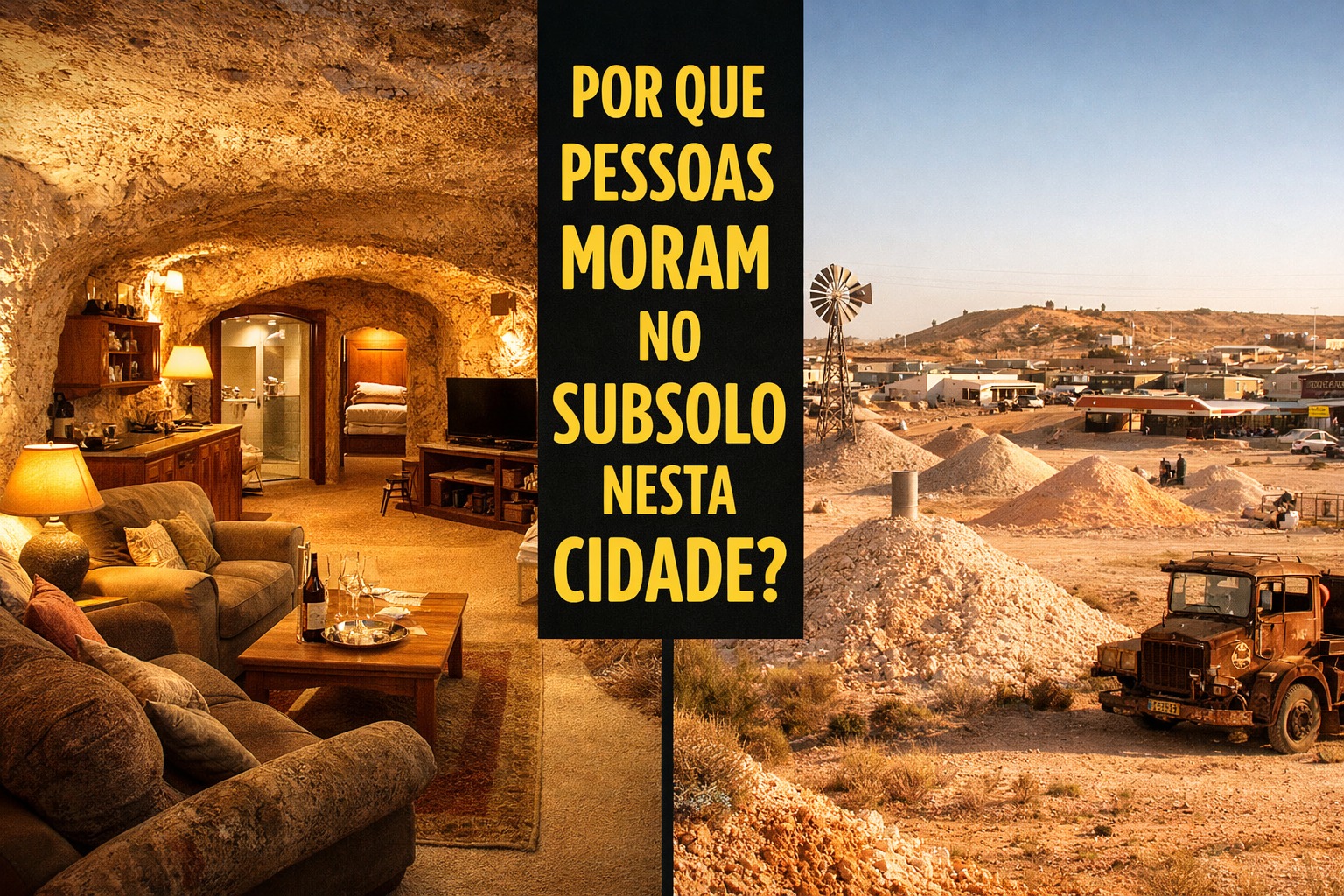
In The Australian Desert, Coober Pedy Residents Live In Subsurface Houses Dug Into The Rock, Taking Advantage Of Thermal Stability, Lower Costs, Climatic Protection And A Way Of Life Shaped By Mining, Extreme Heat And Unique Adaptive Solutions
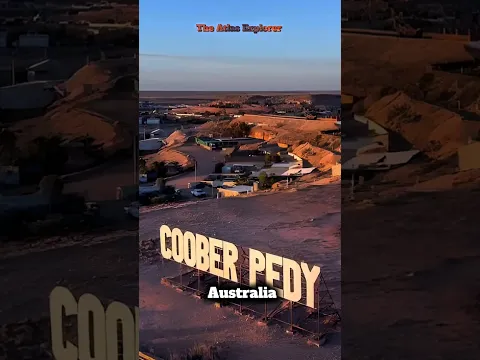
On the long road to the center of Australia, 848 km north of Adelaide, enigmatic hills emerge, signaling Coober Pedy, a mining town where living underground has become a practical response to extreme heat and the local economy.
Before even spotting the town, travelers come across pyramids of light sand scattered across the arid terrain, a direct result of decades of intense opal mining.
The surrounding area is dominated by pink-salmon dust and sparse vegetation, creating a desolate scene that reinforces the sense of isolation in the heart of the Australian outback.
-
Rare earths are in everything, from cell phones to bullet trains, and what almost no one realizes is why they have become the target of such a delicate global war.

-
Brazil extracts 26.3 million tons of ore from what was previously treated as waste, transforming residues into wealth, producing over 3 million tons of sand, and demonstrating how national mining is relearning to generate value.

-
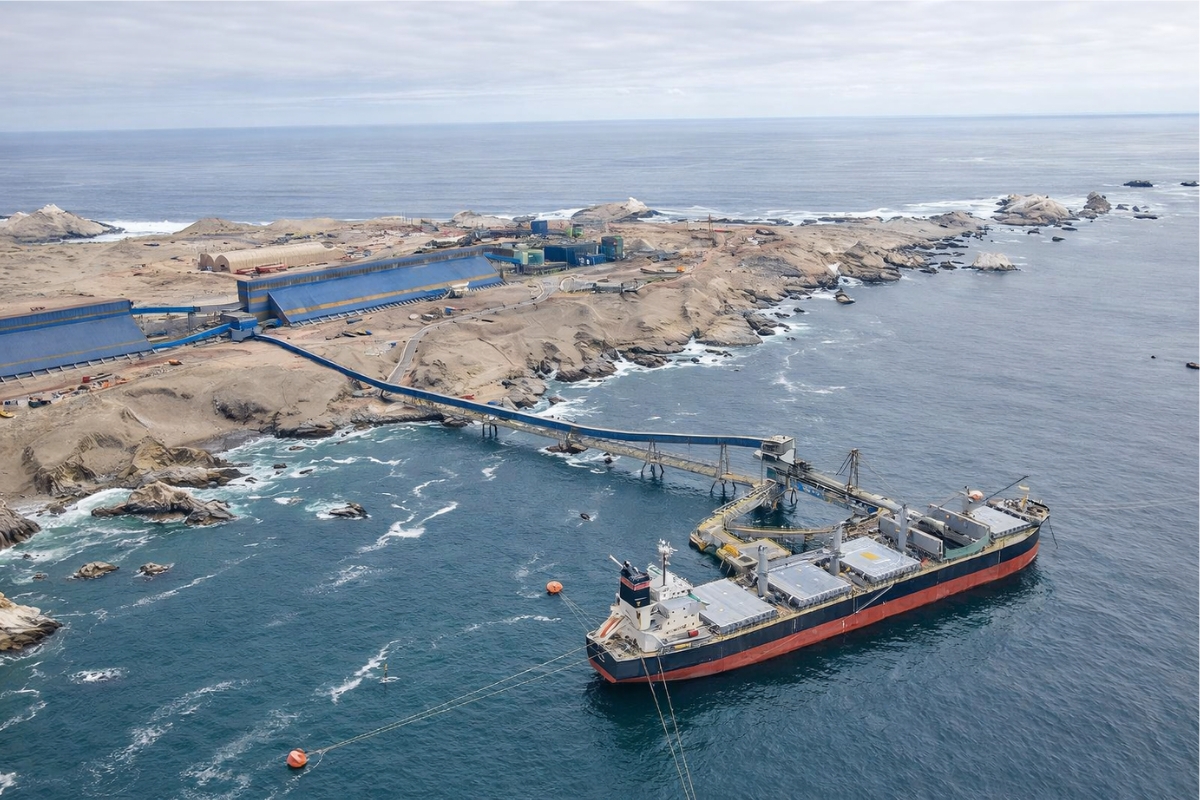
A $3.5 billion megaproject in Latin America pumps desalinated seawater at 1,050 liters per second over 194 km to keep a copper supermine in the Andes operational for another 20 years.
-
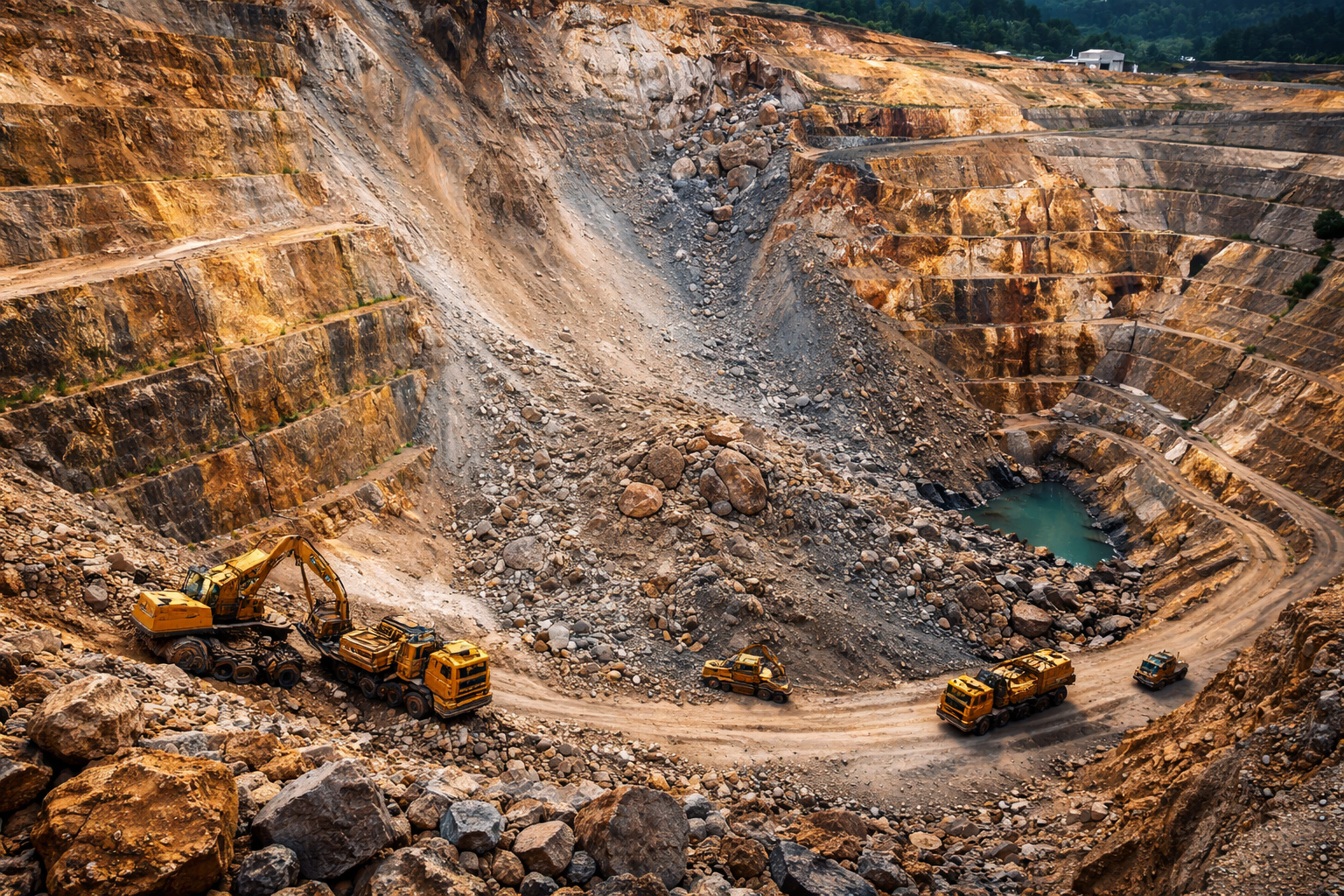
A hidden mine in the Andes valued at nearly R$ 1 trillion is starting to attract global attention, containing copper, gold, and silver, and raises an intriguing question: why do Argentina and Chile need to act together to exploit this gigantic wealth?
Among these hills, white tubes emerge from the ground, serving as ventilation shafts that reveal the presence of underground houses invisible at first glance.
These elements signal the approach to Coober Pedy, a settlement of about 2,500 inhabitants shaped by extreme weather conditions and mineral exploitation.


A City With Subsurface Houses Built Below The Rock
Much of the small peaks in the region correspond to soil waste removed during opal extraction over several generations.
This waste also indicates another fundamental characteristic of the site, as many homes have been dug directly into the rocks of the region.
About 60% of the population lives in underground houses carved into iron-rich sandstone and siltstone, materials abundant in the local underground.
In various places, the only signs of habitation are the ventilation shafts and mounds of earth piled up near the excavated entrances.
During winter, this way of life may seem merely eccentric to outside observers who are not familiar with the daily life of the town.
Extreme Heat As A Decisive Factor
In summer, however, Coober Pedy needs no explanation, as temperatures reach 52°C, making life on the surface nearly unbearable.
The heat is so intense that birds fall from the sky and electronic devices need to be stored inside refrigerators to function.
The name Coober Pedy means “white man in a hole,” a loose translation of an Australian Aboriginal expression that describes local adaptation.
In recent years, this custom has proven even more relevant in the face of increasingly intense heatwaves in various regions.
As wildfires devastate vast areas and record temperatures challenge survival, local experience stands out.
Historical Background
Coober Pedy is neither the first nor the largest subsurface settlement ever inhabited by humans throughout history.
People have sought shelter underground for thousands of years to cope with hostile environments and extreme climates on different continents.
There are records of human ancestors leaving tools in caves in South Africa two million years ago.
Neanderthals also created complex structures with stalagmites in a French cave during the ice age, 176,000 years ago.
Even chimpanzees have been observed using caves to cool off during periods of extreme heat in southeastern Senegal.
Cappadocia As A Parallel
Another notable example is Cappadocia, a region in central Turkey known for its peculiar geology and buildings carved from volcanic rock.
The arid plateau features peaks and natural chimneys transformed into houses, creating a landscape often compared to a fairy tale.
The most impressive part, however, lies beneath the surface, hidden in a vast network of ancient underground cities.
According to popular belief, the modern discovery began with the disappearance of chickens in a local residence.
In 1963, a resident knocked down a wall and revealed a tunnel leading to extensive corridors and hidden rooms.

The City Of Derinkuyu
This passage was one of the entrances to Derinkuyu, an underground city built probably in the 8th century BC.
Derinkuyu is part of a group of hundreds of cave dwellings in the region, used continuously for millennia.
The structure had ventilation shafts, a water supply, stables, churches, and storage rooms interconnected by deep corridors.
In case of invasion, the city could shelter up to 20,000 people relatively safely.
Just like in Coober Pedy, the main objective was to deal with a severe and unstable continental climate.
Natural Thermal Control
On the surface of Cappadocia, temperatures vary from below freezing in winter to over 30 °C in summer.
In the underground, however, the temperature remains stable at around 13 °C year-round.
This stability has turned the caves into efficient examples of passive cooling without direct energy consumption.
Today, ancient galleries store thousands of tons of potatoes, lemons, and cabbages without the need for artificial refrigeration.
The demand for such spaces has grown so much that new caves continue to be excavated in the region.
Arrival At The Urban Center
On the final road to Coober Pedy, travelers reach the town center, seemingly similar to other settlements in the Australian desert.
The streets are covered in pink dust, and there are restaurants, bars, supermarkets, and gas stations in regular operation.
Atop a hill, a metal sculpture represents the only tree in the town, silently observing the arid surroundings.
At first glance, the surface seems empty, with spaced-out houses and little apparent activity during the day.
This impression fades upon realizing that much of daily life happens underground.
Life Hidden Below Feet
Some houses appear normal from the outside but reveal underground passages that gradually delve deeper into the terrain.
The transition resembles walking through a wardrobe into an unexpected space, like in C.S. Lewis’s work “The Chronicles of Narnia.”
Other entrances are more evident, as in Riba’s camping, where tents are installed in deep underground niches.
Access occurs through a dark tunnel leading to areas protected from the extreme heat of the surface.
In Cooper Pedy, houses must be at least four meters deep to avoid structural collapses.
Constant Thermal Comfort
Under the rock, the temperature stays around 23 °C, regardless of external conditions throughout the year.
Surface residents face scorching summers and winter nights with temperatures that drop to 2-3 °C.
In contrast, underground residences maintain a stable and comfortable temperature 24 hours a day.
In addition to comfort, there are significant economic advantages associated with this unique housing model.
The town generates all the electricity it consumes, with 70% coming from wind and solar sources.
Economy And Cost Of Living
Even so, the use of air conditioning on the surface is expensive and often unfeasible for local residents.
Jason Wright, manager of Riba’s camping, states that living above ground incurs high heating and cooling costs.
According to him, temperatures often exceed 50°C during summer, making energy consumption excessive.
In contrast, underground houses tend to have relatively low prices in the local real estate market.
In a recent auction, three-bedroom houses were sold for around 40,000 Australian dollars.
Price Difference
This amount is equivalent to approximately R$ 126,000, even considering that many properties required significant renovations.
Still, the difference is vast when compared to the nearest big city, Adelaide.
In the regional capital, the average price of homes reaches 700,000 Australian dollars, about R$ 2.25 million.
In addition to cost, underground houses offer additional benefits that are rare in traditional urban areas.
Among them is the near-total absence of insects indoors in dug-out homes.
Silence And Protection In Subsurface Houses
According to Wright, flies abandon people upon reaching the door, avoiding the dark and cold interior environment.
There is also no noise or light pollution, creating a quiet space protected from excessive external stimuli.
Interestingly, the underground lifestyle may offer some protection during occasional earthquakes in the region.
Wright reports that tremors produce only a vibrating noise that travels through the underground without causing significant shaking.
He mentions two seismic events since his move, without having felt direct impacts in his home.
Structural Limits
Despite this, the level of safety depends on the size, depth, and complexity of the underground construction.
The possibility of applying this model in other locations raises questions about feasibility and climate adaptation.
There are specific reasons that explain why Coober Pedy became particularly suitable for this type of housing.
The main one is the nature of the local rocks, described as extremely soft and easy to excavate.
Barry Lewis states that the material can be scraped even with a knife or fingernail.
Easy Excavation
In the 1960s and ’70s, residents expanded houses using shovels, pickaxes, and explosives, as in opal mines.
Many took advantage of abandoned shafts as starting points, reducing the initial excavation effort.
Today, industrial equipment is utilized to open new tunnels more quickly and safely.
Wright explains that modern machines remove about six cubic meters of rock per hour.
Thus, an underground house can be constructed in less than a month of continuous work.
Unexpected Gains
It is still possible to dig manually, and some residents expand their homes on their own when they need space.
Since it is an active mining area, renovations can lead to unexpected valuable discoveries.
One man found a large gem while installing a shower in his underground house.
During the expansion of a local hotel, opals worth 1.5 million Australian dollars were discovered.
These findings reinforce the direct relationship between housing and mining activity in the town.
Unique Architecture
Local sandstone is structurally stable and does not require additional supports, allowing for spacious halls with high ceilings.
It is possible to create environments of any shape without adding extra structural materials to the excavated space.
Therefore, some underground houses have been transformed into sophisticated luxury residences.
There are underground swimming pools, game rooms, large bathrooms, and high-end living rooms.
One resident described his house as a castle, with 50,000 exposed bricks and arched doors.
Reserved Life
Wright states that surprising undergrounds exist, although residents are known for their discretion.
According to him, it is only possible to know these houses by being invited for dinner, reflecting a reserved lifestyle.
Despite the advantages, the benefits are not easily replicated in other regions of the world.
Most inhabited dug-out homes are located in dry, arid areas.
Wet environments present significant additional challenges for durable underground constructions.
Humidity As An Obstacle
Historical examples include Mesa Verde, in Colorado, which was inhabited for over 700 years by the ancestral Pueblo people.
There is also Petra, in Jordan, with temples and palaces carved from pink sandstone in a desert environment.
One of the last dug-out villages still inhabited is Kandovan, in Iran, with only 11 mm of rain monthly in summer.
In wetter regions, the risk of infiltration and mold makes underground construction much more complex.
The London Underground illustrates this historical challenge faced since the 19th century.
Modern Challenges
To waterproof old tunnels, layers of bricks and tar have been used in large quantities.
Even with modern methods, black mold still occurs in the city’s underground galleries.
Similar problems affect basements and parking lots in areas with high rainfall worldwide.
The lack of ventilation encourages the condensation of moisture generated by domestic activities and human respiration.
Another factor is proximity to the water table, increasing the presence of underground water.
Comparisons Between Places Where People Live In Subsurface Houses
The Hazan caves in Israel show how humidity can quickly double in closed underground systems.
Just 66 meters from the entrance, the temperature drops, but humidity rises to double the initial 40%.
In Coober Pedy, built on 50 meters of porous sandstone, the environment remains extremely dry.
Simple ventilation shafts allow moisture to escape and ensure adequate oxygenation.
Despite this, occasional collapses occur, usually associated with poorly chosen sites.
Lewis lost his underground home after a collapse but states he misses life below the ground.
For Wright, living underground is a simple solution to intense heat, and it may inspire other places in the future.
With information from G1.








-

-

2 pessoas reagiram a isso.