





 Portuguese
  English
  Spanish
  7 min of reading
  0 comments


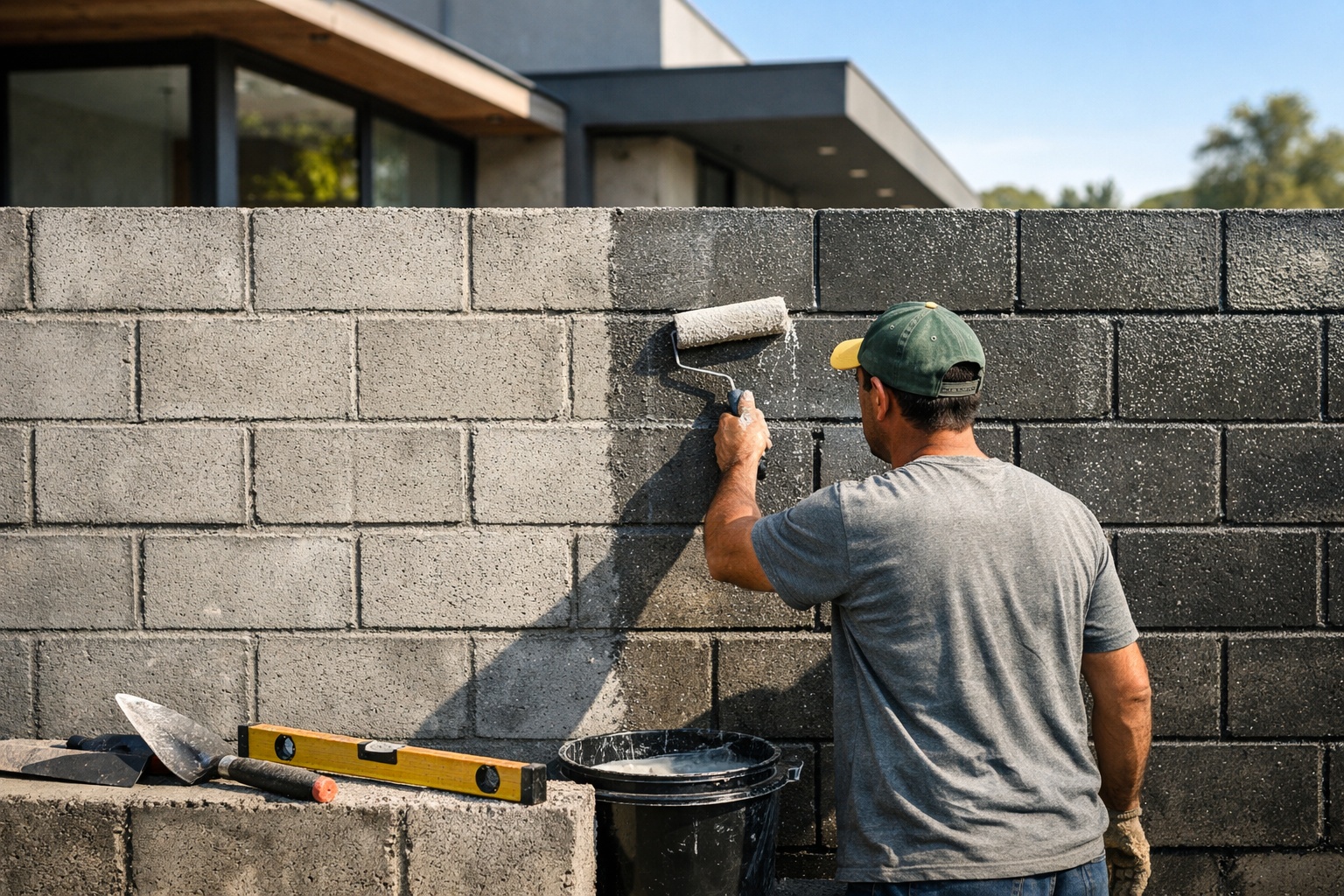
Exposed Concrete Block Eliminates Plaster and Paint on Walls, Reduces Construction Costs, and Can Avoid Decades of Maintenance with the Application of Transparent Waterproofing.
Anyone who has built a residential wall is well acquainted with the traditional construction sequence. First, the masonry is raised. Next comes the rough casting. Then the plaster. The wall must go through a curing period. After that comes sanding, application of compound, painting, and another waiting period for drying. This cycle does not end when the work is finished.
Between two and three years later, the sun, rain, and temperature variations begin to degrade the finish. The paint fades, the plaster cracks, and the surface requires maintenance again. The owner repeats the process: sanding, repairing cracks, applying sealer, painting again. It is a predictable maintenance cycle that repeats indefinitely and consumes labor, materials, and time over decades. However, there is a constructive alternative that eliminates much of these steps.
This solution has been used for decades in condominium walls, industrial sheds, and contemporary architectural projects. For a long time, it remained associated with larger works, but today it is available for any typical residence. The technique uses only two basic elements: exposed structural concrete block and transparent waterproofing. There is no rough casting, no plaster, and no paint.
-
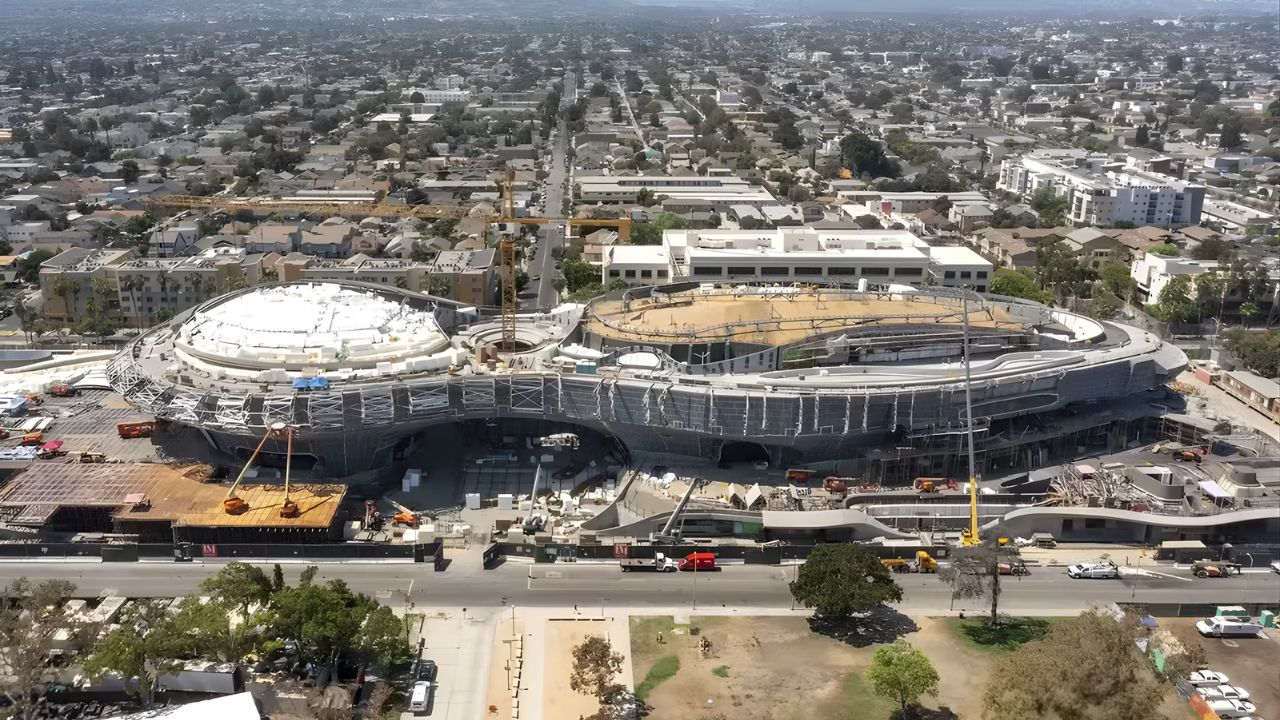
Created by George Lucas with over $1 billion, a futuristic museum in the shape of a spaceship with 1,500 curved panels is about to open in Los Angeles and will house one of the largest private collections of narrative art in the world.
-
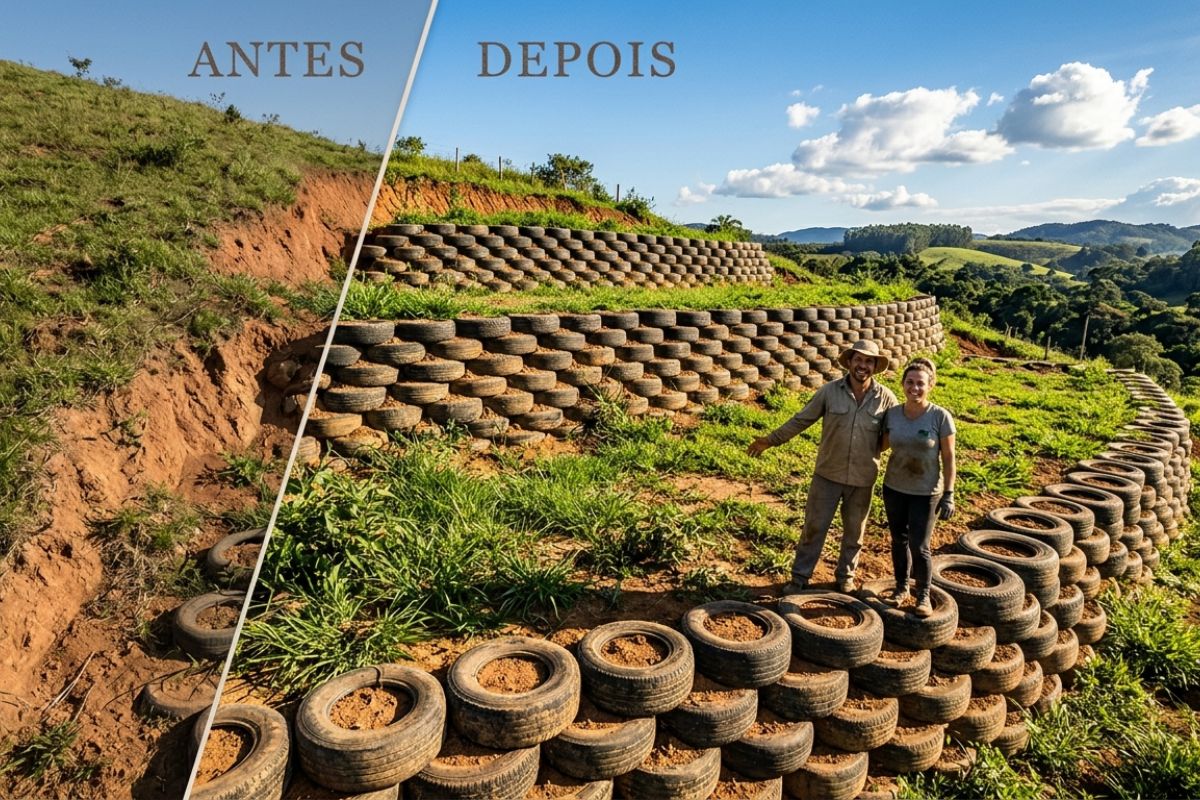
Couple shows how they built a retaining wall on their property using 400 old tires: sloped land turned into plateaus, tires are aligned, filled, and compacted with layers of soil, with grass helping in support and at almost zero cost.
-
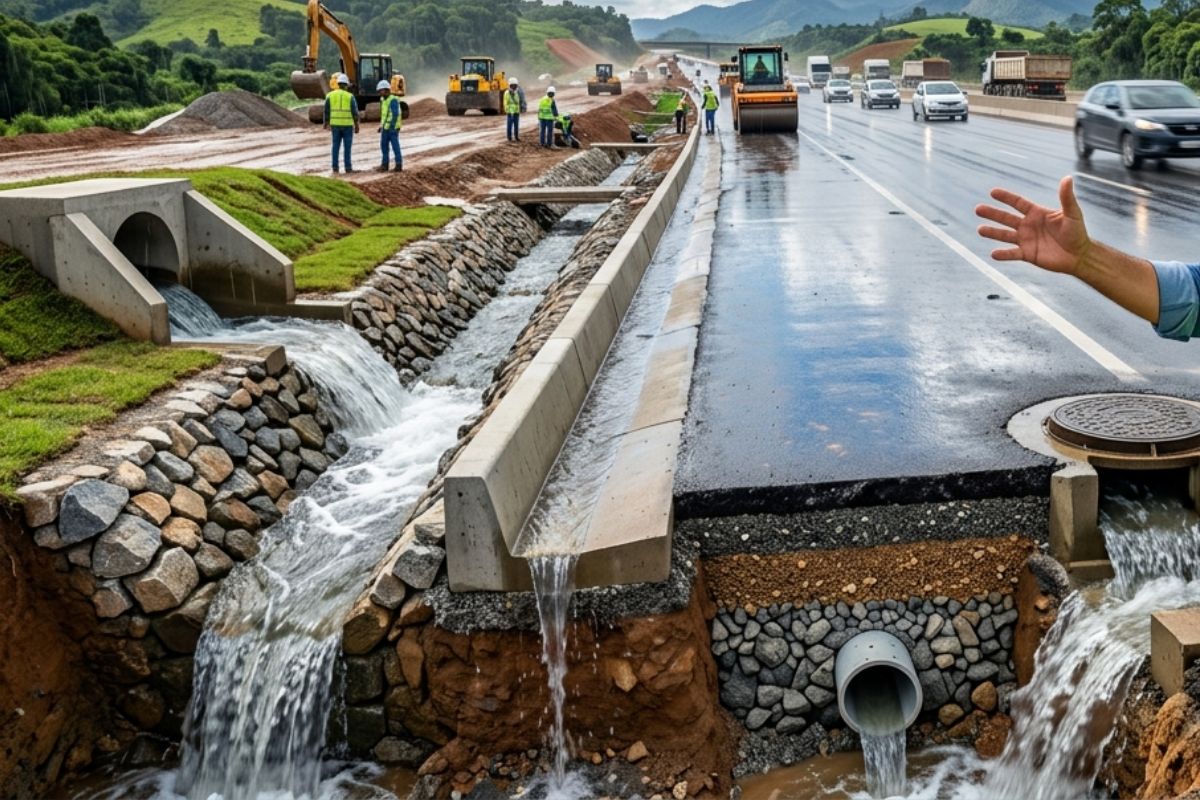
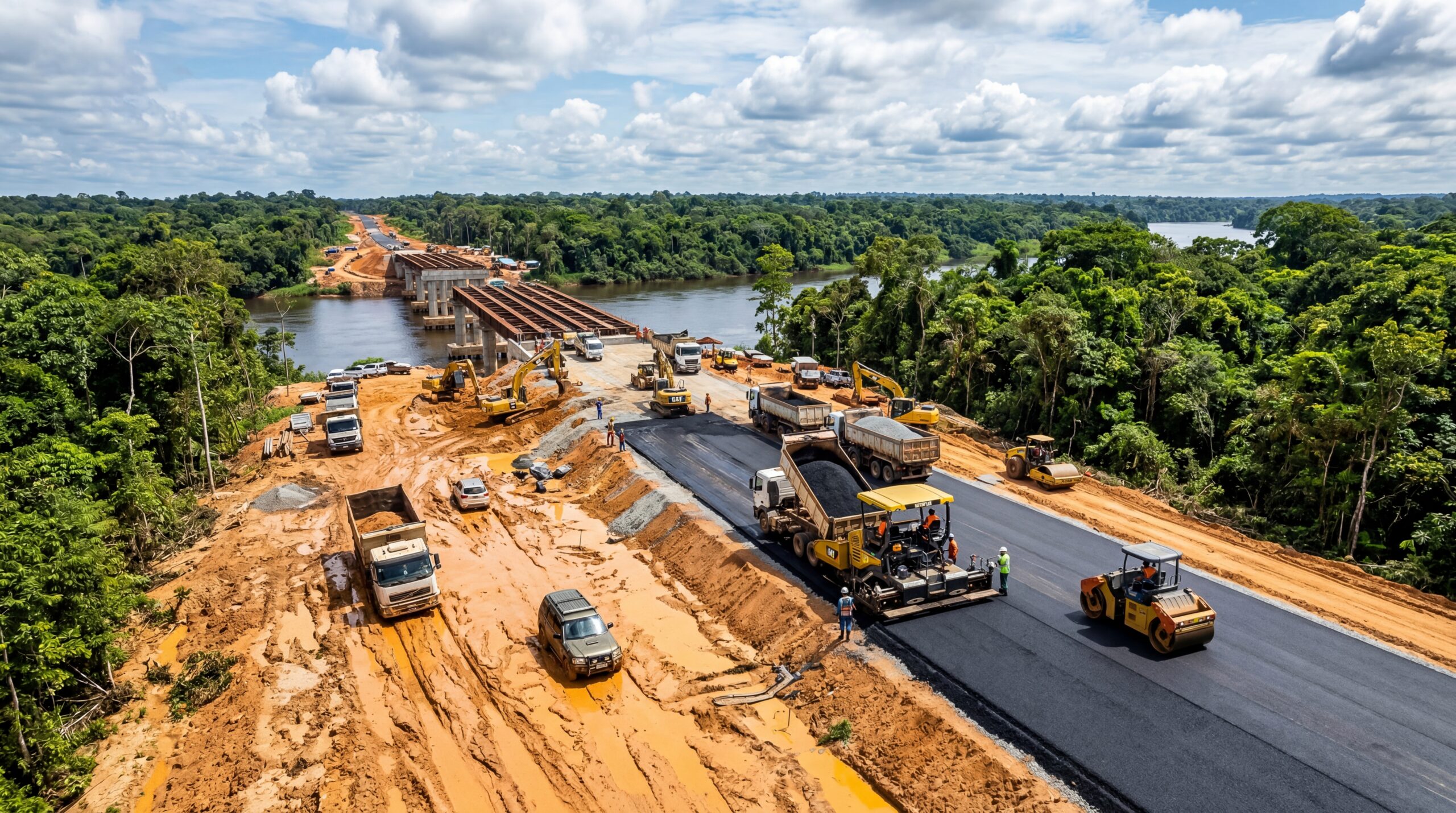
Engineer explains drainage during the rainy season: the difference between surface water and deep water, ditches, gutters, and water outlets on the road, as well as drains and drainage mattresses, to prevent erosion, aquaplaning, and flooding at the construction site today.
-
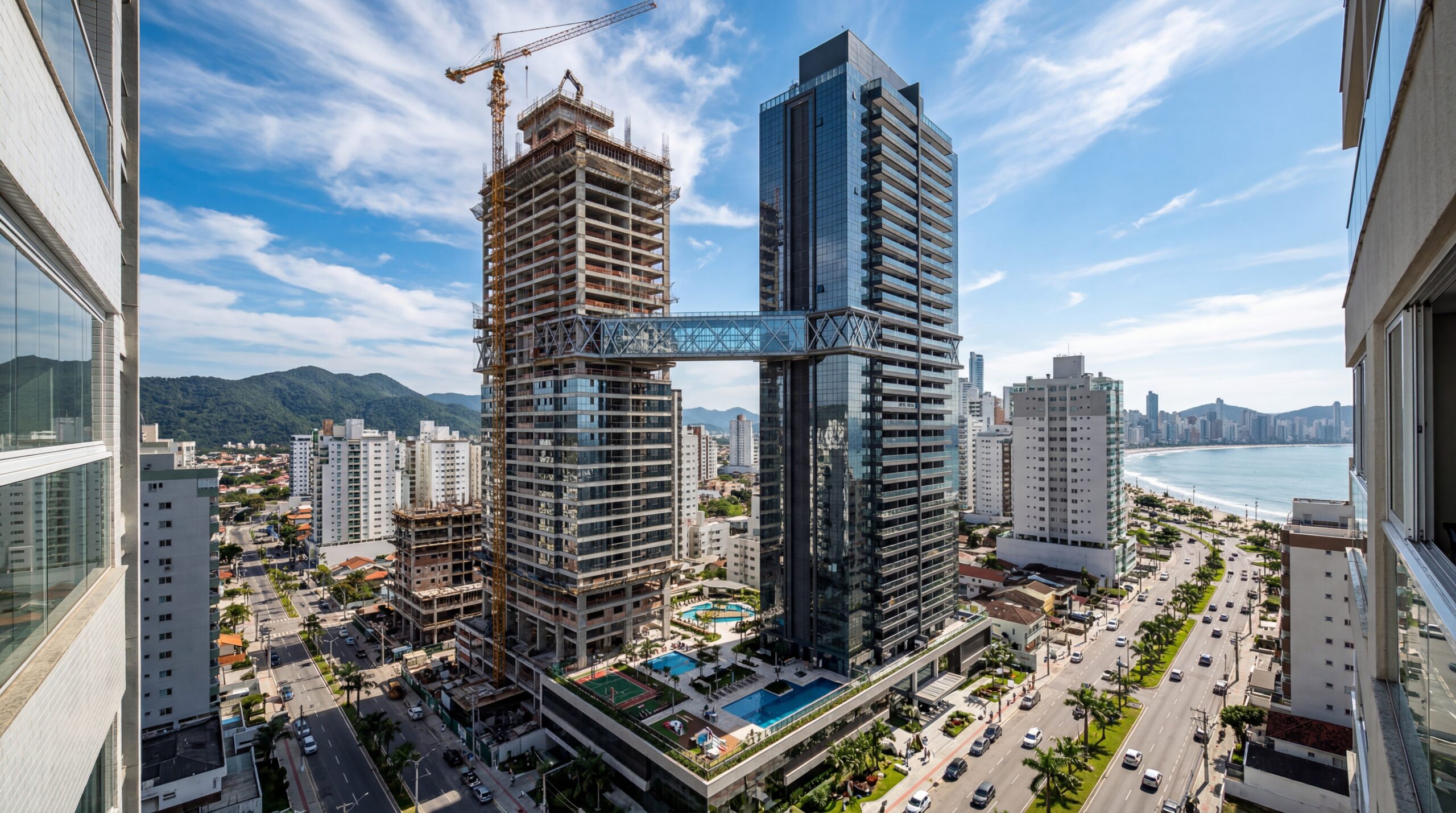
With 55 floors, 177 meters in height, a 15-meter walkway between the twin towers, ventilated facade, and 6,300 m² of leisure space, Ápice Towers already has one tower completed and another nearly at the top.

Exposed Concrete Block: A Standardized Material That Already Functions as a Final Finish
The structural concrete block used for walls follows the dimensions standardized by NBR 6136/2016, a Brazilian technical standard that regulates the manufacturing of these elements.
The most common shape used in walls is 14 cm wide, 19 cm high, and 39 cm long. Unlike traditional ceramic bricks, which have irregularities and must be covered with plaster to hide imperfections, the concrete block is produced with uniform geometry and regular faces.
This feature allows the block itself to serve as the final wall finish. When the setting is performed correctly, with aligned joints and uniform mortar thickness, the surface already presents a clean and organized geometric appearance.

There is no need for plaster to correct imperfections, no leveling compound for leveling, and no exposed porous surface that necessarily requires paint. Structural blocks are classified according to their strength.
Class A blocks have a minimum strength of 8 MPa and can be used both above and below ground level. Class B blocks have a strength between 4 MPa and 8 MPa, suited for structures above ground level.
For conventional residential walls, Class B blocks fully meet the structural requirements.
Transparent Waterproofing Protects the Concrete Without Altering Its Natural Appearance
One of the most common misconceptions in residential construction is confusing sealer with waterproofing. The sealer is a product used before painting to reduce paint absorption by the plaster. It prepares the surface for finishing but does not create real protection against infiltration.
The transparent waterproofing for exposed concrete has a different function. Products like Acquella by Vedacit or Sika AcrilTop Acqua are water-based acrylic resins that form an invisible protective film over the concrete.
This layer creates several important protections:
- It drastically reduces rainwater absorption, preventing infiltration.
- It prevents the formation of efflorescence, those white stains caused by the migration of mineral salts.
- It inhibits the emergence of mold and fungi on the masonry surface.
- At the same time, it allows the internal water vapor from the wall to continue evaporating, preventing moisture retention inside the structure.
A gallon of 18 liters of transparent waterproofing costs about R$ 120 and has an approximate yield of 36 m² in two coats. The application is simple and can be done with a regular paint roller or brush, without the need for specialized labor.
How the Plastered Wall Degrades Over the Years
Traditional plastered and painted walls show relatively quick wear when exposed to the external environment. Between two and three years after construction, signs of deterioration begin to appear.
The first problem is usually the emergence of hairline cracks in the plaster. These cracks appear due to the thermal expansion and contraction of the mortar under the influence of sun and temperature variation.
Over time, the paint begins to peel and lose adhesion. Moisture penetrates the cracks, creating a favorable environment for mold and deterioration of the finish. In some places, the roughcast may lose its adhesion and come off.
Each maintenance cycle involves several steps:
- First, it is necessary to sand the entire surface.
- Then the cracks need to be treated.
- Next, sealer and new coats of paint are applied.
According to average values in the construction industry in 2026, the cost of external painting ranges between R$ 20 and R$ 40 per square meter just for labor. Considering a residential wall of 20 meters long by 2 meters high, we have about 40 m² of surface.
A complete repainting can cost between R$ 1,200 and R$ 2,400, depending on the materials used. Over a period of ten years, this wall will need to undergo three or four maintenance cycles. The cumulative cost easily exceeds R$ 5,000 or even R$ 8,000, without any structural improvements being made.
Waterproofed Exposed Block Wall Can Last Decades Without Maintenance
When the structural concrete block is properly set and protected with the appropriate waterproofing, the structure can last decades without needing intervention.


Unlike plaster, concrete does not exhibit the same cracking behavior due to differing expansion between layers. There is no external finish subject to peeling.
Maintenance becomes much simpler. The acrylic waterproofing usually needs to be reapplied only every five to ten years, depending on sun exposure and climatic conditions.
This reapplication requires only washing with water to remove accumulated dust. After the surface dries, a new coat is applied with a paint roller. For the same wall of 40 m², the reapplication cost is typically around R$ 240 in materials, which can be completed by the homeowner in a few hours.
Structural Savings in Wall Construction
In addition to savings on maintenance, the exposed block system also reduces costs during construction. A conventional wall of plastered and painted ceramic block costs between R$ 200 and R$ 300 per square meter, including foundation, masonry, roughcast, plaster, and paint.
By opting for exposed concrete block, several steps are eliminated. The following are eliminated:
- roughcasting
- plaster
- finishing
- compound
- painting
The cost of external plaster alone typically ranges between R$ 30 and R$ 60 per square meter. For a 40 m² wall, this step represents between R$ 1,200 and R$ 2,400, an amount that simply does not have to be spent. The savings, therefore, are not marginal. They occur both in the construction and in the following decades of maintenance.
Why Exposed Block Became the Language of Contemporary Architecture
The use of exposed concrete did not emerge as an economic solution. It was born as an aesthetic choice. Since the 1950s, architects associated with the brutalist movement have advocated for the use of structural materials as part of the visual language of the building.
The proposal was simple: to show the material as it is, without hiding it with coverings. In Brazil, this approach marked the works of several modern architects.

The idea of leaving concrete and blocks exposed was later adopted in contemporary residential projects. Today, medium and high-end architectural firms design exposed block walls in condominiums and luxury homes. These projects can cost between R$ 150 and R$ 350 per square meter.
Interestingly, the material used in these sophisticated projects is exactly the same concrete block sold in construction material stores for less than R$ 5 per unit. The difference between a common wall and an architectural wall lies in the execution.
The alignment of the setting, the regularity of the joints, and the correct choice of blocks make all the difference in the final result.
Correct Execution of the Exposed Block Wall
The foundation follows the same principle used in any wall. First, a trench is dug. Then, a lean concrete bed is executed with steel rebar of 8 mm. The depth typically varies between 20 and 40 centimeters, depending on the height of the wall.
For walls up to 2 meters on flat ground, a foundation of 30 centimeters is usually sufficient. The setting of the blocks uses mortar mix 1:3, composed of one part cement to three parts sand. It is common to add a waterproofing additive to the mixing water of the mortar.
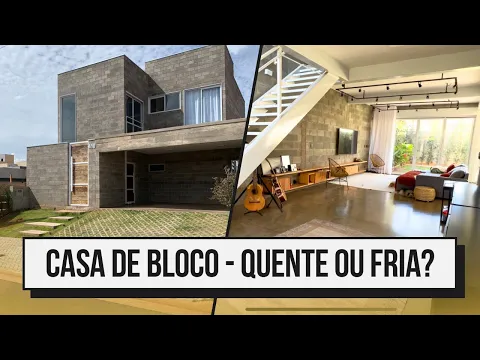
Products like Vedacit help reduce capillary absorption from the base of the masonry. The joints should have a thickness between 10 and 12 millimeters, controlled with spacers or templates.
Another important element is the top channel at the wall’s crown. This piece prevents rainwater from entering from above the masonry. When this step is ignored, infiltrations can occur even in exposed block walls.
After a curing period of approximately 28 days, two coats of the transparent waterproofing are applied.
The interval between applications is usually around six hours. The final result is a surface with the natural appearance of concrete, protected against water and the elements. After this, there is virtually no structural maintenance left to do.









-

-

-

-

-

-

55 pessoas reagiram a isso.