





 Portuguese
  English
  Spanish
  5 min of reading
  0 comments


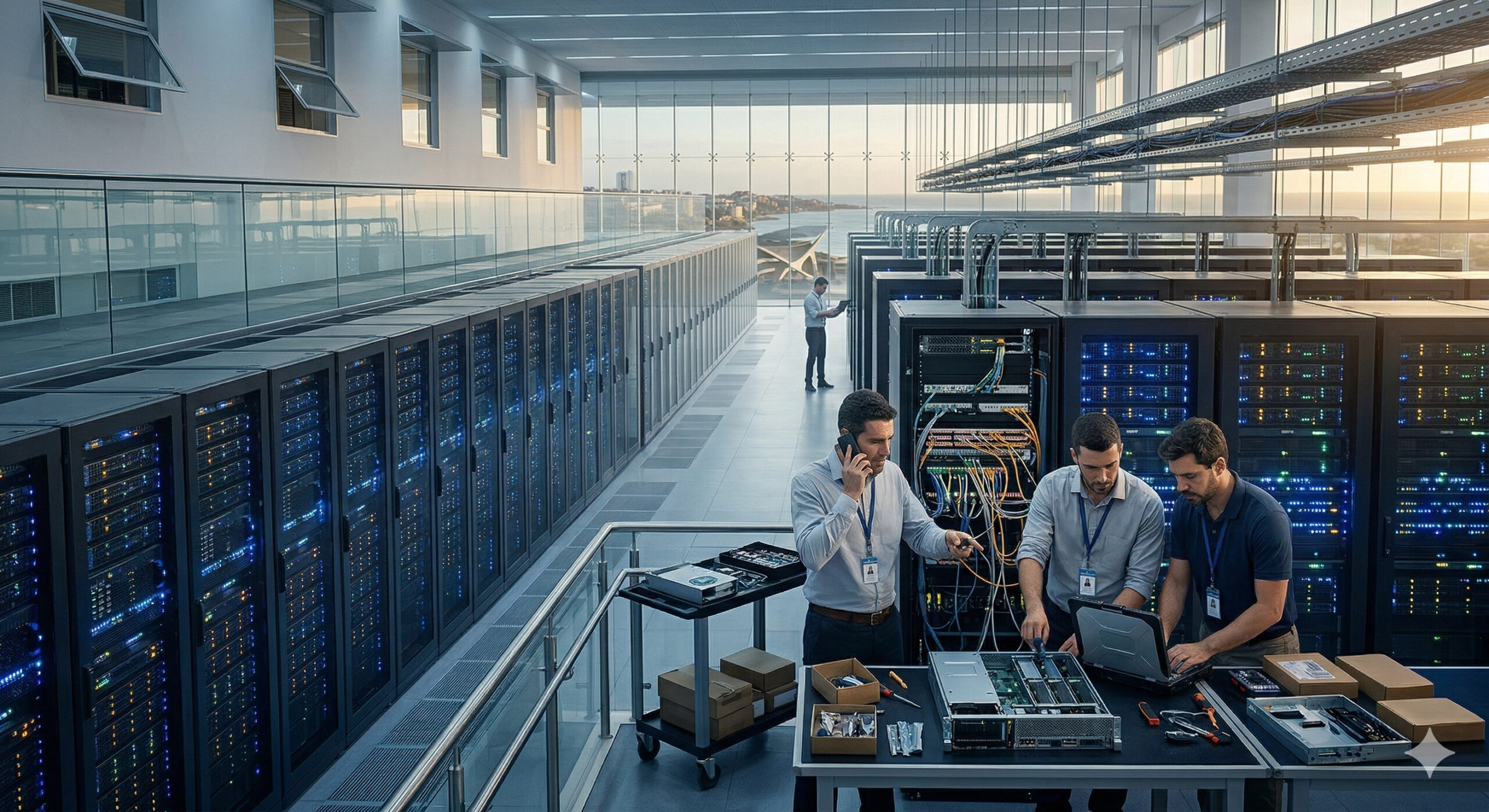
Brazil enters the data center route with thousands of jobs and a shortage of technicians to keep internet, cloud, and artificial intelligence operating.
In 2026, Brazil was chosen as the starting point for a global training program for data center professionals, bringing together the Equinix Foundation, ODATA, Cisco, Vertiv, and Generation Brazil in an unprecedented coalition focused on technical training and direct connection to job opportunities in the sector. According to an official statement released by Equinix about the launch of the initiative, the goal is to prepare professionals for roles such as Data Center Technician and IT Support in a segment that the company itself describes as one of the most strategic areas of the current digital economy.
The most relevant data, based on the official announcement, is that the coalition is born at a time when the sector projects growth of around R$ 15 billion per year in Brazil, while the demand for specialized labor is already treated by companies as a structural bottleneck for the expansion of digital infrastructure. The first two classes will start in June and October 2026, in São Paulo, with an initial training of 50 students for roles of Customer Operations Technician and a plan for expansion to new markets still in 2026.


The race, therefore, is not just for technology, servers, and new facilities, but for people capable of keeping critical environments running without interruptions. In this scenario, Brazil takes on a central position in a silent transformation: the formation of the human base that supports the physical infrastructure of the digital economy.
-
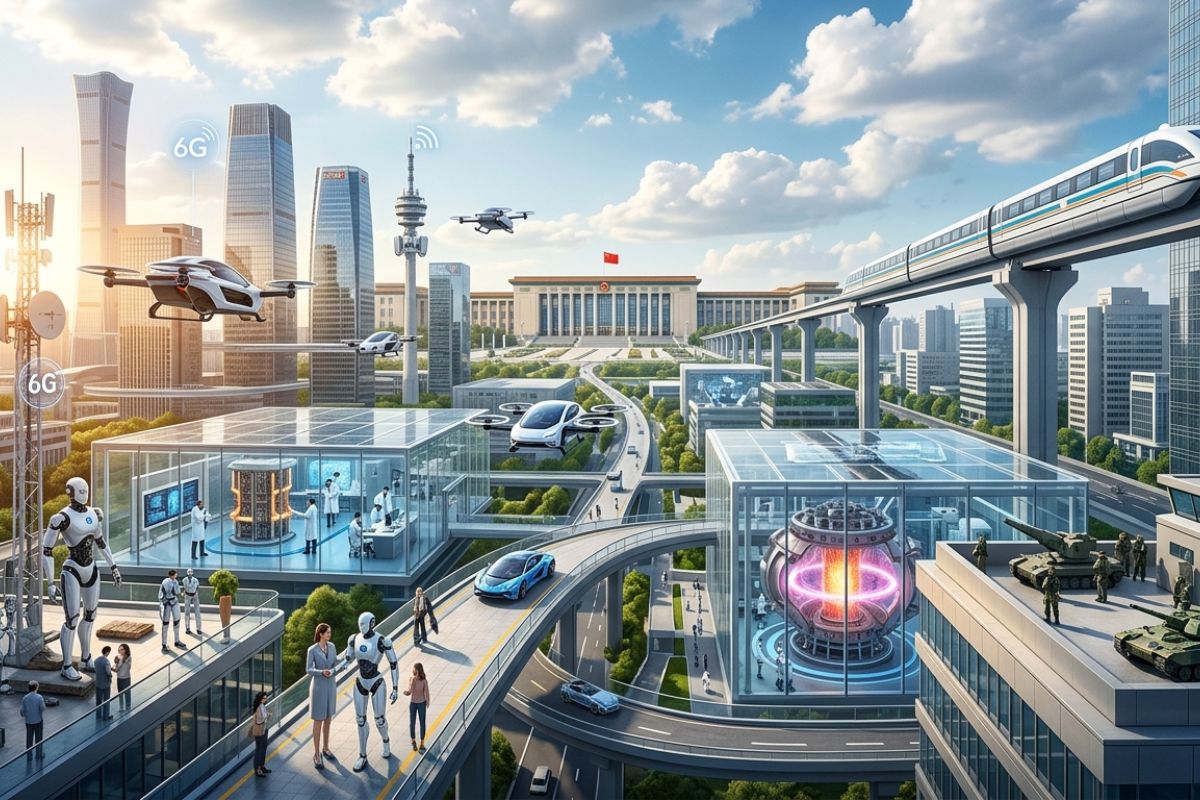
China approves the 15th Five-Year Plan 2026-2030 to become a global power: prioritizes brain implants, 6G with AI, humanoid robots, flying cars, quantum technology, and nuclear fusion, while strengthening defense and the economy.
-
HONOR X80i arrives with a massive 7,000 mAh battery, a 120 Hz AMOLED display with a brightness of 6,500 nits, and the new Dimensity 6500 Elite chip, promising up to 22 hours of video playback and impressive performance in casual gaming.

-
Xiaomi TV Stick HD 2 is announced with Google TV and dual-band Wi-Fi, offering 38% superior performance, HDR10+, Dolby Atmos, a quad-core chip, Mali-G31 GPU, 1 GB RAM, and support for 1080p at 60 Hz.

-
Brazil joins the select group of countries by producing a supersonic fighter that reaches 2,400 km/h with advanced electronic warfare technology, US$ 4 billion in investments, 36 units planned, 350 trained engineers, and unprecedented national production by 2032.


Data centers become the invisible base of the digital economy
Behind applications, social networks, digital banks, and artificial intelligence systems, there is a highly complex physical infrastructure: data centers. These facilities concentrate thousands of servers responsible for processing, storing, and distributing data on a global scale.
Every access to an application, every banking transaction, and every response generated by artificial intelligence directly depends on data centers operating full-time. Without these structures, the digital economy simply does not function.
In Brazil, the growth in the use of digital services, combined with the expansion of artificial intelligence, has drastically increased the need for data processing, driving the construction of new centers.
Accelerated expansion puts Brazil on the global data center route
In recent years, Brazil has begun to attract billion-dollar investments in digital infrastructure. Major global companies have expanded operations in the country, driven by factors such as domestic demand, strategic location, and energy availability.
This movement positions Brazil as one of the leading emerging data center hubs in Latin America, with new facilities being built to serve technology companies, financial services, and digital platforms.
In addition to already established regions, there is a trend of expansion into new areas, seeking to reduce latency and increase distributed processing capacity.
Shortage of technicians becomes the main bottleneck of the sector
Despite the advancement of infrastructure, the sector faces a critical problem: the lack of qualified professionals to operate these systems. The operation of a data center requires technical knowledge in electricity, climate control, networks, and maintenance of critical equipment, and the supply of these professionals is still limited in Brazil.
This deficit affects roles such as:
- operations technicians
- infrastructure specialists
- technical support professionals
- operators of critical systems
The absence of these professionals can compromise the functioning of the facilities, as data centers need to operate continuously.
New profession gains strength in Brazil
With the expansion of the sector, a new demand for specialized professionals emerges: the data center technician. This professional works directly in the maintenance and operation of the infrastructure, being responsible for ensuring that all systems function stably and securely.
This is a strategic role, as any failure can impact large-scale digital services, affecting millions of users simultaneously.

The complexity of the role requires technical training, specific training, and the ability to respond quickly to problems.
Training programs emerge to meet demand
In light of the shortage of professionals, the sector itself has begun to invest in workforce training. In 2026, a global initiative aimed at training technicians for data centers was launched in Brazil, connecting direct training with job opportunities.
These programs aim to train thousands of professionals in the coming years, reducing the deficit and creating a technical base capable of supporting the sector’s growth.
The strategy represents an important change: instead of just competing for talent, companies are beginning to create new professionals.
Artificial intelligence accelerates the need for infrastructure
The growth of data centers is directly linked to the expansion of artificial intelligence. AI systems require high computational power, continuous processing, and massive data storage. This increases the need for physical infrastructure.
Every advancement in artificial intelligence generates a proportional demand for new servers, more energy, and greater operational capacity, expanding the need for specialized technicians. This effect creates a growth cycle, where technology and infrastructure advance simultaneously.
Unlike other structures, data centers cannot stop. These facilities operate 24 hours a day, seven days a week, ensuring that digital services are always available.
To achieve this, they use:
- redundant power systems
- emergency generators
- strict temperature control
- constant monitoring
The continuous operation increases the dependence on qualified professionals, as any failure needs to be resolved immediately.
Shortage begins to pressure salaries and the job market
With high demand and low supply of professionals, the market begins to react. Technicians and specialists related to data centers are becoming more valued, with salary increases and greater job opportunities.
This movement reinforces the strategic nature of the profession, which is becoming increasingly relevant within the digital economy. At the same time, it amplifies the need for continuous training to keep up with technological evolution.
The expansion of data centers in Brazil reveals a scenario where the growth of the digital economy directly depends on physical infrastructure and qualified professionals.
Even with billion-dollar investments and technological advancements, the lack of technicians emerges as one of the main challenges to sustain the continuous operation of internet, cloud, and artificial intelligence.
The country is definitively entering the global route of digital infrastructure, but it faces a challenge that is not in the machines, but in the people needed to keep them running.









Seja o primeiro a reagir!