





 Portuguese
  English
  Spanish
  4 min of reading


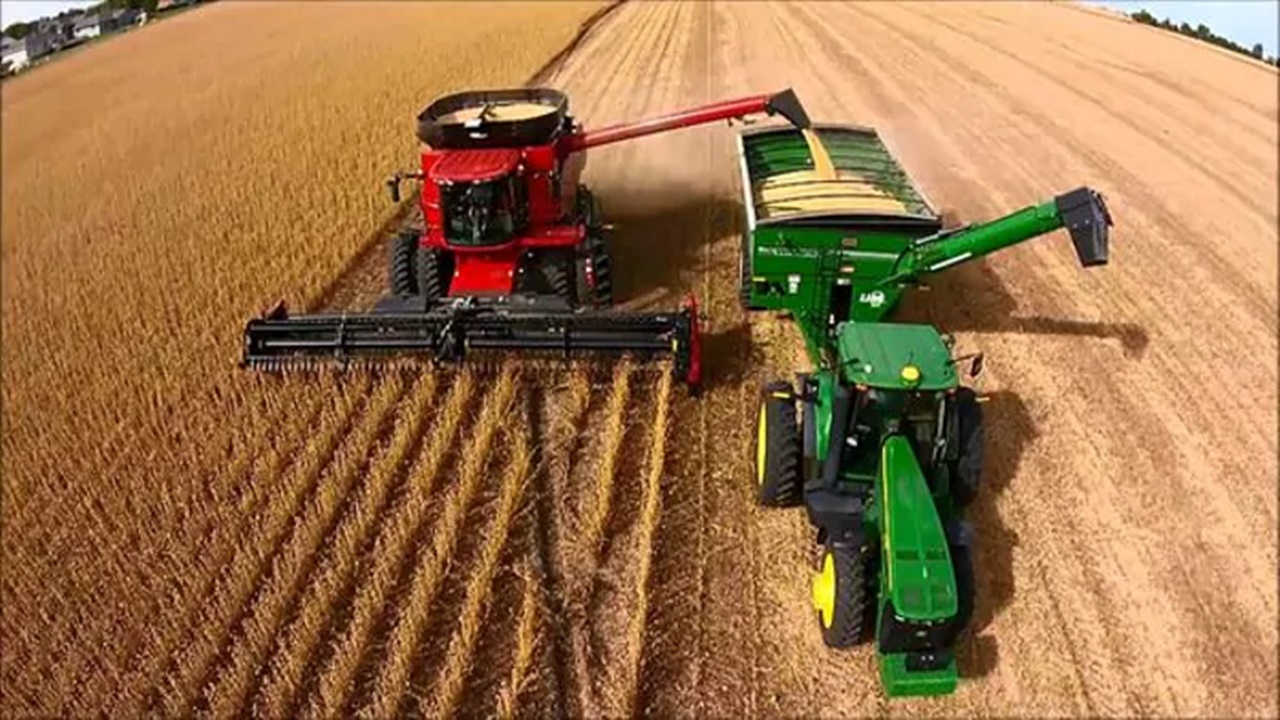
Technologies Like Those of the Titanium Electric and Selenium Electric Seeders, Developed by J.Assy, Help in the Precise Distribution of Seeds in the Soil and Consequently Improve the Productivity and Profits of Farmers
Agriculture is undergoing constant transformation; today, the sector accounts for 26.6% of Brazil’s total GDP, thanks to continuous investment by companies in technology and innovation. One of the stages that has evolved significantly is planting. Until recently, this process, one of the most important in the production cycle, was done entirely mechanically, which did not guarantee good plantability. However, in recent years, the market trend has been moving towards motorization, that is, obtaining individualized control of each seed dispenser.
Read Also
- Company Offers 200 Job Openings for Home Office and On-Site Positions in SP and BH; Candidates from All Over Brazil Can Participate in the Selection Process
- Just Like the Iconic Kombi, the Gol, Voyage, Saveiro, and Fox from Volkswagen Are Being Phased Out, and New Legislation Will Make the Uno, Doblo, and Grand Siena from Fiat Disappear This Year
- Renowned Global Recruitment Multinational in the Oil and Gas Market Calls for Resume Submissions for Many Positions to Meet a Future Contract in Drilling Rig, Today, August 28
- Hyundai Shipyard Secures Contract with Maersk and Will Build Over 8 Carbon-Neutral Ships with a Nominal Capacity of 16,000 Containers
According to Luiz Lamardo, computer engineer and product manager at J.Assy, the advantages of having this individualized control is that the producer can apply different doses with high precision, especially on curves. “By obtaining individual control, if the machine has already planted in a certain area, for example, and it passes over the same spot again, planting is automatically turned off to save inputs and thereby increase productivity,” he highlights.
Seeder Motors Provide Farmers with Seed Savings
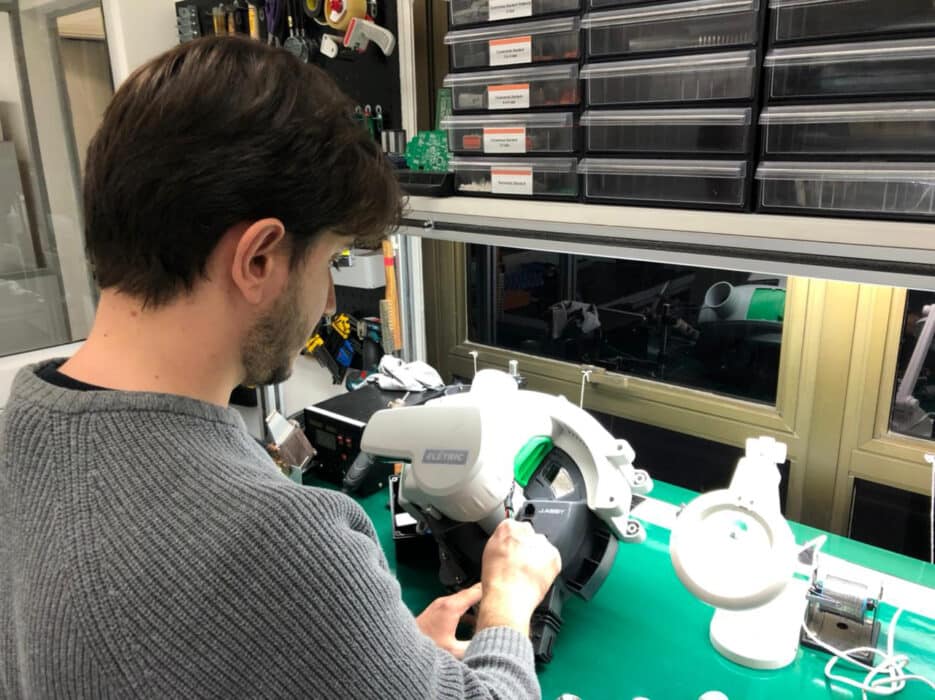
According to the specialist, due to this individual activation provided by the seed dispenser motors, the producer can achieve seed savings of over 3%. “When talking about hundreds or even thousands of hectares, this gain is very significant in a property,” he emphasizes.
-
The institute that trained the greatest aerospace engineers in Brazil has just opened its first campus outside São Paulo after 75 years: ITA Ceará will have R$ 445 million, new courses in energy and systems, and classes are expected to start in 2027.
-
Luciano Hang, owner of Havan, goes to Juiz de Fora after the tragedy in February, brings R$ 1 million, hands out R$ 2,000 cards, and donates up to R$ 15,000 to victims in the region.

-
The Brazilian passport allows legal residence in dozens of countries without the need for a prior visa, and most Brazilians are unaware that they can apply for residency directly upon arriving in nations in South America, Africa, and even Europe.

-
Petrobras sends a message to Brazilian truck drivers after fuel collapse and reveals plan to have 100% domestic diesel.


Among the various types of motors available in the market for farmers, hydraulic motors can be highlighted. However, these are made up of larger parts, are more expensive, and their operation is more complicated, making them less attractive options.
On the other hand, combustion motors present dangers of fire, and their maintenance is much more complex. “Electric motors are more compact and much easier to use, from installation to control. They are simpler products that bring more benefits and fit better with technological characteristics like application, for example,” says the specialist.
Another advantage of electric motors is that they remove all mechanical parts, from the planter wheel through to the transmission box. This simplifies machine maintenance, as there are no more chains breaking or gears malfunctioning, for example. “All these moving mechanical parts are reduced with the electric motor. They are very robust, tend not to have problems, but if they do, replacement is simpler,” Lamardo highlights.
Transition of Seeders to Electric Motors
Initially, J.Assy began developing its motorization technology for its mechanical seeder. It was an initial experience to learn more about it. The company then developed the Titanium Electric, which ensures uniform rotation of the disk. All control is done through the display installed in the tractor cabin, and with just a few touches, the operator selects the planting speed and the amount of seeds desired per meter.
From there, they began investing in a new concept, utilizing a more modern format compatible with ISOBUS (an agricultural communication protocol to standardize and facilitate the use of implements). “We learned a lot from this first experience with the electric motorization solution of the Titanium, and we developed the pneumatic seeder with electric motor, the Selenium Electric, which is a product that is entering the market with very good acceptance,” says the engineer.
The Selenium Electric enhances planting quality, as it replaces the mechanical drive assembly with an electric system. Other important features include the capability for up to 60 rows, wireless communication, variable rate planting, and automatic line-by-line shutdown. It is truly a differentiated product, also being 100% ISOBUS and completely wireless. “J.Assy’s mission is to develop products that will be considered true works of art by farmers. Something simple to operate, robust, and lightweight, and that’s what we aim for in our products. In both solutions, we incorporate these concepts,” concludes Lamardo.
J.Assy – A Specialist Company in Technology for Agribusiness. Among the solutions offered are the pneumatic seeder Selenium, the mechanical seeder Titanium, and the electric drive seeders Selenium Electric and Titanium Electric, as well as the Visum flow sensors for Fertilizer or Fine Grains and the Apollo planting disks.








Seja o primeiro a reagir!