






 Portuguese
  Spanish
 4 min of reading
  2 comments


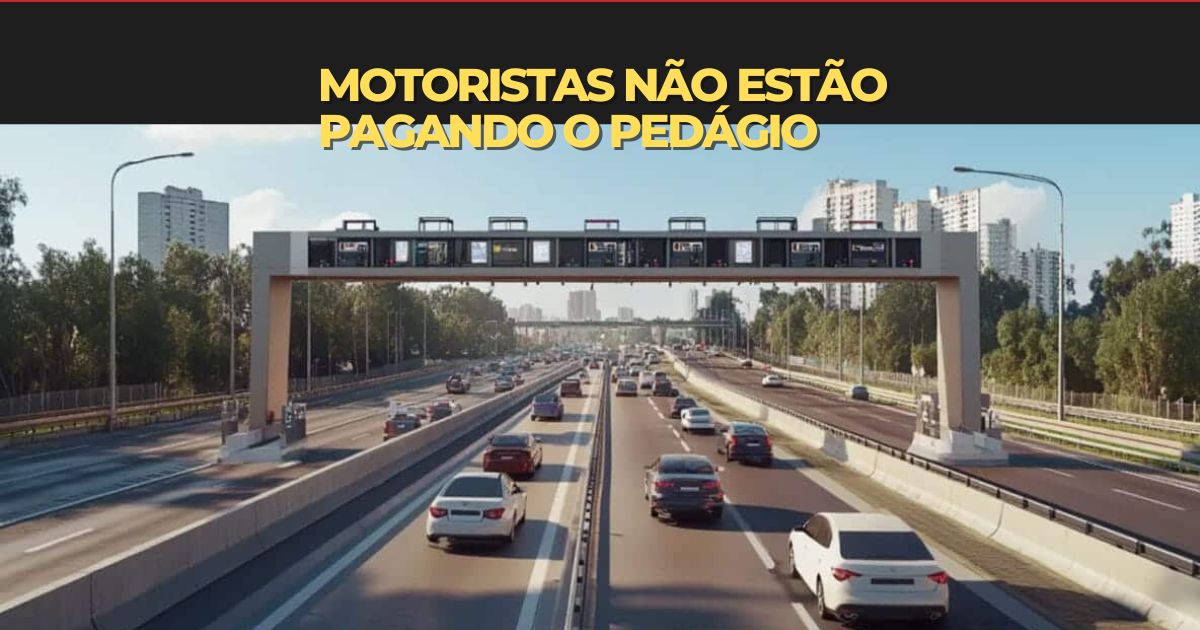

Drivers Face A New Challenge With Free Flow Toll. Forgetting To Pay Can Result In Severe Fines And Points On The Driver’s License, While Delinquency Concerns Concessionaires.
On the highways of the state of São Paulo, a new electronic toll collection system has been causing headaches for drivers who forget to pay the toll.
The new system, known as free flow tolling, allows vehicles to pass without barriers but requires attention to settle the fee after crossing.
The problem? Many drivers are simply ignoring the payment, which, according to recent estimates, has led to a growing rate of delinquency and the issuance of heavy fines for offenders.
-
Uber Faces Shareholder Scrutiny as Board Accused of Ignoring Safety, Compliance, and Harassment Warnings Amid Over 3,500 U.S. Lawsuits

-
Ferrari’s First Electric Car Divides Fans, Priced at $630,000, Amid Concerns Over Limited Editions; Brand Clarifies It’s Not Just for Future Perks
-
BYD Dolphin Mini: The Electric Car That Defies Depreciation, Losing Only 3.58% in a Year and Becoming the Best-Selling Retail Model Under $22,000

-
Electric Car JAC E-JS4 Loses $19,000 in Value in One Year, Leading Record Depreciation of Used Cars in Brazil Due to Expensive Battery and New Models


In one month of operation, thousands of drivers failed to pay, bringing new discussions about the effectiveness and challenges of this model.
According to data from EcoNoroeste, the concessionaire that manages the toll at km 179 of the SP-333 highway (Laurentino Mascari highway), in Itápolis, about 12 thousand evasions were recorded just in the first month of free flow operation.
This number represents 8.4% of total traffic of approximately 143 thousand vehicles that passed through the section between September 4 and October 4, 2024.
The financial impact is also significant: the concessionaire observed a 7% reduction in revenue, a direct result of unpaid tolls.
The newspaper Folha de São Paulo points out that this innovative model has brought new challenges for the toll sector, exposing gaps in public awareness.
The Free Flow System And How It Works
The free flow system, implemented in the section managed by EcoNoroeste, replaces traditional toll plazas with electronic gantries equipped with cameras that identify vehicle license plates and register passage without the need for stops.
This model simplifies toll collection, but requires new habits from drivers, who must comply with payments within 30 days after crossing, unless they have electronic tags.
For drivers with valid tags, the payment occurs automatically through the toll operator associated with the tag.
Those without the device must make the payment manually, which includes various options: websites, apps, or, in some cases, physical payment locations.
According to regulations from the National Traffic Council (Contran), starting October 14, the deadline for settling the fee was extended from 15 to 30 days, a measure aimed at reducing delinquency rates and facilitating compliance with the rule.
Fines And Points On The Driver’s License
Failing to pay the fee within the regulated period results in serious penalties for drivers.
As highlighted by Folha de São Paulo, offenders receive a serious fine of R$ 195.23 and have 5 points added to their Driver’s License (CNH).
This model, inspired by international examples, is still being adapted to Brazilian reality, where awareness about payment is a challenge.
In addition to the gantry in Itápolis, EcoNoroeste has started a similar operation in the city of Jaboticabal, where drivers can also receive a 5% discount for using tags.
Furthermore, there is a progressive reduction in the toll rate according to the number of trips made by the same vehicle during the month.
Comparisons With Other States
The evasion rate observed in the São Paulo system is slightly higher than the national average, according to data from the National Land Transport Agency (ANTT).
In June 2024, the delinquency rate on federal highways operating with free flow, such as BR-101 in the Rio-Santos section, was 6.1%.
This figure is lower than that recorded on the SP-333 but follows the initial delinquency trend of new toll models.
Folha de São Paulo also mentions the recent implementation of the system in Minas Gerais, where the concessionaire EPR Sul de Minas reported a delinquency rate of only 2.9% at the gantry located on the MG-459 highway, between the cities of Ouro Fino and Monte Sião.
Although this figure is considerably lower, experts point out that the difference relates to the profile of the highways and the degree of exposure of drivers to the new system.
Expectations And Future Prospects
For Luiz Roberto Tavares, user service manager at EcoNoroeste, the delinquency rate of 8.4% is within initial expectations.
He believes that, over time, driver awareness will help further reduce these rates.
According to him, “the arrival of the fines will contribute to raising driver awareness and decreasing delinquency.”
Governor Tarcísio de Freitas (Republicans) has already announced plans to implement the free flow toll system on all state highways in São Paulo, aiming to expand the model’s coverage throughout the state.
Moreover, the Ministry of Transport hopes that traditional toll concessionaires will migrate to free flow, taking advantage of the simplicity of electronic structures, which require lower investment in infrastructure and are cheaper to maintain.
The Future Of Tolling In Brazil
With new toll plazas scheduled for installation in Caraguatatuba and São Sebastião, on the northern coast of São Paulo, starting November 17, the free flow model gains more strength in São Paulo.
Without expected discounts, this expansion should solidify the model in the state and pave the way for adoption on other Brazilian highways.
This change in the method of collection directly impacts the daily lives of drivers and raises the discussion about the effectiveness of the model in combating delinquency.
Now, it remains to be seen whether the innovation will bring significant benefits or if drivers will continue to face difficulties in meeting the new payment requirements.
Do You Believe That The Free Flow Model Really Represents The Future Of Tolling In Brazil? Comment Below!





Uma vergonha, acabaram com a mão de obra dos trabalhadores continuam arrecadando muito dinheiro o investimento nas estradas é pouco e tem políticos ganhando algum por fora.. uma **** de canalhas..
Eu acho ,ser uma forma mais eficiente para poderem arrecardar mais dinheiro, dos motoristas , já lesados com tanto meios ,tipo pegadinha, para caírem em armadilhas de ser multados, isto é armadilhas de multas, eu de fora morador do nordeste , fui de carro , para são Paulo, recebi multas sem saber o porquê, agora estou compreendendo que devo ter caído, nesta armadilhas, pois em todos os pedágios que cruzei realizei o pagamento do pedágio, só não paguei, o que não fui parado no caminho, e esse tipo de pagamento eu não estava consciente , desta forma e aplicaram – me multa sem eu estar lá .