





 Portuguese
  English
  Spanish
  5 min of reading
  10 comments


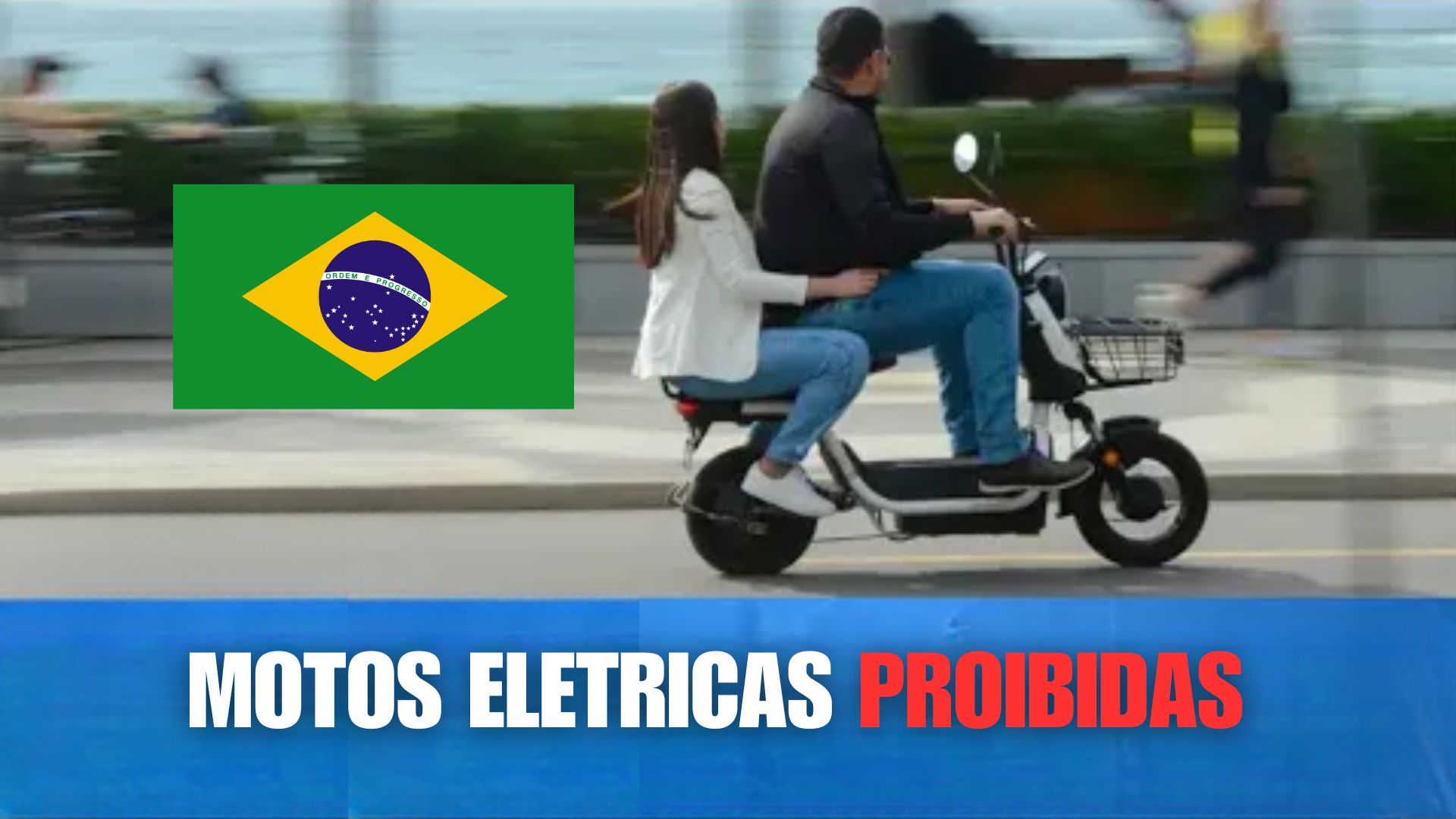


New Circulation Rules Determine Where Mopeds and Electric Bicycles Can or Cannot Ride, with Plate Requirements, License and Specific Fines for Those Who Break the Law.
The circulation of mopeds and “electric motorcycles” on cycle paths is no longer allowed in several Brazilian cities, particularly in Rio de Janeiro, which since August 2024 provides for a fine of R$ 1,000 for those who use bicycle-exclusive infrastructure with these vehicles.
The information was originally published by the Jornal da Band, in a report broadcast on Saturday (20).
According to the report, the national rule also requires license plates and a license (ACC or category A) to operate mopeds.
-
The village where two rivers run side by side without mixing in Santarém and Alter do Chão reveals some of the most beautiful freshwater beaches on the planet.

-
Brazil’s nuclear submarine with a speed 5 times greater than normal advances after nearly 50 years and R$ 40 billion spent.

-
A Brazilian island charges R$ 0.50 to receive visitors and prohibits any new residents.
-
Why was the Great Wall of China built? The truth that many are unaware of!


Additionally, their circulation must occur on the right edge of the road, never on high-speed roads or on sidewalks.
What Changes in Cycle Paths
As highlighted in the report by the Jornal da Band, pedal-assisted electric bicycles are equated to bicycles and can use cycle paths, provided they respect local speed limits.
On the other hand, mopeds — a category that includes two- or three-wheeled vehicles with a motor of up to 4 kW (electric) or 50 cm³ (combustion) and a factory speed of up to 50 km/h — do not have automatic authorization to circulate in these spaces and are subject to municipal regulation.
In Rio, Law 8.547/2024 expressly prohibited the presence of mopeds, scooters, motorcycles, and tricycles in cycle paths and bike lanes.
According to the findings of the Jornal da Band, the same standard has allowed pedal-assisted electric bicycles within more restrictive parameters than the federal ones, such as a maximum speed of 25 km/h and 350 W of nominal power.
The local fine for non-compliance is R$ 1,000, with double in case of recurrence.


Who Needs a Plate and CNH
National legislation determines that mopeds must be registered, licensed, and plated with the state Detrans.
Driving them without ACC (Authorization to Drive Moped) or CNH category A constitutes a serious infraction, with a fine of R$ 880.41 and retention of the vehicle until a licensed driver is presented.
Pedal-assisted electric bicycles do not need a plate or CNH/ACC to circulate.
The Jornal da Band emphasized that those who drive an unregistered or unlicensed vehicle commit a serious infraction, subject to fines and removal/seizure of the vehicle.
The rule applies to mopeds that have not yet been regularized.
Where Each Vehicle Should Circulate
The Brazilian Traffic Code (CTB) stipulates that mopeds must travel on the right side of the roadway, preferably in the center of the rightmost lane, when there is no shoulder or specific lane.
They are prohibited in high-speed roads and sidewalks.
In roads with two or more lanes, if the right lane is exclusive for another type of vehicle, the moped must use the adjacent lane.
Meanwhile, pedal-assisted electric bicycles follow the same rules as bicycles.
The Contran Resolution 996/2023 determines that circulation in cycle paths, bike lanes, and cycle routes must obey the maximum speed defined by local authorities.
In competitions or authorized sporting use, there are specific speed rules.
What Happens If the Vehicle Is Caught in the Wrong Place
Using cycle paths or bike lanes with a vehicle that cannot be there is a serious infraction provided for in Article 193 of the CTB, with a tripled fine.
In cities that have approved their own rules, such as Rio, the specific municipal penalty of R$ 1,000 applies, doubled for recurrence.
Additionally, if the vehicle is a moped without plating or without licensing, the inspection can remove/seize the property and cite for lack of registration/licensing.
When the driver does not have a CNH or ACC, the citation falls under Article 162, I, of the CTB, with a fine of R$ 880.41 and retention until a licensed driver takes over.
As shown by the Jornal da Band, in some situations, the authority may combine citations: for example, improper use of the cycle path, lack of license, and absence of licensing.
Rio de Janeiro: Rules and Enforcements
In the municipality of Rio de Janeiro, Law 8.547/2024 consolidated the prohibition of mopeds in cycle paths and bike lanes and established clear parameters for pedal-assisted e-bikes.
The City Hall and the Municipal Guard can enforce and apply the specific fine, without prejudice to the infractions of the CTB when applicable.
As highlighted by the report from the Jornal da Band, in recent periods, the City Council and civil society organizations have published explanatory materials to differentiate mopeds from electric bicycles, reducing common confusions among users.
And the Electric Bicycles with Pedal Assist?
By national standard, these bicycles have a auxiliary motor that only works when the user pedals, nominal power of up to 1,000 W, and a propulsion limit of up to 32 km/h.
They are equated to bicycles and do not require a plate, licensing, or license.
However, municipalities may adopt stricter limits, as is the case in Rio, which restricts to 350 W and 25 km/h.
Therefore, before circulating, it is important to check the local rules regarding speed and mandatory equipment.
Deadlines for Regularization and Documents
For older mopeds that did not have factory certification, Contran established a schedule for inclusion in Renavam from November 1, 2023, to December 31, 2025.
Once the deadline is over, the vehicle cannot circulate on public roads until it is regularized.
The documentation includes an invoice or proof of origin, inspection report, and, when necessary, CSV (Vehicle Safety Certificate).
In Case of Accident, Who Responds?
The responsibilities follow the CTB.
If a moped is improperly in a cycle path and causes risk or damage, in addition to fines and administrative measures, civil and criminal repercussions may occur, depending on the case.
Compliance with the rules — up-to-date plates, adequate licenses, and use of the correct road — reduces conflicts and facilitates the determination of responsibilities.
With local changes and the consolidation of federal rules, it has become easier to understand: moped on the road; bicycle (including pedal-assisted electric bicycle), on the cycle path.
Given this scenario, has your city already regulated speed limits and equipment for e-bikes in cycle paths, or are there still questions about what is permitted?







Impressionante, fazem a matéria e nem mencionam dos autospropelidos,…rs Brasil tem que entender que o infrator e quem condiz e faz coisa errada, e não as motos elétricas generalizadas.
A evolução acontecendo, de forma ecológica e segura… investimento gigantesco em veículos de natureza elétrica… forma auxiliadora na contenção de poluentes… mas… As autoridades degladiando em achar formas de fiscalização e punição… o negócio é arrecadação para manter este sistema ridículo e sujo… aliás, ninguém fiscaliza a construção destes equipamentos, deixa entrar no país sem nenhuma regra… depois que instala a modalidade, aí que vão tentar definir regulamentos… e dizem que foi dado prazo… prá quê, se nem eles conseguem se entender para regulamentar… mas as multas já pode aplicar… paisinho de **** mesmo… só corrupção… é de esquerda, é de centro, e de extrema pra ou pra cá… e de direita tbm, tem umas par disfarçado de ovelha, nas tudo lobo… agente lê e não entende o quê um diferente do outro, se é isso ou aquilo, agora na, fiscalização tem um monte de argumento individualista… cada equipe define no achismo… tá lá na nota fiscal, dizendo ser uma coisa, mas eles dizer ser outra…. fica difícil….
as bicicletas elétricas ou autopropelido são transportes seguros e ecológicos devendo merecer mais apoio dos dirigentes de órgãos de regulamentação de trânsito e pensar menos em MEIOS DE CRIAR NORMAS E LEIS LOCAIS PARA ARRECADAR DINHEIRO DE TRABALHADOR QUE USA ESSE MEIO DE TRANSPORTE PARA ECONOMIZAR