Portuguese
 Spanish


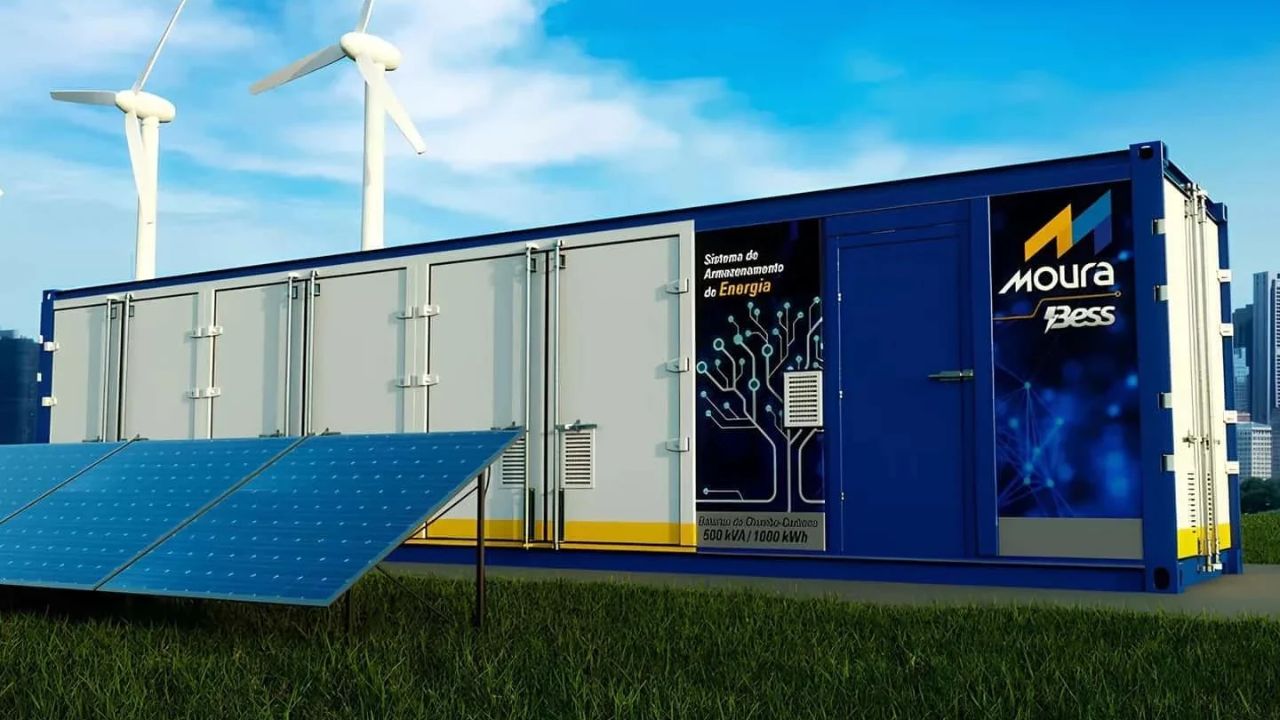

System using technology from China’s CATL will be integrated in Belo Jardim and could serve projects with domestic content in a competition set for December 2.
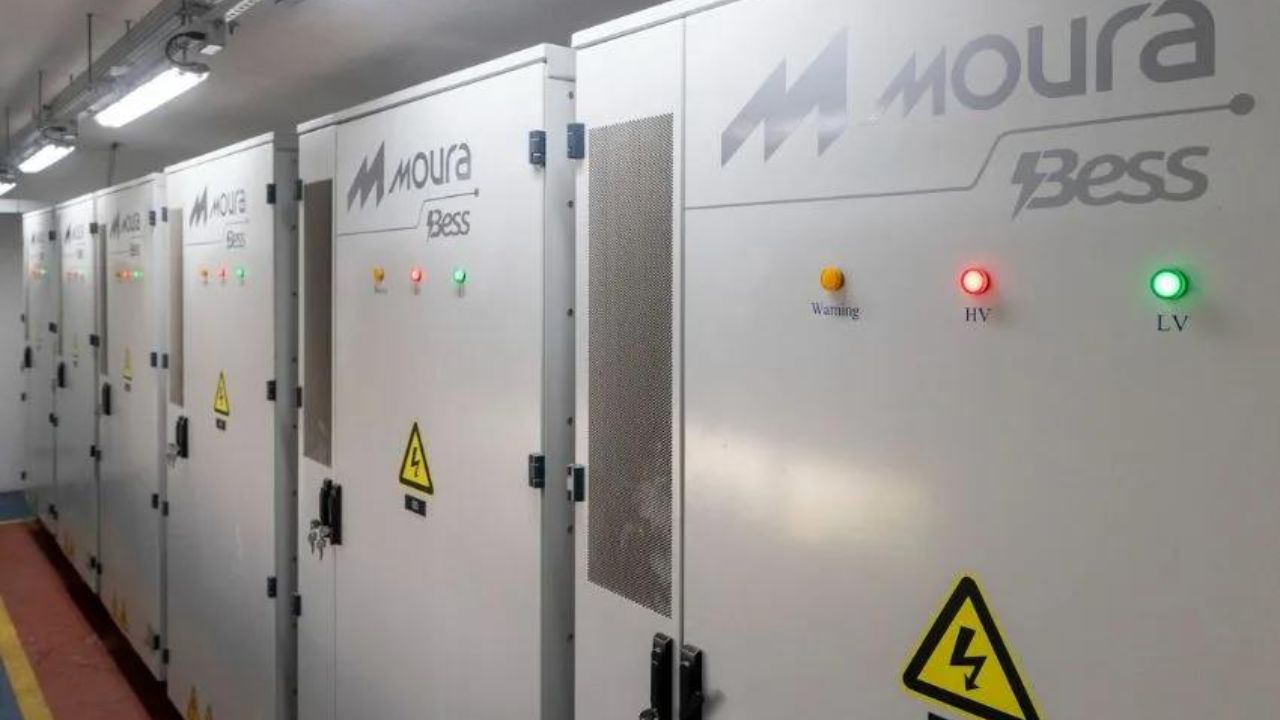
Moura has received accreditation from BNDES, Brazil’s development bank, to supply battery energy storage systems for the national auction scheduled for December 2, 2026. Approval was granted under CFI-Finame Route 2, which requires manufacturing steps to take place in Brazil and allows eligible projects to seek financing for up to 100% of items eligible for funding through the Climate Fund. To meet expected demand, the manufacturer plans R$200 million in investments at its industrial complex in Belo Jardim, Pernambuco.
According to a report published by Canal Solar on November 24, the accredited system will be offered to companies competing in the Capacity Reserve Auction in the Form of Power (LRCAP). Accreditation does not mean Moura has won the auction: it allows developers interested in contracting equipment with domestic content to consider its technology.
Moura secures Route 2 accreditation, expanding financing options
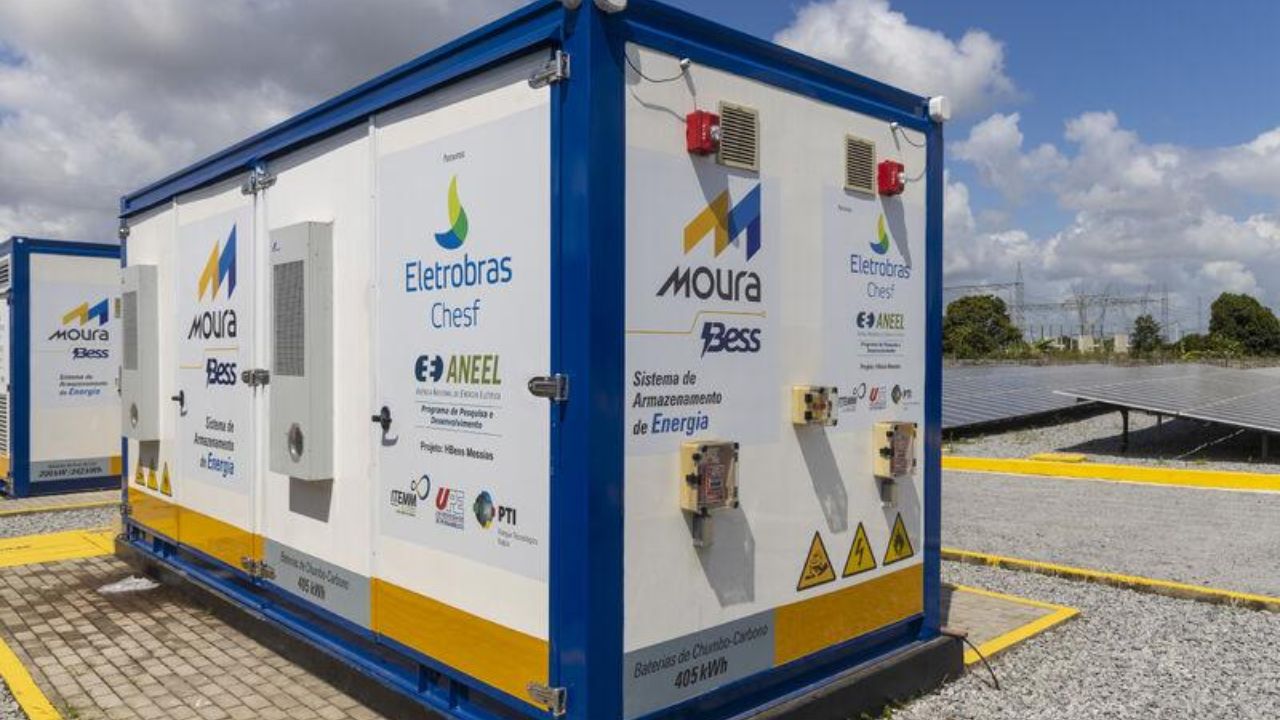
The equipment’s inclusion in the accreditation system of the Brazilian Development Bank confirms that it meets the industrial criteria established for this financing option.
-
Brazil’s ANEEL approves rule that could reduce solar power discounts starting in 2027

-
99 offers drivers in six Brazilian states electricity-bill discounts of up to 34% through shared solar power
-
Pontal do Araguaia in Brazil’s Mato Grosso announces R$6.2 million contract for solar power in public buildings using Maranhão tender

-
Brazil targets European green hydrogen market with over R$117 billion in projects across six states and 10.5 GW electrolysis capacity

For the national energy storage auction, systems must meet a minimum domestic-content threshold of 15% under the methodology used by BNDES. Route 2 requires certain battery-assembly activities to take place in Brazil, rather than counting only supplementary components.
According to MegaWhat, Moura said the accredited configuration exceeds 50% domestic content under the applicable criteria. The calculation includes equipment assembly and integration, electronic systems, thermal components, and items purchased from Brazilian suppliers.
The routes also differ in their financing terms. Projects using systems classified under Routes 2, 3, and 4 can seek Climate Fund financing for up to 100% of eligible items. For Route 1, the stated limit is 80%.
This does not mean credit is automatically approved. Each transaction remains subject to financial review, program requirements, and bank approval.
Belo Jardim plant to receive R$200 million and use CATL technology
Moura plans to expand and modernize its production complex in Belo Jardim to meet demand for electricity storage at large-scale facilities.
The company announced a planned investment of approximately R$200 million and the capacity to supply more than 8 gigawatt-hours (GWh) of battery systems. That figure represents the amount of energy the equipment can store, not its power output.
The technology will be supplied by China’s CATL, an international battery manufacturer. In Brazil, the industrial model calls for assembling and integrating modules, electronic control systems, cooling components and other equipment.
The participation of domestic suppliers is part of the strategy to meet domestic content requirements. In its announcement of the qualification, the company did not disclose how many systems it would actually sell or the revenue it expects from auction contracts.
The investment is still an industrial expansion plan. It should not be confused with confirmed orders or with funds automatically granted by BNDES, Brazil’s national development bank.
The move comes as other manufacturers expand their presence in the same market. In Santa Catarina, WEG announced a new battery factory in Itajaí, with an investment of R$330 million and planned annual capacity of 4 GWh.
December auction will procure capacity for operations to begin in 2028
The Ministry of Mines and Energy has organized the process into two auctions. The first, scheduled for December 2, 2026, will be open to systems that meet domestic content requirements.
The second is scheduled for December 4 and will be open to other battery storage projects, subject to the conditions set out in the auction rules.
Winning companies will have to make capacity available to Brazil’s National Interconnected System (SIN), allowing the National Electric System Operator (ONS) to determine charging and discharging periods based on operational needs.
The contracts will run for 15 years, with supply scheduled to begin on August 1, 2028. Payments will be tied to the availability of contracted capacity rather than depending solely on the amount of energy actually discharged.
The goal is to give the power system additional capacity during periods of peak demand. The procurement could also help make use of surplus generation from renewable sources, provided the equipment is operated under conditions set by the ONS.
The outcome will depend on the prices offered, technical qualifications and ranking criteria. BNDES approval of a supplier does not guarantee that projects using its equipment will be awarded contracts.
Batteries store electricity and help meet peak demand
Systems known as BESS, short for Battery Energy Storage System, store electricity for later use. Unlike a solar or wind power plant, a battery does not produce primary energy: it receives electricity, stores some of it and feeds it back into the system when needed.
Energy can be stored during periods of lower demand or greater generation availability. The equipment can later discharge electricity to meet consumption or support grid operations.
This capability is becoming more important as solar and wind power grow, since their output varies with weather conditions. Batteries make it possible to shift some electricity availability to other times, although each storage cycle involves losses.
A system’s response capability depends on its power output, measured in megawatts, and the amount of energy it can store, measured in megawatt-hours. That is why the 8 GWh announced by Moura is not equivalent to 8 GW of power capacity.
The equipment must also meet requirements for grid connection, control, safety and performance. The Energy Research Office (EPE), Brazil’s energy planning agency, and ONS, the country’s grid operator, revised the minimum technical requirements for auction projects in October.
Energy storage is already being used in smaller commercial applications. A report by CPG featured a poultry farm that installed six batteries in Minas Gerais to cope with power outages and try to reduce electricity costs.
Moura has more than 40 projects and awaits results of first auction


Moura has been developing stationary energy storage solutions for about a decade and launched its Moura BESS line commercially in 2019.
The company says more than 40 projects have already been installed in Brazil. It maintains its industrial base in Pernambuco, with engineering and technical support operations in Itapetininga, in the interior of São Paulo state.
The experience it has built up in energy storage is one of the factors the manufacturer is drawing on to offer equipment to developers taking part in the national procurement process.
Moura’s lithium operations director, Spartacus Pedrosa, said the choice of Route 2 is intended to expand Brazilian industry’s role in the systems and provide greater security for projects that will have to meet commitments over 15 years.
Beyond meeting the industrial classification, the company will have to compete commercially with other approved suppliers. Equipment prices, financing arrangements and technical requirements could influence developers’ decisions.
The next milestone will be the December 2 auction, when the projects awarded in the domestic-content round will be announced. Only after the results are released will it be possible to identify which projects will use systems supplied by Moura.