





 Portuguese
  English
  Spanish
  4 min of reading
  0 comments


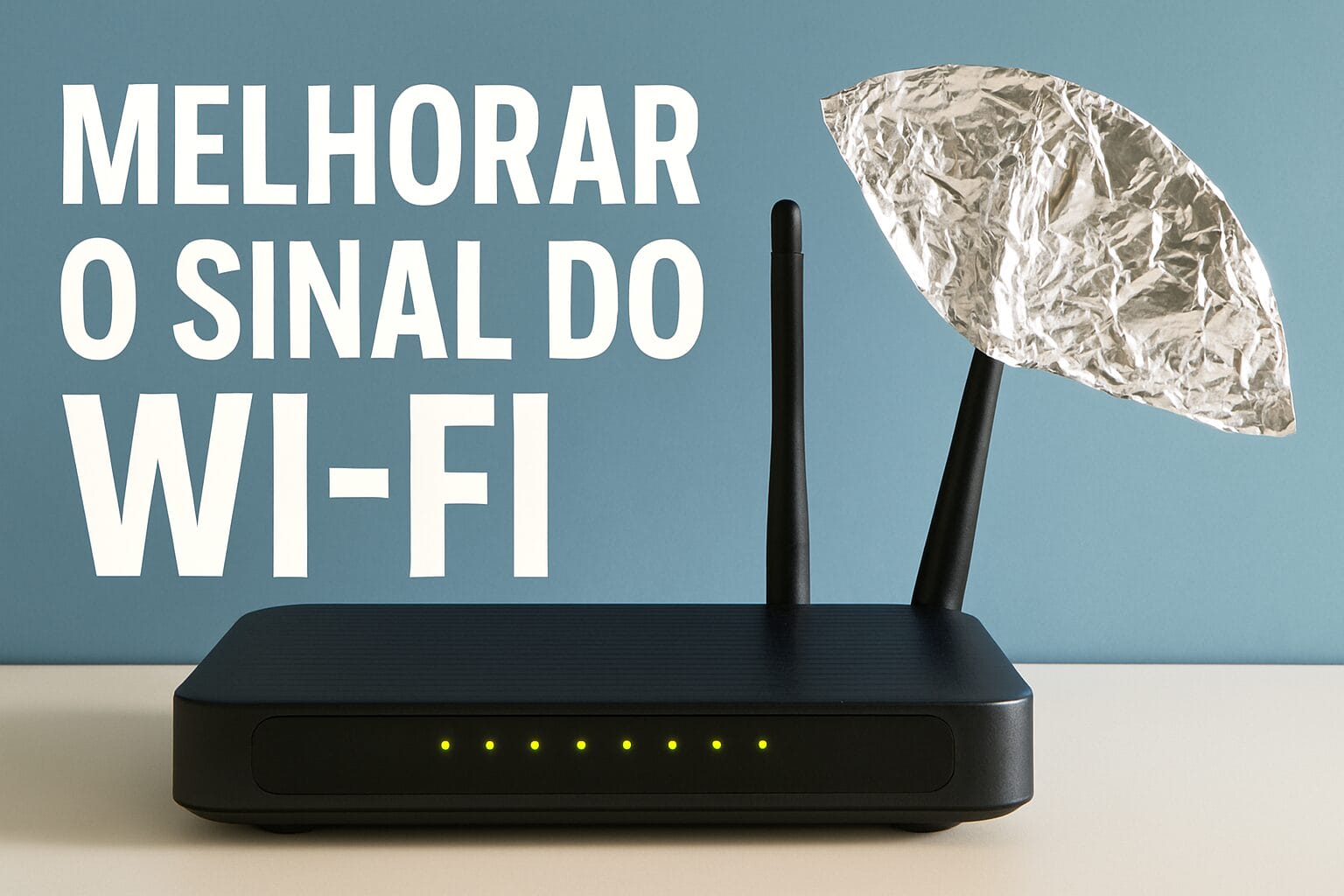
A homemade trick is catching attention on social media: using aluminum foil to improve the Wi-Fi signal. The technique involves positioning a sheet of aluminum behind the router, helping to reflect the waves and direct the signal to areas with coverage failures
An unstable Wi-Fi connection can cause frustration, especially while using streaming services. That’s exactly what led social media users to rescue a curious trick: placing a sheet of aluminum foil behind the router.
The suggestion went viral and reignited debates about the effectiveness of the technique.
Publications Show Enthusiasm for the Trick
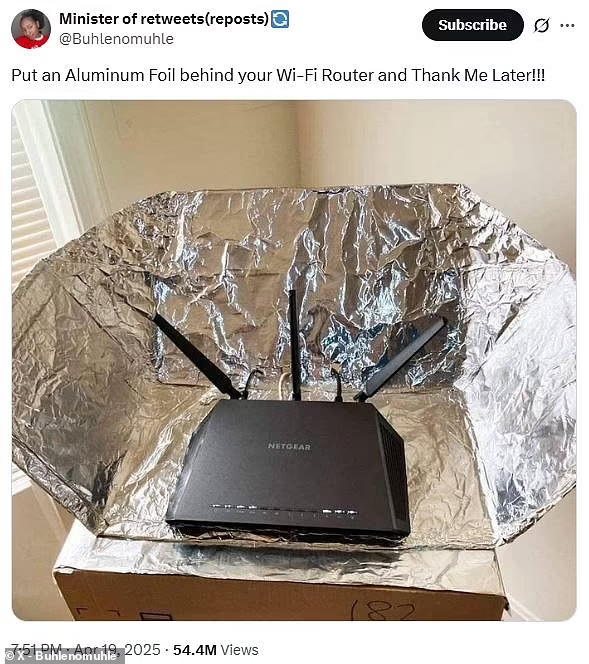
On X (formerly Twitter), a post caught attention with the phrase: “Put a sheet of aluminum behind your Wi-Fi router and thank me later!!!“. The result was a flood of comments.
-
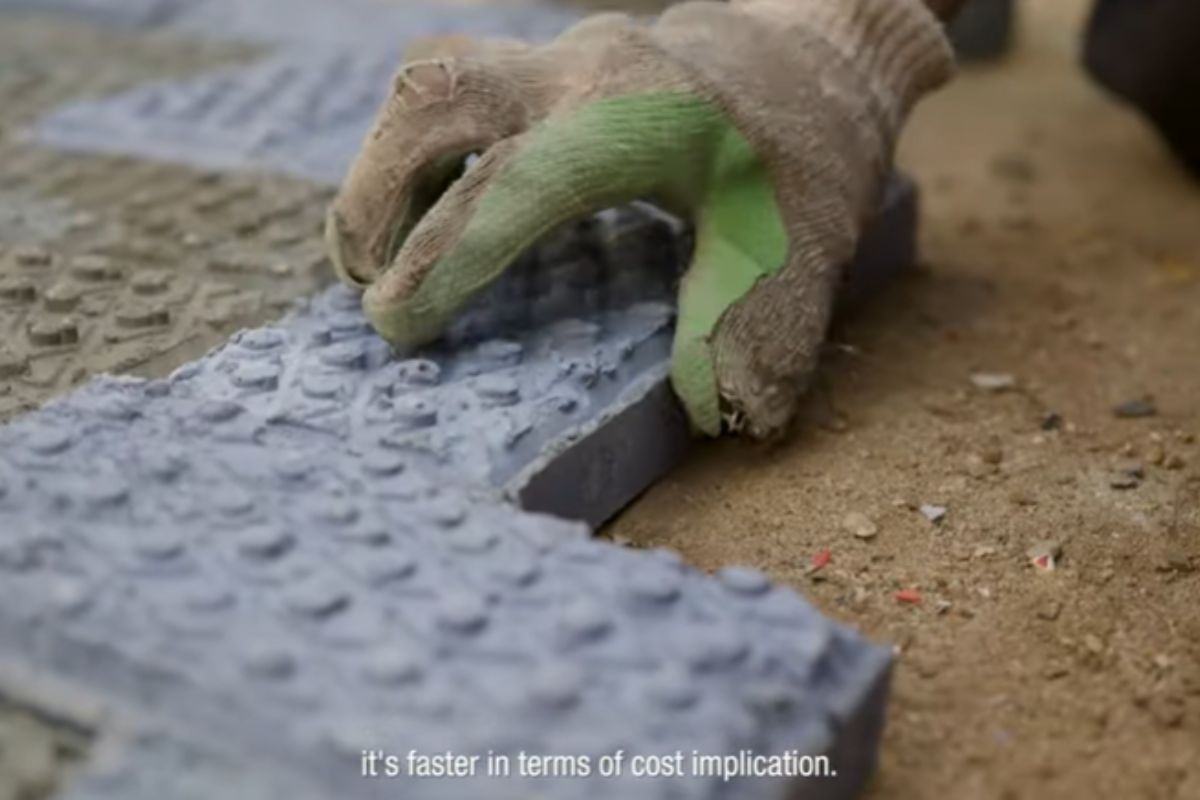
In Kenya, engineer Nzambi Matee created “bricks 2.0” using packaging plastic: a mixture with sand, heated and pressed; they are 5 times more resistant, already have official licensing, and are being used in streets and construction projects.
-
More than 20,000 positions could be opened, and thousands of technicians are starting to be trained in Brazil, as the expansion of data centers creates an urgent race for professionals to keep the internet, cloud, and artificial intelligence running 24 hours a day.

-
China approves the 15th Five-Year Plan 2026-2030 to become a global power: prioritizes brain implants, 6G with AI, humanoid robots, flying cars, quantum technology, and nuclear fusion, while strengthening defense and the economy.

-
HONOR X80i arrives with a massive 7,000 mAh battery, a 120 Hz AMOLED display with a brightness of 6,500 nits, and the new Dimensity 6500 Elite chip, promising up to 22 hours of video playback and impressive performance in casual gaming.


One user wrote: “It’s amazing what a simple sheet of aluminum can do for a Wi-Fi signal. Now I have Wi-Fi in my room that doesn’t drop every 5 seconds!”. Another commented: “Dude, it only improves the Wi-Fi signal in the direction opposite the foil. It’s not a conspiracy of someone spying on me.”
Scientific Basis Supports the Idea, but There Are Reservations
Despite the light tone of the posts, there is scientific basis for using aluminum as a reflector.
The logic lies in how Wi-Fi works: signals are electromagnetic energy waves that travel from the router to the connected device.
Just as parabolic antennas reflect signals, aluminum foil can redirect waves, improving performance in certain rooms.
The suggested configuration seems to serve to redirect signals that would escape behind the router, channeling them into the house. A commentator on X explained: “The aluminum foil acts as a parabolic reflector, reflecting radio waves forward and concentrating the signal where you need it most. Thank science later.”

Previous Experiments Confirm Potential
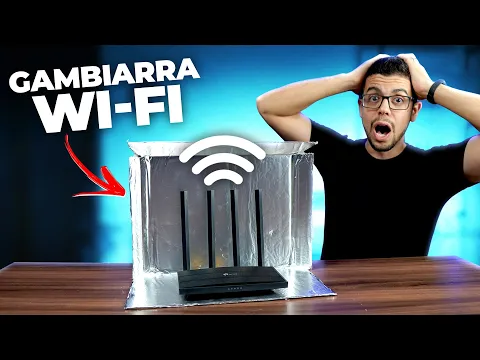
Research has also explored this idea. In 2017, researchers from Dartmouth College and Columbia University created a “virtual wall” using aluminum foil.
The experiment showed that even simple forms of aluminum stretched around the router’s antenna led to improvements.
The tests even included a metal antenna shaped to boost signals in specific areas of the house. In some cases, signal strength increased by up to 55%.
But the same experiment showed that the side effect could be severe: a reduction of up to 63% of the signal in other areas of the house.
Custom Reflectors Yield Better Results
It is important to highlight that the best results were obtained with reflectors designed by algorithms and printed in 3D.
These structures were specifically designed for the tested environment. A common sheet of aluminum does not perform the same way and can cause the opposite effect: worsening the connection.
On the network, some users warned about this. “How about not doing this, as it protects your router and makes it slower!”, commented one. Another stated: “Modern routers use passive beamforming. Placing aluminum foil around them is silly and will drastically reduce your Wi-Fi performance.”
Homemade Techniques Don’t Always Work
Not everyone was impressed. Some complained of complete connection loss after applying the trick. “My Wi-Fi stopped working since I used this trick and now I’m thinking of how to thank you,” sarcastically remarked one internet user.
Another pointed out that the trick seems more fiction than science: “Not that you’re wrong, but there’s nothing ‘parabolic’ about this setup.”
Legal and Regulatory Issues Come to the Fore
In addition to the technical issue, there is a legal point to consider. Swarun Kumar from Carnegie Mellon University warned in an interview with Popular Science that using reflectors may infringe regulations set by regulatory agencies.
In the United States, the FCC (Federal Communications Commission) establishes limits on the power of signals emitted by routers. Concentrating this signal too much, even with simple objects like aluminum, may exceed legally permitted levels.
Ironic Comments Show Skepticism
A good portion of users viewed the idea with humor. One commented: “No way I’m taking off my aluminum hat to wrap a router.” Another joked: “You could also fold the aluminum foil into a hat shape and wear it wherever you go.”
With more sarcasm, someone suggested: “Why not put it in the oven too, since we’re at it?”
The use of aluminum foil to improve Wi-Fi signal might work in some cases, but it is far from a guaranteed solution.
Results vary, and there are risks of worsening the situation or even violating local regulations. The simple trick divides opinions on social media, with reactions ranging from enthusiasm to total skepticism.
The most important thing, according to experts, is to understand the limitations and not expect miracles from a piece of aluminum.






-

Uma pessoa reagiu a isso.