





 Portuguese
  English
  Spanish
  4 min of reading
  0 comments


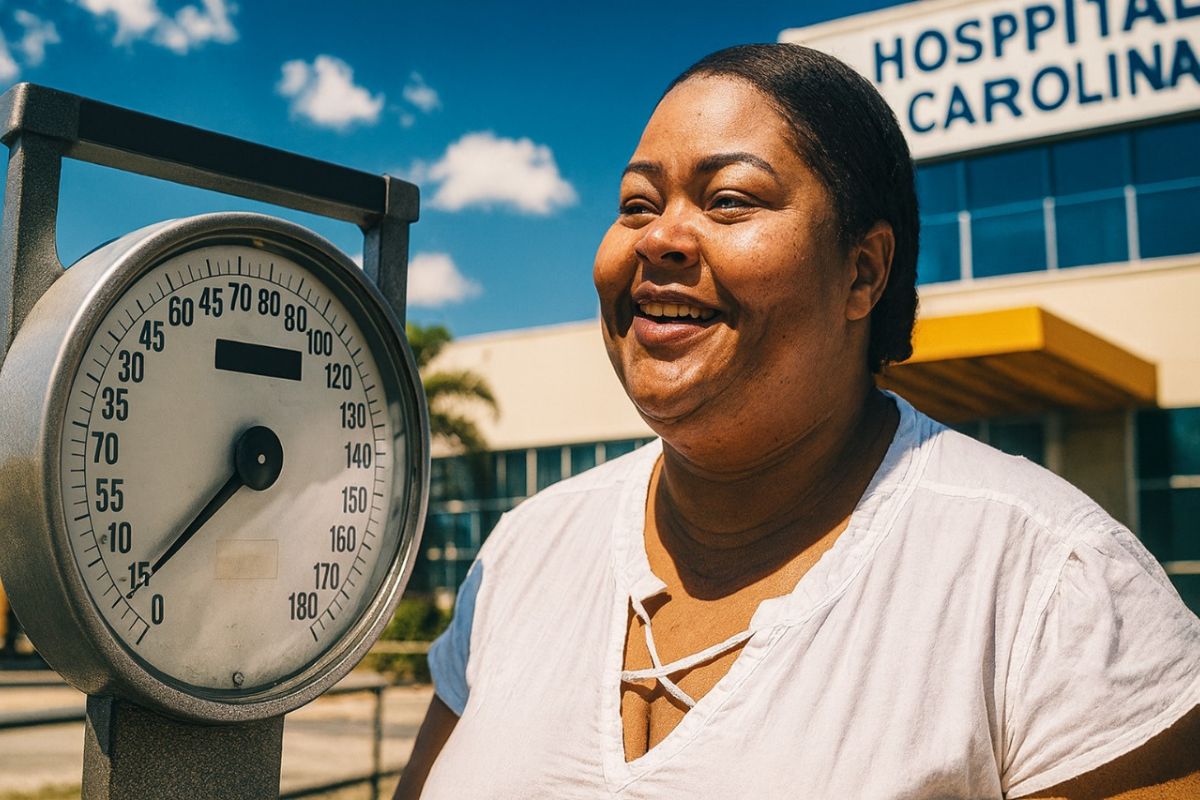
Housewife Who Weighed Over 300 Kilograms Regains Autonomy and Self-Esteem in Public Hospital in Rio, Reference in Extreme Obesity Treatment.
Hospitalized for six months at the State Institute of Diabetes and Endocrinology (IEDE) in Rio de Janeiro, Viviane da Silva Moreira surprised the medical team by losing 120 kilograms while awaiting a bariatric surgery. The hospital is the only one in the public network of the state specialized in severe obesity, and maintains an adapted structure to accommodate patients facing severe mobility limitations.
According to the G1 portal, before her hospitalization, Viviane depended entirely on her children to perform basic tasks, such as getting out of bed or taking a shower. Today, she celebrates every small achievement and says that the treatment has helped her regain what she had lost the most: hope.
The Treatment That Goes Beyond Surgery
The State Institute of Diabetes and Endocrinology is a national reference in the care of people with severe obesity.
-
Attracting around 250,000 people a year, a lighthouse 200 meters from the sea, on a 60-meter high cliff, on the North Sea coast in Denmark, becomes one of the most impressive examples of how nature can threaten historical buildings.

-
The narrowest house in the world is only 63 centimeters wide, but inside it can accommodate a bathroom, kitchen, bedroom, office, and even two staircases.

-
In the middle of the sea, these enormous concrete and steel structures, built by the British Navy to protect strategic maritime routes, look like they came straight out of a Star Wars movie.

-
For years, no one could cross a neighborhood in Tokyo because of the tracks, but an impressive solution changed mobility and completely transformed the local routine.


To safely accommodate patients, the hospital has adapted beds, outpatient clinics, and reinforced equipment including special chairs, larger blood pressure cuffs, and custom measuring tapes.
Of the 15 hospitalization beds, seven are adapted for morbidly obese patients, and the multidisciplinary team works together with nutritionists, psychologists, physical educators, social workers, and physiotherapists.
The focus goes beyond weight loss: it is about restoring autonomy, self-esteem, and quality of life.
According to the nursing coordination, the rapid weight loss of patients like Viviane is the result of a continuous process of food re-education, physiotherapy, and emotional support.
“The treatment is for life,” emphasizes Dr. Rafael da Costa, the sector coordinator.
Viviane’s Story: From 300 Kilograms to Overcoming
Viviane arrived at IEDE weighing over 300 kilograms, debilitated and unable to walk. Today, after six months of hospitalization, she emotionally shares the changes in her body and mind.
“I arrived without hope, thinking I wouldn’t be able to live anymore. Now I see that I am overcoming,” she said.
Even far from her children and family routine, she affirms that the treatment has taught her to value the process.
“I wanted to leave, but when I look at my progress, I think I don’t want to give up. I will succeed,” she reinforces.
The bariatric surgery, expected as part of the treatment, will be the next step in a journey that has already transformed not only her body but also her perception of herself.
Other Inspiring Stories: The Case of Gláucia
Viviane is not an isolated case. Housewife Gláucia Silva, also hospitalized at IEDE, went from 330 to 147 kilograms and has fully regained her autonomy.
“Before I had no life. I couldn’t walk, I couldn’t leave my room. Today I can take a shower by myself and take care of my family,” she says.
At 42 years old, Gláucia is determined to achieve double digits on the scale. For her, success is not only about weight loss but also about the mental and emotional change that the treatment provides.
“The transformation needs to start in the mind and heart,” she states.
A Team Effort with Purpose
The IEDE conducts an average of one thousand consultations per month just in the endocrinology sector, and around 400 patients receive comprehensive support from the multidisciplinary team.
About 250 people with grades 4 and 5 obesity are in continuous treatment at the facility.
Each advancement is closely monitored by professionals who view the treatment as a process of rebuilding lives.
The team emphasizes that not all patients are candidates for bariatric surgery, and that sustainable weight loss requires re-education and constant emotional support.
Viviane’s story is a reflection of the silent struggle of thousands of Brazilians facing severe obesity and finding in the public network a real chance for a new beginning.
More than preparing the body for bariatric surgery, the treatment restores dignity, movement, and hope.
And you? Do you believe that the public health system offers adequate support to those struggling with obesity? Leave your opinion in the comments; stories like Viviane’s show that the fight against weight is also a fight for life, acceptance, and respect.







-

Uma pessoa reagiu a isso.